Former Google, Facebook and Twitter insiders explain how social media is built to hold attention, mixed with a scripted family drama. For anyone who wants to understand the attention economy.
Documentary
Directed by Ava DuVernay
2016 · 1 h 40 min · Summary updated 3 November 2026
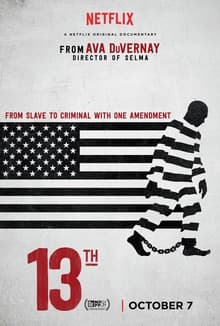
Ava DuVernay's documentary traces a line from slavery to mass incarceration through one clause of the Thirteenth Amendment. For anyone who wants the history behind US prisons.
13th argues that the Thirteenth Amendment ended slavery but left a loophole: it allows involuntary servitude as punishment for a crime. Ava DuVernay traces how that exception let the country keep control of Black Americans after 1865, through convict leasing, Jim Crow, the war on drugs and mass incarceration. Each era, the documentary argues, used a new tool for the same job: label Black people as criminals, then use the label to take their labor, votes and freedom. It ties this history to politicians of both parties who ran on crime, and to companies that profit from prisons, bail and detention. Its message is that the system is a set of choices that people can change.
The amendment ends slavery and involuntary servitude, except as punishment for a crime. DuVernay treats that exception as the hinge of American racial history. If the state can force a convicted person to work, then whoever controls who gets convicted controls who can be forced to work. The documentary argues that Southern states saw this at once after 1865. Its point for the viewer is to read laws for their exceptions, because the exception is often where power hides.
After the Civil War, the documentary says, Southern states passed laws against minor acts such as loitering and vagrancy. Police arrested freed Black people under these laws, and the state leased them to plantations, mines and railroads when they could not pay fines. DuVernay argues that this gave the state an incentive to criminalize more behavior, since every arrest produced a worker. The documentary uses this period to show that the link between crime and labor is old, not a modern invention.
The documentary shows scenes from The Birth of a Nation (1915), which portrays Black men as a threat and the Ku Klux Klan as heroes. Speakers argue that this image did not fade. It came back in news coverage of crime and drugs, and in campaign ads. DuVernay's claim is that fear built by images makes harsh laws feel reasonable. The lesson is to ask, when you see crime coverage, which faces are shown and which are left out.
DuVernay follows a line from Nixon's law and order campaign and war on drugs, through Reagan's drug policy, to Bill Clinton's 1994 crime law with its three strikes rules and mandatory minimum sentences. The documentary argues that each party tried to look tougher on crime than the other. The documentary shows some politicians who backed these policies expressing regret. The point is that mass incarceration, in the documentary's telling, is a bipartisan project, not the work of one side.
The documentary argues that private interests profit at every stage of the system. It names ALEC, where corporations and state lawmakers draft model bills, and the private prison company Corrections Corporation of America. It also points to companies that sell prison phone calls, food and commissary goods, and to the growth of immigrant detention. DuVernay's claim is that once a business depends on prisoners, it has a reason to fight reform. Critics argue that she overstates this part of the story.
Through the story of Kalief Browder, the documentary shows how the system can harm a person who is never convicted. Browder was held at Rikers Island for about three years without trial, much of it in solitary confinement, after an arrest over a backpack. Speakers argue that people who cannot pay bail face pressure to plead guilty, even when innocent, to avoid a longer sentence. The documentary presents this as a quiet engine of incarceration that most people never see.
Near the end, speakers warn that some reforms may change the form of control, not its scale. Electronic monitoring and other alternatives to prison can still be run by private companies and still restrict people's lives. The documentary asks viewers to judge a reform by what it does to the number of people under state control, not by its label. This mirrors its main argument: the same system has changed its name several times since 1865.
Availability in the US. Services change their catalogs, so check the price on the service before you pay.
13th is a 2016 documentary directed by Ava DuVernay, who wrote it with its editor, Spencer Averick. Its title points to the Thirteenth Amendment to the US Constitution, adopted in 1865. The amendment ends slavery and involuntary servitude, with one exception: "as a punishment for crime." DuVernay builds the whole documentary on that clause.
Her argument is simple to state. Slavery did not end in 1865. It changed its form. The exception let states turn Black Americans into "criminals" and then take their labor, their votes and their freedom by law. Each later era, the documentary argues, found a new tool for the same job.
The documentary opens with an audio clip of President Barack Obama, who says the United States has 5 percent of the world's population and 25 percent of its prisoners. From there, it moves through history in three broad chapters, with hip-hop songs as breaks between them. Interviews carry the argument. The speakers include the scholar and activist Angela Davis, the lawyer Bryan Stevenson, the legal scholar Michelle Alexander, the historian Henry Louis Gates Jr., the journalist Jelani Cobb, the commentator Van Jones, the political scientist Marie Gottschalk and the activist Malkia Cyril. DuVernay also interviews politicians from both parties, including Newt Gingrich and Cory Booker.
The first chapter covers the years after the Civil War. The documentary argues that the Southern economy lost its unpaid workforce and moved fast to replace it. States passed laws against minor acts such as loitering and vagrancy. Police arrested freed Black people under these laws. When they could not pay fines, the state leased them to plantations, mines and railroads. This system is convict leasing. DuVernay presents it as slavery under a new name, and she argues it gave the state a reason to criminalize more behavior.
The documentary then turns to images. It shows scenes from The Birth of a Nation (1915), which portrays Black men as a threat to white women and presents the Ku Klux Klan as heroes. Speakers argue that this image of the Black man as a dangerous criminal outlived the movie and still shapes how people see crime. The documentary links it to the wave of lynchings and to the Jim Crow laws that enforced segregation and kept Black citizens off voter rolls and juries.
The civil rights movement ended legal segregation in the 1960s. DuVernay shows activists being arrested for protest, and she argues that the arrest record became a new tool against the movement.
The second chapter is about national politics. The documentary argues that as legal segregation ended, politicians found a coded language for race in "law and order." It shows Richard Nixon's campaign on crime and his declaration of a war on drugs, and it presents both as a strategy to win white voters in the South.
Under Ronald Reagan, the documentary says, the war on drugs grew into a war on drug users. It focuses on the gap in sentences for crack cocaine and powder cocaine, and argues that this gap fell hardest on Black neighborhoods. News images of "crack" and of young Black men in handcuffs fed public fear.
DuVernay does not let Democrats off the hook. The documentary shows Bill Clinton's 1994 crime law, with its "three strikes" rules, mandatory minimum sentences and money for more police and prisons. It notes Hillary Clinton's support for that agenda. Speakers describe a contest in which both parties tried to look tougher on crime. The documentary also shows some of the politicians who backed these policies expressing regret.
The documentary's charts show the number of people in prison climbing year after year from the 1970s. Speakers argue that prison numbers rose because of policy choices, not because of crime alone.
The third chapter follows the money. The documentary argues that a large web of private interests now depends on keeping prisons full. It names the American Legislative Exchange Council (ALEC), a group in which corporations and state lawmakers draft model bills. The documentary argues that ALEC helped spread laws such as "truth in sentencing" and "stand your ground," and that member companies profited from them. It names the private prison company Corrections Corporation of America as one beneficiary.
DuVernay widens the view beyond private prisons. The documentary points to companies that sell prison phone calls, commissary goods and food, and to the bail system that keeps poor people in jail before trial. It describes plea bargains in which defendants, many of them innocent, the speakers say, accept guilt to avoid a much longer sentence at trial. It also looks at immigrant detention, which it presents as a new growth market for the same companies. Speakers warn that reforms such as electronic monitoring could simply move the profit from the cell to the ankle bracelet.
The term the documentary uses for the whole system is the prison industrial complex.
The documentary keeps returning to single lives. The most detailed is the story of Kalief Browder, a teenager from the Bronx who was held at Rikers Island for about three years without trial, much of it in solitary confinement, after an arrest for allegedly stealing a backpack. He died by suicide after his release. DuVernay uses his story to show what the bail and plea system can do to one person.
The final part brings the history to the present. DuVernay sets audio of Donald Trump's 2016 campaign rallies against archival footage of violence against Black protesters in the 1960s. She shows the names and images of Black people killed by police or vigilantes, including Trayvon Martin, Philando Castile and Sandra Bland. Speakers present the Black Lives Matter movement as part of a long struggle against criminalization.
The documentary ends with phone and dashboard videos of police killings. The New York Times critic Manohla Dargis called the documentary powerful and infuriating. DuVernay's closing point is that the system is the product of choices, and choices can change.
Most reviews were strongly positive, and the documentary was nominated for the Academy Award for Best Documentary Feature. The historian Dan Berger, writing for Black Perspectives, praised its account of Kalief Browder but argued that it uses outdated statistics and overstates the role of private prisons, prison labor and ALEC; he notes that private prisons hold a small share of US prisoners. Berger also argued that it dates mass incarceration too late and says little about women in prison. In Sight and Sound, Fanta Sylla made a similar point about the criminalization of Black women and girls and questioned whether showing footage of killings changes anything.
Watch it if you want a clear, compact case for how race, politics and money shaped the American prison system. Pair it with a careful history or policy book to test its numbers, since some of its statistics have dated.
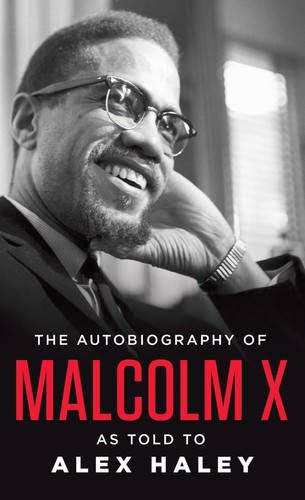
Book 1 of 4 · 1965
by Malcolm X with Alex Haley
Malcolm X describes how prison shaped his life and politics, a first-hand view of the system the documentary analyzes.
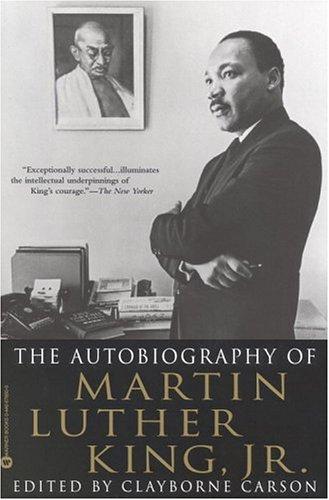
Book 2 of 4 · 1998
by Martin Luther King Jr.
King's own account of the civil rights movement fills in the era the documentary covers in a few minutes.
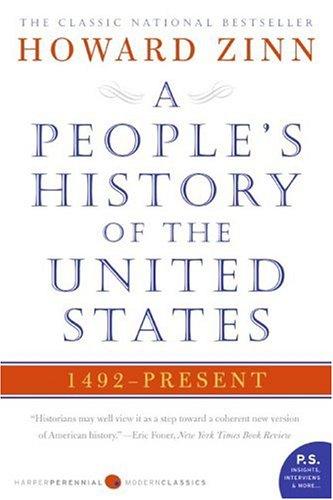
Book 3 of 4 · 1980
by Howard Zinn
Zinn tells American history from the side of the powerless, the same angle DuVernay takes on crime and punishment.
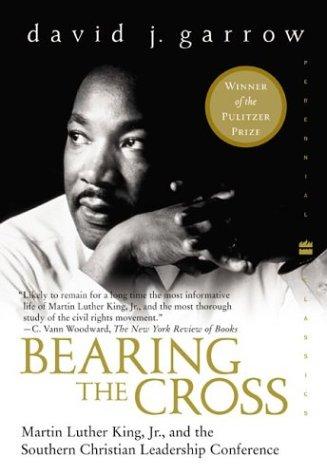
Book 4 of 4 · 1986
by David J. Garrow
Garrow's detailed history of King and the movement shows how arrests and jail were used against civil rights protest.
Store links may earn a commission.
11 cards
Question 1 of 5
What part of the Thirteenth Amendment is at the center of the documentary's argument?
Former Google, Facebook and Twitter insiders explain how social media is built to hold attention, mixed with a scripted family drama. For anyone who wants to understand the attention economy.
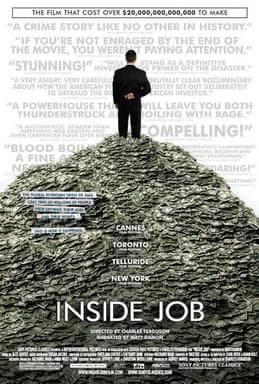
Charles Ferguson's Oscar-winning documentary explains the 2008 financial crisis and argues that bankers, regulators and economists caused it and escaped blame. For anyone who wants to understand the crash.
A three-part National Geographic docuseries in which Jared Diamond argues that geography, not people, explains why Europeans conquered so much of the world. For anyone curious about the roots of global inequality.

Documentary · 2010
Directed by Heidi Ewing, Alex Gibney, Seth Gordon, Rachel Grady, Eugene Jarecki and Morgan Spurlock
Six documentary makers adapt Levitt and Dubner's bestseller into segments on baby names, cheating in sumo, crime and abortion, and paying students for grades. For anyone who wants the book's ideas on screen.
New books, occasionally