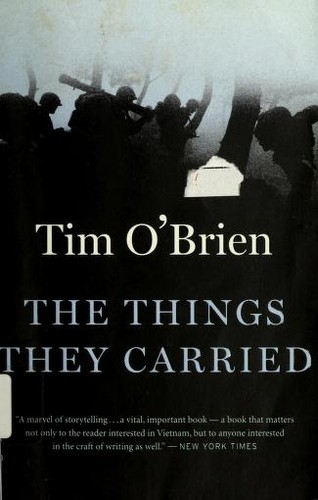
Tim O'Brien's linked stories about a platoon of American soldiers in Vietnam, told by a narrator named Tim O'Brien who keeps asking what a true war story is. For readers who want the stories in order and what the book says about memory and truth.
1998 · 400 pages · Summary updated 24 October 2026
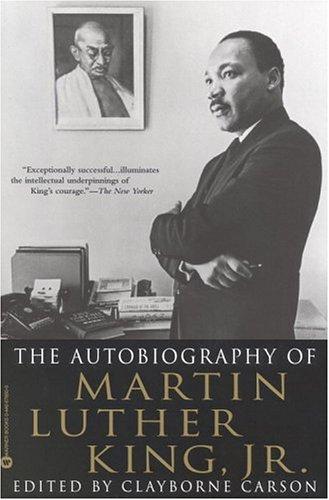
The Autobiography of Martin Luther King, Jr., assembled in 1998 by editor Clayborne Carson from King's own writings, tells his life in his words, from an Atlanta childhood to Montgomery, Birmingham, Selma and Memphis.
King never wrote an autobiography. In 1998 Clayborne Carson, director of the King Papers Project at Stanford, built one from King's books, sermons, speeches, letters and interviews, arranged in the first person and in order. It follows King from his Atlanta childhood and his studies of Gandhi and Christian ethics to the Montgomery bus boycott, where he becomes a leader at 26. It covers the failure in Albany, the victory in Birmingham, the March on Washington, Selma, Chicago and his stand against the Vietnam War. It ends in Memphis in 1968, with King expecting his own death and holding to nonviolence.
King never wrote a full autobiography. Clayborne Carson, director of the King Papers Project at Stanford, assembled this one in 1998 from King's books, sermons, speeches, letters and interviews. He arranged the passages in time order and in the first person. The words are King's, but the selection is Carson's. Readers get King's view of his own life, and they should keep in mind that it is his public voice.
King draws on Gandhi, the Social Gospel and Christian love to form his method. Nonviolent resistance opposes injustice firmly, accepts suffering without striking back and aims to win over the opponent. It is active and confrontational. In Montgomery, after his house is bombed, he asks an angry crowd to go home and meet hate with love. The method works because it exposes the violence of the system to the public.
King does not plan to lead a movement. When Rosa Parks is arrested in 1955, local leaders form the Montgomery Improvement Association and elect him president, partly because he is new and has no enemies. He is 26. He doubts himself, and one night after a death threat he prays at his kitchen table and feels the strength to continue. The book shows a leader who grows into a role he did not seek.
In Albany, Georgia, the movement fails. King writes that the protests spread too wide, attacking segregation in general instead of one clear target. The police chief also avoided public brutality. In Birmingham the next year, the SCLC picks specific targets in downtown stores and plans carefully. That campaign wins. The lesson is that a campaign needs a focused, winnable goal, and a failure can teach what to change.
In the Letter from Birmingham Jail, King answers clergymen who call the protests untimely. He argues that people have a moral duty to disobey unjust laws, and that "wait" has almost always meant "never." He says the white moderate who prefers order to justice is a greater obstacle than the open racist. The idea applies to any cause where people agree in principle but delay in practice.
After the Voting Rights Act, King turns to poverty, housing and jobs. Laws against segregation do not give a family a decent home or income. He campaigns against slum housing in Chicago and plans the Poor People's Campaign for people of every race. He calls riots "the language of the unheard." The idea is that legal equality is the start, not the end, of justice.
In 1967 King publicly opposes the Vietnam War. He argues that the war drains money from programs for the poor and sends poor young men, Black and white, to fight and die. Many allies and the White House turn against him. He refuses to keep quiet to protect his position. The book shows a leader who sees moral issues as linked and pays a price for saying so.
“Injustice anywhere is a threat to justice everywhere.”
“I have a dream that my four little children will one day live in a nation where they will not be judged by the color of their skin but by the content of their character.”
The Autobiography of Martin Luther King, Jr. is not a book King wrote. He was killed in 1968 at 39, before he could write one. In 1998 the historian Clayborne Carson, director of the King Papers Project at Stanford University, assembled this book from King's own words. He drew on King's published books, such as Stride Toward Freedom and Why We Can't Wait, and on sermons, speeches, letters, interviews and unpublished papers. He arranged the passages in time order and in the first person, so the book reads like a memoir.
Carson adds short editorial notes and selects the material, but the sentences are King's. Each chapter usually ends with an excerpt from a key speech or document of that period. The result is a life story that covers almost all of King's public career, from 1929 to 1968.
King is born in Atlanta, Georgia, in 1929, the son of a Baptist pastor. His father leads Ebenezer Baptist Church and stands up to segregation in daily life. King recalls a shoe store where a clerk tells them to move to the back; his father refuses and walks out. He also recalls a white boy who was his close friend until the boy's parents ended the friendship when the two started school. These moments teach him early what segregation does to people. He writes that, as a boy, he decided he would hate every white person, and that his parents taught him it was his duty as a Christian not to. The tension between anger and love runs through the rest of his life.
He enters Morehouse College at 15. Its president, Benjamin Mays, shows him that a minister can be both a thinker and a fighter for justice. King decides to enter the ministry. He studies at Crozer Theological Seminary in Pennsylvania and then earns a doctorate at Boston University. In Boston he meets Coretta Scott, a music student, and they marry in 1953.
In these years King searches for a method of social change. He reads the Social Gospel of Walter Rauschenbusch, which says Christianity must care about poverty and injustice. He reads the theologian Reinhold Niebuhr, who warns that groups act more selfishly than individuals. A lecture on Mahatma Gandhi convinces him that love can be a force for social change, not only for personal ethics. From these sources he forms his belief in nonviolent resistance: oppose injustice firmly, accept suffering without hitting back, and aim to win over the opponent, not defeat him.
In 1954 King becomes pastor of Dexter Avenue Baptist Church in Montgomery, Alabama. In December 1955, Rosa Parks is arrested for refusing to give up her bus seat to a white man. Local leaders call a one-day boycott of the buses and form the Montgomery Improvement Association. They elect King, then 26, as its president, partly because he is new in town and has no enemies.
The boycott lasts more than a year. Black residents walk, share rides and organize car pools. King is arrested, threatened and attacked. The city charges him and dozens of other leaders under an old state law against boycotts, and a judge convicts and fines him. One night in January 1956, after a threatening phone call, he sits at his kitchen table, unable to sleep. He prays and feels a calm, inner assurance that he must keep going. Days later his house is bombed while his wife and baby daughter are inside. They are unhurt. An angry crowd gathers, and King asks them to go home and answer hate with love. In late 1956 the Supreme Court rules that bus segregation is unconstitutional, and the buses integrate.
The victory makes King a national figure. In 1957 he helps found the Southern Christian Leadership Conference (SCLC) to spread nonviolent protest across the South. In 1958, while signing books in Harlem, he is stabbed in the chest by a mentally ill woman and nearly dies. In 1959 he travels to India to learn more about Gandhi's movement.
In 1960 King moves back to Atlanta to work full time on the movement. He is jailed after a sit-in at an Atlanta department store. A judge then sends him to a state prison on an old traffic charge. The presidential candidate John F. Kennedy calls Coretta to express concern, and King is released soon after. King describes how this call helped turn Black voters toward Kennedy.
In Albany, Georgia, in 1961 and 1962, the movement fails. King writes that the protests attacked segregation in general instead of one clear target, and the local police chief avoided the kind of brutality that would draw national outrage. King learns from the defeat.
In Birmingham, Alabama, in 1963, the SCLC targets downtown stores and lunch counters. King is arrested. In jail he writes the Letter from Birmingham Jail, an answer to white clergymen who called the protests "unwise and untimely." He argues that people have a moral duty to disobey unjust laws, that waiting for justice usually means never getting it, and that the greatest obstacle is not the open racist but the white moderate who prefers order to justice. When young people join the marches, police use dogs and fire hoses on them. The images shock the nation, and the city's business leaders agree to desegregate.
In August 1963 King gives the "I Have a Dream" speech at the March on Washington, before a crowd of about 250,000 people. The first part of the speech is less famous. In it, King says America has given its Black citizens a bad check, a promise of freedom marked "insufficient funds." Only then does he turn to his dream of a nation where his children are judged by their character. Weeks later, a bomb at the 16th Street Baptist Church in Birmingham kills four girls. In November, President Kennedy is assassinated. King writes that these events showed him how deep the violence in American life runs.
In 1964 Congress passes the Civil Rights Act, and King wins the Nobel Peace Prize. He gives the prize money to the movement. In 1965 he joins the voting rights campaign in Selma, Alabama. On March 7, a day later called Bloody Sunday, state troopers beat marchers on the Edmund Pettus Bridge. Two weeks later, under federal protection, the march to Montgomery goes ahead. That August, the Voting Rights Act becomes law. King writes that the right to vote is the foundation for every other gain, because it lets Black citizens elect officials who answer to them. King also reflects on Malcolm X, whom he met only briefly, and on the different path Malcolm took.
After Selma, King turns to the problems that civil rights laws do not solve: poverty, housing and jobs. After the Watts riot in Los Angeles in 1965, he warns that poverty and despair fuel unrest. He later calls a riot "the language of the unheard." In 1966 he moves into a Chicago apartment to campaign against slum housing and segregated neighborhoods. White crowds attack the marchers. King says he has seen more hatred in Chicago than in the Deep South.
The same year, younger activists raise the slogan Black Power. King understands their anger and agrees that Black people need political and economic power. But he rejects the slogan's hints of separatism and violence.
In April 1967, in a speech at Riverside Church in New York, he publicly opposes the Vietnam War. He links war, racism and poverty as connected evils and says the money spent on war is money taken from the poor. Many allies, the press and the White House turn against him. He refuses to separate the struggle for civil rights from the struggle for peace.
In his last months King plans the Poor People's Campaign, a mass protest in Washington for jobs and income for poor people of every race. He goes to Memphis, Tennessee, to support striking sanitation workers. On April 3, 1968, he gives the speech now called "I've Been to the Mountaintop." He says he would like to live a long life but is not worried about it now, because he has seen the promised land. The next day, April 4, he is shot and killed on the balcony of the Lorraine Motel.
Reviewers welcomed a single, readable volume of King's words. Some note the limits of the method. Because Carson uses mostly King's public writing, the book shows King as he presented himself. It says little about his private doubts, his family life, his conflicts inside the movement or the FBI's campaign against him. For those, readers turn to biographies such as David Garrow's Bearing the Cross or Taylor Branch's trilogy.
Read it if you want King's life and ideas in his own voice, in one volume, with the key speeches in context. Pair it with a critical biography if you want the full picture of the man and the movement.
11 cards
Question 1 of 5
How was The Autobiography of Martin Luther King, Jr. created?
Tim O'Brien's linked stories about a platoon of American soldiers in Vietnam, told by a narrator named Tim O'Brien who keeps asking what a true war story is. For readers who want the stories in order and what the book says about memory and truth.
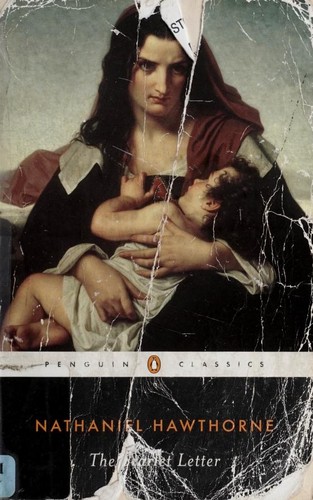
Nathaniel Hawthorne's novel about Hester Prynne, forced to wear a scarlet A for adultery in Puritan Boston, the minister who hides his guilt and the husband who seeks revenge. For readers who want the plot in order and the ideas behind it.

S. E. Hinton's novel about Ponyboy Curtis, a fourteen-year-old greaser in 1960s Oklahoma, and the night a fight with rich kids ends in a death. For readers who want the plot, the characters and the meaning of "stay gold."
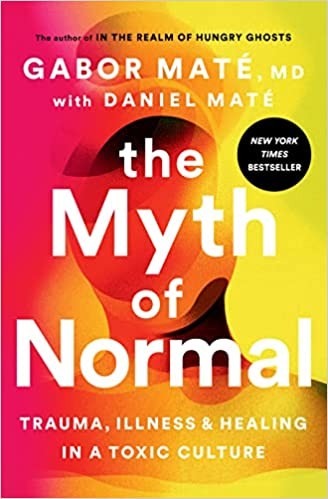
Gabor Maté's The Myth of Normal argues that much of what we call normal in modern life makes people sick, linking trauma, stress and illness. For readers who want to understand how early experience and culture shape health.
New books, occasionally