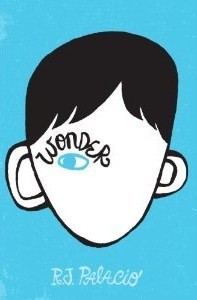
Wonder by R. J. Palacio is a novel about August Pullman, a ten-year-old boy with a facial difference who goes to school for the first time in fifth grade. For readers who want the plot, the narrators and the book's lesson on kindness.
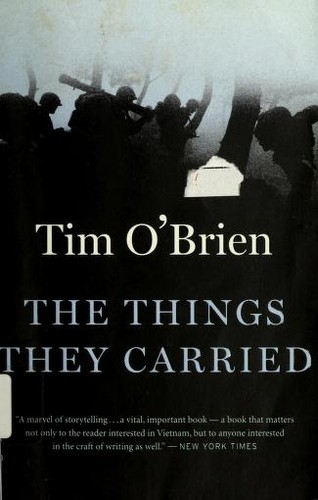
by Tim O'Brien
1990 · 256 pages · Summary updated 24 October 2026
Tim O'Brien's linked stories about a platoon of American soldiers in Vietnam, told by a narrator named Tim O'Brien who keeps asking what a true war story is. For readers who want the stories in order and what the book says about memory and truth.
A narrator named Tim O'Brien, a writer in his forties, looks back at his year as a foot soldier in Vietnam with Alpha Company. In twenty-two linked stories he tells what the men carried: weapons and rations, but also photographs, fear, guilt and love. He tells how he nearly fled to Canada to avoid the draft, how friends died, and how the survivors lived afterward. He also keeps stepping out of the stories to question them. O'Brien argues that a war story can be truer than the facts, and that telling stories is how the living keep the dead alive and carry their own burdens.
The title story lists the gear each soldier carries, with exact weights, then turns to what cannot be weighed: fear, grief, love, the dread of looking like a coward. O'Brien's reasoning is that the emotional load is the heavier one, and that it does not end when the war ends. The example is Jimmy Cross, who carries Martha's letters and pebble and, after Ted Lavender dies, carries guilt for the rest of the book.
In "On the Rainy River," O'Brien sits in a boat twenty yards from Canada and cannot jump. He thinks the war is wrong. He goes anyway because he cannot face the judgment of his town, his family and his own idea of himself. He calls this cowardice. O'Brien's argument is that many soldiers fought not out of bravery but out of fear of embarrassment, and the book returns to this idea in nearly every story.
O'Brien says a true war story does not teach virtue or offer a lesson. It is often unbelievable, and the crazy parts may be the true ones. It is not about war but about love, memory and sorrow. The example is Rat Kiley shooting a baby water buffalo after Curt Lemon's death. It is ugly and has no moral, and that is what makes it true. Readers who want heroes or lessons are, O'Brien says, missing the point.
When a soldier dies, every man finds a reason to blame himself. O'Brien shows this as a way of making sense of random death. When Ted Lavender is shot, Jimmy Cross decides that his daydreams about Martha killed him, and he burns her letters as a kind of penance. Later deaths set off the same search for fault in the others. The book suggests that guilt is not proof of fault. It is what people feel when they survive something that had no logic.
O'Brien writes at forty-three because stories join the past to the future. He says that in a story, the dead can still smile and sit up. The book ends with Linda, the girl he loved at nine, who died of a brain tumor and came back to him in dreams. O'Brien's reasoning is that memory, shaped into story, is the only way to hold on to people the war or illness took.
In "Good Form," O'Brien says almost everything in the book is invented. He did not kill the young man on the trail at My Khe; he was there and afraid to look. He separates happening-truth, what occurred, from story-truth, what makes the reader feel what he felt. He argues that story-truth is sometimes truer. Even his daughter Kathleen is invented. The idea forces the reader to ask what truth in fiction means.
Norman Bowker survives the war and spends the Fourth of July circling a lake in his Iowa hometown, with no one to tell about Kiowa's death in the mud. He writes O'Brien that he cannot find a use for his life and later takes his own life. O'Brien, who did find a use for his, admits he gave Bowker his own guilt. The book's point is that survivors carry the war home, and some cannot set it down.
“They carried all they could bear, and then some.”
“I was a coward. I went to the war.”
“A true war story is never moral.”
The Things They Carried by Tim O'Brien was published in 1990. It was a finalist for the Pulitzer Prize and the National Book Critics Circle Award, and it is one of the most taught books about the Vietnam War. O'Brien was drafted in 1968 after college in Minnesota and served as an infantryman in Vietnam in 1969 and 1970. He was wounded and came home with a Purple Heart.
The book is a set of twenty-two linked stories. Some are long, some are a page. The narrator is a writer named Tim O'Brien, forty-three years old, who served with Alpha Company. He shares the author's name and much of his history. The book is dedicated to the men of Alpha Company, and it names the same characters who appear in the stories. Yet the title page calls it a work of fiction. That tension, between memoir and invention, is the book's real subject.
The stories are not in order. They move between the war, the summer before it, and the decades after. Characters who die in one story are alive in the next. The narrator often interrupts himself to explain how he wrote a story, what he changed, and why. The summary below follows the main stories and groups them by the people at their center.
The title story introduces the platoon by listing what each man carries. Lieutenant Jimmy Cross, twenty-four, carries letters from a girl named Martha, a college student in New Jersey who signs them "Love" but does not love him. He carries a pebble she sent him and imagines her all day. The others carry can openers, insect repellent, comic books, a New Testament, dental floss, a pair of pantyhose, tranquilizers. O'Brien lists the weights: a steel helmet, a radio, a machine gun, ammunition, each measured in pounds.
Then the list turns. The men also carry fear, and the greater fear of being seen as cowards. They carry grief, terror, love and longing. They carry their reputations. They carry, O'Brien says, all they could bear, and then some.
Early in the story, a frightened soldier named Ted Lavender is shot in the head and killed as he walks back from relieving himself. Cross, who was daydreaming about Martha at that moment, blames himself. That night he burns her letters and photographs and decides to be a hard, careful officer who puts his men first.
In "On the Rainy River," O'Brien tells a story he says he has never told anyone. In June 1968, a month after he graduated from college, his draft notice arrives. He thinks the war is wrong. He spends the summer working in a meatpacking plant in his Minnesota hometown, spraying blood clots off pig carcasses, and he cannot think of anything but escape.
One day he leaves work and drives north to the Rainy River, which forms the border with Canada. He stops at a run-down fishing lodge run by an old man named Elroy Berdahl. Elroy asks no questions. For six days O'Brien helps around the lodge. On the last day Elroy takes him fishing and steers the boat to within twenty yards of the Canadian shore. Elroy says nothing and waits. O'Brien sits in the boat and cries. He imagines everyone he knows on the bank, watching and shouting. He cannot jump, because he is ashamed of what people will think. He goes home, and he goes to the war. He ends with the confession that he was a coward. He went to the war.
In "How to Tell a True War Story," O'Brien tells about Curt Lemon, a young soldier who was playing catch with his friend Rat Kiley, the platoon medic, when he stepped on a booby-trapped artillery round and was killed. Afterward, Rat shoots a baby water buffalo, slowly and on purpose, while the others watch. Rat writes a long letter to Lemon's sister about how great her brother was. She never writes back.
Between these scenes O'Brien gives rules for telling a true war story. A true war story is never moral. It does not teach virtue or restrain men from doing what they have always done. If a story seems moral, do not believe it. A true war story often cannot be believed, and the crazy parts are often the true ones, while the normal parts are made up. It is not about war at all. It is about love, memory and sorrow. Then he says that much of what he has just told is invented, and that it does not matter, because it is true.
Across the stories, the platoon becomes a group of distinct people:
O'Brien also includes short scenes from the war: a soldier fainting at the dentist, a village girl dancing in the ashes of her burned home, a pagoda where the men camp with two monks. In "Spin" he explains why he still writes about it at forty-three: stories are for joining the past to the future, and for remembering.
This section reveals one of the book's major turns.
"Sweetheart of the Song Tra Bong" is a story Rat Kiley tells, and the others do not believe it. At a remote medical outpost in the mountains, a young soldier named Mark Fossie flies his high school sweetheart, Mary Anne Bell, from Ohio to Vietnam to be with him. She arrives in culottes and a pink sweater.
She is curious about everything. She learns to handle a rifle and to treat wounds. She stops wearing jewelry and cuts her hair. Then she starts disappearing at night with the Green Berets who share the camp. Fossie finds her in their hut, wearing a necklace made from human remains, chanting. She has crossed over into the war. Eventually she walks off into the jungle and never comes back. The Green Berets say she is still out there.
The story asks what the war does to anyone who goes into it, and whether the innocent American girl is so different from the boys sent there.
This section reveals a death and its aftermath.
One night the platoon camps in a field along the Song Tra Bong river. It rains for days, and the field is a sewage field that a village uses as a toilet. The mud is deep. Under mortar fire, the field explodes into muck, and Kiowa is sucked under and drowns.
"In the Field" follows the search for his body the next morning. Each man blames himself. Jimmy Cross blames himself for choosing the campsite. A young soldier blames himself because he turned on a flashlight to show Kiowa a photograph of his girlfriend, which may have drawn the fire. Azar apologizes for joking about Kiowa's death. They find him and pull him out.
"Speaking of Courage" follows Norman Bowker after the war, on the Fourth of July in his small Iowa town. He drives around the lake again and again. He imagines telling his father how he almost won the Silver Star: he had Kiowa by the boot in the mud, but the smell was so bad that he let go. There is no one to tell. He wades into the lake and watches the fireworks.
In "Notes," O'Brien reveals that Bowker wrote him a long letter after the war, saying he could not find a meaningful use for his life and asking O'Brien to write about him. Three years later, Bowker hanged himself in a YMCA locker room. O'Brien also admits that the part about Bowker failing to save Kiowa was not true. That part of the story was his own.
In "Field Trip," O'Brien returns to Vietnam twenty years later with his ten-year-old daughter, Kathleen. He finds the field. He wades in and pushes Kiowa's moccasins into the mud. An old farmer watches. Kathleen does not understand why he is there. O'Brien feels that something has gone out of him, and that the war is over.
This section reveals the book's central twist about truth.
In "The Man I Killed," O'Brien describes the body of a slim young Vietnamese man lying on a trail near the village of My Khe. O'Brien threw the grenade that killed him. He cannot stop looking. He imagines the man's life: born in 1946, a student of mathematics, afraid of being a coward, as O'Brien was. Kiowa tries to comfort him and tells him it was a good kill, that he had to do it.
In "Ambush," Kathleen asks her father whether he ever killed anyone. He says no. Then he tells the reader the story again, as he imagines telling her when she is grown.
In "Good Form," O'Brien steps out of the book. He says that almost everything in it is invented. He did not kill the young man. He was present, and he was afraid to look at the dead. He makes a distinction between happening-truth, what really happened, and story-truth, the invented story that makes the reader feel what he felt. Story-truth, he says, is sometimes truer. He leaves both answers to Kathleen's question honest: no, and yes.
The twist goes further than the reader expects. The real Tim O'Brien had no daughter at the time he wrote the book. Kathleen, too, is part of the story-truth.
This section reveals the ending.
Two late stories show the cost of being wounded. In "The Ghost Soldiers," O'Brien is shot twice. The first time, Rat Kiley treats him well. The second time, a new medic, Bobby Jorgenson, panics and fails to treat him for shock, and the wound becomes infected. O'Brien plans revenge. With Azar, he sets up a night of fake enemy noises to terrify Jorgenson on guard duty. Halfway through, O'Brien loses heart. He and Jorgenson make an uneasy peace, and O'Brien is ashamed of what the war has made of him. In "Night Life," Rat Kiley, worn down by night patrols, shoots himself in the foot to get out of the war.
The final story, "The Lives of the Dead," goes back to O'Brien's childhood in Minnesota. When he was nine, he loved a girl named Linda. She wore a red cap to cover the scars of surgery, and a boy pulled it off in class. She died of a brain tumor that spring. After seeing her body at the funeral home, Timmy began to dream about her, and in the dreams she was alive and talking. He learned that stories can bring the dead back.
O'Brien connects Linda to the dead of Vietnam: Ted Lavender, Curt Lemon, Kiowa, the man on the trail at My Khe. The book ends with an image of Timmy skating on a frozen pond with Linda, and with the forty-three-year-old writer saying that he is trying to save Timmy's life with a story.
Most critics treat the book as one of the best works of fiction about Vietnam, and the metafiction (the stories about writing stories) is the reason it is taught so widely. Some readers feel cheated by the book's games with truth, because they cannot tell which scenes really happened. Others note that the Vietnamese characters are mostly silent or dead, seen only through American eyes. The book has been challenged in schools for profanity and violence.
Read it if you are studying it and need the stories untangled, or if you want a book about war that is really about memory, guilt and why people tell stories. It works as a first book about Vietnam and as a book about writing.
12 cards
Question 1 of 5
What does Jimmy Cross do after Ted Lavender is killed?
The last story, "The Lives of the Dead," goes back to O'Brien's childhood and Linda, a girl he loved at nine who died of a brain tumor. He dreamed of her afterward, and in his dreams she lived. He links her to the dead of Vietnam and ends by saying he is trying to save his younger self's life with a story.
Wonder by R. J. Palacio is a novel about August Pullman, a ten-year-old boy with a facial difference who goes to school for the first time in fifth grade. For readers who want the plot, the narrators and the book's lesson on kindness.

Ugly Love is Colleen Hoover's romance about Tate Collins, a nursing student who agrees to a no-strings affair with a guarded airline pilot, Miles Archer, whose past is a closed door. For readers who want a steamy, emotional love story with a heartbreaking backstory.
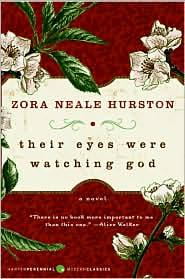
Zora Neale Hurston's novel about Janie Crawford, a Black woman in early 1900s Florida who moves through three marriages in search of real love and her own voice. For readers who want the plot, the themes and the meaning of the title.

The Wife Upstairs is Rachel Hawkins's 2021 thriller that retells Jane Eyre in a wealthy Alabama suburb, where a broke dog walker falls for a widower whose wife vanished on a lake. For readers who like twisty domestic suspense.
New books, occasionally