
Wonder by R. J. Palacio is a novel about August Pullman, a ten-year-old boy with a facial difference who goes to school for the first time in fifth grade. For readers who want the plot, the narrators and the book's lesson on kindness.
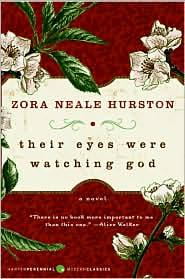
1937 · 256 pages · Summary updated 24 October 2026
Zora Neale Hurston's novel about Janie Crawford, a Black woman in early 1900s Florida who moves through three marriages in search of real love and her own voice. For readers who want the plot, the themes and the meaning of the title.
Janie Crawford comes back to the all-Black town of Eatonville, Florida, alone and in overalls, and the town gossips. She tells her friend Pheoby her life. Her grandmother married her at sixteen to an old farmer for safety. She left him for Joe Starks, who made himself mayor and made her a silent ornament. When Joe died, she chose Tea Cake, a younger, poor man who treated her as an equal and took her to work in the Everglades, where a hurricane changed everything. Hurston argues that a woman has to find out about living for herself, and that love is real only when it lets her speak.
At sixteen Janie watches a bee in a pear blossom and sees what marriage should be: two sides meeting, both giving and both receiving. Every marriage in the book is measured against this picture. Logan offers safety and work. Joe offers status and a porch. Tea Cake comes closest, because he plays with her and wants her beside him. Hurston's argument is that a woman should not settle for any marriage that is less than this, even when others say love will come later.
Nanny, who survived slavery, wants Janie protected above all. She marries her to Logan for his sixty acres. Joe later gives her a big house and a high seat in the town. Hurston shows both as cages. Nanny's love is real, but her dream was shaped by what she could not have. Janie's life tests the difference between a woman being kept safe and a woman being free, and she chooses freedom, with its risks.
Joe tells the town his wife knows nothing about speeches and bans her from the store porch talk. Janie spends twenty years silent outside and alive inside. Her turning point is speech: she answers Joe in front of the men and breaks his pride. Later she tells her whole story to Pheoby. Hurston argues that speaking for yourself is how a person claims a self. The novel itself is Janie's voice, told on her own porch.
Nanny says that white men hand their loads to Black men, who hand them to Black women, so the Black woman is the mule of the world. Hurston returns to the image in Matt Bonner's starved mule, which Joe buys to show off and Janie pities. The image names a double burden of race and gender. Janie's story is an attempt to put the load down. The example is Logan's plan to buy a second mule so Janie can plow.
The novel opens with the porch sitters talking about Janie's overalls and her younger husband. The town judges her for every choice she makes. Hurston shows the same porch as a place of art: men tell tall tales and trade insults with real skill. Janie's answer to gossip is not a defense but a full story told to one friend. Hurston suggests that judgment flattens a life, and a told story gives it back its shape.
Mrs. Turner, a light-skinned woman on the muck, admires Janie's straight hair and pale skin and despises darker people, including Tea Cake. She wants Janie to marry her brother. Hurston presents her as a person who has taken white ideas about race into herself. Joe's big house, which looks down on the town, shows a parallel divide by money. The novel argues that hierarchy does not stop at the color line; it is copied inside it.
Tea Cake saves Janie from a rabid dog in the flood and is bitten. Weeks later, mad with rabies, he tries to shoot her, and she kills him to save her own life. A white jury acquits her. She goes home grieving and not broken. Hurston's point is that Janie's love was worth living, even with this end. She returns with Tea Cake's seeds and pulls in her horizon like a net full of life, having found out about living for herself.
“Ships at a distance have every man's wish on board.”
“They seemed to be staring at the dark, but their eyes were watching God.”
Their Eyes Were Watching God by Zora Neale Hurston was published in 1937. Hurston was an anthropologist who had studied with Franz Boas and collected Black folklore across the American South. She wrote the novel in about seven weeks while doing fieldwork in Haiti. It sold poorly, went out of print, and was nearly forgotten until the writer Alice Walker went looking for Hurston's unmarked grave in 1973 and wrote about her two years later. It is now one of the most taught American novels.
The book opens at sundown in Eatonville, Florida, one of the first all-Black incorporated towns in the United States, where Hurston grew up. Janie Crawford, about forty, walks back into town in muddy overalls. The people on the porches remember her as the mayor's widow, in fine dresses, with long hair down her back. They talk about her and the younger man she left with. Only her friend Pheoby Watson goes to see her, bringing a bowl of rice. Janie decides to tell Pheoby the whole story, and Pheoby can tell the town if she wants. The rest of the novel is Janie's story, told in a narrator's voice that moves in and out of the rich dialect of the characters.
Janie was raised in West Florida by her grandmother, Nanny, who had been enslaved. Nanny's daughter, Janie's mother, was born after Nanny's owner forced himself on her. Janie's mother was later raped by a schoolteacher and ran off after Janie's birth. Janie grew up with the white family Nanny worked for and did not know she was Black until she saw herself in a photograph.
At sixteen, Janie lies under a blossoming pear tree and watches a bee sink into a flower. She feels that this is what marriage should be: union, sweetness, both sides giving. That afternoon she kisses a local boy over the fence. Nanny sees it and decides to marry Janie off at once, for protection. Nanny tells her that the Black woman is the mule of the world, carrying the loads that white men hand to Black men and Black men hand to their wives. She wants Janie safe on a porch, not loved.
Janie marries Logan Killicks, an older farmer with sixty acres and a house no one visits. She waits for love to come after the wedding, as Nanny promised. It does not. Nanny dies a month after Janie tells her so. Logan talks to her less and less sweetly, and after a year he plans to buy a second mule so that Janie can plow. Janie learns that marriage does not make love, and her first dream dies.
One day a stylish, ambitious man walks down the road. Joe Starks, called Jody, is on his way to a new town of Black people in Orange County where he means to be a big voice. He talks to Janie about a different life. When Logan threatens her, she leaves with Joe and marries him.
In Eatonville, Joe buys more land, opens a store and a post office, and gets himself elected mayor. He puts up the first streetlamp and lights it with a speech. He builds a big white house that looks down on the others. Janie runs the store.
Joe wants a wife who reflects his status. When the town asks Mrs. Mayor for a speech, Joe cuts in and says his wife knows nothing about speechmaking, that her place is in the home. He makes her tie her long hair up in a head rag in the store because other men admire it. The men on the store porch tell stories and play at insults, and Janie loves it, but Joe will not let her join in. He says she is too good for it.
The town has a joke about Matt Bonner's mule, a starved yellow mule everyone teases. Janie mutters that someone should stop the cruelty. Joe buys the mule to let it rest, and the town praises him. When the mule dies, Joe gives a mock funeral speech and the buzzards hold their own funeral. Janie is not allowed to go.
The marriage goes cold. When a meal is bad, Joe slaps her. Janie splits herself in two: an inside self she keeps, and an outside self that serves. After twenty years, Joe begins to age and turns his fear on her, mocking her age in the store. Janie answers in front of the men. She tells him that when he pulls down his pants he looks old himself. The porch laughs. Joe's pride is broken.
He falls ill with failing kidneys and refuses to see her. She goes to his deathbed anyway and tells him he never let her be herself. He dies. Janie looks in the mirror, sees she is still pretty, and lets down her hair. After the funeral she burns every head rag.
Janie enjoys her freedom. Men court the rich widow, and she sends them away. Then a young man walks into the store and asks her to play checkers. No one has ever asked her to play. His name is Vergible Woods, but everyone calls him Tea Cake. He is much younger, has no money, plays guitar and gambles. He takes her fishing at midnight and treats her as a person who can do anything.
The town is scandalized. They warn her he wants her money, and they tell the story of an older widow who lost everything to a young man. Pheoby warns her too. Janie tells Pheoby that she lived Nanny's way, and now she means to live her own.
She sells the store and marries Tea Cake in Jacksonville. On the first morning he disappears with her two hundred dollars. He spends it on a party for railroad workers and comes back ashamed. He wins it back at dice, and she tells him she wants to be part of everything he does.
Tea Cake takes her south to the Everglades, the rich black soil around Lake Okeechobee that the workers call the muck. They pick beans with migrant workers from across the South and the Bahamas. Janie wears overalls, learns to shoot, works in the field next to her husband, and joins the stories and games at night. Their shack is the center of the camp. She is happy.
The marriage is not perfect. Janie fights a young woman who flirts with Tea Cake. Mrs. Turner, a light-skinned woman who runs an eating house, admires Janie for her straight hair and fair skin and wants her to leave Tea Cake for her brother. She despises darker people, including Tea Cake. To show that he is in charge, Tea Cake slaps Janie around, and the other men envy him. Hurston reports this without comment, and readers have argued about it ever since.
One season the Seminoles and the animals start moving east, away from the lake. They say a storm is coming. The bosses say nothing is wrong, and Tea Cake decides to stay for the money. The hurricane comes. Janie, Tea Cake and their friend Motor Boat sit in the shack and wait, and the narrator gives the line that names the book: they seem to be staring at the dark, but their eyes are watching God.
The lake breaks its dikes. They wade for miles toward higher ground as the water rises.
This section reveals the ending.
In the flood, Janie is swept into the water and grabs the tail of a swimming cow. A dog riding on the cow's back attacks her. Tea Cake swims out and kills the dog with his knife, but the dog bites him on the cheek. They reach Palm Beach. There, armed white men force Tea Cake to bury the dead. The white bodies get pine coffins and the Black bodies are thrown in ditches. They return to the muck.
Weeks later Tea Cake falls sick. He cannot swallow water. A doctor tells Janie that the dog had rabies and that it is too late to save him. Tea Cake grows confused and jealous. He accuses Janie of planning to leave him for Mrs. Turner's brother, who has come back. He sleeps with a pistol. Janie checks it and finds that he has loaded it. She turns the cylinder so that it will click three times before it fires.
One morning he points the pistol at her and pulls the trigger. It clicks on an empty chamber. Janie takes up the rifle and begs him to stop. When the pistol fires, she fires too, and kills him. He dies with his teeth in her arm.
She is tried for murder the same day. The Black workers from the muck crowd the back of the courtroom against her. White women from the town sit in front for her. Janie tells the jury what happened. The all-white jury acquits her in minutes. She gives Tea Cake a grand funeral in Palm Beach, and his friends later forgive her.
Janie goes home to Eatonville with a packet of seeds Tea Cake meant to plant. She tells Pheoby that love is like the sea: it moves, and it takes its shape from the shore it meets. Pheoby says she feels ten feet taller from listening. Janie goes upstairs and feels Tea Cake with her. She pulls in her horizon like a great fishnet and drapes it over her shoulder, and there is so much of life in its meshes.
In 1937 Richard Wright attacked the novel for having no theme and for showing Black life in a way that pleased white readers. Other Black critics of the time wanted protest fiction about racism, and Hurston gave them a love story. Later critics, starting with Alice Walker and June Jordan, read the book as a pioneering story of a Black woman's inner life and voice. Some readers object that the novel lets Tea Cake's violence pass without judgment, and that Janie tells her story to Pheoby while the trial scene gives her almost no direct speech.
Read it if you are studying it and want the three marriages and the hurricane in order, or if you want a novel about love, independence and voice told in some of the richest language in American fiction. Read it aloud if you can.
12 cards
Question 1 of 5
Who does Janie tell her life story to?
In the hurricane, Tea Cake saves Janie from a rabid dog and is bitten. Weeks later he goes mad with rabies and tries to shoot her, and she kills him in self-defense. An all-white jury acquits her. She buries him in Palm Beach and returns to Eatonville, where she tells Pheoby her story and finds peace with her memories.
Wonder by R. J. Palacio is a novel about August Pullman, a ten-year-old boy with a facial difference who goes to school for the first time in fifth grade. For readers who want the plot, the narrators and the book's lesson on kindness.

Ugly Love is Colleen Hoover's romance about Tate Collins, a nursing student who agrees to a no-strings affair with a guarded airline pilot, Miles Archer, whose past is a closed door. For readers who want a steamy, emotional love story with a heartbreaking backstory.

The Wife Upstairs is Rachel Hawkins's 2021 thriller that retells Jane Eyre in a wealthy Alabama suburb, where a broke dog walker falls for a widower whose wife vanished on a lake. For readers who like twisty domestic suspense.
Tim O'Brien's linked stories about a platoon of American soldiers in Vietnam, told by a narrator named Tim O'Brien who keeps asking what a true war story is. For readers who want the stories in order and what the book says about memory and truth.
New books, occasionally