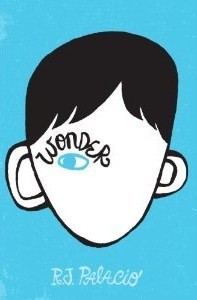
Wonder

by R. J. Palacio

2012 · 315 pages · Summary updated 24 October 2026

Wonder by R. J. Palacio is a novel about August Pullman, a ten-year-old boy with a facial difference who goes to school for the first time in fifth grade. For readers who want the plot, the narrators and the book's lesson on kindness.

Get the book

Links may earn a commission.

The gist

August "Auggie" Pullman was born with a rare condition that changed the shape of his face. He has had 27 surgeries and has always been homeschooled. At ten, his parents send him to fifth grade at Beecher Prep in New York. Some children stare, some are cruel, and a few become real friends. Palacio tells the year through six narrators: Auggie, his sister Via, his friends Summer and Jack, Via's boyfriend Justin and her old friend Miranda. Each voice shows how one boy's difference touches everyone around him. The book's argument fits in the precept a teacher writes on the board: when you can choose between being right and being kind, choose kind.

Key ideas

  1. 01

    Choose kind over being right

    Mr. Browne's first precept says that when you can be right or kind, you should choose kind. Palacio uses it as the book's central rule. Characters are judged by small daily choices: who to sit with at lunch, whether to join a cruel game, whether to speak up. The example is Summer, who sits next to Auggie on the first day for no reason other than kindness, and keeps sitting there when other girls tell her it will cost her friends.

  2. 02

    Every story has more than one narrator

    Palacio gives the year to six narrators: Auggie, Via, Summer, Jack, Justin and Miranda. Each one sees events differently, and each has private worries the others do not know about. The structure teaches empathy by design: the reader has to see the same events from another person's place. The example is Via, who seems like a calm, supportive sister in Auggie's chapters and turns out to feel invisible in her own family.

  3. 03

    Cruelty spreads through groups

    Most of the students at Beecher Prep are not cruel on their own. They stare, avoid touching Auggie, or join a game because others do. Palacio shows that cruelty spreads through crowds, and so does kindness. The example is the Plague, a game where anyone who touches Auggie must wash their hands in thirty seconds. It works only because many children go along with it, not because many children hate him.

  4. 04

    Siblings of a child who needs more also need care

    Via loves her brother, but she has spent her life being the child who did not need attention. When she starts high school, she wants to be known for herself. Palacio treats this as fair, not selfish. The example is her school play: she does not tell her parents about it at first because she wants one thing that is only hers. Her parents learn that loving both children means seeing both children.

  5. 05

    Adults set the rules of a school

    Mr. Tushman and Mr. Browne shape how the school treats Auggie. They pick buddies, set precepts, and take bullying seriously when it comes to light. Julian's parents do the opposite: they defend their son and treat Auggie as the problem. Palacio shows that children often copy the adults around them. The example is the contrast between the principal's patience and the way Julian's parents react.

  6. 06

    An apology must be earned

    At Halloween, Auggie overhears Jack saying cruel things to fit in with Julian. Jack does not know Auggie heard him. When he learns the truth, he punches Julian for insulting Auggie, then apologizes to Auggie. Palacio shows that real repair takes action and admitting fault. The example is Jack accepting suspension rather than taking back his defense of Auggie, which is what makes his apology believable.

  7. 07

    Courage can be ordinary

    At graduation, Auggie wins the Henry Ward Beecher Medal for strength and goodness. He is confused, because he only went to school. Palacio's point is that going to school each day, facing the stares, is itself courage. The retreat shows the same idea in others: Amos, Henry and Miles, former bullies, step in to protect Auggie and Jack from older boys. The example is how the school changes once a few students choose to stand up.

Quotes

“When given the choice between being right or being kind, choose kind.”
Mr. Browne's September precept, quoting Wayne Dyer.

Full summary

Ordinary on the inside

Wonder by R. J. Palacio was published in 2012. It was her first novel. She got the idea when her young son started to cry at the sight of a girl with a facial difference outside an ice cream shop, and Palacio hurried him away. She was ashamed of how she handled the moment and wrote the book that night and over the next months. Wonder became a long-running bestseller, a school reading staple, and a 2017 film with Julia Roberts and Jacob Tremblay. It also started an anti-bullying campaign called Choose Kind.

The book opens with August Pullman, called Auggie, speaking directly to the reader. He knows he is not an ordinary ten-year-old kid. He does ordinary things: he rides his bike, plays Xbox and eats ice cream. But ordinary kids do not make other kids run away screaming in playgrounds. He will not describe his face. Whatever you are thinking, he says, it is probably worse.

Auggie was born with mandibulofacial dysostosis, a rare genetic condition, together with other problems. He has had 27 surgeries. He has trouble hearing and eating, and his face looks very different from other faces. He has always been homeschooled by his mother, Isabel. His father, Nate, makes jokes. His older sister, Olivia, called Via, protects him. The family dog is Daisy.

Part One: August

As fifth grade approaches, Auggie's parents decide he should start at Beecher Prep, a private middle school in North River Heights, in upper Manhattan. Auggie does not want to go. His father thinks it is like sending a lamb to the slaughter, but his mother argues that he is ready.

The principal, Mr. Tushman, invites Auggie to visit before school starts. Three students show him around: Jack Will, a funny boy who seems kind; Julian Albans, who is polite to adults and mean to Auggie; and Charlotte, who talks about herself and her dancing. Julian asks Auggie what is wrong with his face and whether he was in a fire. Jack calls Julian a jerk. Auggie decides to try school.

The first weeks are hard. Children stare and look away. In the hallways, people bump into him on purpose or press against the walls to avoid touching him. Students invent a game called the Plague: anyone who touches Auggie must wash their hands within thirty seconds. Julian leads most of this.

At lunch, Auggie sits alone until Summer Dawson sits down with him. She simply likes him. Jack becomes his friend in class. Auggie's English teacher, Mr. Browne, gives the students a monthly precept, a rule about really important things. The September precept is: when given the choice between being right or being kind, choose kind. The students write their own precepts across the year.

Part Two: Via

The narration switches to Via, who is starting high school. She loves Auggie, but she has always come second. Her parents' attention orbits around her brother, and she learned early not to need much. Her grandmother, who died recently, was the one person who loved Via best.

At her new school, Via does not tell people about Auggie. She likes being known for herself, not as the sister of the boy with the face. Her old best friend, Miranda, has drifted away and now runs with a different crowd. Via makes new friends and meets Justin, a quiet boy who plays the fiddle.

Part Three: Summer

Summer explains why she sits with Auggie. She felt sorry for him at first, but she stays because he is fun. Other girls tell her she would have more friends if she did not hang out with "the freak." They invite her to sit at a popular table if she drops Auggie. She refuses. Summer is one of the few characters who never wavers.

Part Four: Jack

Jack tells his side. Mr. Tushman asked him to be Auggie's welcome buddy, and he did not want to do it. Over time he begins to like Auggie for real: he is funny and smart, and he is the best person in the class to sit next to in a test.

The parts that follow add the voices of Justin, who meets the Pullman family and sees how Via protects her brother, and Miranda, who explains why she drifted away from Via and how much she misses the Pullman family. Palacio uses these voices to show that the story is not only about Auggie. Everyone around him is dealing with their own fear, loneliness or guilt.

What happens between Auggie and Jack around Halloween, how the class splits into sides, and what happens on the fifth-grade nature retreat are the main turns of the year. They are in the spoiler sections below.

Spoilers: Halloween and the war

This section reveals the major turns in the middle of the book.

Halloween is Auggie's favorite holiday because he can wear a mask. He plans to go as Boba Fett from Star Wars, but at the last minute switches to the Bleeding Scream, a ghost costume, so no one recognizes him. In class, hidden under the mask, he hears Jack talking with Julian. Jack says that if he looked like Auggie, he would kill himself, and that he only hangs out with Auggie because Mr. Tushman asked him to.

Auggie is crushed. He goes home sick and refuses to go back. Via talks him into returning. He stops talking to Jack and does not say why. Summer finally tells Jack the clue: the Bleeding Scream. Jack realizes Auggie heard him and is ashamed.

In class, Julian says something cruel about Auggie, and Jack punches him in the mouth. Jack is suspended for two days. Julian's mother tries to have Auggie removed from the school. She even had his face edited out of the class photo. Over winter break, Jack apologizes to Auggie, and they make up.

After the break, the class splits in a war. Julian turns most of the boys against Jack and leaves mean notes in Auggie's and Jack's lockers. Only a few students stay on their side. Slowly the war fades, as more students decide Julian is wrong.

At home, Daisy the dog grows sick and is put to sleep. Via is cast as the understudy for Emily in her school play, Our Town, and does not tell her parents at first, because she does not want Auggie there. On opening night, Miranda, who has the lead role, pretends to be sick so that Via can play Emily in front of her family.

Spoilers: the nature retreat and the ending

This section reveals the ending.

In spring, the fifth grade goes on a three-day nature retreat. On the second night, the students watch a film outdoors. Auggie and Jack walk into the woods to use the bathroom and meet a group of seventh graders from another school. One of them, Eddie, sees Auggie's face and starts to bully him. Amos, Henry and Miles, three boys who were on Julian's side in the war, come to defend Auggie and Jack. They all run, and Auggie loses his hearing aids in the scuffle. The boys treat Auggie as one of them after that. From then on, students at Beecher Prep start to protect him.

Julian does not go on the trip. Mr. Tushman takes the bullying notes seriously, and Julian's parents decide he will not return to Beecher Prep the next year. Palacio later gave Julian his own story in a separate book, The Julian Chapter.

At the end of the year, at the graduation ceremony, Mr. Tushman gives a speech about kindness and quotes J. M. Barrie on being a little kinder than is necessary. He presents the Henry Ward Beecher Medal, given to the student whose strength and goodness have carried others. It goes to Auggie. The whole school stands and cheers. Auggie does not quite understand why he won. He tells his mother that he just went to school. She tells him he is a wonder.

What the critics say

Most reviewers praise the multiple narrators and the book's honesty about cruelty and kindness. Some disability advocates point out that Auggie's story is often used to teach non-disabled children about kindness, which makes his life a lesson for others. Others note that the ending, with its medal and standing ovation, is neater than real life. Palacio has said she wanted to write a story where kindness wins.

Who should read it

Read it if you want a warm, fast novel about difference, friendship and family, or if your child is reading it at school and you want to talk about it. It suits readers aged nine and up and adults who want to remember what middle school felt like.

Do this week

Flashcards

12 cards


Quiz

Question 1 of 5

Why has Auggie never gone to school before fifth grade?

Questions this book answers

What is Wonder by R. J. Palacio about?

Wonder by R. J. Palacio follows August Pullman, a ten-year-old boy with a rare facial difference, through his first year at school in fifth grade. Some children are cruel, and some become loyal friends. The story is told by Auggie, his sister Via, his friends Summer and Jack, and others. The book is about kindness, difference, friendship and family.

What is wrong with Auggie in Wonder?

Auggie was born with mandibulofacial dysostosis, a rare genetic condition that affects the bones of the face, along with other problems. He has had 27 surgeries, wears hearing aids later in the book, and his face looks very different from other children's. Inside, he is an ordinary, funny ten-year-old.

How does Wonder end?

After a hard year, the class bully Julian leaves the school, and students who once avoided Auggie protect him on a nature retreat. At the graduation ceremony, Mr. Tushman gives Auggie the Henry Ward Beecher Medal for strength and goodness. The whole school gives him a standing ovation, and his mother tells him he is a wonder.

What is the theme of Wonder?

The main theme is kindness, summed up in Mr. Browne's precept: choose kind over being right. Other themes are the courage of ordinary days, how cruelty and kindness spread through groups, and how one child's difference affects a whole family. The six narrators show that everyone has a private struggle.

Is Wonder based on a true story?

No. Auggie is a fictional character. R. J. Palacio got the idea when her son cried at the sight of a girl with a facial difference outside an ice cream shop, and she was unhappy with how she handled it. She wrote the novel about what such a child's life might be like.

New books, occasionally

Get new summaries by email.

Free. Double opt-in. Unsubscribe with one click.