
Wonder by R. J. Palacio is a novel about August Pullman, a ten-year-old boy with a facial difference who goes to school for the first time in fifth grade. For readers who want the plot, the narrators and the book's lesson on kindness.
1850 · 272 pages · Summary updated 24 October 2026
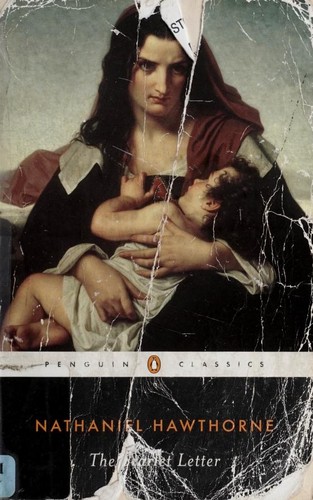
Nathaniel Hawthorne's novel about Hester Prynne, forced to wear a scarlet A for adultery in Puritan Boston, the minister who hides his guilt and the husband who seeks revenge. For readers who want the plot in order and the ideas behind it.
In 1640s Boston, Hester Prynne stands on the scaffold with her baby, Pearl, and a scarlet letter A on her dress for adultery. She refuses to name the father. Her husband, long thought lost at sea, arrives that day and takes a false name, Roger Chillingworth. He swears to find her lover. The lover is the town's beloved young minister, Arthur Dimmesdale, who hides his sin and slowly wastes away from guilt. Chillingworth becomes his doctor and his tormentor. Hester, meanwhile, lives with her shame openly and grows strong. Hawthorne writes about sin, guilt, hypocrisy and the cost of a hidden life.
Hester's sin is known to everyone, and she wears its sign every day. Dimmesdale's sin is the same, but he hides it and is admired as a saint. Over seven years, Hester grows stronger and wiser, while Dimmesdale wastes away. Hawthorne argues that hidden guilt is more destructive than open shame. Hester's punishment is cruel, but it is honest. Dimmesdale's secret eats him from the inside, because he must live a lie every time he preaches.
The A is meant to mark Hester as an adulteress forever. Hester embroiders it in gold thread, making it beautiful. Pearl dresses in scarlet, a living letter. After years of quiet service, the town says the A means Able. The sky shows an A that some read as Angel. Hawthorne shows that symbols do not hold fixed meanings: people give them their meaning, and a person's life can change what a sign of shame stands for.
Roger Chillingworth begins as a wronged husband with a scholar's calm. He decides to find Hester's lover and torment him, not by exposing him, but by staying close as his doctor. Over the years his face darkens and his body twists, and Hester sees that he has become a fiend. Hawthorne suggests that his sin is worse than the lovers'. They sinned in passion; Chillingworth violates, in cold blood, the sanctity of a human heart.
The Puritan magistrates believe that public punishment protects the community and saves the sinner. The women at the prison door want Hester branded or killed. Yet the same society is full of hypocrisy: its best-loved minister is the guilty man, and its leaders enjoy fine embroidery from the woman they shame. Hawthorne, descended from a Salem witch trial judge, presents a community that confuses harshness with virtue and cannot see what lies in its own heart.
Pearl is wild and strange. She is fascinated by her mother's letter, throws flowers at it and refuses to come to Hester in the forest until the letter is back on. She washes off Dimmesdale's kiss because he will not stand with them in daylight. Hawthorne makes her the voice of truth that no adult can silence. She is both the product of the sin and the force that demands it be acknowledged honestly.
Dimmesdale preaches about his own sinfulness in vague words that only increase the congregation's admiration. He cannot speak the plain fact. Hawthorne's moral is direct: be true, and show the world some trait by which your worst may be known. The novel's line about wearing one face to yourself and another to the crowd sums it up. A person who lives a double life ends up unsure which face is real.
On Election Day, after the greatest sermon of his life, Dimmesdale climbs the scaffold with Hester and Pearl and confesses before the whole town. He bares his chest, and Chillingworth cries that he has escaped him. Pearl kisses him at last, and he dies. Hawthorne presents the confession as both his ruin and his salvation. Only the truth, spoken in public at the place of shame, frees him from the man who fed on his secret.
“No man, for any considerable period, can wear one face to himself and another to the multitude, without finally getting bewildered as to which may be the true.”
The Scarlet Letter by Nathaniel Hawthorne came out in 1850 and made him famous. Hawthorne called it a romance, not a novel: a story that allows itself mystery and symbols rather than strict realism. It is set in the Puritan colony of Boston in the 1640s, about two hundred years before Hawthorne wrote. Hawthorne was descended from Puritans; one ancestor, John Hathorne, was a judge in the Salem witch trials, and Hawthorne added a w to his name to separate himself from that past.
The book is short, with twenty-four chapters. It is built around three scenes on the town scaffold, the platform where offenders are publicly shamed: one at the beginning, one in the middle and one at the end. The main themes are sin and guilt, public shame and private hypocrisy, the harshness of Puritan law, and the strength that can come from suffering.
The book opens with a long introduction, The Custom-House. Hawthorne describes his years as surveyor of the customs house in Salem, Massachusetts, and pokes fun at its sleepy old officials. He then claims that in an upstairs room he found a faded piece of red cloth shaped like the letter A, with a manuscript by a former surveyor, Jonathan Pue, telling the story of a woman named Hester Prynne. When he lays the letter on his chest, he feels a burning heat. He says the novel is his version of that story. The frame is fiction, but it lets Hawthorne link the Puritan past to his own town.
A crowd waits outside the Boston prison. The door opens and Hester Prynne walks out with her three-month-old baby. On her dress is a scarlet A, for adultery, beautifully embroidered in gold thread. The women in the crowd say she deserves worse: a brand on her forehead or death. Hester stands on the scaffold for three hours with her head high.
At the edge of the crowd, Hester sees a small, slightly deformed older man in a mix of European and Native American dress. He is her husband. He sent her ahead from Amsterdam to Boston two years before and was held captive by Native Americans on his way. He asks a townsman about her and learns that she will not name the father.
The Reverend John Wilson and the young minister Arthur Dimmesdale, Hester's pastor, urge her to name her partner. Dimmesdale speaks with deep emotion and tells her not to protect the man out of pity, because he may lack the courage to confess on his own. Hester refuses: "I will not speak."
In the prison that night, the stranger visits her as a physician. He calls himself Roger Chillingworth. He admits he was wrong to marry a young woman when he was old and bookish, and he does not seek revenge on her. He will find the man instead. He makes her swear never to reveal that he is her husband.
After her release, Hester could leave the colony, but she stays. She lives in a small cottage at the edge of town, near the sea and the forest. She supports herself and her daughter with fine needlework, which the town buys for its officials' collars, its babies and its dead, but never for a bride's veil. She gives most of her earnings to the poor, who often insult her. She keeps her hair under a cap and dresses plainly. The letter isolates her, and she feels it gives her a strange sense of other people's hidden sins.
Hester names her daughter Pearl, because she was bought at great price. Pearl is beautiful, wild and clever, and dressed by her mother in bright red, like a living scarlet letter. The town children shun her. Pearl is fascinated by the A and throws flowers at it. Hester sometimes wonders if her child is a demon.
The town leaders consider taking Pearl from Hester to give her a proper Christian upbringing. Hester goes to the mansion of Governor Bellingham to plead. When an old minister questions Pearl, she claims that her mother plucked her from the wild rose bush by the prison door. Hester begs Dimmesdale to speak for her. He argues, trembling, that God gave Hester the child as both a blessing and a punishment, to keep her soul alive. The governor lets her keep Pearl.
Dimmesdale's health is failing. He is pale and thin and often presses his hand over his heart. His congregation thinks he is too holy for this world, and they love him more for his suffering and his powerful sermons.
Chillingworth, now known as a skilled doctor, becomes Dimmesdale's medical adviser. The two men move into the same house. Hawthorne calls Chillingworth a leech, the old word for a doctor and also for a bloodsucker. He studies his patient closely and suspects that his illness comes from a hidden sin. One day, while Dimmesdale sleeps, Chillingworth opens his shirt and sees something on his chest. He reacts with wild joy. Hawthorne compares it to Satan's joy at winning a soul.
Dimmesdale knows nothing of Chillingworth's identity, but he feels uneasy around him. In secret, he whips himself with a scourge, fasts and stays awake all night staring into a mirror. He tries many times to confess from the pulpit. Each time he calls himself the worst of sinners, and each time the congregation admires his humility more.
One night in May, Dimmesdale climbs the scaffold alone in the dark and cries out. No one wakes. Hester and Pearl pass on their way from the deathbed of Governor Winthrop, and he calls them up. Holding hands with them, he feels new life rush through him. Pearl asks him to stand with them there tomorrow at noon. He says he will, but on the great judgment day, not before.
A meteor lights the sky. Dimmesdale sees in it a huge letter A. Pearl points to Chillingworth, standing nearby, watching. The next morning, the church sexton tells Dimmesdale that others saw an A in the sky and took it to mean Angel, for the governor who died that night.
Seven years have passed since the first scaffold scene. Hester's patience and charity during an epidemic have changed the town's view of her. Many people now say the A stands for Able. She has become a thoughtful, independent woman who quietly questions the rules of her society.
Shocked by Dimmesdale's state, Hester decides to break her promise to Chillingworth. She first confronts the old man on the beach. He has changed from a scholar into something like a fiend, living only to torment his victim. She tells him she will reveal his identity.
Hester meets Dimmesdale in the forest while Pearl plays by a brook. She tells him that Chillingworth is her husband. Dimmesdale is horrified and then forgives her. She urges him to leave with her for Europe, where they can live as a family. He agrees. A ship is in the harbor. Hester takes off the scarlet letter and throws it away, then removes her cap and lets down her hair. Sunshine floods the forest.
Pearl will not cross the brook to them. She stamps her foot and screams, pointing at her mother's bare chest, until Hester puts the letter back on. When Dimmesdale kisses Pearl's forehead, she runs to the brook and washes the kiss away.
On his way back to town, Dimmesdale feels wild urges to shock his parishioners with wicked words. He returns home and writes a new sermon with great energy.
This section reveals the ending.
It is Election Day, a public holiday when a new governor takes office and Dimmesdale is to give the Election Sermon. In the marketplace, the captain of the ship tells Hester that Chillingworth has booked passage on the same ship. There is no escape.
Dimmesdale gives the finest sermon of his life, and the crowd thinks him close to an angel. As the procession leaves the church, he stops at the scaffold. He calls Hester and Pearl to him. Chillingworth rushes up to stop him, and Dimmesdale says that only on this spot can he escape him. Leaning on Hester, he climbs the scaffold before the whole town. He declares that he is the man who should have stood there seven years ago. He tears open his ministerial band and shows his chest. The crowd gasps. Chillingworth says, "Thou hast escaped me!" Dimmesdale asks Pearl for a kiss, and this time she gives it. Her tears fall on his cheek, and Hawthorne says a spell is broken. Dimmesdale dies.
People later disagree about what they saw. Some say there was a scarlet letter in his flesh, made by self-punishment, by Chillingworth's drugs or by remorse. Others say they saw nothing and that his confession was a parable about everyone's hidden sin. Hawthorne leaves the choice to the reader, and gives the moral: be true, and show the world some sign by which your worst may be inferred.
Within a year Chillingworth withers and dies. He leaves his large fortune to Pearl. Hester and Pearl leave Boston. Years later Hester returns alone and takes up the scarlet letter again by her own choice. Women come to her for comfort and counsel, and she tells them of a future time when men and women will relate on a surer ground of happiness. Pearl, it seems, has married in Europe and is happy; letters arrive with noble seals. When Hester dies, she is buried near Dimmesdale under one tombstone. Its only mark is a heraldic line: on a field, sable, the letter A, gules, a red A on a black ground.
The book was praised at once as one of the first great American novels, though some reviewers attacked it as immoral for its sympathy with an adulteress. Critics debate whether Hawthorne condemns or admires Hester's independence, since he describes her radical thoughts and then has her accept the letter at the end. Some readers find the symbolism heavy, and Pearl more of a symbol than a child. The Custom-House introduction cost Hawthorne friends in Salem.
Read it if you want a short, dense novel about guilt and hypocrisy, or if you are studying it and need the three scaffold scenes in order. It suits anyone who has kept a secret too long.
12 cards
Question 1 of 5
Why does Hester refuse to name Pearl's father on the scaffold?
On Election Day, Dimmesdale climbs the scaffold with Hester and Pearl, confesses before the town and bares his chest, then dies. Chillingworth dies within a year and leaves his fortune to Pearl. Hester and Pearl leave, but Hester later returns, wears the A by choice and counsels women. She is buried beside Dimmesdale under one stone.
Wonder by R. J. Palacio is a novel about August Pullman, a ten-year-old boy with a facial difference who goes to school for the first time in fifth grade. For readers who want the plot, the narrators and the book's lesson on kindness.

Ugly Love is Colleen Hoover's romance about Tate Collins, a nursing student who agrees to a no-strings affair with a guarded airline pilot, Miles Archer, whose past is a closed door. For readers who want a steamy, emotional love story with a heartbreaking backstory.
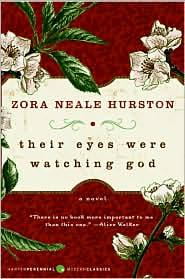
Zora Neale Hurston's novel about Janie Crawford, a Black woman in early 1900s Florida who moves through three marriages in search of real love and her own voice. For readers who want the plot, the themes and the meaning of the title.

The Wife Upstairs is Rachel Hawkins's 2021 thriller that retells Jane Eyre in a wealthy Alabama suburb, where a broke dog walker falls for a widower whose wife vanished on a lake. For readers who like twisty domestic suspense.
More in Fiction →More in Psychology →More in Society and history →
New books, occasionally