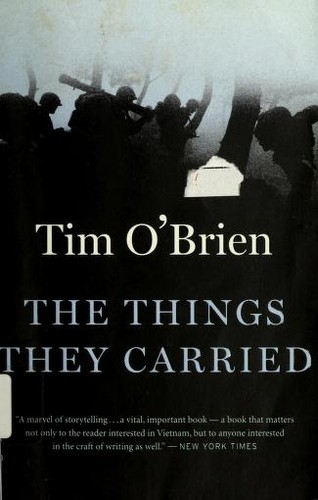
Tim O'Brien's linked stories about a platoon of American soldiers in Vietnam, told by a narrator named Tim O'Brien who keeps asking what a true war story is. For readers who want the stories in order and what the book says about memory and truth.
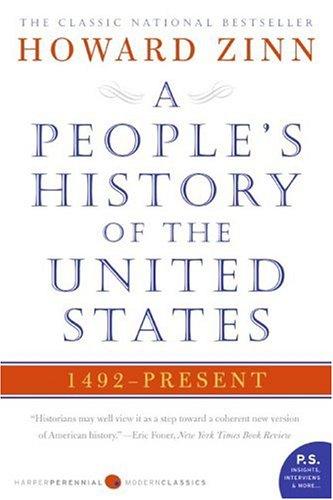
by Howard Zinn
1980 · 729 pages · Summary updated 24 October 2026
A People's History of the United States by Howard Zinn retells American history from Columbus to the present through the eyes of Native Americans, enslaved people, workers, women and protesters. A best-selling, much debated alternative to the standard textbook.
Howard Zinn argues that standard history books tell America's story from the side of presidents, generals and business leaders. He retells it from the side of those they ruled: the Arawaks Columbus enslaved, enslaved Africans, indentured servants, factory workers, women, Native nations, soldiers and protesters. In his account, American elites keep power by dividing poor people by race and by granting just enough reform to prevent revolt. Real progress comes from below, through strikes, rebellions and movements. Zinn openly takes sides. Historians have praised his focus on ordinary people and criticized his one-sided judgments.
Zinn argues that every historian chooses what to include, and that the choices serve some interest. Standard textbooks present the nation as one family with shared interests. Zinn says this hides real conflicts between rich and poor, men and women, and white and nonwhite people. He chooses openly to tell the story from the side of the conquered, the enslaved and the working poor. He does not claim neutrality.
The book opens with Columbus's arrival in the Caribbean. Using Columbus's journals and the writings of Bartolomé de las Casas, Zinn describes how the Spanish enslaved the Arawaks and forced them to mine gold. Many died from violence, overwork and disease. Zinn argues that textbooks celebrate the voyage while hiding its cost. The chapter sets the method for the whole book: look at events from the side of those who paid for them.
In Bacon's Rebellion of 1676, poor white and Black servants rose together in Virginia. Zinn argues that colonial elites responded by drawing a firm legal line between white servants and Black slaves. Poor whites got small privileges and learned to see themselves as superior. The idea, which recurs throughout the book, is that racism helped the rich prevent poor people of different races from joining forces.
Zinn sees the Revolution as a way for colonial leaders to direct popular anger toward England and away from themselves. Following Charles Beard, he argues that the Constitution protected property owners, creditors and slaveholders. He points to Shays' Rebellion, an uprising of indebted farmers, as a reason elites wanted a strong central government. This is one of the book's most debated arguments.
Zinn argues that change in America comes from pressure by ordinary people, not from the goodwill of leaders. The end of slavery, labor rights, women's suffrage, civil rights and the end of the Vietnam War all followed strikes, rebellions and mass movements. Leaders granted reforms to calm unrest. The lesson he draws is that citizens should organize, because waiting for those in power rarely brings change.
Zinn questions even the wars most Americans see as just. He presents the war in the Philippines as a brutal conquest and World War I as a war many opposed and some were jailed for opposing. On World War II, he points to Japanese American internment and the bombing of civilian cities. As a former bombardier, he argues that a good cause does not excuse every method used to win.
Near the end, Zinn says the middle class acts as a buffer between the rich and the poor. Teachers, police, soldiers and office workers keep the system running in exchange for modest security. He hopes these "guards" will realize their interests lie with the poor and will join them in demanding change. It is the book's closing hope: that a majority, once united, could reshape the country.
A People's History of the United States by Howard Zinn, first published in 1980, is a one-volume history of America told from the point of view of ordinary and oppressed people. It runs from Columbus's arrival in 1492 to the present, and later editions extend it to the 2000s. It has sold millions of copies and is widely used in high schools and colleges, often as a counterweight to standard textbooks.
Zinn was a historian and an activist in the civil rights and antiwar movements. He taught at Spelman College, a Black women's college in Atlanta, until it fired him in 1963 after he supported student protests, and then at Boston University. He had flown as a bombardier in World War II, and his doubts about that war shaped his view of history.
In the first chapter, Zinn states his method openly. All history involves choosing what to include, he says, and every choice serves some interest. Standard histories tell the story of nations as if everyone in them shared the same interests. Zinn argues that this hides deep conflicts between rulers and ruled, rich and poor, men and women, and white and nonwhite people. He chooses to tell the story of the discovery of America from the viewpoint of the Arawaks, the Constitution from the viewpoint of slaves, and the Civil War from the viewpoint of Irish workers in New York. He does not claim to be neutral. The 25 chapters of the latest editions run in time order, and many take their titles from the voices of the period, such as "Tyranny Is Tyranny," "War Is the Health of the State" and "Or Does It Explode?"
The book opens with Columbus and the Arawaks of the Bahamas and Hispaniola. Zinn uses Columbus's own journals and the writings of the priest Bartolomé de las Casas to describe how the Spanish enslaved the native people, forced them to search for gold and killed many who resisted. Within decades, much of the native population had died from violence, forced labor and disease. Zinn argues that textbooks celebrate Columbus as a hero while mentioning this cost in a line, if at all.
He then turns to the English colonies. He describes the wars against the Powhatan and the Pequot. He traces how slavery grew in Virginia and how a firm color line between Black and white servants was drawn by law. In Bacon's Rebellion of 1676, poor white and Black servants joined in an uprising in Virginia. Zinn argues that colonial elites then worked to divide poor whites from enslaved Black people, giving whites small privileges so they would side with the rich. This idea, that elites divide the poor by race to prevent joint revolt, runs through the whole book.
Zinn sees the American Revolution as a conflict in which colonial leaders turned popular anger against England, and away from themselves. Many poor colonists were already rioting against local elites. By leading the fight for independence, Zinn argues, the founders kept control of a restless population. He notes that the Declaration of Independence's promise that all men are created equal left out women, enslaved people and Native Americans. He also describes mutinies by unpaid soldiers of the Pennsylvania and New Jersey lines, which the army put down.
He draws on the historian Charles Beard to argue that the Constitution protected the interests of property owners, creditors and slaveholders. Women, enslaved people, Native Americans and men without property had no voice in making it. He describes Shays' Rebellion, an uprising of indebted farmers in Massachusetts, as a key reason the elites wanted a stronger central government.
Zinn describes Indian removal under Andrew Jackson, including the forced march of the Cherokee on the Trail of Tears. He describes the Mexican War of 1846 as a war of conquest that many soldiers and citizens opposed. He gives space to women's lives in the 19th century: their legal limits, their work in the textile mills of Lowell, and the rise of the women's rights movement at Seneca Falls.
On slavery, he stresses the resistance of enslaved people: escapes, revolts such as Nat Turner's, and the Underground Railroad. He argues that the federal government ended slavery for its own reasons, under pressure. He cites Lincoln's 1862 letter to the editor Horace Greeley, which says his main goal is to save the Union, with or without freeing the slaves. In Zinn's account, emancipation came from military need and from the resistance of enslaved people, and the government then abandoned Black Southerners after Reconstruction. The result was a new system of control through sharecropping, Jim Crow laws and terror.
A large part of the book covers class conflict. Zinn describes the rise of the industrial robber barons and the government's support for them through land grants, tariffs and troops. He tells the story of the great strikes and labor struggles: the railroad strike of 1877, the Haymarket affair, the Homestead and Pullman strikes, the Lawrence textile strike and the Ludlow massacre in Colorado. He gives attention to the Socialist movement of Eugene Debs and to the Industrial Workers of the World.
He argues that the reforms of the Progressive Era and the New Deal were real gains, but that they came from pressure from below, and that they also served to save the system from deeper change. In the Great Depression, he describes hunger marches, rent strikes, the sit-down strikes in the auto plants and the Bonus Army of veterans driven out of Washington by troops. The New Deal, in his view, gave relief and recognized unions in order to calm this unrest, while leaving the basic distribution of wealth in place.
Zinn is critical of American wars. He presents the Spanish American War and the brutal war in the Philippines as the start of an overseas empire. He describes opposition to World War I and the jailing of critics under the Espionage Act. He calls World War II a "people's war" in the minds of most Americans, then questions it. He points to the internment of Japanese Americans, segregation in the armed forces and the bombing of civilians in Dresden, Tokyo, Hiroshima and Nagasaki. Drawing on his own experience as a bombardier, he argues that even a war against fascism used methods that should be judged. He describes a raid he flew in April 1945, weeks before the war in Europe ended, in which American planes dropped napalm on the French town of Royan.
He treats the Vietnam War as a failure of American power and a victory for the movement against it. He describes the massacre at My Lai, the bombing of Cambodia and the government's own secret history of the war in the Pentagon Papers. He gives the antiwar movement, including soldiers and veterans who turned against the war, a central place. In his account, the war ended because the Vietnamese would not give up and because opposition at home made it too costly to continue.
The later chapters cover the civil rights movement, the women's movement, the American Indian Movement, prison protests and the gay rights movement. Zinn argues that each won change through protest, not through the goodwill of leaders. He tells the civil rights story through local people as much as through national leaders: the students at the Greensboro lunch counter, the Freedom Riders, and the organizers of SNCC who risked their lives to register voters in Mississippi. He notes that the federal government often moved only when violence made headlines. On the 1970s, Zinn argues that the system protected itself during Watergate. Removing President Nixon let the country believe the problem was one bad man, while the congressional hearings on illegal FBI and CIA operations led to little lasting change. He then describes the decades after the 1970s as a bipartisan consensus, in which both parties served corporate interests and military power. A chapter on "unreported resistance" lists the protests of those years that the national press gave little attention.
Near the end, he describes what he calls the revolt of the guards. The middle class, he argues, acts as a buffer between the rich and the poor. Teachers, police, soldiers and office workers are paid to keep the system running. Zinn hopes these guards will see that their interests lie with the poor and will join them. Later editions add chapters on the Clinton years, the 2000 election and the "war on terrorism."
The book has been both influential and sharply criticized. Many readers and teachers credit it with bringing Native Americans, enslaved people, women and workers into the story. Many historians, including some on the left such as Michael Kazin, argue that it reduces American history to a simple story of elites oppressing everyone else. Critics say it leaves out evidence that does not fit, gives little sense of how ordinary people also supported the system, and judges the past without enough context. The education scholar Sam Wineburg criticized its certainty and its handling of sources. Zinn replied that standard textbooks are biased too, and that he was simply open about his own point of view. The book has also been the target of political efforts to keep it out of schools. In 2013, emails showed that Indiana governor Mitch Daniels had asked in 2010 that the book not be used in the state's classrooms.
Read it if you want to hear the voices standard textbooks leave out, and if you are ready to argue with what you read. Pair it with a conventional survey or a critical review to see how historians weigh the evidence.
11 cards
Question 1 of 5
From whose viewpoint does Zinn tell Columbus's arrival?
Tim O'Brien's linked stories about a platoon of American soldiers in Vietnam, told by a narrator named Tim O'Brien who keeps asking what a true war story is. For readers who want the stories in order and what the book says about memory and truth.
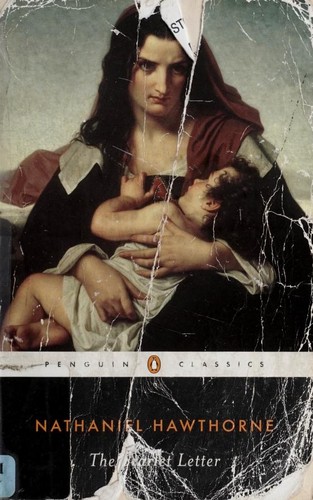
Nathaniel Hawthorne's novel about Hester Prynne, forced to wear a scarlet A for adultery in Puritan Boston, the minister who hides his guilt and the husband who seeks revenge. For readers who want the plot in order and the ideas behind it.
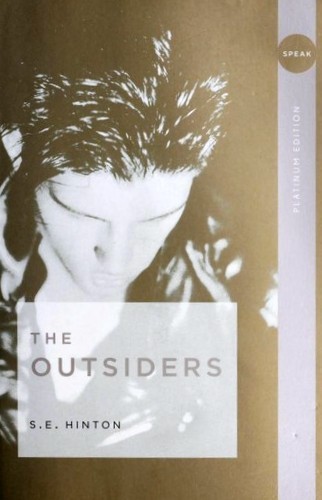
S. E. Hinton's novel about Ponyboy Curtis, a fourteen-year-old greaser in 1960s Oklahoma, and the night a fight with rich kids ends in a death. For readers who want the plot, the characters and the meaning of "stay gold."
Gabor Maté's The Myth of Normal argues that much of what we call normal in modern life makes people sick, linking trauma, stress and illness. For readers who want to understand how early experience and culture shape health.
New books, occasionally