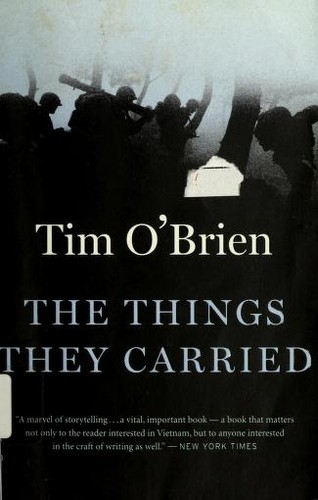
Tim O'Brien's linked stories about a platoon of American soldiers in Vietnam, told by a narrator named Tim O'Brien who keeps asking what a true war story is. For readers who want the stories in order and what the book says about memory and truth.
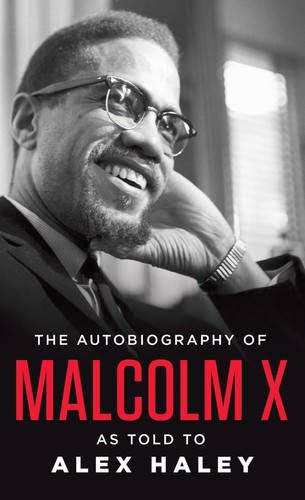
by Malcolm X with Alex Haley
1965 · 460 pages · Summary updated 24 October 2026
The Autobiography of Malcolm X, told to Alex Haley, follows Malcolm X from a broken childhood and a criminal youth to prison, the Nation of Islam, Mecca and his murder in 1965. For readers of American history, race and personal change.
Malcolm Little grows up in Michigan after white racists, he believes, kill his father and the state breaks up his family. As a young man he becomes "Detroit Red," a hustler in Boston and Harlem, and goes to prison for burglary at twenty. In prison he teaches himself to read deeply and joins the Nation of Islam. As Malcolm X he becomes its most powerful minister and preaches that white people are devils. He breaks with Elijah Muhammad, makes the pilgrimage to Mecca and rejects racial hatred. He is shot dead in 1965. Alex Haley's epilogue tells how the book was made.
The book follows Malcolm through a series of names: Malcolm Little, Detroit Red, Satan, Malcolm X and El-Hajj Malik El-Shabazz. Each name marks a new identity and a new set of beliefs. He drops "Little" because he sees it as a slaveowner's name, and the X stands for his lost African name. The structure shows that a person can change completely, more than once, and that each change grows out of the one before.
Malcolm traces his anger to his childhood. White racists threaten his family, their house burns and his father dies in what the family believes is a murder. The state breaks up the family and commits his mother to a hospital. A teacher tells him a Black boy cannot be a lawyer. He argues that these were not private misfortunes. They came from a system that limited what Black people could become.
In prison, Malcolm copies a whole dictionary by hand so he can read and write well. He then reads history, religion and philosophy for hours each night. He says prison gave him the time to study that college would have. The idea is that self-education can transform a person anywhere. For Malcolm, knowledge of history also gave him the words to explain his own life.
As a teenager in Boston, Malcolm gets a conk, a chemical treatment that burns the scalp to straighten Black hair. He later calls it his first real step toward self-degradation. He argues that Black people who try to look white have absorbed the idea that they are inferior. The conk stands for a wider point: oppression works best when its victims believe it.
The Nation of Islam gives Malcolm discipline: no drugs, no pork, no smoking, and strict rules about work and family. It also gives him an explanation for the racism he has lived through. He commits himself fully and builds the Nation into a national force. The book shows how a clear belief system can rescue a person, and also how total devotion can blind him to a leader's faults.
On the hajj in 1964, Malcolm prays and eats beside Muslims of every color. He writes home that this experience forces him to rethink his belief that all white people are evil. He now blames racist attitudes and the American system, not skin color. He takes the name El-Hajj Malik El-Shabazz. The lesson is that new experience can overturn beliefs held with total conviction.
After leaving the Nation, Malcolm says the Black struggle in America is a matter of human rights, not only civil rights. Civil rights depend on the goodwill of the American government. Human rights belong to everyone and can be raised before the world, at the United Nations. He links Black Americans to newly independent nations in Africa. He still defends the right to self-defense.
Haley's epilogue shows that the book is a collaboration. Malcolm talked, Haley wrote, and Malcolm approved the text. Historians such as Manning Marable later argue that Malcolm exaggerated his criminal past and that Haley shaped the story. The book is still a key source. But it is Malcolm's account of himself, told near the end of his life, for readers he wanted to persuade.
“I knew right there in prison that reading had changed forever the course of my life.”
The Autobiography of Malcolm X is the life story of Malcolm X, told in his own voice to the journalist Alex Haley. It covers his childhood in the Midwest, his years as a street hustler, his prison conversion, his rise in the Nation of Islam and his final year as an independent leader. Grove Press published it in late 1965, months after he was shot dead in New York. Doubleday had signed the book but dropped it after the murder. The book became one of the most read accounts of Black life in America.
Haley first interviewed Malcolm X for magazine articles, including a 1963 interview for Playboy. They agreed to write a book together. From 1963 to early 1965, Haley held more than 50 long interviews with him, often late at night. Haley then shaped the talk into chapters in the first person. Their agreement said that nothing could go into the book that Malcolm had not said, and nothing he wanted in could be left out. Haley kept the right to write an epilogue that Malcolm would not review.
The book has 19 chapters plus the epilogue. The chapter titles track the stages of his life, from "Nightmare" and "Mascot" through "Detroit Red," "Satan" and "Saved" to "Mecca" and "1965." Each stage also has a different name: Malcolm Little, Detroit Red, Satan in prison, Malcolm X, and finally El-Hajj Malik El-Shabazz. Each name marks a new self.
Malcolm Little is born in Omaha, Nebraska, in 1925. The book opens before his birth, when Ku Klux Klan riders surround the family home and threaten his pregnant mother. His father, Earl Little, is a Baptist preacher and an organizer for Marcus Garvey's movement, which urges Black people to build their own institutions and look to Africa. In Lansing, Michigan, the family house burns down. When Malcolm is six, his father dies under a streetcar. The family believes a white supremacist group, the Black Legion, killed him. The police call it an accident.
His mother, Louise, raises the children alone. Welfare workers visit often, and Malcolm says they treat the family as property. Under the strain, his mother breaks down. The state commits her to the mental hospital at Kalamazoo, and the children go to different homes. Malcolm says the state destroyed his family.
He lives in a detention home in Mason, Michigan, run by a white couple who are kind to him but talk about Black people in front of him as if he cannot hear. He calls himself their mascot. He is one of the best students in his junior high and is elected class president. Then a white English teacher asks him what he wants to be. He says a lawyer. The teacher tells him that is not a realistic goal for a Black boy and suggests carpentry. Malcolm says this moment changed him. He begins to pull away from white people.
At about fifteen he moves to Boston to live with his half sister Ella. In the Roxbury neighborhood he meets a friend called Shorty, shines shoes at the Roseland Ballroom, buys a zoot suit and gets his first conk, a painful chemical treatment to straighten his hair. He later calls the conk his first big step toward self-degradation, because it shows Black people trying to look white. He drops a young woman named Laura for Sophia, a white woman, and he later blames himself for the hard life Laura falls into.
A job selling sandwiches on the trains takes him to New York. He moves to Harlem, works as a waiter at Small's Paradise and loses the job for offering to find a woman for a soldier. He then becomes Detroit Red, a hustler. He sells marijuana, runs numbers, steers customers to illegal businesses and uses drugs. He carries a gun. When the army calls him up during World War II, he acts disturbed for the army psychiatrist and is rejected. He describes the street life in detail: the clubs, the con games and the constant fear of the police and rival criminals. A dispute over a bet with a numbers man called West Indian Archie puts his life in danger, and Shorty brings him back to Boston.
There he leads a small burglary ring with Shorty, Sophia, her sister and another man. In 1946 he is caught when he returns to a jeweler to collect a stolen watch he had left for repair. He gets a sentence of 8 to 10 years. He believes the sentence is harsh because he had been with white women.
In prison, the other inmates call him Satan because he curses God and the Bible. An older inmate named Bimbi impresses him by speaking with authority on any subject, based on reading. Malcolm decides to learn.
His brothers write to him. Philbert says he has found the natural religion for the Black man. Then Reginald writes and tells him to stop eating pork and smoking, and promises to show him how to get out of prison. Reginald visits and tells him about the Nation of Islam and its leader, Elijah Muhammad. The Nation teaches that the white man is the devil and that Black people must separate, live clean and build their own economy. To Malcolm, this explains everything he has seen, from his father's death to his own life in crime.
He writes to Elijah Muhammad every day. He also wants to write better, so at the Norfolk Prison Colony, which has a large library, he copies an entire dictionary by hand, page by page. He reads history, philosophy and religion late into the night, by the light from the corridor. He joins the prison debate team and learns to argue a case in front of a crowd. He says that in prison he could study for many more hours a day than a college student.
The Nation's teachings include a myth about the origin of the white race, created, it says, by an evil scientist named Yacub. Malcolm accepts it fully at the time. Looking back, he presents these beliefs as what he believed then, not what he believes at the end of the book. This is one of the book's main features: the narrator knows more than the man he describes, and he lets the reader see both. When Reginald is later suspended from the Nation for breaking its moral rules, Malcolm turns his back on his brother.
Malcolm leaves prison in 1952 and goes to Detroit. He drops his last name, Little, which he sees as a name forced on his family by a slaveowner, and becomes Malcolm X. The X stands for the unknown African name his ancestors lost.
He works for the Nation full time and soon becomes a minister. He opens new temples in Boston, Philadelphia and other cities, and in 1954 he takes over Temple Number Seven in Harlem. Membership grows quickly. He also starts the Nation's newspaper, Muhammad Speaks. He describes the Nation's appeal to poor Black men like the one he had been: it offers discipline, dignity and an explanation for their suffering. In 1957, after police beat a Nation member in Harlem, Malcolm leads an orderly crowd of followers to the police station and demands medical care for him. The display of discipline makes him a figure of power in Harlem. In 1958 he marries Betty Shabazz, a nurse and Nation member.
He becomes famous in 1959, when a television documentary about the Nation, The Hate That Hate Produced, shocks white viewers. Reporters seek him out. He tells them that white America is guilty of crimes against Black people. He mocks the civil rights movement's goal of integration and its use of nonviolence. He says Black people have the right to defend themselves. He debates on radio, on television and at universities. He rejects the charge that he teaches hate and says he is only describing the hate that white America has shown Black people.
In the chapter "Icarus," he speaks at Harvard Law School and sees from the window the area where his burglary ring once hid. He thinks of the Greek myth of the boy whose wings melt when he flies too high, and he reminds himself never to forget who gave him his wings. He gives the Nation all his energy and lives modestly. But his fame grows larger than any other minister's, and he senses jealousy inside the Nation's leadership.
Two events end his time in the Nation. First, he learns that Elijah Muhammad has fathered children with young secretaries. He confirms it with Muhammad's son Wallace and with the women, and Muhammad himself compares his conduct to that of biblical prophets. This crushes Malcolm, because he had preached strict moral rules in Muhammad's name. Second, after President Kennedy is killed in 1963, Malcolm says publicly that it is a case of the "chickens coming home to roost." Elijah Muhammad silences him for 90 days. Malcolm comes to believe the Nation intends to kill him. In March 1964 he leaves and forms his own religious group, the Muslim Mosque, Inc., and later the secular Organization of Afro-American Unity.
His half sister Ella lends him the money for the hajj, the pilgrimage to Mecca, in April 1964. In Jedda, officials hold him until they can confirm he is a Muslim. He calls a Saudi contact, Dr. Omar Azzam, whose family gives him their hotel suite, and Prince Faisal makes him a guest of the state. In Mecca he prays and eats beside Muslims of every color, including people with blue eyes and blond hair. He writes letters home saying that this experience has made him rethink his views on race. He now says that racism comes from attitudes and from the American system, not from skin color. He takes the name El-Hajj Malik El-Shabazz.
He travels in Africa and the Middle East, meets heads of state such as Kwame Nkrumah in Ghana and speaks to students and officials who see American racism as a world issue. He starts to frame the Black struggle as a fight for human rights that belongs before the United Nations, not only a fight for civil rights inside the United States.
He does not become a supporter of nonviolence or integration. He still says Black people must defend themselves and control their own communities. But he now says he will work with anyone, of any race, who truly wants to end racism.
The final chapter, "1965," shows a man who expects to die. He says he lives like a man who is already dead, and he does not expect to live to read the finished book. In February 1965 his family's house in Queens is firebombed.
In the epilogue, Haley tells how the book was made. At first Malcolm is suspicious and talks only about Elijah Muhammad. The breakthrough comes when Haley asks about his mother. Malcolm then talks for hours. Haley also describes Malcolm's habit of writing notes on paper napkins, which Haley collects. After the break with the Nation, Malcolm marks up the early chapters that praise Elijah Muhammad. Haley persuades him to leave them as they are, so readers can follow his change as it happened.
On February 21, 1965, Malcolm X is shot dead as he starts to speak at the Audubon Ballroom in Manhattan. His wife and daughters are in the room. He is 39. Three members of the Nation of Islam are convicted of the murder. Later editions add an afterword by the actor Ossie Davis, who gave the eulogy at his funeral.
The book's accuracy has been debated for decades. Historian Manning Marable, in Malcolm X: A Life of Reinvention (2011), argues that the autobiography is partly a constructed story. He says Malcolm exaggerated his criminal past to make his redemption more dramatic. He also says Haley, whose politics were more moderate, shaped the text, cut negative statements about Jews without Malcolm's consent, and left out chapters Malcolm had prepared, such as one titled "The Negro." Marable's biography won the 2012 Pulitzer Prize for History. Some other scholars dispute parts of his account, and the earlier biographer Bruce Perry had also questioned details such as the story of the house fire. Most historians still treat the book as a key source, but read it as Malcolm's own version of his life, told for a purpose.
The account of the murder has also changed. In 2021, after a review found that the FBI and the New York police had withheld evidence, a Manhattan court threw out the convictions of two of the three men, Muhammad Aziz and Khalil Islam. The third man, who confessed, had long said they were innocent.
Read it if you want to understand American race relations in the 20th century from one of its most important voices. It also suits anyone interested in how a person can remake himself more than once, and in how memoir shapes a life story.
12 cards
Question 1 of 5
Where was Malcolm X born?
Tim O'Brien's linked stories about a platoon of American soldiers in Vietnam, told by a narrator named Tim O'Brien who keeps asking what a true war story is. For readers who want the stories in order and what the book says about memory and truth.
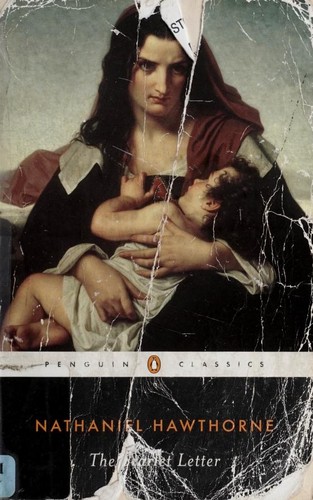
Nathaniel Hawthorne's novel about Hester Prynne, forced to wear a scarlet A for adultery in Puritan Boston, the minister who hides his guilt and the husband who seeks revenge. For readers who want the plot in order and the ideas behind it.

S. E. Hinton's novel about Ponyboy Curtis, a fourteen-year-old greaser in 1960s Oklahoma, and the night a fight with rich kids ends in a death. For readers who want the plot, the characters and the meaning of "stay gold."
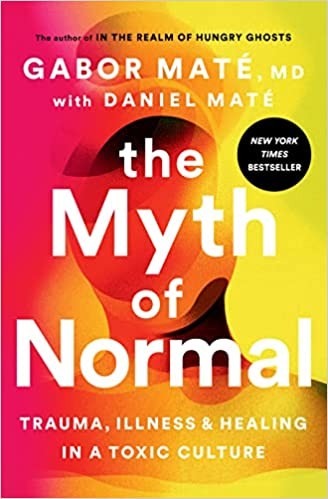
Gabor Maté's The Myth of Normal argues that much of what we call normal in modern life makes people sick, linking trauma, stress and illness. For readers who want to understand how early experience and culture shape health.
New books, occasionally