
Former Google, Facebook and Twitter insiders explain how social media is built to hold attention, mixed with a scripted family drama. For anyone who wants to understand the attention economy.
Docuseries
Directed by Tim Lambert and Cassian Harrison
2005 · 3 episodes · 2 h 45 min · Summary updated 3 November 2026
Featuring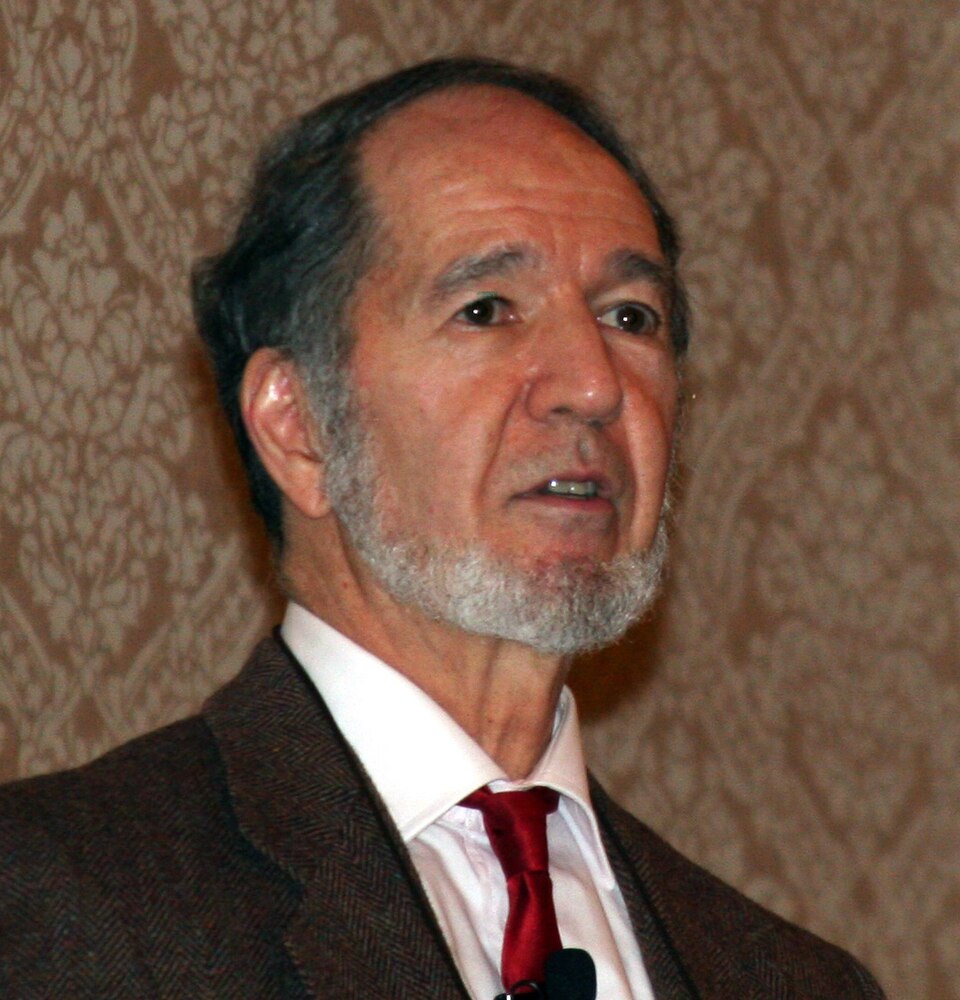 Jared Diamond
A three-part National Geographic docuseries in which Jared Diamond argues that geography, not people, explains why Europeans conquered so much of the world. For anyone curious about the roots of global inequality.
In Guns, Germs and Steel, Jared Diamond sets out to answer a question a New Guinean man named Yali asked him decades earlier: why do some peoples have so much more than others? His answer is geography. Eurasia started with most of the plants and large animals that can be domesticated, and its east-west shape let crops and ideas spread. Farming created surpluses, and surpluses created steel, writing, states and, through livestock, deadly germs. Those advantages let a small Spanish force defeat the Inca. In tropical Africa the pattern broke down, but colonial exploitation still left the region poor. Diamond ends by arguing that geography explains inequality but need not decide the future.
The series starts with Yali's question: why did Europeans end up with so much "cargo" while New Guineans had so little? Diamond rejects any answer based on race or intelligence. From his years in New Guinea, he argues that people everywhere are fundamentally similar in intelligence and resourcefulness. The difference, in his view, lies in the plants, animals and landscapes each society started with. The rest of the series tries to show how those starting conditions grew into the gap between conquerors and conquered.
About 13,000 years ago, all humans lived by hunting and gathering. The series argues that farming changed everything, and that it began first in the Fertile Crescent. Farming produced food surpluses. Surpluses let some people stop farming and become metalworkers, scribes, soldiers and rulers. In Diamond's account, the regions that farmed early and well built the first cities and states. Regions that never gained a strong farming package, such as highland New Guinea, stayed with small communities and hand tools.
Diamond argues that only a small number of wild plants and large animals can be domesticated at all, and that they were spread very unevenly. In the documentary's account, Eurasia had most of the useful grains and almost all of the large animals that can be tamed, including the horse, cow and sheep. The Americas had the llama, and New Guinea had pigs and taro. Without an animal to pull a plow or carry loads, the series argues, farmers stay trapped in manual labor.
Eurasia stretches east to west, so places on the same latitude share similar seasons and climates. The series argues that this let crops, animals and inventions such as gunpowder move across the continent with relative ease. The Americas and Africa run north to south, through very different climates. In episode two, this is why the Inca had never heard of the Aztecs. In episode three, it is why European crops and animals failed when settlers in southern Africa moved north into the tropics.
Diamond calls disease the "lethal gift of livestock." Living close to farm animals for thousands of years exposed Eurasians to diseases such as smallpox, and survivors passed on some immunity. Native Americans had few domestic animals and no such exposure. The series argues that epidemics, more than battles, emptied the Americas after contact. In Africa the pattern reversed: Africans had long lived with tropical diseases, while malaria killed European settlers, which is one reason Europeans failed to settle the tropics.
Episode three argues that tropical Africa built complex societies, such as the state at Mapungubwe, and adapted to its diseases over centuries. When Europeans could not settle there, they took its minerals using forced African labor. The series argues that this system destroyed ways of life that had protected people from disease. Diamond ends in a Zambian hospital, where malaria kills many young children, and presents today's poverty as the result of both geography and colonial history.
Diamond closes by saying his message is not a deterministic one. Geography, in his view, explains how the world became unequal, but it does not fix the outcome forever. He points to tropical countries that have cut malaria through research, new drugs and public health programs. The series ends with the argument that only by understanding how environment shaped history can people work out how to overcome its effects. Critics still say the series gives too little weight to human choices and institutions.
Availability in the US. Services change their catalogs, so check the price on the service before you pay.
Guns, Germs and Steel is a three-part docuseries based on Jared Diamond's Pulitzer Prize-winning 1997 book. Lion Television made it for National Geographic, with Tim Lambert and Cassian Harrison as producers and directors and Peter Coyote as narrator. PBS aired the three episodes on Monday nights in July 2005. Diamond presents the series and travels through it, from the highlands of Papua New Guinea to Spain, Peru, South Africa and Zambia.
The series opens with a question. More than 30 years before the series, while Diamond was studying birds in New Guinea, a local man named Yali asked him why white people had developed so much "cargo" (goods, tools, wealth) while his own people had so little. Diamond treats the question as the core mystery of human history: why did some societies come to conquer others?
He rules out one answer at the start. His years in New Guinea, he says, convinced him that people everywhere are fundamentally similar, and that no society has a monopoly on being smart and resourceful. The difference, he argues, lies not in the people but in the land they started with.
The first episode goes back about 13,000 years, to the end of the last Ice Age, when everyone on Earth lived by hunting and gathering. The series treats this as a time before inequality, when people everywhere lived in much the same way.
The turning point is farming. In the Fertile Crescent, in the modern Middle East, a sudden cold, dry spell pushed hunter-gatherers to plant the hardiest wild species. Over time, those plants changed into crops that depend on people. Farming also began independently in a few other places, including China, the Americas, parts of Africa and the New Guinea highlands.
Diamond's key point is that the raw materials were not shared out evenly. Only a small number of wild plants and large animals can be domesticated. In the documentary's account, most of the useful wild grains, such as wheat and barley, and almost all of the domesticable large animals were native to Eurasia. New Guinea had taro and pigs, but no animal that could pull a plow.
Farming produced surpluses, and surpluses freed some people to become metalworkers, scribes, soldiers and rulers. Eurasia had one more advantage, according to Diamond: it runs east to west. Places on the same latitude share similar climates, so crops, animals and ideas could spread across the continent with relative ease. The episode concludes that geography gave Eurasians a head start.
The second episode tests the theory on one event. In November 1532, a small Spanish force led by Francisco Pizarro met the army of the Inca emperor Atahualpa at Cajamarca, in Peru. Within a day, the Spanish had killed thousands of Inca soldiers and taken the emperor prisoner.
Diamond traces the Spanish advantage back to geography, one agent at a time:
The third episode asks whether the theory explains Africa. It begins in Cape Town, where Dutch settlers found a temperate climate that suited their wheat, cattle and vines. With guns, germs and their familiar crops, they pushed aside the local people and later fought the Zulu kingdom as they moved inland.
But when settlers crossed into the tropics, the pattern broke. Their crops failed, their animals died, and malaria killed them. Diamond argues that the north-south axis of Africa matters here: moving north meant moving through very different climates, so the Eurasian package stopped working.
Africans, by contrast, had adapted to the tropics over thousands of years. Diamond follows the spread of Bantu-speaking farmers across the continent and visits Mapungubwe, the site of an early southern African state that traded gold far across the Indian Ocean. He explains how African communities built resistance to disease and lived in places and ways that reduced the risk of malaria.
So why is tropical Africa poor today? The episode argues that European colonial powers, unable to settle the tropics, took the land's minerals with forced African labor. That system tore apart societies built over centuries and left people more exposed to disease. Diamond ends in a children's hospital in Zambia, where malaria is a leading killer of young children.
The series closes on a careful claim. Diamond says his message is not a deterministic or fatalistic one. Geography, in his view, explains how the world became unequal, but it does not have to decide the future. He points to tropical countries that have reduced malaria with research, new drugs and public health work. His message is that people can overcome geographic disadvantage only if they first understand it.
The series aired just as a wider academic debate about Diamond's thesis took off. In August 2005, Inside Higher Ed reported that anthropologists on the blog Savage Minds had challenged the book that summer: Kerim Friedman argued that it ignores inequality within countries, and Kathleen Lowrey argued that it "lets the West off the hook." Swarthmore historian Timothy Burke wrote that its big-picture approach plays down the human choices and accidents that shaped history after 1500. Geographer James Blaut had earlier called the thesis a revival of environmental determinism with a Eurocentric bias, and economists Daron Acemoglu and James Robinson argue that political institutions, not geography, best explain why nations are rich or poor.
Watch it if you want a clear, visual introduction to one of the best-known theories of world history. It suits students and readers who prefer to see places and evidence before they tackle the long book. Pair it with the critics, because the series presents Diamond's side alone.
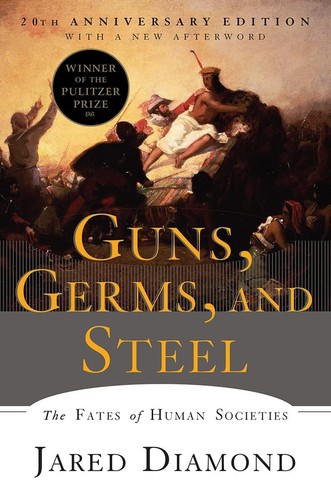
Book 1 of 2 · 1997
by Jared Diamond
The book gives the full evidence behind each episode, including chapters on China, writing and Polynesia that the series skips.
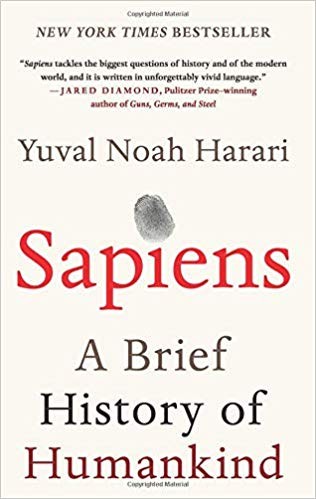
Book 2 of 2 · 2011
by Yuval Noah Harari
Harari covers the same span of history but puts more weight on shared stories and institutions, a useful contrast to Diamond's focus on geography.
Store links may earn a commission.
11 cards
Question 1 of 5
What does Diamond say explains why some societies conquered others?
Former Google, Facebook and Twitter insiders explain how social media is built to hold attention, mixed with a scripted family drama. For anyone who wants to understand the attention economy.
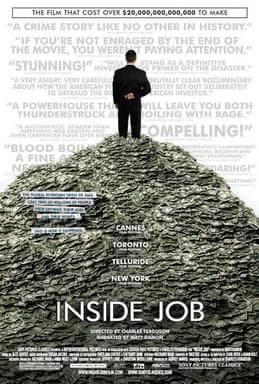
Charles Ferguson's Oscar-winning documentary explains the 2008 financial crisis and argues that bankers, regulators and economists caused it and escaped blame. For anyone who wants to understand the crash.

Documentary · 2010
Directed by Heidi Ewing, Alex Gibney, Seth Gordon, Rachel Grady, Eugene Jarecki and Morgan Spurlock
Six documentary makers adapt Levitt and Dubner's bestseller into segments on baby names, cheating in sumo, crime and abortion, and paying students for grades. For anyone who wants the book's ideas on screen.
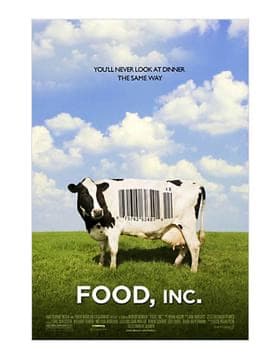
Robert Kenner's documentary looks inside American industrial food: chicken houses, feedlots, slaughterhouses and seed patents. For anyone who wants to know where supermarket food comes from.
New books, occasionally