The Daily Stoic by Ryan Holiday and Stephen Hanselman offers 366 daily meditations from Marcus Aurelius, Seneca and Epictetus, organized by monthly themes. For anyone who wants a daily habit of Stoic reflection.
2014 · 140 pages · Summary updated 24 October 2026
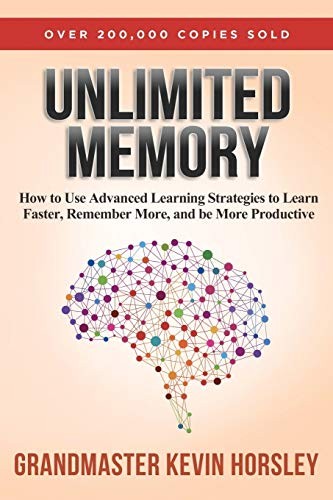
Unlimited Memory by Kevin Horsley teaches the techniques memory champions use, from the SEE principle to the memory palace, in a short practical guide. For students and professionals who want to learn faster and remember more.
Kevin Horsley, a memory champion who struggled at school with dyslexia, argues that there is no bad memory, only an untrained one. Most forgetting is a failure of attention, so start with motivation and concentration. Then turn information into vivid images using the SEE principle: Senses, Exaggeration and Energize. Turn abstract words into pictures by substitution. Store the images on structures you already know: the body method, the car method, familiar routes and number pegs. Use the systems for names, numbers, speeches and study. Finally, practice daily and review on a spaced schedule so the memories last.
Horsley struggled at school with dyslexia and was treated as a slow learner. He later became an International Grandmaster of Memory and set a world record for recalling the first 10,000 digits of pi. His own story is the evidence for his claim that memory is a skill, not a fixed talent. He argues that beliefs like I am bad with names become self-fulfilling, because people who expect to forget stop paying attention. The first step is to drop the excuses and find strong reasons to improve.
When you forget a name seconds after hearing it, Horsley argues, the name was never stored. You were thinking about what to say next. Memory starts with concentration, and concentration is trainable. The main enemy is the inner voice that keeps pulling attention into worries and judgments. He advises setting a clear purpose before you read or listen, removing distractions, working in focused blocks and noticing when your mind drifts. Stopping habits like constant multitasking matters as much as starting new ones.
The brain remembers images far better than words or numbers. Horsley's rule for memorable images is SEE. Senses: hear, smell, feel and taste the image, not only see it. Exaggeration: make it huge, tiny or absurd, because the brain ignores the ordinary. Energize: add action, color and movement. To remember that you need milk, do not picture a carton on a shelf. Picture a giant carton bursting over your front door and soaking you in cold milk.
Many things we need to remember, such as names, places and terms, cannot be pictured directly. Horsley's answer is substitution: replace the word with something that sounds similar and can be pictured. Washington becomes someone washing a ton of laundry. Athens becomes eight hens. Brussels becomes a heap of Brussels sprouts. The image does not have to be logical or accurate. It only has to be vivid enough to bring the original word back when you see it in your mind.
Horsley sums up his systems with a formula: long-term memory plus short-term memory gives medium-term memory. You attach new information to something already fixed in your mind. In the body method, you use ten places from your feet to your head. In the car method, you use set places in your car. In the route method, the classic memory palace, you place images along a familiar walk. Because the structure has a fixed order, walking through it in your mind brings the list back in order.
Once a list is stored, you can add detail to each image. After you store a list of names in order, you can add dates and key facts to the same images. He applies the methods widely. For names, attach an image of the name to a feature of the person's face. For numbers, use a code that turns digits into images and link them into a story, the method memory athletes use for long strings of digits. For speeches, place each main point at a stop on a route so you can talk without notes.
Techniques fade without use. Horsley explains the forgetting curve: most new information disappears within days unless you review it. His answer is spaced review at growing intervals, such as ten minutes, an hour, a day, a few days, a week and then several weeks. Each review is quicker than the last, and the memory becomes more stable. He also stresses daily practice and self-discipline, so the techniques become habits rather than party tricks.
Unlimited Memory by Kevin Horsley came out in 2014. Its subtitle is How to Use Advanced Learning Strategies to Learn Faster, Remember More and Be More Productive. It is a short, practical book that teaches the classic techniques of memory athletes in plain language, with exercises along the way.
Horsley is a South African speaker and memory trainer. He describes himself as a poor student as a child. He says he had dyslexia and found traditional learning hard, and teachers treated him as a slow learner. After school he set out to study how memory works and how people with strong memories use it. He began to practice the techniques himself. He later competed at the World Memory Championships and holds the title International Grandmaster of Memory. He also set a world record in a pi test known as the Everest of memory tests. The examiners read out a five-digit block from the first 10,000 digits of pi, and he names the five digits on each side of it, 50 times in a row.
His starting claim is that there is no such thing as a bad memory, only a trained or an untrained one. Memory is not a fixed talent. It is a set of skills that anyone can learn, and the techniques work for people of any age. A better memory, he argues, does not only help with exams. It supports confidence, creativity and productivity, because so much of thinking depends on what we can recall.
Before the techniques, Horsley deals with the reasons people do not improve. Most people carry beliefs such as I am too old, I have a terrible memory for names or I am not smart enough. He argues that these beliefs become self-fulfilling. If you are sure you will forget, you do not pay attention, and so you do forget.
He asks the reader to drop the excuses and list their reasons for wanting a better memory. Strong reasons supply the motivation to practice. He also argues that memory is closely linked to interest. People remember what they care about. If you can find a reason to care about the information in front of you, you will pay more attention, and attention is the first step of memory.
The second foundation is concentration. Horsley argues that most forgetting is not forgetting at all. The information never went in, because we were not paying attention when it arrived. A name you forget ten seconds after an introduction was never stored, because you were thinking about what to say next.
He treats concentration as a skill too. The main enemy is the inner voice, the running commentary that pulls attention into worries, plans and judgments. Horsley suggests ways to quiet it: set a clear purpose before you read or listen, remove distractions from your space, work in focused blocks and notice when your mind drifts so you can bring it back. He argues that improving concentration is as much about stopping bad habits, such as constant multitasking and checking devices, as it is about starting good ones.
The heart of the book is the idea that the brain remembers images far better than words or numbers. Abstract information slides away. A vivid picture sticks. So the core technique is to convert what you want to remember into images.
Horsley's rule for making images memorable is the SEE principle:
An example shows the difference. To remember to buy batteries, a plain image of a battery pack on a shelf will fade by the afternoon. A giant battery that rolls down your street, fizzing and crackling with sparks, smelling of burnt plastic and crushing parked cars, is hard to forget. The second image takes a few seconds longer to make. Horsley's point is that those seconds are the real act of memorizing. The effort of building a strange, detailed picture is what forces attention onto the information.
For abstract words, he uses substitution. You turn a word you cannot picture into one that sounds similar and can be pictured. Washington becomes someone washing a ton of laundry. Athens becomes eight hens. Brussels becomes a pile of Brussels sprouts. The image does not need to be accurate. It only needs to bring the word back.
Images alone are not enough. You need a way to store them in order and find them again. Horsley's solution is to attach new images to structures already fixed in your memory. He expresses the idea as a simple formula: long-term memory plus short-term memory gives a stronger medium-term memory. You use something you already know well as a set of hooks.
He teaches several such structures:
To recall the list, you walk through the structure in your mind and read off the images. Because the order of the structure is fixed, the order of the list comes back too.
The rest of the core section shows how far the systems can stretch. Horsley demonstrates layering: once you have stored a list, you can add more images to each item. For example, after you store a list of names in order, you can add dates and key facts to the same images.
He applies the methods to practical tasks:
The last foundation is practice and review. Horsley argues that techniques only work if you use them every day until they become habits. Self-discipline matters more than talent, and he urges readers not to let mood decide whether they practice.
He also explains the forgetting curve. Without review, most new information fades within days. His solution is spaced review: go over the material at growing intervals, for example after ten minutes, an hour, a day, a few days, a week and then several weeks. Each review takes less time, and the memory becomes more stable.
He presents the techniques and the reviews as partners. A vivid image on a strong structure makes the first storage easy. Review keeps the path to it open. Without the images, review is slow rote repetition. Without review, even good images fade. Used together, they let a person build up large bodies of knowledge over months, which is what he means by an unlimited memory.
Reviewers generally find the techniques sound but familiar. The SEE principle, the memory palace and peg lists are classic mnemonic methods described in many other books, and Horsley adds little new science. Some readers find the motivational sections heavy and the title overstated, since mnemonics help most with lists, names and numbers and less with deep understanding of complex ideas. Other readers find it a clear short introduction for beginners.
Read it if you want a quick, practical start on memory techniques for names, lists, numbers, speeches or study. It is short enough to read in an evening, but the value comes from doing the exercises.
12 cards
Question 1 of 5
What does the SEE principle stand for?
The Daily Stoic by Ryan Holiday and Stephen Hanselman offers 366 daily meditations from Marcus Aurelius, Seneca and Epictetus, organized by monthly themes. For anyone who wants a daily habit of Stoic reflection.
Robert A. Glover's No More Mr. Nice Guy describes Nice Guy Syndrome: men who seek approval, hide flaws and put others first, then feel resentful. For men stuck in people-pleasing who want more honest relationships.
Models by Mark Manson is a dating guide for men that replaces pickup tactics with honesty: become non-needy, show vulnerability, polarize, and build a life worth sharing.
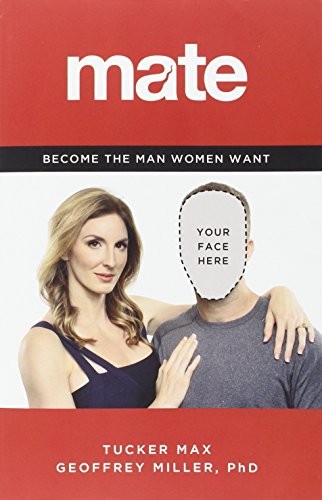
Mate by Tucker Max and Geoffrey Miller is a dating guide for men built on evolutionary psychology: see dating from her side, build real traits, show them honestly, and pick the right market.
New books, occasionally