
Wonder by R. J. Palacio is a novel about August Pullman, a ten-year-old boy with a facial difference who goes to school for the first time in fifth grade. For readers who want the plot, the narrators and the book's lesson on kindness.
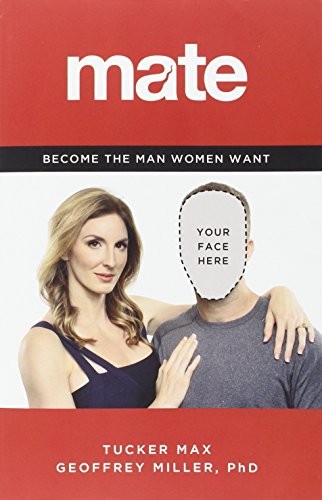
by Tucker Max and Geoffrey Miller
2015 · 384 pages · Summary updated 24 October 2026
Mate by Tucker Max and Geoffrey Miller is a dating guide for men built on evolutionary psychology: see dating from her side, build real traits, show them honestly, and pick the right market.
Mate argues that men fail at dating because they start from their own wants. Tucker Max and evolutionary psychologist Geoffrey Miller ask men to start from women's side instead. Women face real risks in dating, so they are choosy and judge a man on three questions: good genes, good partner, good dad. A man's job is to build real traits (physical health, mental health, intelligence, willpower and the tender-defender balance) and show them through hard-to-fake proofs: social, material, aesthetic and romantic. Then he should go to mating markets where he fits, state his intentions honestly and aim for win-win.
The authors argue that most dating advice fails because it asks what men want and how to get it. Mate asks what women want and fear. A man's main fear is rejection. A woman's fears include assault, pregnancy, disease, a damaged reputation and years lost to an unreliable man. Much of what men call coldness or mixed signals is caution. Meeting in public and never pushing lowers her fear.
The authors describe four strategies males use across the animal kingdom: force, trickery, bribery and honest mating effort. Force is criminal. Trickery is what much pickup teaches, and it leaves a man no better than he was. Bribery treats sex as a purchase. Honest mating effort means becoming a better partner and showing it truthfully. It is the only strategy the book endorses, and the one that builds lasting relationships.
The authors argue that a woman sizing up a man is, in effect, asking three questions. Does he have good genes? Would he be a good partner? Would he be a good dad? A woman looking for a fling weighs these differently from one looking for a husband. All three point to the same thing: is he effective at life, in health, friends, work and knowledge?
Women are risk-averse in mate choice, so a bad trait costs a man more than a great trait earns him. The authors advise men to fix their worst areas before polishing their best ones. A man who plays brilliant guitar but has bad hygiene and no friends loses to a man who is average at most things and poor at none. Find your weakest area and start there.
Tenderness is one of the five traits the book asks men to build, alongside physical health, mental health, intelligence and willpower. The tender-defender is kind and warm toward people who need care, and firm and protective when there is a threat. The doormat cannot stand up for anyone, and the jerk is aggressive with everyone. Both repel women. To build tenderness, the authors suggest mentoring, volunteering or caring for animals.
Women cannot see traits directly, so they read signals, and hard-to-fake signals are trusted most. The authors name four proofs. Social proof is friends who value you. Material proof is money and resources, though a self-made founder impresses more than a lottery winner. Aesthetic proof is grooming, clothes and a clean home. Romantic proof is attention and steady commitment, and it matters most for long-term dating.
The authors treat dating as local markets with supply and demand. A good market has many single women you like, a low operational sex ratio (fewer single men than women), a culture that suits your goal, and people who value your traits. Bars and clubs are poor markets for most men. A bookish man may do far better in a writing class, a college town or a filtered dating app.
Short-term, medium-term and long-term mating each have different costs and need different traits. The authors ask men to decide which they want and to tell women honestly. A man who wants something casual can say so with respect. A man who wants a relationship can say so early. Hidden intentions waste both people's time and break trust, which fails the book's win-win test.
Mate: Become the Man Women Want is a 2015 dating guide for heterosexual men by Tucker Max and Geoffrey Miller, written with Nils Parker. A 2016 paperback carries the title What Women Want. The pairing is unusual. Tucker Max became famous in the 2000s for comic, crude stories about drinking and casual sex. Geoffrey Miller is an evolutionary psychologist at the University of New Mexico and the author of The Mating Mind, which argues that sexual choice shaped much of the human mind. Before the book, the two ran a podcast called The Mating Grounds.
Their claim is that most young men were never taught how dating works, and that most dating advice starts from the wrong side. It asks what men want and how to get it. Mate asks what women want, and why. The authors reject pickup tricks and manipulation. They also reject moralizing. Their aim is what they call a win-win approach: relationships where both people come out ahead.
They set out five principles:
The book then follows a five-step plan, one part each:
The first part fixes a man's thinking before it changes his behavior. The authors define confidence as a realistic expectation of success, based on real skill and real risk. So a man cannot fake it for long. He builds it by getting better at things, with a growth mindset that treats skill as learnable.
Next comes the woman's perspective. The authors argue that men badly underrate what dating costs women. A man's main fear is rejection. A woman's fears include assault and physical harm, unwanted pregnancy, disease, damage to her reputation, and years lost to a man who will not commit. Much of what men read as coldness, testing or mixed signals is caution. A woman may be interested and afraid at the same time. A man who sees this can lower her fear instead of raising it: meet in public, respect her signals, and never pressure her.
The authors place this in evolutionary terms. Through sexual selection, the preferences that helped ancestral women choose good partners were passed down. Because pregnancy and child care cost women far more than men, women evolved to be choosier. The authors present this as a way to understand preferences, not an excuse for bad behavior.
They describe four strategies males use across the animal kingdom to get mates: force, trickery, bribery and honest mating effort. Force is abhorrent and criminal. Trickery is what much pickup teaches. Bribery treats sex as a purchase. Honest mating effort, becoming a better partner and showing it truthfully, is the only strategy the book endorses.
They also ask men to be clear about their mating strategy: short-term, medium-term or long-term. Each has different costs and needs different traits. A man who wants casual sex should not pretend to want commitment, and a man who wants a wife should not act like a player.
The authors argue that a woman judging a man is, in effect, asking three questions:
Different women weigh these differently, and the same woman weighs them differently for a fling than for a marriage. But all three come down to whether a man is effective at life: in his health, family, friendships, work, play and knowledge.
A key point is that women are risk-averse in mate choice. A bad trait hurts a man more than a great trait helps him. So the authors advise men to get out of the bottom 10 percent in every area before trying to reach the top 1 percent in one. A man who is a brilliant guitarist but never showers loses to a man who is average at most things and bad at none.
Part two covers the traits women value. The authors stress that each one improves a man's life whether or not he is dating.
Having traits is not enough. A woman meets a man briefly and has to judge fast, so she reads signals. The authors call these signals proofs, and their rule is show, don't tell. Signals that cost real time, effort or skill are trusted most, because they are hard to fake. This idea runs through Miller's research.
They describe four kinds:
The fourth part applies economics. The authors describe dating as a set of local mating markets with supply and demand. A man's options depend on which market he is in, not only on himself.
They list features of a good market: many single women of the age and type he prefers, a low operational sex ratio (fewer single men than single women), a local culture that suits his goal, short-term or long-term, and a place where his traits and proofs are valued. A bookish man with average looks may struggle in a loud bar and do well at a writing class or in a college town.
They argue that bars and clubs are poor markets for most men. Noise, alcohol and crowds of competing men work against him. Better options include building a social life that brings him into contact with women, joining classes and clubs, and using online dating with clear filters.
The final part covers conversation, flirting, dates, sex and relationships. The advice follows the earlier principles:
They also give simple tests for ethical choices. Would you be fine if everyone knew what you did? Would an audience see you as the hero or the villain? Would you be ashamed if a video of it went online? The authors argue that honest behavior is also practical. A woman who feels safe and respected is more likely to come back.
Critics of evolutionary psychology argue that it often explains present behavior with stories about the past that are hard to test, and the book states contested claims about sex differences with more confidence than the research supports. Some readers find the market framing of dating cold. Others say the book leans toward a provider role and suits men seeking relationships more than men seeking casual sex. Others note the irony of Tucker Max, known for crude accounts of casual sex, co-writing a guide built on respect for women, and the book does not dwell on that change.
Young heterosexual men who feel lost in dating, and who want an explanation instead of a set of tricks, will get the most from Mate. Men seeking a committed relationship will find it more useful than men seeking casual sex.
12 cards
Question 1 of 5
Which mating strategy does Mate endorse?
Wonder by R. J. Palacio is a novel about August Pullman, a ten-year-old boy with a facial difference who goes to school for the first time in fifth grade. For readers who want the plot, the narrators and the book's lesson on kindness.
Unlimited Memory by Kevin Horsley teaches the techniques memory champions use, from the SEE principle to the memory palace, in a short practical guide. For students and professionals who want to learn faster and remember more.

Ugly Love is Colleen Hoover's romance about Tate Collins, a nursing student who agrees to a no-strings affair with a guarded airline pilot, Miles Archer, whose past is a closed door. For readers who want a steamy, emotional love story with a heartbreaking backstory.
Zora Neale Hurston's novel about Janie Crawford, a Black woman in early 1900s Florida who moves through three marriages in search of real love and her own voice. For readers who want the plot, the themes and the meaning of the title.
More in Psychology →More in Relationships →More in Self-improvement →
New books, occasionally