
Wonder by R. J. Palacio is a novel about August Pullman, a ten-year-old boy with a facial difference who goes to school for the first time in fifth grade. For readers who want the plot, the narrators and the book's lesson on kindness.
2013 · 300 pages · Summary updated 24 October 2026
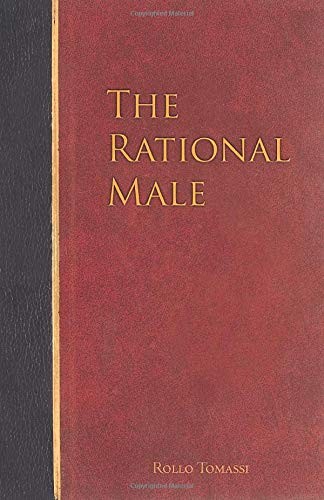
The Rational Male by Rollo Tomassi is a central text of the online red pill movement, built on claims about hypergamy, frame and sexual market value. A summary of what it argues, where it comes from and why critics reject it.
Tomassi, the pen name of a blogger, collects essays that argue modern society hides the truth about sex and relationships. He calls seeing that truth taking the red pill. His core claims are that women as a group are driven by hypergamy, a drive to secure the highest-status partner available; that society is organized around a feminine imperative; and that men's value rises with age while women's falls on a sexual market value curve. He advises men to hold frame, avoid early commitment and put themselves first. Researchers and critics say the claims misread evolutionary psychology, generalize about women without evidence and promote manipulative tactics.
Tomassi borrows the red pill from The Matrix to mean seeing what he believes is the truth about relationships. The blue pill, in his terms, is the conventional view that kindness and devotion win women. He argues that this view fails men. Critics note that the red pill framing presents contested opinions as revealed truth, which makes disagreement look like denial rather than evidence.
Tomassi claims that culture, media and social rules are organized to favor women's mating goals and train men to put women first. He calls this force the feminine imperative. In his account, men raised on this message are confused when kindness does not lead to attraction. Critics say the idea has no evidence behind it and casts women as a group as a hidden, coordinated adversary.
In sociology, hypergamy means marrying someone of higher status. Tomassi stretches the term into a claim that women as a group have an innate drive to secure the best partner available, and that it shapes almost all their choices. Researchers note that partner preferences vary widely between individuals and that both sexes value status, kindness and reliability, so one motive cannot explain behavior.
Tomassi claims women seek short-term partners for genes and status and long-term partners for security. He cites research suggesting preferences shift across the menstrual cycle. Later large, preregistered studies found little support for such shifts. Evolutionary psychologists add that the studies Tomassi uses describe small average tendencies with wide overlap, not rules that predict any one person's behavior.
Tomassi's SMV chart claims that women's dating value peaks in their early to mid twenties and men's peaks in their late thirties. He uses it to tell young men to wait and invest in themselves. The chart is his own illustration, not based on data. Critics note it reduces people to a single market score and ignores what research shows matters in lasting relationships.
Tomassi says a man must hold the frame, so the relationship happens on his terms. He also repeats that the partner with the least interest has the most power, an idea sociologists call the principle of least interest. He uses these to argue that men should never appear more invested than their partners. Relationship research links satisfaction to mutual responsiveness, not to winning a power contest.
Tomassi advises young men to date several women without commitment, which he calls spinning plates, and to delay monogamy. He also describes dread: letting a partner fear she might lose him to other women. Critics and psychologists say deliberately creating insecurity in a partner resembles emotional abuse and coercive control. Tomassi presents both as ways for a man to avoid depending on one woman.
The Rational Male grew from forum posts and a blog and became a core text of the red pill movement, part of the online manosphere. It was widely shared on The Red Pill forum on Reddit, which Reddit quarantined in 2018. Researchers such as Debbie Ging describe red pill writing as misogynist. Some readers say it helped them after divorce; critics link it to resentment toward women.
Rollo Tomassi is the pen name of an American blogger who began writing about men, women and relationships on online dating advice forums, such as SoSuave, in the early 2000s. In 2011 he started a blog called The Rational Male. The Rational Male (2013) is a self-published collection of essays drawn from about ten years of that writing, mostly from the blog. Later volumes followed, among them Preventive Medicine (2015), Positive Masculinity (2017) and Religion (2020).
The book is one of the central texts of the red pill movement, part of a loose network of websites and forums that researchers call the manosphere. That network includes pickup artist communities, men's rights groups and other online spaces focused on men's grievances about dating and gender. Tomassi's ideas were widely shared on The Red Pill forum on Reddit, which Reddit quarantined in 2018. A quarantine hides a community from search and warns visitors before they enter.
The essays are written for heterosexual men, especially men who feel that conventional advice about women failed them. Tomassi presents himself as describing reality rather than giving moral advice. The sections below set out what the book claims, followed by the main criticisms.
The title concept comes from the film The Matrix, in which the hero takes a red pill to see the reality behind an illusion. Tomassi uses it to mean seeing what he believes is the truth about intersexual relationships. The blue pill, in his terms, is the conventional view: that women want a kind, attentive and supportive partner, and that men should be agreeable, romantic and devoted to win them.
Tomassi argues that this conventional view is not just mistaken but serves women's interests. He calls the force behind it the feminine imperative: his claim that culture, media and social rules are organized to favor women's goals in mating and to train men to accept them. In his view, men are taught from childhood to put women first, to believe in romantic love as women describe it and to seek women's approval. He argues that this leaves men confused when their kindness does not lead to attraction.
Several essays describe the moment a man unplugs from this view, often after a divorce or breakup, and the anger that can follow. Tomassi tells readers to move past anger and use the new view for their own benefit.
The book's central claim concerns hypergamy. In sociology, the word describes the pattern of marrying someone of higher status. Tomassi uses it much more broadly. He claims that women as a group have an innate drive to secure the best partner they can get, and that this drive shapes almost all of their choices in relationships.
He builds on this with what he calls women's dual sexual strategy. He claims that women look for two different things in men: short-term partners who signal strong genes and status, and long-term partners who offer security and resources. He argues that women prefer the first type at some times and in some life stages, and the second at others. He cites research on how women's preferences may shift across the menstrual cycle in support.
From these claims Tomassi concludes that women's love is conditional on a man's status in a way that men's love for women is not. He presents this as a fact men must accept rather than resent.
Tomassi introduces a chart he calls the sexual market value curve, or SMV. It plots what he claims is the dating value of men and women by age. In his chart, women's value peaks in their early to mid twenties and declines after that. Men's value rises more slowly and peaks in their late thirties, as they gain status, money and confidence.
He argues that this explains common patterns: young men who struggle to date, women who seek commitment as they near thirty, and men who become more attractive with age. He tells young men to invest in themselves and wait, because their value will rise. The chart is not based on data. It is Tomassi's own illustration of his theory.
Much of the practical advice is about power in relationships. Tomassi's key term is frame: whose view of reality defines the relationship. He argues that a man must hold the frame, meaning the relationship should take place in his world, on his terms, rather than his entering hers.
He repeats a principle he calls the cardinal rule of relationships: in any relationship, the person who needs the other less has more power. Sociologists describe a similar idea as the principle of least interest. Tomassi uses it to argue that a man should never appear more invested than his partner.
Other advice follows from this:
Tomassi also uses the terms Alpha and Beta to describe two sets of male traits. He links Alpha traits to dominance and confidence, and Beta traits to agreeableness and provision. He argues that many men have been trained to show only Beta traits.
The book has a devoted readership. Some readers, often recently divorced men, say it helped them make sense of painful experiences and pushed them to improve their health and careers. Tomassi says he describes how things are rather than how they should be, and that men can use the ideas however they choose. Critics answer that the book's descriptions are themselves claims, many of them unsupported, and that the advice that follows from them treats relationships as contests for power.
Critics, including researchers who study the manosphere such as Debbie Ging, describe red pill writing as misogynist. They point to its claims about women as a group, which present a single, largely self-interested motive behind women's behavior. Evolutionary psychologists note that the research Tomassi draws on describes small average tendencies with wide individual variation, not fixed rules. Later large studies found little support for the claim that women's partner preferences shift across the menstrual cycle. The SMV curve has no empirical basis, and research on relationship satisfaction does not support treating partners as rivals for power. Tactics such as dread, which deliberately creates insecurity in a partner, resemble behaviors psychologists associate with emotional abuse and coercive control. Critics also link red pill ideas to resentment toward women in online communities. Supporters say the book addresses men's pain that mainstream advice ignores.
Read this summary if you want to understand red pill ideas you have met online or in someone you know. Weigh each claim against the research described above.
11 cards
Question 1 of 5
Where does the term red pill come from?
Wonder by R. J. Palacio is a novel about August Pullman, a ten-year-old boy with a facial difference who goes to school for the first time in fifth grade. For readers who want the plot, the narrators and the book's lesson on kindness.

Ugly Love is Colleen Hoover's romance about Tate Collins, a nursing student who agrees to a no-strings affair with a guarded airline pilot, Miles Archer, whose past is a closed door. For readers who want a steamy, emotional love story with a heartbreaking backstory.

Zora Neale Hurston's novel about Janie Crawford, a Black woman in early 1900s Florida who moves through three marriages in search of real love and her own voice. For readers who want the plot, the themes and the meaning of the title.

The Wife Upstairs is Rachel Hawkins's 2021 thriller that retells Jane Eyre in a wealthy Alabama suburb, where a broke dog walker falls for a widower whose wife vanished on a lake. For readers who like twisty domestic suspense.
New books, occasionally