
Wonder by R. J. Palacio is a novel about August Pullman, a ten-year-old boy with a facial difference who goes to school for the first time in fifth grade. For readers who want the plot, the narrators and the book's lesson on kindness.
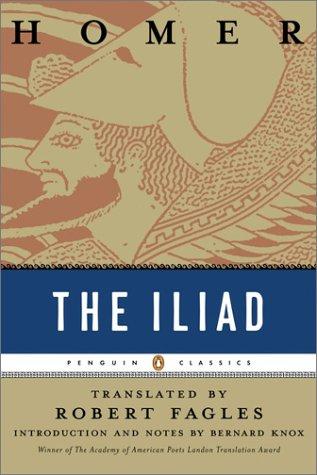
by Homer
-750 · 704 pages · Summary updated 24 October 2026
The Iliad is Homer's ancient Greek epic about the rage of Achilles during the tenth year of the Trojan War, from his quarrel with Agamemnon to the death of Hector. For readers who want the plot, the characters and the ideas, book by book.
In the tenth year of the Greek siege of Troy, the warrior Achilles quarrels with the Greek commander Agamemnon, who takes his prize, the captive woman Briseis. Achilles withdraws from the fighting, and the Trojans, led by Hector, drive the Greeks back to their ships. Achilles' closest friend, Patroclus, goes into battle in Achilles' armor and is killed by Hector. Achilles returns in grief and fury. The poem covers only a few weeks of the war, but it is about honor, rage, grief and the shared fate of men who must die.
The first word of the Iliad is menis, the rage of Achilles. Homer follows that anger from start to finish. It begins as wounded pride when Agamemnon takes Briseis, turns into withdrawal that costs many Greek lives, and becomes a killing fury after Patroclus dies. It ends only when Priam kneels in Achilles' tent. Homer shows anger as a force that grows, harms friends more than enemies, and must be released through grief.
For Homer's warriors, honor, or time, is shown by prizes, seats at the feast and respect in the assembly. When Agamemnon takes Briseis, he takes Achilles' public worth, not just a woman. That is why gifts cannot settle it in Book 9: the insult was in front of everyone. The poem shows a culture where reputation is everything and asks whether a man's value can be counted in objects.
Achilles knows he has two fates. If he stays at Troy he will die young and win kleos, glory that lives in song. If he goes home he will live long and be forgotten. He threatens to choose the long life in Book 9. After Patroclus dies, he chooses death and glory with open eyes. Homer makes this the hero's central choice and shows its full cost.
Homer gives the Trojans as much humanity as the Greeks. Hector says goodbye to Andromache and his baby, who is frightened by his helmet. Priam is a grieving father. Glaucus and Diomedes refuse to fight when they discover a family bond. The poem never asks readers to hate Troy. It shows that the men killing each other share the same fears, loves and fate.
Patroclus is Achilles' closest companion. When he dies wearing Achilles' armor, Achilles falls in the dust and wants to die. Nothing that Agamemnon could offer moved him, but this loss sends him back into battle within a day. Homer shows that people who will not move for honor or gifts may move for love. The death of a friend changes Achilles more than any argument.
Hephaestus decorates Achilles' new shield with a city at peace and a city at war, weddings, a trial, plowing, harvest, a vineyard, dancing and the ocean around the rim. Homer spends more than a hundred lines on it, right before the worst killing in the poem. The shield reminds readers of everything war destroys and of the ordinary life that goes on beyond the battlefield.
In Book 24, Priam comes alone to Achilles' tent and kisses the hands that killed his son. He asks Achilles to think of his own aging father. They weep together, each for his own losses. Achilles returns Hector's body and grants a truce. The poem ends not in victory but in this moment of pity between enemies, built on the knowledge that both will lose everything to death.
“Sing, goddess, the anger of Peleus' son Achilleus and its devastation”
The Iliad is a Greek epic poem of about 15,700 lines in 24 books. Tradition credits it to Homer, a poet who may have lived in the 8th century BCE. Like its companion, the Odyssey, it grew out of a long tradition of oral performance and was written down later. Scholars still debate whether one poet made it. Its title comes from Ilion, another name for Troy.
The poem is set in the tenth year of the Trojan War. A Greek army, which Homer calls the Achaeans, has besieged Troy to win back Helen, wife of the Spartan king Menelaus, who left with the Trojan prince Paris. The Iliad does not tell the start of the war or the fall of Troy. There is no wooden horse. It covers about 50 days and tells one story: the rage of Achilles, what caused it and what it cost.
The first word of the Greek poem is the word for rage, menis. Achilles is the son of the mortal king Peleus and the sea goddess Thetis. He is the greatest fighter on either side. He knows he has two possible fates: a long, quiet life at home, or a short life and glory that never dies at Troy.
The other ideas that run through the poem are kleos, the glory a warrior earns by fighting and that lives on in song, and time, honor measured by the prizes and respect a man receives. The gods take sides. Hera, Athena and Poseidon favor the Greeks. Apollo, Aphrodite and Ares favor the Trojans. Zeus tries to keep the balance of fate.
A priest of Apollo, Chryses, comes to the Greek camp to ransom his daughter, whom Agamemnon has taken as a prize. Agamemnon sends him away with insults. Apollo answers the priest's prayer with a plague that kills men and animals for nine days.
Achilles calls an assembly. The prophet Calchas says the girl must go back. Agamemnon agrees, but demands another prize in her place and takes Briseis, Achilles' captive. Achilles almost draws his sword on him. Athena holds him back. He swears he will not fight again until the Greeks are dying at their ships and Agamemnon regrets the insult. He asks his mother, Thetis, to persuade Zeus to give the Trojans victory. Zeus agrees.
Zeus sends Agamemnon a false dream that he can take Troy now. Agamemnon tests the army by suggesting they go home, and the men run for the ships. Odysseus stops them and beats a commoner, Thersites, who mocks the kings. Homer then lists the Greek forces in the Catalogue of Ships.
Paris and Menelaus agree to fight a duel for Helen. From the walls of Troy, Helen names the Greek leaders for King Priam. Menelaus is winning when Aphrodite snatches Paris away to his bedroom. Then a Trojan archer, Pandarus, urged by Athena, wounds Menelaus with an arrow and breaks the truce. The war resumes.
The Greek hero Diomedes has a day of glory. With Athena's help he wounds Aphrodite and even Ares, the god of war.
In Book 6, Hector goes back inside the city to ask the Trojan women to pray. He finds his wife, Andromache, and their baby son, Astyanax, at the gates. She begs him not to fight. He says he cannot hide like a coward, though he knows Troy will fall. The baby screams at the plume on Hector's helmet. Hector laughs, takes it off and prays that his son will be a better man than him. This is the gentlest scene in the poem, and every reader knows what is coming for this family.
On the field, the Greek Diomedes and Glaucus, a Lycian ally of Troy, meet before a duel and learn that their grandfathers were guest friends. They exchange armor instead of fighting. Hector duels the giant Greek Ajax until night falls.
Zeus forbids the gods to interfere and gives the Trojans the advantage. They camp on the plain near the Greek ships. Agamemnon, in despair, sends an embassy to Achilles: Odysseus, the old tutor Phoenix and Ajax. He offers to return Briseis untouched, with gold, horses and one of his daughters in marriage. Achilles refuses. He says no gift can pay for the insult, and that he may sail home and take the long life. Phoenix tells him a story of a hero whose anger cost him everything. Ajax calls him cruel. Achilles stays in his tent.
That night Odysseus and Diomedes go on a raid, catch and kill a Trojan spy, Dolon, and slaughter the Thracian king Rhesus in his sleep.
The next day is the longest in the poem. Agamemnon fights well and is wounded. So are Diomedes and Odysseus. The Trojans break through the wall the Greeks built around their camp. Hector smashes the gate with a boulder. Hera distracts Zeus by seducing him with Aphrodite's charmed band, so that Poseidon can help the Greeks while he sleeps. Zeus wakes, furious, and sends Apollo to lead the Trojans to the ships. Hector sets fire to one of them.
Achilles has watched all of this. His friend Patroclus, moved by the Greeks' suffering, begs to be allowed to lead Achilles' men, the Myrmidons, into battle.
Achilles agrees. He lends Patroclus his armor and warns him to drive the Trojans from the ships and come back, not to chase them to the walls. Patroclus drives them from the ships, then forgets the warning. He kills Sarpedon, a son of Zeus, whom Zeus lets die. He pursues the Trojans to the walls of Troy. Apollo strikes him from behind, a Trojan wounds him, and Hector kills him with a spear. Hector strips Achilles' armor from the body and puts it on. The Greeks fight all day to recover the corpse.
When Achilles hears, he pours dirt over his head and groans so loudly that Thetis hears him in the sea. She warns him that if he kills Hector, his own death will follow soon. He accepts it. The god Hephaestus forges him new armor and a great shield, decorated with scenes of a city at peace and a city at war, weddings, a lawsuit, harvest, dancing and the ocean around it all. Homer describes it for more than a hundred lines.
Achilles makes peace with Agamemnon, who returns Briseis. He refuses to eat until he has his revenge. Then he fights. He kills Trojans in such numbers that the river Scamander clogs with bodies and rises against him. He takes twelve young Trojans alive to sacrifice at Patroclus's pyre. The Trojans flee into the city.
This section reveals the ending.
Only Hector stays outside the walls. His parents beg him from the walls to come in. He thinks of the shame of retreating and waits. When Achilles comes at him, he runs. Achilles chases him around the walls of Troy three times. Zeus weighs their fates on golden scales, and Hector's sinks. Athena, disguised as Hector's brother Deiphobus, tricks him into turning to fight. Achilles drives his spear through his throat. As he dies, Hector begs that his body be returned to his family. Achilles refuses. He ties the corpse to his chariot by the ankles and drags it in the dust in front of the city, while Andromache, Priam and Hecuba watch.
In Book 23, Achilles holds Patroclus's funeral. He burns the twelve Trojan captives on the pyre and holds athletic games with prizes. Every day he drags Hector's body around Patroclus's tomb, but Apollo keeps it from decay.
In Book 24, the gods decide this must stop. Zeus sends Thetis to tell Achilles to accept a ransom. Hermes guides old King Priam through the Greek camp at night to Achilles' tent. Priam kneels and kisses the hands that killed his sons. He asks Achilles to think of his own father, Peleus, who will also lose his son. The two men weep together, one for his son, one for his father and for Patroclus. Achilles gives back the body and grants eleven days of truce for the funeral. The poem ends with the Trojans mourning and burning Hector, the tamer of horses. Achilles' own death and the fall of Troy lie ahead, outside the poem.
The Iliad is a war poem, and readers have long argued about whether it glorifies war or mourns it. Simone Weil, in a 1940 essay, called it a poem of force, showing how violence turns people into things. Others note how much space it gives to killing, described wound by wound. The treatment of captive women like Briseis as prizes draws modern criticism, and recent retellings by Pat Barker and Madeline Miller give these women a voice. Some readers find the long lists and battle scenes in the middle books hard going. Translations shape the experience: Richmond Lattimore (1951) stays close to the Greek, Robert Fagles (1990) is more vivid, and Emily Wilson published a version in 2023.
Read it if you want the oldest major work of Western literature and the source of Achilles, Hector and the Trojan War as most people know them. It suits readers who can handle battle scenes for the sake of some of the most moving human moments in literature, and students who need the plot book by book.
12 cards
Question 1 of 5
What starts the quarrel between Achilles and Agamemnon?
Achilles kills Hector and drags his body behind his chariot. After Patroclus's funeral, King Priam comes secretly to Achilles' tent and begs for his son's body. The two men weep together, and Achilles returns the body. The poem ends with Hector's funeral. It does not show Achilles' death or the fall of Troy.
Wonder by R. J. Palacio is a novel about August Pullman, a ten-year-old boy with a facial difference who goes to school for the first time in fifth grade. For readers who want the plot, the narrators and the book's lesson on kindness.

Ugly Love is Colleen Hoover's romance about Tate Collins, a nursing student who agrees to a no-strings affair with a guarded airline pilot, Miles Archer, whose past is a closed door. For readers who want a steamy, emotional love story with a heartbreaking backstory.

Zora Neale Hurston's novel about Janie Crawford, a Black woman in early 1900s Florida who moves through three marriages in search of real love and her own voice. For readers who want the plot, the themes and the meaning of the title.

The Wife Upstairs is Rachel Hawkins's 2021 thriller that retells Jane Eyre in a wealthy Alabama suburb, where a broke dog walker falls for a widower whose wife vanished on a lake. For readers who like twisty domestic suspense.
New books, occasionally