Unlimited Memory by Kevin Horsley teaches the techniques memory champions use, from the SEE principle to the memory palace, in a short practical guide. For students and professionals who want to learn faster and remember more.
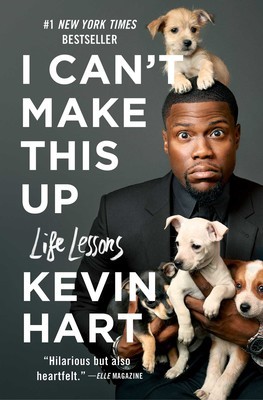
by Kevin Hart with Neil Strauss
2017 · 400 pages · Summary updated 24 October 2026
I Can't Make This Up: Life Lessons is Kevin Hart's memoir, written with Neil Strauss, about growing up in North Philadelphia and rising from booed amateur to stadium comedian. For readers who want a funny success story with a lesson at the end of every chapter.
Kevin Hart grows up in North Philadelphia with a strict, protective mother and a father lost to cocaine addiction. His mother keeps him busy so the streets cannot take him, as they took his older brother. He finds stand-up comedy in his late teens, gets booed off stage, and keeps going. Hollywood gives him early chances and then drops him. He learns that he must build his own audience, his own voice and his own business. Along the way he makes mistakes in marriage, money and drinking. Each chapter ends with a lesson about work, failure, family and self-belief.
Hart's mother fills his days with activities and rules so the streets of North Philadelphia have no time to claim him. He watches his older brother fall into drug dealing and violence, and sees where that path leads. Hart describes his mother as both loving and frightening. He credits her discipline and work ethic as the foundation of his later success. The idea is that structure, even when a child resents it, can be a form of protection.
Hart's father is addicted to cocaine and drifts in and out of jail. Hart learns to tell stories about him with humor instead of bitterness. His concert film Laugh at My Pain makes this approach its title. He argues that the parts of your life you most want to hide often connect with people the most. Owning those stories gave him a voice no one else could copy.
When Hart starts stand-up, he imitates comedians he admires, such as Chris Tucker. Crowds boo, and older comics tell him that audiences can tell he is not being himself. His comedy improves only when he talks about his own life: his height, his mother and his fears. The lesson is that imitation can teach you the basics, but success depends on finding what only you can say.
Hart is booed many times as Lil Kev at amateur nights. Later his first network sitcom is canceled quickly. Each time, he asks what went wrong instead of quitting. After the sitcom, he sees that he let executives make him generic. He uses that lesson to take control of his comedy. Hart argues that every failure tells you what to fix, if you are willing to look.
After Hollywood drops him, Hart stops waiting to be chosen. He tours small cities other comedians skip, talks to fans on social media and studies which markets sell tickets. His specials and his self-funded film Laugh at My Pain grow his fan base until studios come to him. The idea is that when gatekeepers say no, you can build demand directly and return with leverage.
In the comedy clubs of Philadelphia and New York, Hart sees gifted comics fail because they are late, rude or lazy. He decides to be the most reliable person in every room. He arrives early, writes constantly and takes small gigs. His mentor Keith Robinson and the veteran comics in New York toughen him further. The lesson is that consistency compounds, while talent without work fades.
Hart admits that his first marriage, to Torrei, broke down under the pressure of his career and his own behavior. He writes about drinking too much and spending carelessly during early success. He does not blame others. He argues that more money and fame make your weaknesses louder, so you must face them honestly. Looking in the mirror is, for him, a daily discipline.
I Can't Make This Up: Life Lessons is the 2017 memoir of comedian and actor Kevin Hart, written with Neil Strauss, the author of The Game. It follows Hart from a hard childhood in North Philadelphia to sold-out arenas and lead roles in Hollywood films. The book is part memoir and part motivational guide. Each chapter tells a story and then ends with a short lesson that Hart draws from it.
Hart's tone is the one fans know from his stand-up: fast, self-mocking and honest about his own flaws. He makes fun of his height, his fears and his bad decisions. Under the jokes, the book has one steady message: success comes from work, from ownership of your choices and from refusing to quit.
Hart was born in Philadelphia in 1979. His mother, Nancy Hart, raised him and his older brother, Robert, mostly on her own. She worked at the University of Pennsylvania and ran the home with strict rules. His father, Henry Witherspoon, was addicted to cocaine and was in and out of jail for much of Hart's childhood.
The neighborhood offered drugs, guns and easy ways to get lost. Hart watched his brother drift into that world. Robert sold drugs and became violent at home, including toward their mother. Hart says this shaped his teenage years. It showed him exactly where one path led.
His mother's answer was to fill every hour of his day. She signed him up for after-school programs, sports and activities so he had no time to get in trouble. She also demanded respect and good manners. Hart describes her as loving and frightening at once. He credits her rules and her work ethic as the base of everything he built later.
His father appears in the book as a source of pain and of comedy. Hart describes the broken promises and strange visits of an addict who loved his son in his own way. Over time Hart learns to laugh at these stories instead of being crushed by them. That habit becomes the core of his stand-up.
After high school Hart drifts. He briefly attends community college and then works as a shoe salesman. Friends and coworkers tell him he is funny. He decides to try stand-up.
His first performance is at an amateur night at The Laff House in Philadelphia, under the stage name Lil Kev. It goes badly. Over the following months he is booed many times. Some crowds are brutal. He enters comedy contests outside the city and slowly improves.
His mother does not like the idea of comedy as a career. She agrees to support him for a limited time, on the condition that he go back to school if it fails. This deadline pushes him to treat comedy as a job, not a hobby.
At first Hart imitates other comedians. He copies the energy of stars he admires, such as Chris Tucker. Older comics tell him that this will never work, because audiences can tell when someone is not being himself. The turning point comes when he starts to talk about his own life: his size, his mother, his father and his fears. The material is more honest, and the crowds respond.
Hart splits his time between Philadelphia and New York, chasing stage time. He describes the New York clubs as a hard school, where veteran comics test and toughen younger ones. One of them, the comedian Keith Robinson, becomes a mentor and friend. Hart learns to write and rewrite jokes, to study a crowd, and to accept that every bad set teaches something.
He also learns the business. He sees comics with talent who never make it because they are late, rude or lazy. Hart decides that he will be the most reliable person in any room. He shows up early, does the work and says yes to small gigs. This becomes one of his central lessons: talent gets you in the door, but discipline keeps you there.
In the early 2000s Hart gets his first chances on screen. He appears in the comedy film Paper Soldiers, has a part on Judd Apatow's college sitcom Undeclared, and plays a role in Scary Movie 3. A network gives him his own sitcom. Then the show is canceled quickly, and other projects fall through.
Hart is crushed. He realizes that he had let executives shape his comedy. They wanted a safe, generic version of him. When it failed, he had nothing of his own to fall back on. He resolves to stop waiting for Hollywood to make him a star.
This is the book's turning point. Hart decides to build his audience directly. He tours constantly, including small cities that bigger comedians skip. He uses social media early to talk to fans. He pays attention to ticket sales and to which markets respond.
The strategy works. His stand-up specials grow his fan base: I'm a Grown Little Man in 2009, Seriously Funny in 2010, and the concert film Laugh at My Pain in 2011. He invests his own money in Laugh at My Pain and releases it in theaters. The tour behind it grosses more than 15 million dollars, and the film earns about 7.7 million dollars at the box office on a small budget. The title captures his approach. He turns the worst parts of his life, from his father's addiction to his mother's death, into material.
His mother dies of cancer in 2007, before his biggest success. Hart describes her death as one of the hardest moments of his life. He writes about her with deep love and regret that she did not see what he became.
Film studios now come to him on his terms. He stars in hit comedies such as Think Like a Man, Ride Along and Central Intelligence. He builds his own production company and business ventures. He insists on owning his work wherever he can.
Hart is open about his failures. He marries his first love, Torrei, in 2003, and they have two children. He describes the marriage as falling apart under the pressure of his career and his own behavior. He admits that both partners did damage, and that he was not the husband he should have been. They divorce in 2011.
He also writes about drinking too much, spending carelessly and falling into debt during his early success. Each time he gains something, he risks losing it through his own choices. He learns to look at himself honestly, to cut out habits that hurt him, and to build a team he trusts.
He writes about fatherhood and about trying to give his children the presence his own father could not. He describes his relationship with Eniko Parrish, whom he marries in 2016.
The lessons at the end of each chapter repeat a few big ideas:
The book reads like Hart talking. Neil Strauss, who has co-written memoirs with musicians and celebrities, shapes Hart's spoken stories into chapters while keeping his voice: loud, self-deprecating and full of tangents. Hart often stops a story to mock himself or to address the reader directly.
The chapters move roughly in order, from childhood to stardom. Each one builds to a moment of failure or embarrassment and then explains what Hart learned from it. The structure makes the book easy to read in short sittings. It also makes the message repetitive in places, since many lessons return to the same theme of hard work.
The book is most powerful when Hart writes about his parents. His mother's strictness and his father's addiction are the two forces he keeps returning to. One gave him discipline. The other gave him material, and a model of what not to become. Much of the book is his attempt to make peace with both.
Kirkus Reviews calls Hart a magnetic storyteller on the page. Some readers find that the lessons border on platitudes, that the book runs long and that the self-help sections are less fresh than the stories that lead to them.
Read it if you are a fan of Kevin Hart or stand-up comedy, or if you want an entertaining story about turning failure into fuel. It suits anyone chasing a creative career who needs a push to keep going.
11 cards
Question 1 of 5
What does each chapter of I Can't Make This Up end with?
Unlimited Memory by Kevin Horsley teaches the techniques memory champions use, from the SEE principle to the memory palace, in a short practical guide. For students and professionals who want to learn faster and remember more.
The Last Black Unicorn is Tiffany Haddish's comic memoir of a South Central Los Angeles childhood, foster care, homelessness, an abusive marriage and her rise to stardom with Girls Trip. For readers who like raw, funny survival stories.
The Glass Castle by Jeannette Walls is a memoir of growing up poor and often hungry with a brilliant, alcoholic father and an artist mother who refused to settle down, and of how she escaped. For readers interested in family, poverty and resilience.
The Diary of a Young Girl by Anne Frank is a Jewish girl's record of two years in hiding from the Nazis in an Amsterdam annex, from age 13 to 15. A summary for students and readers who want the history and the person behind it.
New books, occasionally