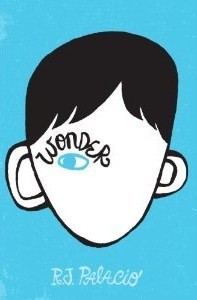
Wonder by R. J. Palacio is a novel about August Pullman, a ten-year-old boy with a facial difference who goes to school for the first time in fifth grade. For readers who want the plot, the narrators and the book's lesson on kindness.
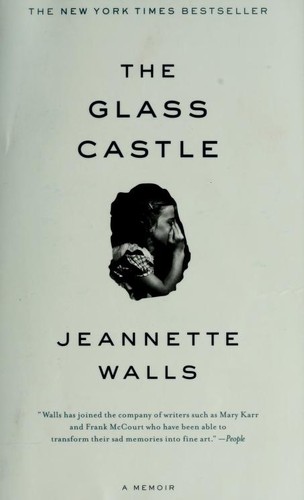
2005 · 288 pages · Summary updated 24 October 2026
The Glass Castle by Jeannette Walls is a memoir of growing up poor and often hungry with a brilliant, alcoholic father and an artist mother who refused to settle down, and of how she escaped. For readers interested in family, poverty and resilience.
Jeannette Walls grew up moving from one desert town to another with her parents, Rex and Rose Mary, and three siblings. Rex was a charming, inventive man who taught his children physics and promised to build them a solar-powered Glass Castle. He was also an alcoholic who could not keep a job. Rose Mary was an artist who hated cooking and saw hardship as adventure. When the money ran out, the family moved to Rex's hometown in West Virginia, where the children went hungry. One by one, they saved money and escaped to New York. Walls's argument is that a person can love their parents fully and still have to leave them.
Rex Walls teaches his children physics, hunts monsters for them and gives them stars for Christmas. He also drinks away the money and leaves them hungry. Walls refuses to make him a hero or a villain. Her reasoning is that children love parents as they are. The example is the Christmas in the desert: there are no presents, and she still remembers it as one of the best nights of her childhood.
The Glass Castle is Rex's dream house with a glass roof and solar power. He shows the children the blueprints at every move. Walls shows how the promise keeps the family hoping and keeps them stuck. The example is the hole dug for the foundation in Welch, which slowly fills with the family's garbage. The image says what Walls does not: the dream has turned into its opposite.
Rose Mary sees poverty as freedom and danger as learning. Rex calls fleeing in the night the skedaddle. The children believe them for years. Walls shows the cost of this framing through the child's eyes. The example is her burn at age three: she was cooking alone because her mother was painting, and her father took her out of the hospital without paying.
In Welch, Lori, Jeannette and Brian feed, protect and comfort each other while their parents fail them. They fight off their grandmother together and plan their escape together. Walls's reasoning is that siblings can supply what parents do not. The example is the piggy bank they fill for Lori's ticket to New York, and the way Jeannette finds Lori a job after Rex steals the money.
Jeannette loves her parents, and she leaves them anyway. She goes to New York at seventeen, finishes school and builds a life they cannot damage. Walls argues that saving yourself is not betrayal. The example is the gap between Jeannette's Park Avenue apartment and her parents' squat on the Lower East Side: she cannot fix their lives, but she will not let them destroy hers.
For years, Walls hid her past and lied about her parents. At the start of the book, her mother tells her to tell the truth. The memoir is that truth, told plainly and without blame. Walls's reasoning is that shame keeps a secret alive, and saying it aloud ends its power. The example is the opening scene, where she hides in a taxi from her mother, followed by a book that does the opposite.
The Glass Castle by Jeannette Walls was published in 2005. Walls was then a gossip columnist in New York, and for years she had hidden her childhood from friends and colleagues. The memoir spent years on the New York Times bestseller list and became a 2017 film with Brie Larson and Woody Harrelson.
The book opens in New York. Walls is in a taxi on her way to a party when she sees her mother on the street, digging through a dumpster. Her mother is homeless by choice. Walls slides down in her seat so she will not be seen, and has the driver take her home. Later, she invites her mother to lunch and asks what she should tell people about her parents. Her mother says to tell the truth.
The rest of the book is that truth. Walls tells it in plain, unsentimental prose, mostly from the point of view of the child she was at each age. She does not judge her parents in the telling. She lets the reader see both the love and the neglect.
Walls's first memory is of fire. She is three years old, standing on a chair in a trailer park, cooking hot dogs on the stove because her mother is painting. Her pink dress catches fire. She spends weeks in hospital with severe burns. When the nurses start asking questions, her father, Rex Walls, carries her out without paying. He calls it checking out Rex Walls style.
The family moves constantly across Arizona, Nevada and California. Rex calls it the skedaddle: leaving in the night, usually one step ahead of bill collectors or the law. The children are Lori, the oldest, Jeannette, Brian and later Maureen.
Rex is brilliant and charismatic. He teaches the children physics, geology and how to shoot a gun. He tells them stories about his adventures and makes them feel special. For Christmas one year, when there is no money for presents, he takes each child into the desert at night and lets them choose a star. Jeannette chooses Venus. When she is afraid of monsters, Rex takes her out to hunt a demon in the dark, and she is no longer afraid.
He has a dream: the Glass Castle. He carries blueprints for a large house with a glass roof and solar panels, which he will build once he finds gold with a machine he calls the Prospector. Every move is a step toward it. The children believe him.
Rose Mary Walls is a painter and writer with a teaching degree. She thinks children should learn from experience and should not be coddled. She dislikes cooking. She would rather spend the afternoon on a painting that will last than on a meal that will be eaten in an hour. When the children are hungry, she tells them to be grateful for what they have.
In Battle Mountain, Nevada, the family lives in an old railroad depot. For a while, Rex has a job at a mine, there is food, and the children are happy. They collect rocks and geodes in the desert. Then Rex's drinking gets worse, he loses the job, and the food runs out.
Rex teaches Jeannette to swim by throwing her into a hot spring again and again until she stops sinking. When she accuses him of trying to drown her, he says that if you do not want to sink, you better figure out how to swim. Walls tells it without comment.
After Rose Mary's mother dies, the family moves into her house in Phoenix. For a time the children attend school regularly. Rex works as an electrician. Then the drinking returns. One Christmas he burns the tree and the presents in a drunken rage. The house falls apart around them.
Rose Mary owns land in Texas, which Walls later learns is worth around a million dollars. She refuses to sell it.
When the money runs out entirely, the family drives across the country to Welch, a coal town in West Virginia where Rex grew up. They move in with his parents. His mother, Erma, is a bitter alcoholic. When Jeannette sees Erma molesting Brian, the children fight her off. The adults do little to protect them.
The family buys a three-room house on Little Hobart Street, on a muddy hillside. It has no plumbing, no heat and a leaking roof. Rex and the children dig a deep hole beside it for the foundation of the Glass Castle. Because there is no money for trash collection, the family starts throwing garbage into the hole. It fills up. Walls marks it as the end of the dream.
In Welch, the children go hungry for real. Jeannette hides in the school bathroom at lunch and eats food other students throw away. The children are bullied for being dirty and poor. Rex disappears for days at a time. Rose Mary takes a job as a teacher in a nearby town but often refuses to go, lying in bed for days. The children take care of themselves. Lori, Jeannette and Brian become a team.
At one point Rex takes Jeannette to a bar, then leaves her with a man who takes her upstairs and tries to assault her. She gets away. Rex treats it as nothing. Jeannette begins to see her father clearly for the first time.
At thirteen, Jeannette is left in charge of the house for a summer while her parents travel. At fourteen she starts working at the local paper, the Welch Daily News, and finds she loves journalism.
Jeannette and Lori decide that Lori must get out first. They save every dollar they earn from babysitting and odd jobs in a piggy bank. Just before Lori is due to leave, Rex steals the money and spends it. Then Jeannette is offered a summer babysitting job with a family moving to Iowa. She gives it to Lori, whose pay covers a bus ticket to New York. Lori leaves at seventeen.
A year later, Jeannette follows, at seventeen. She finds work and a room, finishes high school, and earns a place at Barnard College. Brian follows, and later Maureen. Within a few years, Rex and Rose Mary also come to New York. They are evicted, sleep in parks and finally squat in an abandoned building on the Lower East Side. Rex sometimes wins money gambling and once gives Jeannette money toward her tuition.
Jeannette marries and lives on Park Avenue. She writes for a magazine and hides her parents from almost everyone. Maureen, who never found her footing, stabs her mother during an argument. A judge sends her to a psychiatric hospital for a year, and afterward she moves to California.
Rex gets sick with tuberculosis and stops drinking for a time. He takes a maintenance job at a resort upstate. Later he dies of a heart attack. In one of their last talks, Rex admits he never built the Glass Castle. Jeannette tells him they had fun planning it.
The book ends with a Thanksgiving dinner five years after Rex's death. Jeannette has left her first husband and lives in the country with her second husband, John. Rose Mary, Lori and Brian come. They tell stories about Rex, and the family laughs about the worst times. Rose Mary says life with Rex was never boring. Walls makes a toast to her father, and the book closes without a final verdict on either parent.
Reviewers praised the book's lack of self-pity and its flat, matter-of-fact voice. Some readers find that voice too forgiving and wish Walls judged her parents more harshly for neglect that, they argue, would justify removing children from a home today. Others note that the book relies on childhood memory and cannot be fully verified, though Walls's siblings have largely confirmed it. Some critics say the film softened Rex.
Read it if you want a memoir about poverty, addiction and family love that does not tell you what to feel, or if you grew up with a parent you loved and could not rely on. It suits anyone who has had to leave a family to save themselves.
12 cards
Question 1 of 5
What does Jeannette see from the taxi at the start of the book?
Wonder by R. J. Palacio is a novel about August Pullman, a ten-year-old boy with a facial difference who goes to school for the first time in fifth grade. For readers who want the plot, the narrators and the book's lesson on kindness.

Ugly Love is Colleen Hoover's romance about Tate Collins, a nursing student who agrees to a no-strings affair with a guarded airline pilot, Miles Archer, whose past is a closed door. For readers who want a steamy, emotional love story with a heartbreaking backstory.
Zora Neale Hurston's novel about Janie Crawford, a Black woman in early 1900s Florida who moves through three marriages in search of real love and her own voice. For readers who want the plot, the themes and the meaning of the title.
The Wife Upstairs is Rachel Hawkins's 2021 thriller that retells Jane Eyre in a wealthy Alabama suburb, where a broke dog walker falls for a widower whose wife vanished on a lake. For readers who like twisty domestic suspense.
New books, occasionally