Wonder by R. J. Palacio is a novel about August Pullman, a ten-year-old boy with a facial difference who goes to school for the first time in fifth grade. For readers who want the plot, the narrators and the book's lesson on kindness.
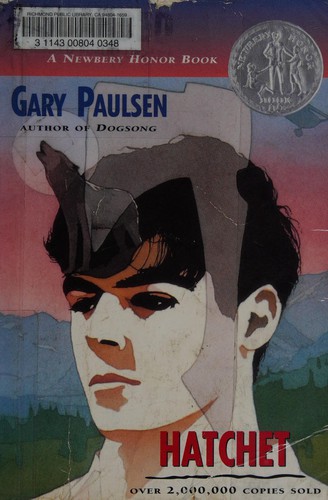
by Gary Paulsen
1987 · 192 pages · Summary updated 24 October 2026
Hatchet by Gary Paulsen is a survival novel about Brian Robeson, a thirteen-year-old who crashes in the Canadian wilderness with only a hatchet. For readers who want the plot, the survival lessons and the themes.
Brian Robeson is thirteen and angry. His parents are divorcing, and he carries a Secret: he saw his mother kissing another man. He flies alone in a small bush plane to visit his father in the oil fields of northern Canada. The pilot has a heart attack, and Brian crash-lands in a lake in the forest. He has only the clothes he wears and the hatchet his mother gave him. Through mistakes, hunger, insects, a bear, a moose and a tornado, he learns to make fire, find food and think before he acts. Paulsen's argument is that survival depends less on tools than on patience, observation and the refusal to give in to self-pity.
After the search plane flies away, Brian falls into despair and hurts himself. When he wakes, he understands the most important rule of survival: feeling sorry for yourself changes nothing and costs energy you cannot spare. Paulsen marks this as the moment the old Brian ends. The example is how Brian reacts to the tornado later in the book: he cries for a moment, then starts rebuilding his shelter and his fire.
Brian survives by watching, not by force. He learns that water bends light, so fish are lower than they look, and he aims his arrows below them. He learns that foolbirds hide in plain sight and teaches himself to see their shape. Paulsen argues that the wilderness rewards attention. The example is the turtle eggs: he finds them only because he notices odd tracks on the sand.
Almost every skill Brian learns comes from a mistake. The gut cherries make him sick, so he learns to eat less of an unknown food. The porcupine's quills hurt, so he builds a door for his shelter, and the thrown hatchet makes sparks. The skunk sprays him, so he builds a safer place to store food. Paulsen shows a cycle: act, fail, think, change. The example is fire, which comes only after hours of failed sparks.
At first Brian hopes to be rescued any minute, and every delay crushes him. Later he builds a different kind of hope, based on what he can do himself. Paulsen contrasts the two. Wishful hope waits for someone else. Tough hope keeps working. The example is Brian's food store: he builds a pen of sticks to keep fish alive, because he no longer counts on rescue coming soon.
The hatchet is a silly gift at the start. By the middle, it is his most valuable thing. It cuts wood, builds a shelter, makes fire and opens the plane. But it does nothing on its own. Paulsen shows that tools amplify knowledge. The example is fire: Brian has had the hatchet since the first day but makes fire only once he learns to shred birch bark into a nest.
The bear in the raspberry patch leaves Brian alone. The moose attacks him for no reason. The tornado wrecks his camp the same night. Paulsen's point is that the forest is neither friend nor enemy. It follows its own rules, and Brian must adapt to them. The example is how Brian's view changes: early on he thinks the woods are against him, and later he simply prepares for anything.
Brian finds the emergency transmitter in the survival pack, flips the switch, sees nothing happen and puts it aside. A fur buyer hears its signal and lands that evening, after 54 days. Paulsen ends with an irony: the device that saves him is the one thing he does not understand. The lesson is that knowledge has limits, and that the skills he learned kept him alive long enough to be found.
Hatchet by Gary Paulsen was published in 1987 and was a Newbery Honor book in 1988. It is one of the most widely taught survival stories in American schools. Paulsen drew on his own life in the woods of northern Minnesota. He had trapped, hunted and run sled dogs in two Iditarod races, and he used his own experience for Brian's methods. He later wrote four more books about Brian, including The River, Brian's Winter, Brian's Return and Brian's Hunt.
The story opens in the air. Brian Robeson, thirteen, sits next to the pilot of a single-engine Cessna, flying from Hampton, New York, to visit his father. His father is an engineer in the oil fields of northern Canada. His parents have just divorced, and Brian will spend the summer with his father.
Brian thinks about the Secret. A few months earlier, he saw his mother in a station wagon at the mall, kissing a man with short blond hair who was not his father. He has told no one. He thinks the Secret is why his parents split up, and he cannot stop replaying it. At the airport, his mother gave him a present: a hatchet in a leather case for his belt. He thought it looked silly, but he wears it to please her.
The pilot lets Brian hold the controls for a while. Later the pilot complains of pain, rubs his shoulder and arm, and grimaces. Then he jerks back in his seat. He is having a heart attack. In a few moments he is dead.
Brian is alone in a plane he cannot fly, over endless forest. He puts on the headset and calls for help. A voice answers, but the signal fades. The plane flies on autopilot until the fuel runs out. Brian sees a lake and steers toward it. The plane hits the trees, then the water. He swims out of the sinking cabin, half-drowned, and pulls himself onto the shore. He passes out.
When Brian wakes, he is covered in mosquito bites. He is in a forest by an L-shaped lake. He is badly bruised, and his head aches. He drinks lake water and realizes he is hungry and alone.
He remembers his English teacher, Mr. Perpich, who told the class to stay positive and to know that you are your most valuable asset. Brian decides to think through his situation. The plane was off course, so searchers may not know where to look. He may be there for a while.
He builds a shelter under a rock overhang near the lake. He finds a bush of red berries and eats them until he is full. He names them gut cherries because they make him violently sick that night. A few days later he finds raspberries. A bear appears in the raspberry patch, looks at him and leaves. Brian learns that the animals of the forest are not all out to kill him.
One night a porcupine wanders into the shelter. Brian throws his hatchet at it in the dark. The hatchet misses and hits the rock wall, and sparks fly. Brian's leg is full of quills, and he is in pain, but the next morning he understands what the sparks mean.
He spends hours striking the hatchet against the rock to make sparks. They land on dry grass and die. He learns that fire needs air and finer fuel. He peels paper-thin strips of birch bark, shreds them into a fluffy nest, and blows gently on the sparks. A tiny flame catches. He feeds it twigs, then sticks, and keeps it alive.
Fire changes everything. It keeps the mosquitoes away. It warms him at night. It is company. Brian now thinks of the fire as a friend. He keeps it burning day and night.
Brian sees a turtle's tracks on the sand and digs up a nest of turtle eggs. He eats them raw. He learns to save some for later.
He watches small fish in the shallows and tries to catch them with his hands. He makes a spear with a forked end, but the fish move too fast. He notices that water bends light, so the fish are not where they look. He makes a bow and arrows and learns to aim below the fish.
He learns to hunt the birds he calls foolbirds, which are a kind of grouse. They sit so still he walks right past them, until he learns to look for their shape instead of their color.
A plane flies over the lake. Brian runs to build a signal fire, but the plane turns and leaves. No one has seen him. That night he falls into despair. He tries to hurt himself with the hatchet. When he wakes, he decides that he is not the same boy. He calls himself the new Brian. He has learned the most important rule: feeling sorry for yourself does not work. It wastes energy and changes nothing.
The forest keeps teaching him. A skunk sprays him in the face when he surprises it at his food store. A moose attacks him for no clear reason while he wades in the lake and nearly drowns him. That same night a tornado tears through the area. It destroys his shelter and scatters his fire. Brian rebuilds. He has learned that the woods will not care if he lives or dies, and that he must expect setbacks.
The tornado also moves the crashed plane. Its tail now sticks up out of the water, and Brian remembers that planes carry a survival pack. What he finds when he goes after it, and how his time in the woods ends, are in the spoiler section below.
This section reveals the ending.
Brian builds a raft out of logs and paddles it to the plane's tail. He cuts through the aluminum skin with the hatchet. He drops the hatchet in the lake and dives to the bottom to find it, a moment that shows how much he depends on it. He keeps cutting and finally squeezes inside.
In the cabin, he sees the pilot's head. The body has been eaten by fish. Brian is sick, then keeps going. He finds the survival pack. It holds a sleeping bag, cooking pots, matches, a knife, a compass, a survival rifle and packets of freeze-dried food. It also holds an emergency transmitter, a small box with an antenna. Brian does not know what it is. He flips the switch, sees nothing happen and puts it aside.
That night he cooks a full meal for the first time in weeks. As he eats, he hears an engine. A small floatplane lands on the lake. The pilot is a fur buyer who picked up the transmitter's signal. He looks at Brian, at the camp and at the fire, and says that Brian is the boy they were searching for. They had given up weeks ago. Brian has been in the forest for 54 days.
An epilogue explains what came next. Brian has lost a great deal of weight and has new habits: he watches and thinks before he acts. He has dreams about the lake and the woods. His father and mother greet him. He never tells his father about the Secret, though he almost does once. Paulsen adds that if Brian had not been found, he would have faced the northern winter with only summer skills, a possibility he later explored in Brian's Winter.
Read it if you want a short, fast survival story with real outdoor detail, or if you are studying it and need the chapters in order. It suits readers aged ten and up, and adults who enjoy stories about patience and practical problem solving.
12 cards
Question 1 of 5
Where is Brian flying when the plane goes down?
After a tornado lifts the crashed plane's tail out of the lake, Brian cuts his way inside and finds the survival pack. He switches on an emergency transmitter without knowing what it is. A fur buyer hears the signal and lands that evening. Brian has survived 54 days. He never tells his father the Secret.
Wonder by R. J. Palacio is a novel about August Pullman, a ten-year-old boy with a facial difference who goes to school for the first time in fifth grade. For readers who want the plot, the narrators and the book's lesson on kindness.

Unlimited Memory by Kevin Horsley teaches the techniques memory champions use, from the SEE principle to the memory palace, in a short practical guide. For students and professionals who want to learn faster and remember more.

Ugly Love is Colleen Hoover's romance about Tate Collins, a nursing student who agrees to a no-strings affair with a guarded airline pilot, Miles Archer, whose past is a closed door. For readers who want a steamy, emotional love story with a heartbreaking backstory.
Zora Neale Hurston's novel about Janie Crawford, a Black woman in early 1900s Florida who moves through three marriages in search of real love and her own voice. For readers who want the plot, the themes and the meaning of the title.
New books, occasionally