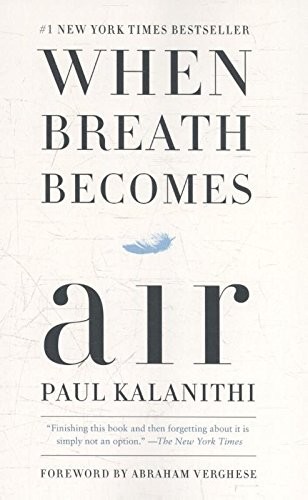
Paul Kalanithi's memoir of training as a neurosurgeon, being diagnosed with stage IV lung cancer at 36, and deciding how to live in the time left. For readers who want a doctor's account of facing death.
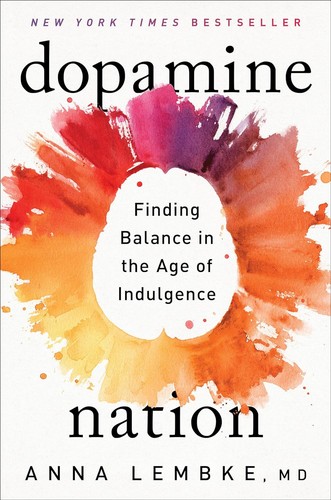
by Anna Lembke
2021 · 304 pages · Summary updated 24 October 2026
Stanford psychiatrist Anna Lembke on why a world of easy pleasure leaves people in pain, and how abstinence, self-binding and honesty reset the brain. For anyone who feels hooked on something.
Lembke, who runs an addiction clinic at Stanford, argues that pleasure and pain share one system in the brain and sit on a balance. Every pleasure tips the balance, and the brain pushes back toward pain to restore level. Repeated pleasure makes the pushback stronger and longer, until the thing you use no longer feels good and you need it just to feel normal. In a world of cheap, abundant dopamine (drugs, food, phones, porn, gambling), many people live in this deficit state. Her remedy is a four-week dopamine fast, self-binding strategies that put distance between you and the substance, deliberate pain such as cold water and exercise, and radical honesty that rebuilds connection.
Lembke's central model is that pleasure and pain are processed in overlapping brain regions and work like two sides of a balance. Any pleasure tips the balance, and the brain restores level by pushing toward pain. That pushback is the comedown and the craving. With repeated exposure, the pleasure response weakens and the pain response grows, until the balance rests on the pain side. The model draws on the opponent-process theory of Solomon and Corbit, and it explains why the thing you use stops feeling good yet becomes hard to stop.
The human brain evolved in scarcity, where chasing pleasure and avoiding pain kept people alive. Modern economies produce an endless supply of potent, novel, available rewards: drugs, processed food, porn, gambling, phones. The same wiring now drives overconsumption. Lembke adds that people have become intolerant of discomfort and are medicated for ordinary sadness and boredom. She argues that the flight from pain is itself a source of misery, because it keeps the balance tipped and leaves people unable to enjoy anything.
Lembke uses dopamine as a yardstick for how addictive something is. In rat studies, chocolate raises dopamine about 55 percent above baseline, sex about 100 percent, nicotine 150 percent, cocaine 225 percent and amphetamine 1,000 percent. Repeated exposure causes neuroadaptation: the brain reduces its own response, so the same dose delivers less and the comedown lasts longer. The user ends up in a dopamine deficit state, anxious and unable to enjoy ordinary things, using the substance to feel normal rather than good.
Lembke's first prescription is about four weeks of abstinence from the problem substance or behavior. Her patient Delilah smoked cannabis all day for anxiety. The first two weeks without it were worse. By week four she felt better than in years and saw that the cannabis had caused the anxiety it was meant to treat. The DOPAMINE acronym structures the process: Data, Objectives, Problems, Abstinence, Mindfulness, Insight, Next steps, Experiment. Severe addictions need medical supervision, and the goal is restored balance, not a pleasureless life.
Willpower is a poor defense against products engineered to defeat it. Lembke's alternative is self-binding: barriers set in advance, like Ulysses tied to the mast. Physical strategies use space (delete the app, keep no alcohol at home, take naltrexone). Chronological strategies use time (only on weekends, set a timer). Categorical strategies use meaning (no hard liquor but beer with dinner, no video on the phone). Categories work because they turn a moment-by-moment decision into a rule you made when thinking clearly.
The balance works in both directions. Deliberate discomfort tips it toward pleasure, through hormesis: a small dose of a stressor makes the body stronger. Cold-water immersion raised dopamine about 250 percent in one study, with the rise lasting hours rather than minutes. Intense exercise and fasting work similarly. Her patient Michael used daily ice baths in his recovery from cocaine and alcohol. Lembke warns that pain can become its own addiction, so the aim is modest, regular discomfort, not extremes.
Lying and addiction travel together: patients lie about use first to others, then to themselves. Radical honesty means telling the truth about small things daily. It builds awareness, because saying a thing aloud forces you to notice it. It builds intimacy, because people who know the truth can be close to you. It builds accountability. Her patient Maria confessed eating her husband's cake rather than break her honesty rule, and the small truth protected the large ones. Lembke cites research linking honesty to stronger prefrontal circuits.
Lembke treats shame as a social signal. Destructive shame isolates: the person hides, lies and uses more. Prosocial shame connects: the person admits the failure to a group that responds with acceptance and clear expectations. Alcoholics Anonymous works this way, letting members confess relapse without expulsion while group norms pull them back. Her patient Lori relapsed repeatedly until she found a group that would hear the truth and keep her. Recovery, Lembke argues, is a social process.
Anna Lembke is a psychiatrist and the chief of the addiction medicine clinic at Stanford University. Her earlier book, Drug Dealer, MD, examined how doctors fueled the opioid crisis. Dopamine Nation widens the lens. Her patients are not only addicted to opioids and alcohol. They are hooked on cannabis, pornography, romance novels, video games, shopping, gambling and their phones. Her claim is that these are versions of the same problem, and that the problem has a shared mechanism in the brain.
The book opens with Jacob, a patient in his sixties who built a machine for compulsive masturbation and lost his marriage and much of his life to it. Lembke tells his story without judgment and uses it to show the shape of addiction: a behavior that starts as pleasure, escalates, stops delivering pleasure and continues anyway.
She then sets the scene. We live in an age of abundance. Modern economies produce an endless supply of high-reward goods, engineered to be more potent, more available and more novel than anything our ancestors met. Lembke calls this the problem of plenty. The human brain evolved in a world of scarcity, where seeking pleasure and avoiding pain kept people alive. In a world of plenty, the same wiring drives overconsumption.
She adds a second observation. We have become intolerant of pain. People are prescribed more medication than ever for anxiety, sadness and boredom, and the message of modern life is that discomfort is a problem to be solved. Lembke suggests that this flight from pain is itself making people miserable.
The book's central model comes from neuroscience. Pleasure and pain are processed in overlapping regions of the brain and work like opposite sides of a balance. When you experience pleasure, the balance tips to the pleasure side. The brain then works to restore level, and it does so by pushing toward pain. This aftereffect, which Lembke calls the gremlins hopping on the pain side, is the comedown, the craving, the slight unease after a pleasure ends. The model draws on the opponent-process theory of Richard Solomon and John Corbit.
Dopamine is the common currency. It is not the molecule of pleasure so much as the molecule of wanting and motivation. Lembke cites studies of dopamine release in rats to give a sense of scale. Chocolate raises dopamine about 50 percent above baseline, sex about 100 percent, nicotine about 150 percent, cocaine about 225 percent and amphetamine about 1,000 percent.
With repeated exposure, the brain adapts. The pleasure response gets weaker and shorter, and the pain response gets stronger and longer. This is tolerance, or neuroadaptation. Eventually the balance tips to the pain side as its resting state. The person is now in a dopamine deficit state: anxious, irritable, unable to enjoy ordinary things, and using the substance not to feel good but to feel normal. Lembke argues that this explains why addiction looks like a disease of the brain rather than a failure of will, and why the first task of recovery is to stop tipping the balance.
Lembke's first prescription is a period of abstinence, typically four weeks. Her patient Delilah, a young woman who smoked cannabis all day for anxiety, is the running example. Lembke asked her to stop for a month. The first two weeks were worse, with more anxiety and poor sleep, because the balance was still tipped toward pain. By the fourth week, Delilah felt better than she had in years, and she realized the cannabis had been causing the anxiety it was supposed to treat.
The method is organized around the acronym DOPAMINE. Data: gather the facts about what you use, how much and how often. Objectives: name what the behavior does for you, since every addiction serves a purpose. Problems: list the harms, which addicted people often cannot see until they stop. Abstinence: four weeks is long enough for the balance to reset for most people. Mindfulness: observe the discomfort of withdrawal without running from it. Insight: abstinence lets you see the behavior clearly. Next steps: decide whether to return in moderation or stay abstinent. Experiment: test the plan and adjust.
Lembke is clear that four weeks is not a cure and that some people, especially those with severe addiction, should not attempt abstinence without medical help. She is also clear about the goal: not a life without pleasure but a balance that can feel pleasure again.
Willpower, Lembke argues, is a poor defense against a substance engineered to defeat it. Her alternative is self-binding: deliberately creating barriers between yourself and the thing you crave, decided in advance when you are thinking clearly. Her image is Ulysses tying himself to the mast so he could hear the Sirens without steering toward them. She sorts self-binding strategies into three kinds.
Physical strategies use space. Remove the substance from the house. Delete the app. Keep the phone in another room. Some patients take medications such as naltrexone or disulfiram, which make the substance less rewarding or make its use unpleasant.
Chronological strategies use time. Limit use to certain hours, days or occasions. Set a timer. Lembke notes that time limits help people notice how a short session stretches into hours.
Categorical strategies use meaning. Decide which categories of a substance are off limits and which are allowed, such as no hard liquor but beer with dinner, or no video on the phone but books on an e-reader. Categories work because they remove the decision from each moment and attach it to a rule.
She also addresses the role of medication. Psychiatric drugs can restore a broken balance, and she prescribes them. But she argues that medicating every discomfort can keep people from doing the work that would make the drugs unnecessary, and she describes patients whose long-term use of prescribed stimulants or benzodiazepines became an addiction of its own.
Lembke includes her own case. For a period she read romance novels compulsively, starting with the Twilight series and escalating to more explicit books, reading late into the night and hiding it from her family. She recognized the pattern from her patients and used the same tools on herself.
The third part of the book turns the balance around. If pleasure tips the balance toward pain, then pain tips it toward pleasure. Lembke calls this pressing on the pain side. The mechanism is hormesis: a small dose of a stressor makes the organism stronger. Cold-water immersion, intense exercise, fasting and other deliberate discomforts produce a slow rise in dopamine and other neurotransmitters that lasts for hours, without the sharp spike and crash of a drug.
Her example is Michael, a patient who recovered from cocaine and alcohol addiction partly through daily ice baths. She cites research showing that cold water raised dopamine levels by about 250 percent, with the rise lasting hours rather than minutes. Exercise has similar effects, and she notes that it is one of the most reliable treatments for depression and anxiety.
She adds a warning. Pain can be addictive too. People who chase extreme exercise, extreme fasting or extreme risk can tip the balance the same way a drug does, and they show the same tolerance and withdrawal. The point is not to replace one compulsion with another but to use modest, regular discomfort to keep the balance level.
Lembke's clinical experience is that lying and addiction travel together. Patients lie about what they use, how much and why, first to others and then to themselves. Radical honesty means telling the truth about small things as well as large ones, every day. She argues that it works through three channels. It builds awareness, because saying something aloud forces you to notice it. It builds intimacy, because people who know the truth about you can be close to you. And it builds accountability, because a stated truth is harder to retreat from.
Her example is Maria, a patient in recovery from alcohol who ate her husband's cake and then told him the truth about it, over a small matter, because she had committed to total honesty. The small truth protected the larger one. Lembke also cites brain research suggesting that honesty strengthens prefrontal circuits involved in planning and self-control, and that habitual lying weakens them.
The last chapter is about shame, which Lembke treats as a social signal rather than a private emotion. Destructive shame isolates: the person who feels it hides, lies more and uses more. Prosocial shame connects: the person admits the failure to a group that responds with acceptance and clear expectations. She points to Alcoholics Anonymous as a system built on prosocial shame, where members confess relapse without being cast out and where the group's norms pull them back. Her patient Lori, who relapsed repeatedly, stayed in recovery once she had a group that would hear the truth and still keep her.
The book ends with a list of lessons of the balance. The relentless pursuit of pleasure leads to pain. Recovery begins with abstinence. Abstinence resets the reward pathway and restores the ability to enjoy simple pleasures. Self-binding creates distance between desire and consumption. Medication can restore balance, but consider what it costs to medicate every discomfort. Pressing on the pain side can reset the balance toward pleasure. Beware addiction to pain. Radical honesty promotes awareness, intimacy and connection. Prosocial shame keeps people in the group. And finally, instead of running from the world, find a way to immerse yourself in it.
Neuroscientists have pointed out that the book simplifies dopamine, which is involved in motivation, learning and movement and is not a pleasure chemical, and that the rat studies she cites do not translate directly to humans. Critics also note that most of the evidence is patient anecdote, that "dopamine fasting" is a popular label rather than a tested protocol, and that the book treats very different behaviors (opioid use, phone use, reading) as one disorder. Some reviewers worry that the chapter on pursuing pain could be misread as endorsing extreme practices.
Read it if you suspect you are hooked on something ordinary, such as your phone, sugar or shopping, and you want a clear model for why stopping is hard and how to start. It is also useful for anyone supporting a person in recovery. Readers who want rigorous neuroscience should look elsewhere.
12 cards
Question 1 of 5
In Lembke's model, what happens in the brain right after a pleasure?
Paul Kalanithi's memoir of training as a neurosurgeon, being diagnosed with stage IV lung cancer at 36, and deciding how to live in the time left. For readers who want a doctor's account of facing death.
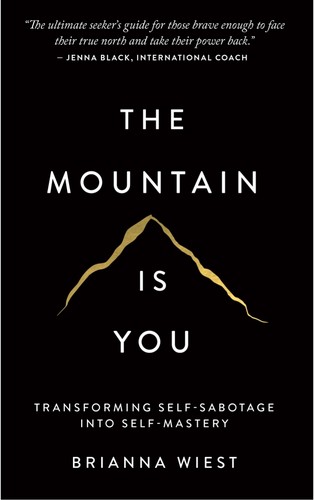
Brianna Wiest on why people sabotage their own goals and how to turn that pattern into self-mastery. For anyone who keeps getting in their own way.

Salinger's novel about Holden Caulfield, a sixteen-year-old who is expelled from prep school and wanders New York for three days. For students and readers who want the plot, the voice and the meaning of the title in plain words.
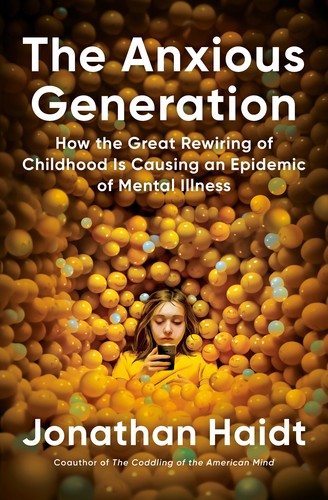
Jonathan Haidt's case that smartphones and overprotection rewired childhood after 2010 and drove a surge in teen anxiety. For parents, teachers and anyone weighing the research dispute around it.
New books, occasionally