Mitch Albom's record of fourteen Tuesday visits with his dying college professor, Morrie Schwartz, and the lessons on love, work, family and death that came out of them. For readers who want a short book on how to live.
2016 · 256 pages · Summary updated 24 October 2026
Paul Kalanithi's memoir of training as a neurosurgeon, being diagnosed with stage IV lung cancer at 36, and deciding how to live in the time left. For readers who want a doctor's account of facing death.
Paul Kalanithi is in his last year of neurosurgery residency at Stanford when a scan shows tumors in his lungs. He is 36. The book has two parts. The first follows his path from a childhood in Arizona, through literature degrees and a year at Cambridge, to medical school at Yale and seven years of brain surgery, all driven by one question: what makes a human life meaningful? The second part follows the illness. He returns to the operating room, decides with his wife Lucy to have a child, and starts to write. He dies in March 2015, eight months after his daughter Cady is born. Lucy's epilogue describes his last days. The book is unfinished, and it says so.
Kalanithi trained for ten years for a career that ended before it started. He argues that the training still counted, because it was spent on the question he cared about: what makes a human life meaningful. He uses the image of an asymptote. A surgeon never reaches perfection but approaches it forever. A life can be judged the same way, by the direction it took and the care it was lived with, not by the number of years it lasted.
Neurosurgery forces choices about identity. A tumor near the speech center can be removed with a risk to language. A patient might accept paralysis but not the loss of the ability to read. Kalanithi argues that the surgeon's first job is to learn what the patient would and would not trade to survive. He learned this through literature before medicine, and he applied it to himself when his oncologist asked what he valued instead of how long he wanted to live.
Kalanithi asks his oncologist Emma for the Kaplan-Meier survival curves. She refuses. Numbers describe populations, not a person, and would not tell him whether he had ten months or ten years. She asks what matters to him instead. He later sees this as the right decision. Without a known horizon, he cannot plan by time, so he plans by value. He returns to surgery, has a child and writes. The lesson applies to any decision made under uncertainty.
Kalanithi studied English before biology and argues that the two belong together. A doctor's words shape how a patient understands a scan, a prognosis and a choice. He describes helping a patient read a fatal image in plain terms and later being on the receiving end of the same conversation. He argues that medicine fails when it treats data as answers. The book itself is his attempt to give language to an experience that scans cannot describe.
After the diagnosis Kalanithi rebuilds his surgical schedule from short cases to full weeks, and finishes his residency while on cancer treatment. When chemotherapy puts him in the hospital, he stops it. He takes Beckett's line, I can't go on, I'll go on, as his rule. The book shows that persistence and surrender are not opposites. Each decision is made with the facts available and revised when they change.
Paul asks Lucy whether a baby would make his death harder for her. She asks whether it would not be good if it did. They use IVF and their daughter Cady is born in July 2014. He has eight months with her. His last written words are to Cady: she filled a dying man's days with a joy that did not need more. The book argues that relationships can be complete even when they are short.
Lucy Kalanithi's epilogue describes what Paul could not: the final decline, his choice of comfort care over a ventilator, the family at his bed and his death on March 9, 2015. She refuses to turn it into a lesson. She describes a marriage that stayed tender and funny through the end. Readers often cite her chapter as the reason the book is about love as much as about death.
“Even if I'm dying, until I actually die, I am still living.”
“I can't go on. I'll go on.”
When Breath Becomes Air opens with Paul Kalanithi looking at his own CT scan. The lungs are full of tumors, the spine is deformed and a lobe of the liver is gone. He has read hundreds of scans like it, always for other people. He is 36, a chief resident in neurosurgery at Stanford, with months to go before he becomes an attending surgeon. His wife Lucy, an internist, is beside him. He has been losing weight and having back pain for months and has explained it away as the cost of residency.
The title comes from a poem by Fulke Greville, a 16th century English poet. The book has a foreword by the physician and writer Abraham Verghese and an epilogue by Lucy Kalanithi. Paul died on March 9, 2015, before the book was finished. What follows is the manuscript as he left it.
Kalanithi grows up in Kingman, Arizona, a desert town where his family moves when he is ten. His father is a cardiologist who works long hours. His mother, worried about the local schools, hands her sons a reading list: Brave New World, 1984, Hamlet and more. Paul reads everything and decides that he will not be a doctor. Medicine, in his house, means absence.
At Stanford he takes degrees in English literature and human biology. He wants to understand what makes life meaningful, and he thinks the answer sits where language and the brain meet. He writes a thesis on Walt Whitman and the physiology of the self. He then takes a master's degree in the history and philosophy of science and medicine at Cambridge. The reading does not satisfy him. He concludes that he cannot understand life and death from a library. He needs to be in the room where they happen. He applies to medical school.
At Yale he dissects a cadaver and notes how fast the body becomes an object. He meets Lucy Goddard, who becomes his wife. He records his first conversations with patients about fatal scans and learns that the words a doctor uses are a kind of surgery too.
He chooses neurosurgery because the brain is where identity lives. A tumor in the frontal lobe changes who a person is. A surgeon in that territory has to decide, with the patient, what loss is acceptable: speech, movement, memory, the ability to recognize a face. He writes that before operating on a brain he has to understand the mind, meaning the patient's values and what they would not trade to survive.
Residency at Stanford is seven years. Kalanithi describes hundred hour weeks, the first death he causes through delay, the first time he tells a family that their child will not recover. He takes on a research year in a neuroscience lab that works on brain implants. He describes a friend and fellow resident, Jeff, who kills himself after a patient dies in his care. Kalanithi records this to show the cost of the work. He also records what the work gives him: the sense that he is in the place where the big questions get asked, and that he is good at it. By his final year he has job offers, prizes and a plan: a lab, a surgical practice, children with Lucy. Then the back pain gets worse.
The diagnosis is stage IV non-small cell lung cancer. Kalanithi has never smoked. He is referred to an oncologist he calls Emma, who refuses to give him survival statistics. He asks for the Kaplan-Meier curves, the graphs that show how many patients are alive at each point after diagnosis. She will not discuss them. She asks instead what matters to him and what he wants his life to look like. He is irritated, then grateful. He understands that she is treating him as a person with a future to design, not a case with a prognosis.
The tumor carries a mutation in the EGFR gene, so he starts on Tarceva, a daily pill. The cancer shrinks. His weight returns. He has a decision to make. He could stop operating and spend the time with Lucy. He could return to the hospital. Emma's advice is to decide what he values, since the data cannot tell him how long he has. Because he does not know whether he has ten years or ten months, every plan is a guess. He goes back to the operating room.
He describes the return in detail. He builds up from short cases, then to full days, then to full weeks. He operates on brain tumors in other people while living with tumors in his own body. He completes the requirements of his residency. He also admits what the work costs him: nausea, exhaustion and a fear that he will harm a patient.
In the same months, he and Lucy decide to have a child. He asks whether a baby would make his death harder for her. She answers with a question: would it not be good if it did? They use IVF with sperm he banked before treatment, because the drugs could damage it. Their daughter Elizabeth Acadia, called Cady, is born on July 4, 2014.
The Tarceva stops working. A new scan shows the cancer growing. He starts chemotherapy. A round of it puts him in the hospital. He stops operating for good. He writes that the future he spent a decade building has disappeared, and that he is now like a sprinter who has been told the race is cancelled.
He turns to writing. He has always wanted to write a book, and now there is no later. He writes at the kitchen table, in bed and in the infusion chair. He reads the writers who faced death before him, including Tolstoy, Montaigne and Samuel Beckett, whose line "I can't go on. I'll go on" becomes the sentence he repeats to himself.
The second part ends with a short message to Cady. He tells her that she filled a dying man's days with a joy he had not known before, one that did not need more. He asks her to count that as evidence when she judges what her life has meant.
Lucy describes what Paul could not. In the winter of 2015 the cancer grows past the reach of treatment. He is admitted to the hospital with breathing failure, declines a ventilator and chooses comfort care. Family members gather. Cady is brought to his bed and placed in his arms. He dies on March 9, 2015, aged 37, with Lucy beside him.
Lucy says that the book was unfinished because Paul ran out of time, and that she has not completed it for him. She describes what he was like as a husband in the last months: a man who kept being tender and funny while losing everything. She describes the burial on a hillside with a view of the Pacific. She writes about grief without presenting it as a lesson. Her chapter is why many readers say the book is also about marriage.
Kalanithi does not give rules. The book is an argument carried by examples, and three points run through it.
First, the meaning of a life does not come from how long it lasts. He trained for a decade for a career that never began, and he argues that the training still mattered because it was spent on the question that mattered to him. He uses the image of an asymptote: a surgeon cannot reach perfection, but can believe in a line he approaches forever.
Second, doctors and patients both need language. Kalanithi's scans told him nothing about how to live. Emma's questions did. He argues that medicine fails when it treats numbers as answers, and that literature trained him to speak to patients about death in a way his medical training had not.
Third, the right response to death is not denial and not surrender. He kept operating, had a child and wrote a book while dying. He also stopped operating when the cost became too high. The book shows the decisions being made, one at a time, with the information he had.
Some reviewers note that the book is unfinished: the second part is shorter and stops before the last months, so Lucy's epilogue carries the ending. A few find the literary references, from Eliot to Beckett, heavier than the story needs. Others point out that Kalanithi's prognosis, with an EGFR mutation and targeted therapy, was better than the typical lung cancer case, so his course is not a template.
Read it if you work in medicine, if you face a diagnosis or care for someone who does, or if you want a short book about what to do with limited time. It reads in a few hours and is often recommended to medical students in their first year.
11 cards
Question 1 of 5
What did Kalanithi study before medical school?
Mitch Albom's record of fourteen Tuesday visits with his dying college professor, Morrie Schwartz, and the lessons on love, work, family and death that came out of them. For readers who want a short book on how to live.
Jonathan Haidt's case that smartphones and overprotection rewired childhood after 2010 and drove a surge in teen anxiety. For parents, teachers and anyone weighing the research dispute around it.
Phil Knight's memoir of building Nike, from selling Japanese running shoes out of his car in 1964 to the public offering in 1980. For readers who want the real story of a startup, including the years it nearly died.
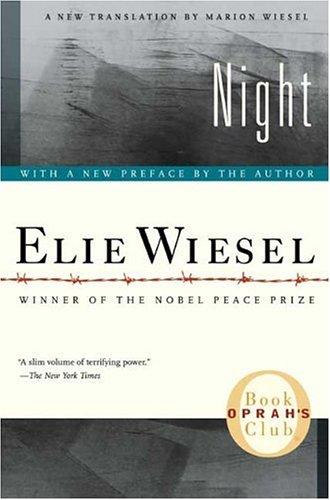
Elie Wiesel's memoir of one year as a teenage prisoner in Auschwitz, Buna and Buchenwald with his father. For readers who want a first-hand account of the Holocaust in a single short book.
New books, occasionally