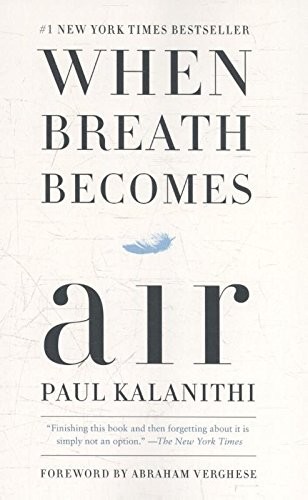
Paul Kalanithi's memoir of training as a neurosurgeon, being diagnosed with stage IV lung cancer at 36, and deciding how to live in the time left. For readers who want a doctor's account of facing death.

by Elie Wiesel
1956 · 120 pages · Summary updated 24 October 2026
Elie Wiesel's memoir of one year as a teenage prisoner in Auschwitz, Buna and Buchenwald with his father. For readers who want a first-hand account of the Holocaust in a single short book.
In 1944 Eliezer Wiesel is fifteen and lives in Sighet, a town in Hungarian Transylvania. The Germans arrive, the Jews are put in ghettos, and in May the town is deported to Auschwitz. His mother and his youngest sister are sent to the gas chambers on the first night. Eliezer and his father survive the work camp at Buna, a winter death march and a train of open cattle cars. In Buchenwald his father dies in January 1945. Eliezer is freed in April. The book records what he saw, what the camps did to belief in God and to the bond between fathers and sons, and what he looked like in a mirror when it was over.
Moishe the Beadle survives a mass shooting in 1942 and returns to Sighet to tell what he saw. The town calls him mad or says he wants pity. Even in 1944, with the German army in Hungary, the Jews of Sighet believe the war will end before harm reaches them. Wiesel records this without blame, but the lesson is clear: people fit new information to what they want to be true. He also notes a servant who offered to hide the family, and his father's refusal.
At Birkenau Eliezer sees children burned in a pit while his father recites the prayer for the dead. In a famous passage he vows never to forget the smoke, the faces and the night that turned his life into one long night. He is fifteen. From this point he still believes that God exists, but not that God is just. The book is as much about the death of a belief as about the death of people.
The hanging of a young boy, a pipel, is the center of the book. The boy is too light to die at once and hangs for more than half an hour while the prisoners watch. A man behind Eliezer asks where God is. Eliezer answers inside himself that God is there, hanging on the gallows. Readers have taken this as a statement of atheism, as an accusation against God, and as a claim that God suffers with the victims. Wiesel leaves it open.
Eliezer's father is his reason to live, and the camp works to break that. Eliezer watches a son leave his father behind on the death march, and another son beat his father to death for bread. In Buchenwald a block leader tells him to keep his father's rations. When his father dies Eliezer records that part of him felt free. He does not excuse this. He reports it so that readers know what starvation does to love.
Eliezer and his father choose to leave the infirmary and join the winter evacuation, because they fear that the SS will shoot the patients. The patients were liberated two days later. Eliezer lies about his age at the gate, gives up a gold crown to save his father from drills, and helps his father slip back into the line of the living at a selection. Wiesel shows that survival was not a skill or a virtue. It was a run of guesses that happened to go right.
Eliezer's name becomes A-7713, tattooed on his arm. Prisoners stop speaking of family, then of God, then of anything but bread. During an air raid a man is shot reaching for soup and the others feel only hunger. Wiesel's spare style mirrors this. He uses short sentences and few adjectives, and he leaves gaps where another writer would explain. The restraint is the point. It shows a world where language had been reduced along with the people who used it.
Wiesel wrote the book so that the dead would have a record and the living could not say they did not know. In his later preface he explains that he chose to write a short book rather than a complete one. The final image, a corpse looking back from a mirror, is not a conclusion but a charge. The reader now carries what the narrator saw. Wiesel spent the rest of his life insisting that indifference, not hatred, is the opposite of love.
Night is Elie Wiesel's account of his deportation from Hungary in 1944 and his year in Nazi camps. He wrote it first in Yiddish, then in a shorter French version published in 1958. The narrator is called Eliezer. The book covers about one year, from the spring of 1944 to April 1945. It is short, and it is told without ornament.
In 1941 Eliezer is twelve and lives in Sighet, a town in Transylvania under Hungarian rule. His father is a shopkeeper and a respected figure in the Jewish community. Eliezer studies the Talmud by day and wants to study the Kabbalah. His teacher is Moishe the Beadle, a poor man who works at the synagogue.
In 1942 the Hungarian police expel the foreign Jews from Sighet, and Moishe goes with them. Months later he returns. He tells the town what happened. The Gestapo took the deportees into a forest in Galicia, made them dig pits and shot them. Moishe was shot in the leg and left for dead. He goes from house to house with his story. No one believes him. People say he wants pity, or that he has gone mad. Eliezer records this as the first lesson of the book: the warning came, and the town chose not to hear it.
Through 1943 and the start of 1944 life goes on. The radio reports German defeats. The Jews of Sighet tell each other that the war will end before anything reaches them.
In the spring of 1944 the German army occupies Hungary. Within weeks Sighet has new rules: Jews cannot leave their homes after six, cannot own gold or jewelry and must wear the yellow star. Then two ghettos are set up inside the town. The Wiesels stay in their own house, which lies inside the larger ghetto. Eliezer notes that people adjusted even to this. A former servant, Maria, offers to hide the family in her village. His father says no.
In May the ghetto is emptied in transports. The family goes in one of the last. The Hungarian police pack eighty people into each cattle car. On the train a woman named Madame Schächter screams that she sees a fire. There is no fire outside. The other passengers tie her up and beat her to make her stop. When the train reaches its destination the passengers see chimneys and smell burning flesh.
The place is Birkenau, the arrival camp of Auschwitz. An SS officer orders: men to the left, women to the right. Eliezer walks with his father. His mother and his younger sister Tzipora walk the other way. He never sees them again. His two older sisters, Hilda and Bea, survive the war, but he does not know this until later.
A prisoner tells Eliezer to say he is eighteen and tells his father to say he is forty. In fact they are fifteen and fifty. The man who decides who lives is Dr. Mengele, who holds a baton and points left or right. Eliezer and his father pass. On the way to the barracks they see a truck unload small children into a pit of flames. Eliezer's father recites the Kaddish, the prayer for the dead, and Eliezer feels anger at a God who allows this. In one of the most cited passages of the book he vows never to forget that first night, the smoke, the children's faces and the murder of his faith.
They are stripped, shaved, disinfected and given prison clothes. A number is tattooed on Eliezer's left arm: A-7713. After three weeks in Auschwitz they are marched to Buna, a labor camp attached to a factory.
At Buna Eliezer and his father are assigned to a warehouse for electrical parts. The work is light compared with other units. The danger comes from the men in charge. The Kapo Idek has fits of rage and beats prisoners at random. One day he beats Eliezer's father with an iron bar for nothing. Eliezer is angry at his father for not avoiding the blows. He notes this as a sign of what the camp is doing to him.
A dentist from Czechoslovakia wants Eliezer's gold crown. Eliezer claims to be ill and puts him off. The dentist is later hanged for selling the gold teeth he collected. Then the foreman Franek wants the crown. When Eliezer refuses, Franek torments his father with marching drills until Eliezer gives in. A prisoner pulls the crown out with a rusty spoon.
One Sunday Eliezer sees Idek with a Polish girl in a back room. Idek has him whipped twenty-five times in front of the whole unit.
During an air raid on the factory a prisoner crawls toward an unguarded cauldron of soup. He reaches it and is shot. The prisoners watch and feel nothing but hunger.
The camp holds public hangings. The one Eliezer records in detail is of a young boy, a pipel who served a Kapo accused of sabotage. The boy is so light that he does not die at once. He hangs between life and death for more than half an hour while the prisoners file past. Behind Eliezer a man asks where God is. Eliezer answers inside himself that God is there, hanging on the gallows. This is the center of the book.
On Rosh Hashanah, the Jewish New Year, ten thousand prisoners gather to pray. Eliezer does not pray. He asks why he should bless a God who keeps the crematoria running. He feels he has become the accuser and God the accused. On Yom Kippur his father tells him not to fast, since he needs his strength. Eliezer eats, and he turns the act into a protest.
Other prisoners travel the same road. Akiba Drumer, a devout man who used to sing Hasidic songs, loses his faith and gives up. He is chosen in a selection. He asks the others to say Kaddish for him in three days. They forget.
Eliezer does not stop believing that God exists. He stops believing that God is just. He is careful to describe this as what he felt at the time, not as a conclusion.
The camp holds selections. Dr. Mengele inspects the prisoners while they run past naked, and writes down the numbers of the weak. Those numbers go to the gas chambers. Eliezer passes. His father is written down. A second selection is held days later, and his father passes that one.
In the winter of 1944 Eliezer's foot swells with infection. A doctor in the camp infirmary operates. While he recovers, the Russian army approaches. The SS announce that the camp will be evacuated. Patients can stay behind. Eliezer and his father decide to go with the evacuation, because they believe the SS will shoot the patients. Eliezer learns after the war that the Russians liberated the infirmary two days after the camp was emptied.
The prisoners march at night in snow. The SS shoot anyone who stops. Eliezer runs on his wounded foot. A boy named Zalman collapses with stomach cramps and is trampled. Eliezer records Rabbi Eliahu, who searches for his son. Eliezer realizes that the son saw his father falling behind and ran ahead to lose him. He prays that he never does the same to his own father.
At Gleiwitz the prisoners are packed into a shed on top of each other. In the dark Eliezer hears a violin. It is Juliek, a young musician from Warsaw, playing a fragment of Beethoven. In the morning Juliek is dead and the violin is crushed. After a selection, in which Eliezer helps his father slip back among those allowed to live, they are loaded into roofless cattle cars.
The train takes ten days. The prisoners eat snow off each other's shoulders. At a stop a German worker throws bread into the car to watch the prisoners fight. Eliezer sees a son beat his father to death for a piece of bread, then die himself when others attack him. Of about a hundred men in Eliezer's car, twelve are alive when the train reaches Buchenwald.
At Buchenwald Eliezer's father has dysentery and cannot get up. The block leader tells Eliezer that in the camp there are no fathers and no sons, and that he should keep his father's rations for himself. Eliezer listens and hates himself for it. Other prisoners beat his father for soiling his bunk. An SS officer strikes his father on the head with a truncheon for calling out for water. Eliezer hears his father say his name. He does not go to him, because he fears the blows.
In the morning of January 29, 1945, another sick man lies in his father's bunk. His father was taken to the crematorium in the night. Eliezer does not weep. He writes that somewhere inside him a thought said he was free at last. He reports this without comment. It is the honesty of the book.
From then until April Eliezer thinks of nothing but food. In early April the SS begin to move prisoners out in groups. On April 10 the camp is to be emptied. The resistance in the camp rises up. On April 11 American tanks arrive. Three days later Eliezer has food poisoning and nearly dies. When he can stand he looks in a mirror for the first time since the ghetto. A corpse looks back at him. The book ends with that image.
The scholar Naomi Seidman has shown that Wiesel's longer Yiddish version, published in 1956, differs in tone from the French version of 1958: the Yiddish text is angrier at the bystanders, and the French text is more spare and more concerned with the silence of God. Wiesel also faced questions, which he rejected, about whether the book should be read as fiction. Many editions and school lists have classed it as both memoir and novel.
Read it if you want to know what the Holocaust was from the inside, told by someone who was fifteen when it happened to him. It is also a book about faith under pressure and about what a son owes a father. It takes two or three hours to read and is widely used in schools.
12 cards
Question 1 of 5
What does Moishe the Beadle do after he escapes the Gestapo?
Paul Kalanithi's memoir of training as a neurosurgeon, being diagnosed with stage IV lung cancer at 36, and deciding how to live in the time left. For readers who want a doctor's account of facing death.
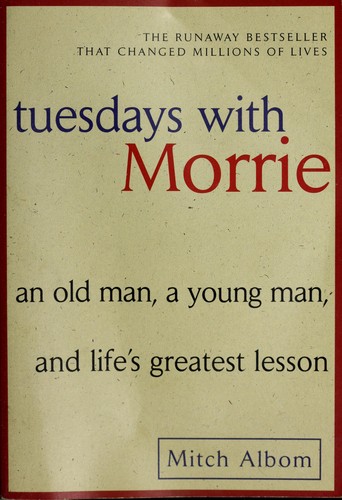
Mitch Albom's record of fourteen Tuesday visits with his dying college professor, Morrie Schwartz, and the lessons on love, work, family and death that came out of them. For readers who want a short book on how to live.
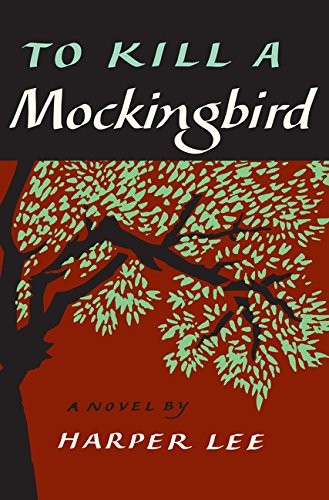
Harper Lee's novel about Scout Finch, her brother Jem, and their father Atticus, who defends a Black man falsely accused of rape in 1930s Alabama. For students and readers who want the plot, the themes and the ending in plain words.
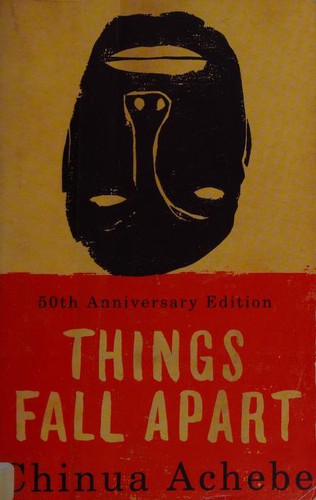
Chinua Achebe's novel about Okonkwo, an Igbo leader whose village is undone by his own rigidity and the arrival of British missionaries. For readers who want the colonial encounter told from the African side.
New books, occasionally