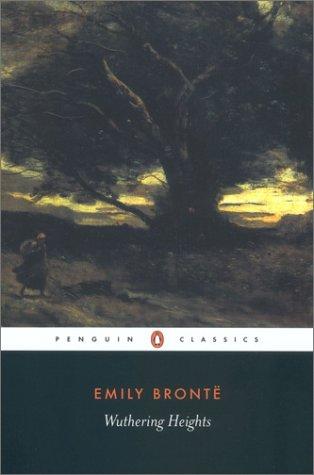
Emily Brontë's 1847 novel about Heathcliff, Catherine Earnshaw and two families on the Yorkshire moors, told across two generations. For readers who want the plot, the characters and the ideas behind a famous story of love and revenge.
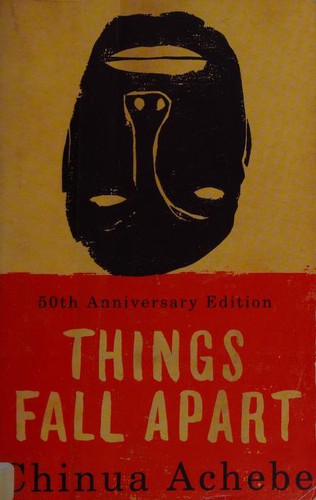
1958 · 209 pages · Summary updated 24 October 2026
Chinua Achebe's novel about Okonkwo, an Igbo leader whose village is undone by his own rigidity and the arrival of British missionaries. For readers who want the colonial encounter told from the African side.
Okonkwo is a wrestler, farmer and warrior in Umuofia, a group of nine Igbo villages in what is now Nigeria, in the 1890s. His father was a lazy debtor, and Okonkwo has built his life on never looking weak. That fear drives him to beat his wives, to help kill a boy who called him father, and to scorn his gentle son Nwoye. An accident sends him into seven years of exile. When he returns, British missionaries and a colonial court have arrived, and his clan no longer acts as one. Achebe's argument is that Igbo society was complex and self-governing before colonization, and that it fell apart from both outside pressure and its own fault lines.
Okonkwo's every act answers his father's failure. He beats his wives, hides his affection, and kills Ikemefuna to avoid looking soft. Achebe shows that the fear itself is the flaw, not the softness. The reasoning runs through Obierika, who says a man should not join in killing a boy who calls him father. Okonkwo's rigidity costs him his son, his standing, and in the end his life.
Achebe builds Part One around institutions: the egwugwu court, the Oracle, the Week of Peace, titles earned by achievement, and assemblies where decisions are argued. There is no king. He wrote the book because European novels showed Africans without a culture. The example is the case of Uzowulu, a man who beat his wife, judged in public by masked elders who order him to make amends.
The first converts are osu, outcasts barred from clan life, then mothers of twins who were left to die, then Nwoye, who cannot accept what the clan did to Ikemefuna. Achebe's reasoning is that a society's unresolved cruelties become the openings through which an outside power enters. Obierika sees the same thing: the church did not need to defeat Umuofia, only to win its brothers one at a time.
Achebe refuses a single cause. The British bring guns, a court and a religion. But the clan also kills Ikemefuna, exposes twins and shuns osu, and it cannot agree on whether to fight. Obierika's speech near the end sets out both halves: the white man put a knife on the things that held them together. The example is the final assembly, where Okonkwo acts alone and the crowd lets the messengers go.
The last paragraph hands the narration to the District Commissioner, who plans to give Okonkwo a paragraph in a book about pacifying primitive tribes. Achebe's reasoning is that a whole life, shown over two hundred pages, becomes a footnote in the colonizer's account. The novel exists to reverse that. It is the reason he wrote in English, so that the readers of the Commissioner's kind of book would read this one.
In exile, Uchendu asks why the Igbo say Nneka, mother is supreme, when fathers rule. His answer is that a person belongs to the fatherland in good times but returns to the motherland in sorrow, and the mother protects. Achebe uses the scene to show a value system that balances the warrior ideal Okonkwo lives by. The example is Okonkwo himself, who takes refuge in Mbanta for seven years and resents every day of it.
Mr. Brown listens to Akunna, learns about Chukwu and the lesser gods, restrains his converts and builds a school and hospital. Reverend Smith sees only light and darkness and lets Enoch unmask an egwugwu. Achebe's reasoning is that the manner of the encounter matters as much as its content. Under Brown, the village tolerates the church. Under Smith, it burns the church and the Commissioner jails the elders.
Okonkwo beheads the court messenger, sees that the clan will not follow, and hangs himself. Suicide offends the earth goddess, so his own people may not bury him. The man who feared weakness above all ends in the one way that makes him an outcast. Achebe's reasoning is that Okonkwo's values and the clan's values were never the same thing, and the gap between them is where he falls. Obierika's angry speech to the Commissioner is the novel's judgment.
“Things fall apart; the centre cannot hold; Mere anarchy is loosed upon the world.”
“He has put a knife on the things that held us together and we have fallen apart.”
Things Fall Apart was published in 1958, two years before Nigeria's independence. Chinua Achebe, an Igbo writer born in a Christian family, wrote it in English in response to European novels such as Joseph Conrad's Heart of Darkness and Joyce Cary's Mister Johnson, which showed Africans as scenery or as fools. The title comes from W. B. Yeats's poem "The Second Coming," which Achebe quotes as an epigraph.
The novel has three parts. Part One shows life in Umuofia before the Europeans. Part Two follows Okonkwo's exile in his mother's village. Part Three shows his return to a clan that has changed. The book is short, and Achebe writes in plain English woven with Igbo words, proverbs and folk tales. He has his narrator explain that among the Igbo, proverbs are the palm oil with which words are eaten.
Okonkwo is famous across the nine villages because, as a young man, he threw Amalinze the Cat, a wrestler who had been undefeated for seven years. He is tall, quick-tempered and stammers when angry, so he uses his fists instead.
His father, Unoka, was a flute player who loved music and palm wine, borrowed money he never repaid, and died in debt with no titles. Okonkwo is ashamed of him. Everything he does is a reaction: he has three wives, two barns of yams, two clan titles and a reputation in war. The narrator says his whole life is ruled by the fear of being thought weak like his father.
Achebe spends Part One building the world of Umuofia. Yams are the king crop and the measure of a man. Kola nuts are broken to welcome a guest. The chi is a person's personal god or destiny, and the saying goes that when a man says yes, his chi says yes also. The egwugwu are masked elders who appear as ancestral spirits to judge disputes. The Oracle of the Hills and Caves, called Agbala, speaks through its priestess, Chielo. The Week of Peace, before planting, forbids any violence. The clan has no king. Decisions are made in assemblies of titled men.
When a woman of Umuofia is killed in the market at Mbaino, the clan demands a virgin and a boy as compensation to avoid war. The boy, Ikemefuna, is placed in Okonkwo's household. He is lively and clever, and he becomes close to Okonkwo's eldest son, Nwoye. Okonkwo grows fond of him, though he never shows it. Ikemefuna calls him father and lives with the family for three years.
During the Week of Peace, Okonkwo beats his youngest wife, Ojiugo, because she went to braid her hair without cooking his meal. The priest of the earth goddess fines him for breaking the sacred week. Okonkwo pays, but the village sees that he has no respect for the gods when his temper is up.
The Oracle declares that Ikemefuna must die. Ogbuefi Ezeudu, the oldest man in the village, visits Okonkwo in private. He tells him that the boy calls him father, so he should have no hand in his death.
Okonkwo joins the party anyway. The men lead Ikemefuna into the forest and tell him he is going home. When a man strikes him with a machete, the boy runs to Okonkwo for help. Okonkwo, afraid of being thought weak, cuts him down.
He cannot eat or sleep for days. His friend Obierika, a thoughtful man who questions customs, tells him that he should not have gone. Obierika says that the earth goddess would not have punished him for staying home, and that what he did is the kind of act the goddess does punish, through his children. Nwoye, who guessed what happened the moment his father came home, goes cold and never recovers his respect for him.
Achebe gives other scenes from family life. Okonkwo's daughter Ezinma, the only child of his second wife Ekwefi, is his favorite, and he often wishes she were a boy. Ekwefi has buried nine children before her. Ezinma is an ogbanje, a child believed to die and return to the same mother repeatedly. A medicine man digs up her iyi-uwa, the stone that ties her to the spirit world, to make her stay. One night Chielo carries Ezinma to the Oracle's cave, and Ekwefi follows through the dark. Okonkwo, who pretends not to worry, follows too.
At Ezeudu's funeral, a gun fires during the ceremonial salute. It is Okonkwo's gun, and the shot kills Ezeudu's sixteen-year-old son. Killing a clansman, even by accident, is a crime against the earth goddess. It is a "female" crime because it was unintended, so the punishment is seven years of exile rather than death. Okonkwo's family flees that night to Mbanta, his mother's village. The men of Umuofia, Obierika among them, burn his houses and kill his animals to cleanse the land. They bear him no hatred. The law requires it.
In Mbanta, Okonkwo's uncle Uchendu receives him. Okonkwo is bitter and listless, since he had been close to earning the highest titles in Umuofia. Uchendu gathers the family and asks why a child's common name is Nneka, which means "Mother is supreme," when men rule. His answer is that a person goes to his motherland when things are bad, for comfort and protection, and that Okonkwo has no right to despair when others have suffered more.
Obierika visits twice. On the first visit he brings news that the village of Abame has been wiped out. A white man arrived on an iron horse, a bicycle. The Oracle said he would bring destruction, so the villagers killed him and tied the bicycle to a tree. Months later, soldiers surrounded the market and shot everyone. Uchendu says the Abame people were fools to kill a man who said nothing. Okonkwo says they should have armed themselves.
On the second visit, missionaries have reached Mbanta. They ask for land to build a church, and the elders give them a plot in the Evil Forest, where people with bad deaths are thrown, expecting them to die within days. They do not die, and the villagers begin to listen. The first converts are outcasts, osu, and people whose lives the clan had pushed to the edge.
Nwoye is drawn to the hymns. He has never been able to accept the killing of Ikemefuna or the custom of leaving twins to die in the forest. He joins the church, takes the name Isaac, and leaves to train as a teacher. Okonkwo disowns him and blames his own chi for giving him such a son.
Okonkwo returns to Umuofia after seven years with a feast for his mother's kinsmen. He expects a hero's welcome and gets none. The village has changed. There is a church, a school, a trading store that pays good money for palm oil, and a court run by the District Commissioner, where court messengers (called "ashy buttocks" for their gray shorts) enforce decisions no clan elder made. A man has been hanged for killing a missionary. Obierika sums it up: the white man came quietly, the clan laughed at him, and now he has won their brothers, so the clan can no longer act as one.
The first missionary in Umuofia, Mr. Brown, is cautious. He talks about religion with a village elder, Akunna, and learns the Igbo ideas about Chukwu, the high god, and the lesser gods. He discourages his converts from provoking the clan and builds a hospital and a school. When his health fails, Reverend James Smith replaces him. Smith sees everything as black and white, and he encourages zealots.
One of them, Enoch, unmasks an egwugwu during a ceremony, which amounts to killing an ancestral spirit. The next day the egwugwu burn Enoch's compound and then the church. Smith is spared. The District Commissioner invites six leaders, Okonkwo among them, to a meeting, then has them seized and jailed. The court messengers shave their heads, beat them and starve them until the village pays a fine of two hundred bags of cowries, which the messengers inflate to two hundred and fifty for themselves.
This section reveals the ending.
When the six are released, Umuofia calls an assembly. Okonkwo has spent the night planning revenge. He wants war. As the speaker asks whether the clan will act, five court messengers arrive to stop the meeting. Okonkwo confronts the head messenger and beheads him with his machete.
The crowd does not rise. Okonkwo hears voices asking why he did it, and he sees the other messengers allowed to escape. He wipes his blade on the sand and walks away. He understands that Umuofia will not fight.
The next day the District Commissioner comes with soldiers to arrest him. Obierika leads them behind the compound, where Okonkwo has hanged himself from a tree. Suicide is an offense against the earth, and the clan may not touch the body. Obierika asks the Commissioner's men to cut him down and bury him. Then he turns on the Commissioner and says that this man was one of the greatest in Umuofia, and that the white men drove him to kill himself and now he will be buried like a dog.
The final paragraph belongs to the Commissioner. He decides that Okonkwo's story might make an interesting paragraph, or at least a reasonable one, in the book he is writing. Its title will be The Pacification of the Primitive Tribes of the Lower Niger. Achebe ends with the colonial voice reducing the whole novel to a footnote, which is the view he wrote the book to answer.
The novel has been taught worldwide for decades, and the debates about it are old ones. Some critics object that Achebe wrote in English rather than Igbo, a debate he had in public with the Kenyan writer Ngũgĩ wa Thiong'o. Feminist readers note that women in the book are beaten, traded and silent, though Achebe shows this as Okonkwo's view more than his own. Others find Okonkwo too rigid to carry sympathy and argue that the book blames the clan's fall on his flaws as much as on the British. Achebe's reply was that he wanted to show a society with its own faults, not a paradise.
Read it if you want to understand colonialism from the side that was colonized, or if you read Heart of Darkness and want the answer to it. It is short, direct and suitable for students and adults alike.
12 cards
Question 1 of 5
What drives most of Okonkwo's behavior?
After the colonial court jails and humiliates the village leaders, Okonkwo beheads a court messenger at an assembly. The clan does not rise with him, so he goes home and hangs himself. Suicide is an abomination, and his people cannot bury him. Obierika tells the District Commissioner that the white men drove a great man to his death. The Commissioner decides the story is worth a paragraph in his book.
Emily Brontë's 1847 novel about Heathcliff, Catherine Earnshaw and two families on the Yorkshire moors, told across two generations. For readers who want the plot, the characters and the ideas behind a famous story of love and revenge.
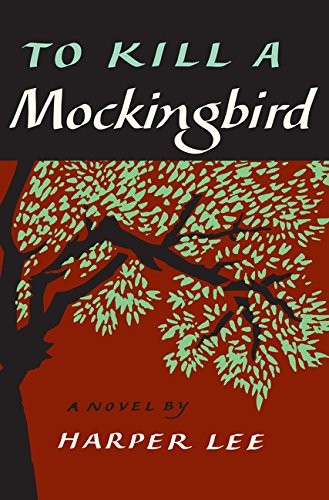
Harper Lee's novel about Scout Finch, her brother Jem, and their father Atticus, who defends a Black man falsely accused of rape in 1930s Alabama. For students and readers who want the plot, the themes and the ending in plain words.
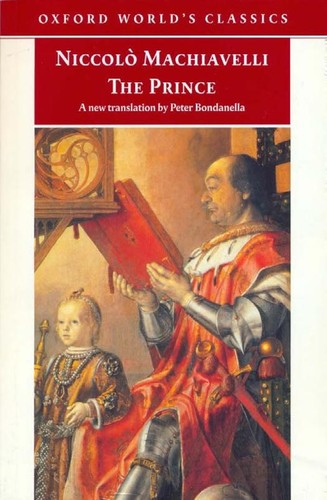
Machiavelli's 1513 manual on how a ruler gains and keeps power, written for the Medici after his fall from office in Florence. For readers who want the argument behind the word Machiavellian.
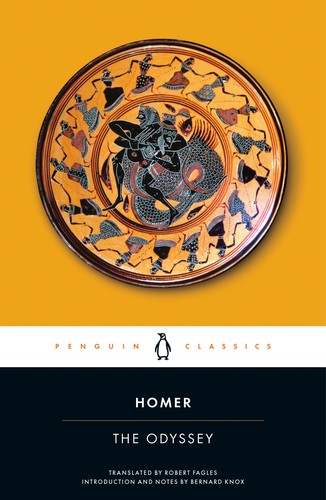
Homer's ancient Greek epic about Odysseus's ten-year journey home from Troy to Ithaca, and his son Telemachus's search for him. For readers who want the plot, the characters and the ideas, book by book.
New books, occasionally