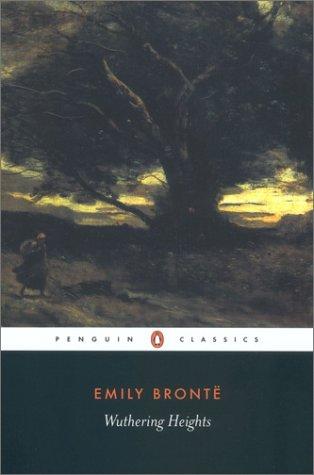
Emily Brontë's 1847 novel about Heathcliff, Catherine Earnshaw and two families on the Yorkshire moors, told across two generations. For readers who want the plot, the characters and the ideas behind a famous story of love and revenge.
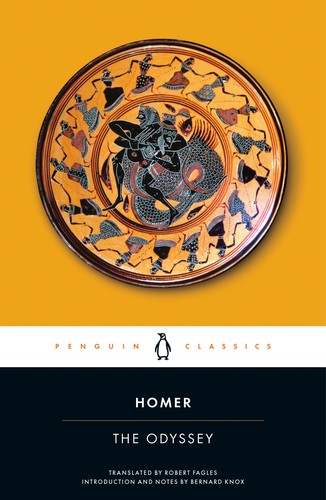
by Homer
-700 · 541 pages · Summary updated 24 October 2026
Homer's ancient Greek epic about Odysseus's ten-year journey home from Troy to Ithaca, and his son Telemachus's search for him. For readers who want the plot, the characters and the ideas, book by book.
After ten years at the siege of Troy, the Greek king Odysseus spends another ten years trying to reach his island home of Ithaca. He blinds the Cyclops Polyphemus, escapes the witch Circe, visits the dead, passes the Sirens and loses every one of his men. At home, more than a hundred suitors eat his wealth and pressure his wife Penelope to remarry, while his son Telemachus comes of age. The epic turns on cunning, the favor of the gods and the duty of hospitality. It is a story about homecoming and about what a man must do to reclaim his place.
The Greek rule of xenia says a host must feed, shelter and protect a stranger before asking his name, and a guest must not abuse the host. Homer uses it to sort every society Odysseus meets. The Phaeacians feed him before they know who he is. Polyphemus eats his guests. The suitors eat their absent host out of his home. The idea is that how you treat a stranger who can do nothing for you shows what you are.
Odysseus cannot fight the Cyclops, so he gets him drunk, tells him his name is Nobody, blinds him and leaves under the sheep. Homer calls this quality metis. Odysseus uses it again with Circe, the Sirens, the Phaeacians and the suitors. He lies to almost everyone he meets, including his own father. The poem admires this. In a world of giants and gods, survival goes to the one who thinks, not the one who swings hardest.
Safe at sea, Odysseus cannot bear to leave the Cyclops without telling him who did it. He shouts his name. Polyphemus prays to Poseidon, and the curse costs Odysseus every ship and every man. Homer shows the same flaw in the crew, who open the bag of winds within sight of home. The lesson is that a clever escape can be wasted in a moment by the wish to be known as the one who pulled it off.
Odysseus reaches Ithaca in Book 13, but his homecoming takes 11 more books. He must be known by the people who matter: the dog Argos, the nurse who finds his scar, his son, his wife and his father. Each recognition has its own test. Homer argues that home is not a place. It is a set of relationships that must be rebuilt in person, one by one, and that reaching the shore is only the start.
The poem spends four books on Telemachus before Odysseus appears. Athena tells him to call an assembly, confront the suitors and travel for news. He fails to move the suitors, but he learns to speak in public, to be a guest at Pylos and Sparta, and to command a ship. When his father comes, he can fight beside him. Homer shows that readiness is built in advance, in small acts, before the big moment arrives.
Athena protects Odysseus at every stage, but she never does the work for him. He builds the raft, swims for two days, makes the speech to Nausicaa, strings the bow. She disguises him, delays the dawn, and stops the final fight. Zeus permits but does not rescue. Homer's gods reward effort and punish arrogance; they do not replace choice. Odysseus is favored because he is the kind of man who keeps going.
Penelope holds off 108 suitors for years with the shroud trick, unweaving each night what she wove by day. She sets the bow contest at the moment it can be won by one man only. When the beggar claims to be her husband, she orders their bed moved, knowing it is built around a living olive tree and cannot be. He explodes, and she knows. Homer makes her the one person who can test Odysseus the way he tests everyone else.
Calypso offers Odysseus immortality if he stays with her. He refuses and chooses a mortal wife and a short life at home. In the underworld, Achilles, the greatest of the Greeks, says he would rather be a poor man's hired hand alive than rule over all the dead. Homer places these two scenes against each other. The poem argues that an ordinary, limited life among your own people is worth more than endless life without them.
“Sing to me of the man, Muse, the man of twists and turns”
“Tell me about a complicated man.”
The Odyssey is a Greek epic poem of about 12,000 lines in 24 books. Tradition credits it to Homer, a poet who may have lived in the 8th century BCE, though the poem grew out of a longer oral tradition and was written down later. Its companion, the Iliad, tells of a few weeks in the Trojan War. The Odyssey tells what happened to one Greek leader afterward.
The Greek word nostos means homecoming, and the poem is the great nostos story. Odysseus, king of the small island of Ithaca, left for Troy when his son Telemachus was a baby. The war took ten years. The journey home takes ten more. When the poem opens, he has been gone for almost 20 years, and most people think he is dead.
The poem starts in the middle of things. Odysseus is trapped on the island of the nymph Calypso, who wants to keep him as her husband. On Ithaca, 108 suitors from the local nobility have moved into his palace. They feast on his cattle and wine every day and demand that Penelope choose one of them. She has delayed them for three years by weaving a shroud for Odysseus's father, Laertes, and unpicking it each night, until a maid betrayed her. Telemachus, now about 20, watches his inheritance disappear and can do nothing.
Three ideas run through the whole poem. The first is xenia, the Greek rule of hospitality: a host must feed and protect a guest, and a guest must respect a host. Almost every episode tests it. The second is metis, cunning intelligence, which Odysseus has more of than any other hero. The third is the role of the gods. Athena protects Odysseus and Telemachus. Poseidon hunts Odysseus for blinding his son. Zeus sets limits on both.
The gods meet on Olympus while Poseidon is away. Athena persuades Zeus to let Odysseus go home. Then she goes to Ithaca disguised as a visiting chief named Mentes. She tells Telemachus to call an assembly, confront the suitors, and sail to the mainland for news of his father.
Telemachus calls the first assembly Ithaca has seen in 20 years. The suitors' leaders, Antinous and Eurymachus, laugh at him and blame Penelope for the delay. Athena, now disguised as the old family friend Mentor, helps him find a ship and crew. He sails in secret with the goddess at his side.
At Pylos he meets old Nestor, who tells him how the Greek fleet split after Troy and how Agamemnon was murdered by his wife and her lover on his return. At Sparta he meets Menelaus and Helen, who recall Odysseus's tricks inside Troy, including the wooden horse. Menelaus tells him that the sea god Proteus said Odysseus is alive, held by Calypso.
The suitors learn Telemachus has gone and set an ambush to kill him on his way back. These four books, often called the Telemachy, show a boy learning to speak, travel and command, with the story of Agamemnon's murder in the background as a warning about what can happen to returning kings.
Zeus sends Hermes to Calypso with the order to release Odysseus. She resents it but obeys. Odysseus has wept on her shore every day for seven years. He builds a raft and sails for 17 days before Poseidon, returning from Ethiopia, sees him and smashes the raft with a storm. A sea goddess, Ino, gives him a veil that keeps him afloat. He swims for two days, crawls ashore on Scheria, the island of the Phaeacians, and sleeps under a bush.
Athena sends the princess Nausicaa to wash clothes at the river. Odysseus, naked and crusted with salt, approaches her with a careful speech. She gives him clothes and directions to the palace. King Alcinous and Queen Arete receive him as a guest without asking his name, as xenia demands.
At the games the next day, a young Phaeacian insults him, and Odysseus throws a discus farther than anyone. The blind bard Demodocus sings three songs: a quarrel between Odysseus and Achilles, the adultery of Ares and Aphrodite, and the wooden horse at Troy. Odysseus weeps at the last song, and Alcinous asks him who he is. He answers: I am Odysseus, son of Laertes, known to all for my cunning.
The next four books are Odysseus's own account of the years since Troy. He tells it at the Phaeacian feast, which means readers hear the famous adventures from a narrator who wants to be admired and sent home.
Leaving Troy, his 12 ships raid the Cicones and lose men. A storm drives them to the Lotus-eaters, where men who eat the fruit forget home. On the island of the Cyclopes, Odysseus leads a party into the cave of Polyphemus, who eats six of them. Odysseus gets the giant drunk, tells him his name is Nobody, and blinds him with a sharpened stake. When Polyphemus shouts that Nobody is hurting him, the other Cyclopes leave. The Greeks escape under the bellies of his sheep. As they sail off, Odysseus cannot resist shouting his real name. Polyphemus prays to his father Poseidon, and the curse that follows Odysseus for the rest of the journey begins here.
Aeolus, keeper of the winds, gives Odysseus a bag holding every wind but the one he needs. In sight of Ithaca, his men open it, thinking it holds treasure, and the ships are blown back. The giant Laestrygonians destroy 11 of the 12 ships. On the island of Circe, the witch turns half his men into pigs. Hermes gives Odysseus a herb that protects him, and he forces Circe to restore them. They stay a year.
Circe sends him to the land of the dead. He digs a trench, pours blood, and speaks with the ghosts. The prophet Tiresias tells him he can get home if his men leave the cattle of the sun god Helios alone, and that he must one day carry an oar inland until someone mistakes it for a winnowing fan. His mother, Anticleia, tells him she died of grief for him. Agamemnon warns him not to trust his wife. Achilles says he would rather be a living farm hand than king of the dead.
On the way back, Odysseus has his men plug their ears with wax and tie him to the mast so he can hear the Sirens and live. The ship passes between Scylla, who eats six men, and Charybdis, the whirlpool. On the island of Helios, trapped by storms and starving, the men kill the sacred cattle. Zeus destroys the ship with a thunderbolt. Odysseus alone survives and drifts to Calypso's island.
The Phaeacians load Odysseus with gifts and carry him home asleep. He wakes on a beach he does not recognize. Athena appears, and the two trade lies before she reveals herself. She tells him about the suitors and disguises him as an old beggar.
He goes first to the hut of Eumaeus, the loyal swineherd, who feeds him without knowing who he is. Odysseus tells a long false story about being a Cretan adventurer. Eumaeus says Odysseus is dead and that he still mourns him.
Athena brings Telemachus home from Sparta by a route that avoids the ambush. He goes straight to Eumaeus's hut. When the swineherd steps out, Athena restores Odysseus's appearance, and father and son meet for the first time since Telemachus was an infant. They plan the attack: Telemachus will remove the weapons from the hall, and the beggar will come to the palace.
This section reveals the ending.
Odysseus enters his own palace as a beggar. His old dog Argos, lying on a dung heap, recognizes him, wags his tail and dies. The suitors mock the beggar. Antinous throws a stool at him. He is forced to fight another beggar, Irus, and knocks him down with one blow. Penelope, who does not know him, questions him about her husband, and he tells her Odysseus is near. The old nurse Eurycleia washes his feet and recognizes a scar on his thigh from a boar hunt. He grips her throat and swears her to silence.
Penelope announces a contest. She will marry the man who can string Odysseus's great bow and shoot an arrow through 12 axe heads. Every suitor fails. The beggar asks for a turn, strings the bow with ease and sends the arrow through the axes. Then he shoots Antinous through the throat.
The slaughter fills Book 22. Odysseus, Telemachus, Eumaeus and the cowherd Philoetius kill every suitor, with Athena's help. The goatherd Melanthius, who sided with the suitors, is mutilated. Telemachus hangs the 12 maids who slept with the suitors. Many modern readers find this scene the hardest in the poem.
Penelope still refuses to believe. She tests him by ordering the nurse to move their bed outside the bedroom. Odysseus explodes: he built the bed himself around a living olive tree, and no one can move it. Only then does she accept him. Athena holds back the dawn so they can talk through the night.
In Book 24 Odysseus finds his father Laertes working in his orchard and proves himself by naming the trees he was given as a boy. The suitors' families gather to take revenge. A fight begins, and Athena, with a word from Zeus, stops it and imposes peace. The poem ends with Ithaca at peace and its king restored.
Ancient scholars already argued that the poem's true ending comes in Book 23, when Odysseus and Penelope reunite, and that the final scenes with Laertes and the families are a later addition. The hanging of the maids and the mutilation of Melanthius draw the most modern criticism, as does the double standard that lets Odysseus sleep with Calypso and Circe while Penelope must remain faithful. Some readers find the poem episodic and the Telemachy slow. Every translation is a new argument about the text. Emily Wilson's 2017 version, the first into English by a woman, uses plain lines and opens by calling Odysseus a complicated man, which started a wide debate about how much a translator should soften or sharpen him.
Read it if you want the source of stories you already half know, from the Cyclops to the Sirens, and the ideas about hospitality, cunning and homecoming behind them. It suits readers who like adventure with a slow, deliberate payoff, and students who need the plot in order.
12 cards
Question 1 of 5
What name does Odysseus give to the Cyclops Polyphemus?
Odysseus returns to Ithaca disguised as a beggar, wins Penelope's bow contest, and kills all the suitors with Telemachus and two loyal servants. Penelope tests him with the secret of their bed, built around an olive tree, and accepts him. He reunites with his father Laertes. When the suitors' families come for revenge, Athena stops the fight and imposes peace.
Emily Brontë's 1847 novel about Heathcliff, Catherine Earnshaw and two families on the Yorkshire moors, told across two generations. For readers who want the plot, the characters and the ideas behind a famous story of love and revenge.
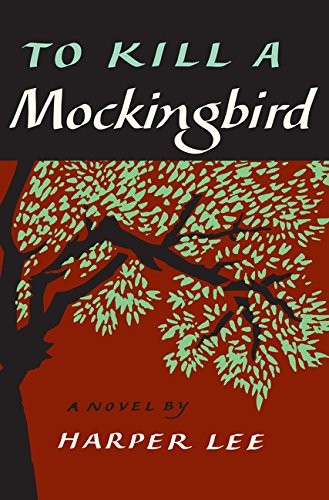
Harper Lee's novel about Scout Finch, her brother Jem, and their father Atticus, who defends a Black man falsely accused of rape in 1930s Alabama. For students and readers who want the plot, the themes and the ending in plain words.
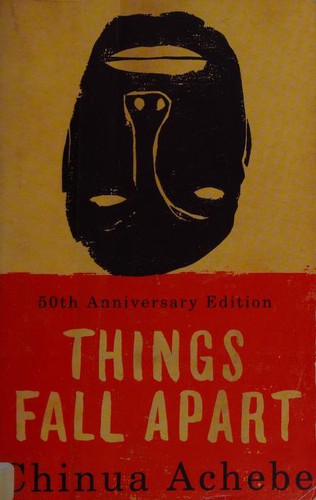
Chinua Achebe's novel about Okonkwo, an Igbo leader whose village is undone by his own rigidity and the arrival of British missionaries. For readers who want the colonial encounter told from the African side.
Machiavelli's 1513 manual on how a ruler gains and keeps power, written for the Medici after his fall from office in Florence. For readers who want the argument behind the word Machiavellian.
New books, occasionally