Harper Lee's novel about Scout Finch, her brother Jem, and their father Atticus, who defends a Black man falsely accused of rape in 1930s Alabama. For students and readers who want the plot, the themes and the ending in plain words.
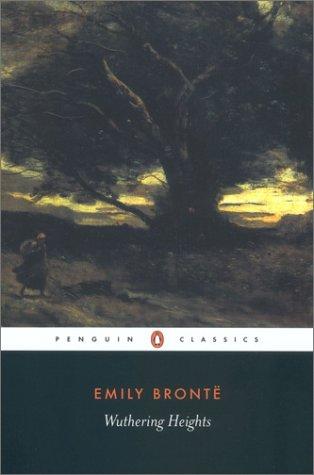
by Emily Brontë
1847 · 416 pages · Summary updated 24 October 2026
Emily Brontë's 1847 novel about Heathcliff, Catherine Earnshaw and two families on the Yorkshire moors, told across two generations. For readers who want the plot, the characters and the ideas behind a famous story of love and revenge.
An orphan named Heathcliff is brought to Wuthering Heights, a farmhouse on the Yorkshire moors. He and Catherine Earnshaw grow up as inseparable companions. Her brother Hindley degrades him to a servant. Catherine marries the gentle Edgar Linton of Thrushcross Grange for status, and Heathcliff vanishes. He returns rich and spends the rest of his life taking both houses and punishing the next generation for what he lost. The housekeeper Nelly Dean tells the story to a tenant, Mr. Lockwood, in 1801. Brontë presents love as a bond of identity rather than affection, and shows what revenge does to the person who carries it.
Catherine tells Nelly that her love for Edgar is like the leaves on a tree, which the seasons change, while her love for Heathcliff is like the rock beneath, which stays. She says she is Heathcliff. Brontë presents their bond as a single self split between two bodies, not as romance. They never court and rarely speak gently. The idea explains why Catherine cannot give Heathcliff up when she marries, and why neither can live once they are parted.
Five weeks at Thrushcross Grange turn Catherine from a wild child into a young lady. After that she lives two lives: polite with the Lintons, free with Heathcliff. She marries Edgar for rank and comfort and tells herself she can keep Heathcliff too. The two selves cannot share one life. Brontë shows the cost in Catherine's illness and her delirium about the moors. The lesson is that choosing a social role over a true one does not remove the true one.
Hindley degrades Heathcliff out of jealousy. Heathcliff waits years, then degrades Hindley through debt and Hareton through neglect, using the same methods. He admits he wants to see whether a tree grows as crooked as another with the same wind to twist it. Brontë shows revenge as a cycle that each generation hands down. The person who takes revenge becomes a copy of the one who wronged him.
Hareton is raised without education or affection and becomes rough, proud and loyal to the man who ruined him. Linton Heathcliff is spoiled, then bullied, and becomes selfish and weak. Neither is born that way. Brontë makes the same point in reverse when Cathy begins to teach Hareton and his rough manners soften. The novel treats character as something a household makes, which is why the two houses matter so much.
Almost everything comes to the reader through Nelly Dean, repeated by Lockwood. Nelly takes sides, keeps secrets from her employers, and sometimes acts in ways that make events worse, such as letting Heathcliff into the Grange or carrying letters between Cathy and Linton. Lockwood misjudges everyone on his first visit. Brontë never corrects them. Readers must notice where the story is being filtered and judge the characters for themselves.
Wuthering Heights sits on an exposed hill: stormy, raw, violent and close to the land. Thrushcross Grange sits in a sheltered valley: carpeted, polite, soft and fragile. Catherine moves from one to the other and belongs to neither. Heathcliff carries the storm of the Heights into the Grange. Brontë uses the houses as two models of life, and neither one alone produces a whole person. The resolution comes when the two sides meet in the next generation.
By the end Heathcliff owns both houses and controls both heirs. He tells Nelly that he holds the levers to destroy them and cannot lift them. Watching Cathy and Hareton, he sees Catherine's eyes in both faces and loses the appetite for harm. He stops eating and dies within days. Brontë shows that revenge gave his life shape, and that getting everything removes the shape. Winning does not return what was lost.
Cathy mocks Hareton for his ignorance and then teaches him to read. He gives up his loyalty to Heathcliff. They plan to marry and move to the Grange. Their story mirrors Catherine and Heathcliff's: a Linton girl and a degraded Earnshaw boy, but this time education and patience replace pride. Brontë closes the loop. The pairing that was blocked in the first generation happens in the second, and the two houses become one family.
“Whatever our souls are made of, his and mine are the same.”
“He's more myself than I am.”
“I cannot live without my life! I cannot live without my soul!”
Wuthering Heights is the only novel by Emily Brontë. It appeared in December 1847 under the pen name Ellis Bell. Brontë died a year later at the age of 30. The book puzzled its first readers because it had no clear hero and showed cruelty without comment.
The story takes place in a small area of the Yorkshire moors around two houses. Wuthering Heights is an old farmhouse on a high, windswept hill. "Wuthering" is a local word for stormy weather. The Earnshaw family has lived there for generations. Thrushcross Grange is a comfortable manor house in the valley below. The Linton family lives there. The novel moves people between the two houses for over 30 years, and each move changes who they become.
Brontë tells the story through two narrators. Mr. Lockwood, a gentleman from the south of England, rents Thrushcross Grange in 1801. He visits his landlord, Heathcliff, at Wuthering Heights and finds a house full of hostile people: Heathcliff himself, a rough young man called Hareton Earnshaw, and a young widow, Catherine Heathcliff. A snowstorm traps Lockwood there overnight. In a closet bed he finds books with the names Catherine Earnshaw, Catherine Heathcliff and Catherine Linton scratched into the paint. He dreams that a child's ghost called Catherine Linton grabs his hand through the window and begs to be let in. Heathcliff bursts in, sends Lockwood out, and then throws the window open and sobs to the ghost to come back.
Lockwood falls ill at the Grange. His housekeeper, Nelly Dean (Ellen Dean), grew up at Wuthering Heights and has served both families. She tells him the whole history. Most of the novel is her account, with Lockwood's visits as a frame. Nelly is a practical, sometimes judgmental witness, and readers have to decide how far to trust her.
About 30 years before Lockwood arrives, old Mr. Earnshaw walks to Liverpool and comes back with a starving, dark-haired child he found in the streets. No one knows the boy's parents or his language. Earnshaw names him Heathcliff, after a son who died, and favors him over his own children. His son Hindley hates the newcomer at once. His daughter Catherine becomes Heathcliff's constant companion. The two run wild on the moors together.
Hindley is sent away to college. When Mr. Earnshaw dies, Hindley returns as master of the Heights with a wife, Frances. He takes revenge on Heathcliff. He stops his education, makes him work as a farm laborer, and separates him from Catherine where he can. Heathcliff bears it and waits. He tells Nelly that he is planning how to pay Hindley back, however long it takes.
One evening Catherine and Heathcliff run down to Thrushcross Grange to spy on the Linton children, Edgar and Isabella, through the window. The Lintons' dog bites Catherine's ankle, and the family takes her in. Heathcliff is sent away as a vagabond. Catherine stays at the Grange for five weeks and comes home transformed: dressed as a lady, with polished manners and a new sense of her own status. Heathcliff, dirty from the farm, feels the distance at once. Nelly helps him clean up, but Edgar's teasing provokes him, and Hindley has him locked away.
Frances dies soon after giving birth to a son, Hareton. Hindley collapses into drink and gambling. The Heights becomes a violent, neglected household, and Hareton grows up without care.
Catherine grows into a willful young woman who plays two roles. With the Lintons she is polite and charming. With Heathcliff she is wild and free. Edgar Linton proposes to her, and she accepts.
That evening she confesses to Nelly in the kitchen. She says she loves Edgar because he is handsome, pleasant, young and rich, and because marrying him will make her the greatest woman in the neighborhood. Then she says that it would degrade her to marry Heathcliff now, because Hindley has brought him so low. Heathcliff, sitting unseen on a bench, hears this part and slips out. He does not hear what follows. Catherine tells Nelly that her love for Edgar is like the leaves of a tree, which time will change, while her love for Heathcliff is like the rocks beneath, a necessary part of her. She says that she is Heathcliff, and that she plans to use Edgar's money to help Heathcliff rise.
Heathcliff disappears that night. Catherine searches for him in a storm, falls ill, and is nursed at the Grange, where the elder Lintons catch her fever and die. Three years pass. Catherine marries Edgar and moves to the Grange with Nelly as her servant. For a while she is content.
Heathcliff returns a changed man: tall, well dressed, educated in manner and apparently wealthy. He never explains where the money came from. He lodges at Wuthering Heights, lends Hindley money for gambling, and takes the farm piece by piece as Hindley's debts mount. He treats young Hareton with the same contempt that Hindley once showed him, and raises the boy as an illiterate servant.
Catherine welcomes Heathcliff with open joy, and Edgar cannot bear it. Edgar's sister Isabella falls in love with Heathcliff. Catherine warns her that he is a fierce, pitiless man who would crush her. Heathcliff sees Isabella as a route to the Linton property and elopes with her anyway. Once married he treats her with open cruelty, and she later escapes to the south of England, where she gives birth to a sickly son named Linton Heathcliff.
The strain between Edgar and Heathcliff breaks Catherine. After a violent quarrel she locks herself in her room, refuses food and falls into delirium. She tears a pillow open and sorts the feathers, recalling the moors and her childhood. She is pregnant. Heathcliff forces his way into the Grange to see her. In a final scene they accuse each other of destroying their lives and cling together. That night Catherine gives birth to a daughter, Cathy, and dies. Heathcliff, outside in the garden, begs her ghost to haunt him rather than leave him alone. Nelly later sees blood on his forehead where he beat his head against a tree.
Hindley dies months later, drunk and ruined. Heathcliff holds the mortgage on Wuthering Heights and becomes its master. Hareton, the rightful heir, is left with nothing.
Thirteen years pass. Cathy grows up at the Grange, protected and happy, with no idea the Heights exists. Isabella dies, and her son Linton, a frail and peevish boy, comes to the Grange. Heathcliff claims him the next day. He despises the boy but needs him alive: if Linton marries Cathy and then dies, Heathcliff gains the Grange as well.
Cathy meets Hareton on the moors and is shocked that her cousin cannot read. She begins a secret correspondence with Linton. As Edgar's health fails, Heathcliff lures Cathy and Nelly to the Heights and locks them in. Cathy is forced to marry Linton. She escapes in time to see her father die. Linton dies weeks later. He has willed his property to his father, so Heathcliff now owns both houses. Cathy, a widow at 18, is trapped at the Heights as Heathcliff's dependent. This is the household Lockwood walks into in 1801.
This section reveals the ending.
Lockwood leaves for London. He comes back in September 1802 and finds the Heights transformed. Nelly tells him what happened.
Cathy, lonely and bitter, at first mocks Hareton for his ignorance. He burns his books in anger. Slowly they make peace. She teaches him to read, and the two fall in love. Heathcliff sees them together and recognizes Catherine's eyes in both of them. He finds he has lost the will to carry out his revenge. He says he has the levers in his hand to destroy both houses and cannot lift them.
Heathcliff stops eating. He wanders the moors at night and speaks to someone no one else can see. He tells Nelly that he had the sexton open Catherine's coffin and that he has arranged to be buried beside her with the sides of the coffins removed. One rainy morning Nelly finds him dead in the closet bed, the window open, his eyes wide and a strange smile on his face. He is buried next to Catherine, as he asked. The local people say the two ghosts walk the moors together.
Cathy and Hareton plan to marry on New Year's Day and move to Thrushcross Grange. Lockwood visits the three graves of Edgar, Catherine and Heathcliff on the moor. He wonders how anyone could imagine unquiet sleepers under that quiet earth.
The structure is a loop. Heathcliff's revenge gives the next generation back the position he and Catherine lost, and the two families become one.
Brontë does not present Catherine and Heathcliff's bond as a romance in the usual sense. They never court, never marry and rarely speak kindly to each other. Catherine describes it as shared identity: Heathcliff is more herself than she is. Marrying Edgar does not end the bond. It splits her in two, and the split kills her.
The two houses carry the novel's contrast. The Heights is raw, violent and exposed to the weather. The Grange is refined, soft and sheltered. Catherine moves from one to the other and cannot live fully in either. Heathcliff brings the Heights' violence into the Grange. The second generation reverses the pattern: Cathy's education and Hareton's rough strength meet and balance.
Revenge drives the plot but does not satisfy. Hindley's cruelty creates Heathcliff's. Heathcliff reproduces it on Hareton and Linton. He wins everything and finds it worthless. Brontë shows the cycle and then shows it ending, not through punishment but through two young people who refuse to inherit it.
The novel also asks how far to trust its narrators. Nelly takes sides and sometimes acts in ways that make things worse. Lockwood misreads almost everything on his first visit. Readers see the events only through them.
Early reviewers called the book coarse, brutal and morally confused. Several assumed a man had written it. Charlotte Brontë's 1850 preface defended her sister by presenting her as an untrained genius shaped by the moors, a view that long shaped the book's reputation. Later critics praised the tight structure and the handling of time. Some readers object that popular culture turns Heathcliff into a romantic hero when the text shows him abusing a wife, a child and a dog. Others debate whether Heathcliff's unknown origins and dark skin make him an outsider by race or by class. The question of Nelly Dean's reliability remains open.
Read it if you want a classic that is stranger and harsher than its reputation, or if you are studying it and want the whole plot across both generations in order. It rewards readers who like unreliable narrators and family sagas.
12 cards
Question 1 of 5
Where does Mr. Earnshaw find Heathcliff?
Heathcliff gains both houses but loses the will to finish his revenge when he sees Catherine's eyes in Cathy and Hareton. He stops eating, walks the moors at night, and is found dead by an open window. He is buried beside Catherine. Cathy and Hareton fall in love and plan to marry and move to Thrushcross Grange, uniting the two families.
Harper Lee's novel about Scout Finch, her brother Jem, and their father Atticus, who defends a Black man falsely accused of rape in 1930s Alabama. For students and readers who want the plot, the themes and the ending in plain words.

Chinua Achebe's novel about Okonkwo, an Igbo leader whose village is undone by his own rigidity and the arrival of British missionaries. For readers who want the colonial encounter told from the African side.

Homer's ancient Greek epic about Odysseus's ten-year journey home from Troy to Ithaca, and his son Telemachus's search for him. For readers who want the plot, the characters and the ideas, book by book.
Mel Robbins's two-word tool for the stress of other people: let them do what they do, then let me decide what I do. For readers who spend energy on opinions, choices and moods they cannot control.
New books, occasionally