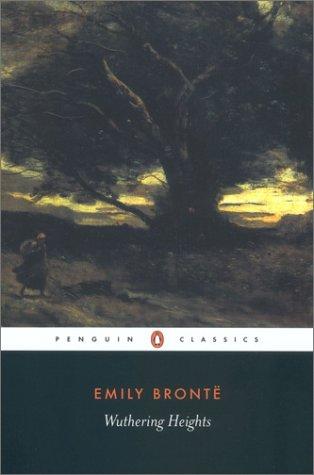
Emily Brontë's 1847 novel about Heathcliff, Catherine Earnshaw and two families on the Yorkshire moors, told across two generations. For readers who want the plot, the characters and the ideas behind a famous story of love and revenge.
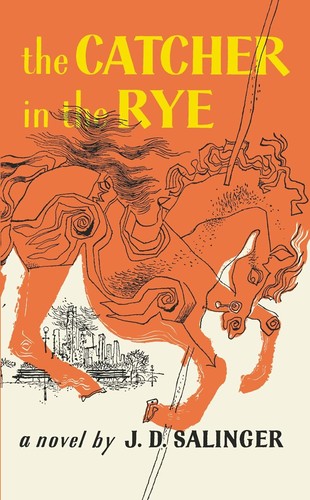
1951 · 277 pages · Summary updated 24 October 2026
Salinger's novel about Holden Caulfield, a sixteen-year-old who is expelled from prep school and wanders New York for three days. For students and readers who want the plot, the voice and the meaning of the title in plain words.
Holden Caulfield, sixteen, has just been expelled from Pencey Prep, his fourth school. Instead of going home, he spends three days in New York City in December. He takes hotel rooms, visits bars, meets a prostitute and does not sleep with her, dates an old girlfriend, drinks too much and calls almost everyone a phony. He is still grieving his younger brother Allie, who died of leukemia. The one person he trusts is his ten-year-old sister Phoebe. He tells her he wants to be the catcher in the rye, the person who stops children from falling off a cliff into adulthood. The novel is the record of a breakdown told in Holden's own voice.
Phony is Holden's word for anything performed for effect: the headmaster who charms rich parents, the actors at the play, the piano player at Ernie's who bows too much, Stradlater's clean razor and dirty face. He uses it on almost everyone. The novel invites the reader to notice that Holden lies constantly, plays roles with strangers and judges Sally for the same vanity he shows. His anger at phoniness is a fear of the adult compromises he can see coming.
Allie died of leukemia three years before the story starts. Holden broke the garage windows with his fist that night and spent time in the hospital. He writes Stradlater's essay about Allie's baseball mitt, talks to Allie on Fifth Avenue when he feels he is disappearing, and lists Allie first when Phoebe asks what he likes. Nobody in the book asks him about his brother. The novel suggests that his failed schools, his insomnia and his contempt are the shape his grief takes.
Holden tells Phoebe he wants to stand at the edge of a cliff and catch children before they fall. The fall is adulthood. He loves the Museum of Natural History because nothing in it changes, he hates that he must change each time he returns, and he asks where the ducks go when the lagoon freezes, because he wants to know that things come back. Phoebe points out that he has the Burns song wrong. The fantasy is built on an error, which the book treats gently but clearly.
The people Holden likes are the ones who are not selling anything. Phoebe, who sees through him and gives him her Christmas money. The boy on Broadway singing to himself by the curb. The two nuns, who talk about Romeo and Juliet and do not try to collect from him. Jane Gallagher, who kept her kings in the back row. Against these he sets Maurice, Stradlater, the Seattle women and the Wicker Bar crowd. The pattern tells a reader what Holden actually values under the sarcasm.
Mr. Spencer tries to help and Holden tunes out. Carl Luce suggests a psychoanalyst and Holden mocks him. Mr. Antolini gives him the only serious advice in the book, about living humbly for a cause instead of dying nobly for one, and Holden flees the apartment over a gesture he later admits he may have misread. Each adult offers something, and Holden runs. The novel shows how a hurt teenager can refuse the help in front of him.
Holden buys the hat in New York the morning after he loses the fencing team's equipment on the subway. He wears it with the peak turned around, the way a catcher does. He puts it on when he writes about Allie, when he walks out of Pencey, and when he sits in the rain watching Phoebe on the carousel. He takes it off when he wants to fit in. Phoebe puts it on his head before he leaves the apartment. Readers can track his confidence by where the hat is.
At the carousel, the children lean out to grab the gold ring, and Holden is afraid Phoebe will fall. He decides to say nothing, because if they fall off, they fall off. This reverses the catcher fantasy. He accepts that he cannot stop anyone, including himself, from growing up. He drops the plan to run west and goes home. Whether the next chapter shows recovery or defeat is debated, but the carousel is the one moment where he stops fighting time.
“Don't ever tell anybody anything. If you do, you start missing everybody.”
“I'm the most terrific liar you ever saw in your life.”
The Catcher in the Rye was published in 1951. It is J. D. Salinger's only novel, and it is told entirely by its narrator, Holden Caulfield, from a rest home in California where he is recovering from some kind of collapse. He says he will tell only about the "madman stuff" that happened to him the previous December, around Christmas. The whole book covers about three days.
Holden's voice is the book. He talks the way a sixteen-year-old in 1949 talked: slang, repetition, digressions, "and all," "it really was," "if you want to know the truth." He insults almost everyone and admits that he lies constantly. He is also sharp, funny and often kind. The reader has to decide how far to trust him, which is the main pleasure and the main difficulty of the novel.
Two facts sit under everything he says. His younger brother Allie died of leukemia three years earlier, when Holden was thirteen. Holden broke all the windows in the garage with his fist the night Allie died, and his hand still does not close properly. And his older brother D.B., a writer Holden admired, has moved to Hollywood to write for films, which Holden counts as a kind of selling out. Holden rarely says that he is grieving. He shows it by the things he cannot let go of.
The story opens on a Saturday in December at Pencey Prep in Agerstown, Pennsylvania. Holden has been expelled for failing four of his five subjects, and he is to leave after Christmas break. It is his fourth school. He skips the big football game and visits his old history teacher, Mr. Spencer, who is sick in bed. Spencer reads Holden's failed exam essay about the Egyptians aloud and tells him that life is a game you play by the rules. Holden thinks that life is a game only if you are on the side that has all the hot shots.
Back in the dorm, Holden puts on a red hunting hat he bought that morning in New York. The hat becomes his emblem for the rest of the book. His neighbor Ackley, with bad skin and worse manners, wanders in. Then his roommate Stradlater arrives. Stradlater is handsome, confident and, in Holden's phrase, a secret slob. He asks Holden to write an English composition for him because he has a date.
The date is Jane Gallagher, a girl Holden knew two summers earlier. Jane kept all her kings in the back row when they played checkers. She once cried while playing, and Holden suspects her stepfather had been abusive. Holden is upset that Stradlater, who treats girls casually, is taking her out. He writes the composition about Allie's baseball mitt, which Allie had covered with poems in green ink so he had something to read in the outfield. When Stradlater returns, he rejects the essay as off topic. Holden tears it up. He asks what happened on the date, and Stradlater will not say. Holden swings at him, Stradlater pins him and bloodies his nose. That night Holden decides to leave Pencey early. He sells his typewriter, packs and walks out, shouting "Sleep tight, ya morons!" down the corridor.
On the train Holden meets the mother of a classmate, Ernest Morrow, and tells her a string of lies about how popular and modest her son is, under a false name. He arrives in New York late on Saturday night. He cannot go home, because his parents do not yet know about the expulsion, so he takes a room at the shabby Edmont Hotel. From his window he watches a man dress in women's clothes and a couple spit drinks at each other in other rooms. He thinks about calling Jane and does not. He calls a woman named Faith Cavendish, whose number he got from a college student, and gets nowhere.
In the hotel's Lavender Room he dances with three women from Seattle who are in town to see celebrities. One of them, Bernice, is a good dancer and a dull conversationalist. He pays for their drinks and is left alone. He takes a cab to Ernie's, a jazz club in Greenwich Village, and on the way asks the driver, as he has asked another, where the ducks in the Central Park lagoon go in winter. Neither driver knows. The question runs through the book. At Ernie's he meets Lillian Simmons, an old girlfriend of D.B.'s, and leaves to avoid her.
Back at the hotel, the elevator operator, Maurice, offers to send a prostitute to his room for five dollars. Holden says yes. The girl, Sunny, is about his age. When she takes off her dress, he feels more depressed than sexy, and he tells her he had an operation and just wants to talk. He pays her five dollars. She says the price was ten. Later, Maurice and Sunny return for the other five. Maurice punches Holden in the stomach and Sunny takes the money from his wallet. Holden lies on the floor imagining he has been shot and is a film hero. He admits that films ruin you.
On Sunday morning Holden checks his bags at Grand Central and eats breakfast beside two nuns who are schoolteachers. He talks to one of them about Romeo and Juliet and gives them ten dollars. He likes them because they do not seem to want anything from him. He walks up Broadway and sees a family with a small boy who walks along the curb singing "If a body catch a body coming through the rye." The boy's parents ignore him. The song makes Holden feel less depressed.
He buys a record called "Little Shirley Beans" for his sister Phoebe and goes to the park to look for her. He meets a girl who knows Phoebe but cannot find her. He visits the Museum of Natural History, where he spent many school trips, and thinks about why he loves it: everything in the glass cases stays the same, while you change every time you come back. He decides not to go in.
He has a date with Sally Hayes, a pretty, conventional girl he has known for years. They go to a matinee of a play with the Lunts, which Sally loves and Holden finds phony. They go skating at Rockefeller Center. Holden suddenly asks her to run away with him to Massachusetts or Vermont, to live in a cabin and chop wood. She says they are practically children and that there will be time for such things after college. He calls her a royal pain in the ass, and she leaves in tears. He admits he would not have gone with her anyway.
That evening he meets Carl Luce, an older student from a former school, for drinks at the Wicker Bar. Luce once gave sex talks in the dorm. Holden asks him intrusive questions about his sex life and his Chinese girlfriend. Luce suggests Holden should see a psychoanalyst, as Luce's father is one, and leaves. Holden stays and gets drunk. He calls Sally late at night and babbles about trimming her Christmas tree. He walks to the Central Park lagoon to see whether the ducks are there, breaks the record for Phoebe on the way, and nearly cries when he finds it in pieces. At the lagoon there are no ducks. He sits on a bench and imagines dying of pneumonia and his funeral. He decides to sneak home and see Phoebe.
Holden lets himself into the family apartment late at night while his parents are out. He wakes Phoebe. She is ten, red haired, smart, and she figures out at once that he has been kicked out again. She says, "Daddy'll kill you." She asks him to name one thing he likes. He thinks of Allie and of James Castle, a boy at Elkton Hills who jumped from a window rather than take back something he said about a bully, and who was wearing a sweater he had borrowed from Holden. Phoebe says Allie is dead and does not count.
Then Holden tells her what he wants to be. He pictures thousands of little kids playing in a big field of rye near a cliff. He stands at the edge and catches anyone who starts to go over. He would be "the catcher in the rye." Phoebe corrects him: the Robert Burns line is "if a body meet a body," not "catch a body." His whole fantasy is built on a misheard song. Phoebe gives him her Christmas money, and he cries.
Holden calls Mr. Antolini, a former English teacher who once carried James Castle's body away, and goes to his apartment. Antolini has been drinking. He warns Holden that he is heading for "a terrible, terrible fall," and quotes a psychoanalyst: the mark of the immature man is that he wants to die nobly for a cause, while the mark of the mature man is that he wants to live humbly for one. Holden falls asleep on the couch. He wakes to find Antolini sitting on the floor stroking his head. Holden panics, assumes something sexual, dresses and leaves. Later he admits that he may have misread the gesture.
This section reveals the ending.
Holden spends the rest of the night in the waiting room at Grand Central. He walks up Fifth Avenue on Monday morning and begins to feel that each time he steps off a curb he will disappear. He asks Allie to let him make it to the other side of the street. He decides to hitchhike west, work at a gas station, pretend to be a deaf mute so he never has to talk to anyone, and live in a cabin at the edge of the woods.
He goes to Phoebe's school to leave her a note saying goodbye. On the wall of the school he finds the words "fuck you" written where children will see it. He rubs it out. He finds another one carved into the wall that he cannot remove. He concludes that you could never rub out even half of them in the whole world, and that someone will write it on his tombstone too.
Phoebe meets him at the museum with a suitcase. She has packed her clothes and wants to go west with him. He says no, and she cries and refuses to speak to him. He walks her to the zoo and then to the carousel in Central Park. She rides it while he sits on a bench in the rain in his red hunting hat. The children reach for the gold ring, and Holden decides you have to let them, because if they fall off, they fall off. He watches Phoebe go around and around and feels so happy he nearly cries. He drops the plan to leave. He goes home.
In the last short chapter he is back in California, near his brother D.B., and a psychoanalyst keeps asking whether he will apply himself at his next school in September. He says he does not know. He says he misses everybody he has told about, even Stradlater and Ackley and Maurice. His last advice is not to tell anybody anything, because if you do, you start missing everybody.
The novel was a bestseller on publication and has sold tens of millions of copies. It was also one of the most banned books in American schools for decades because of its profanity, its sexual content and Holden's attitude to authority. Some early reviewers found Holden self-pitying and the voice monotonous. Later critics have argued that Holden is an unreliable narrator whose judgments of "phonies" apply to himself, and that the novel is really about untreated grief for Allie. Some readers see the ending as recovery and others as defeat. The carousel scene supports both readings. Salinger refused all film adaptations and withdrew from public life in 1953, which added to the book's legend.
Read it if you are studying the novel and want the events, the people and the arguments about Holden in order. It also suits anyone who wants a short, funny, sad book about a teenager who cannot say what hurts him.
12 cards
Question 1 of 5
Why is Holden leaving Pencey Prep?
Holden plans to hitchhike west and live as a deaf mute, but Phoebe shows up with a suitcase to join him. He refuses, and they go to the carousel in Central Park. Watching her ride in the rain, he feels suddenly happy and gives up the plan. The last chapter finds him in a rest home in California, unsure whether he will apply himself at his next school, and missing everyone he has described.
Emily Brontë's 1847 novel about Heathcliff, Catherine Earnshaw and two families on the Yorkshire moors, told across two generations. For readers who want the plot, the characters and the ideas behind a famous story of love and revenge.
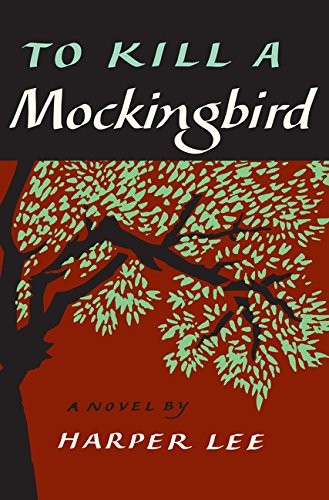
Harper Lee's novel about Scout Finch, her brother Jem, and their father Atticus, who defends a Black man falsely accused of rape in 1930s Alabama. For students and readers who want the plot, the themes and the ending in plain words.
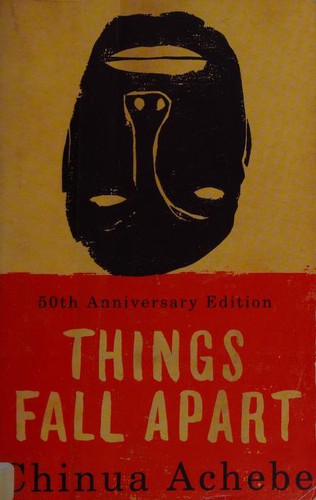
Chinua Achebe's novel about Okonkwo, an Igbo leader whose village is undone by his own rigidity and the arrival of British missionaries. For readers who want the colonial encounter told from the African side.

Homer's ancient Greek epic about Odysseus's ten-year journey home from Troy to Ithaca, and his son Telemachus's search for him. For readers who want the plot, the characters and the ideas, book by book.
New books, occasionally