
Wonder by R. J. Palacio is a novel about August Pullman, a ten-year-old boy with a facial difference who goes to school for the first time in fifth grade. For readers who want the plot, the narrators and the book's lesson on kindness.
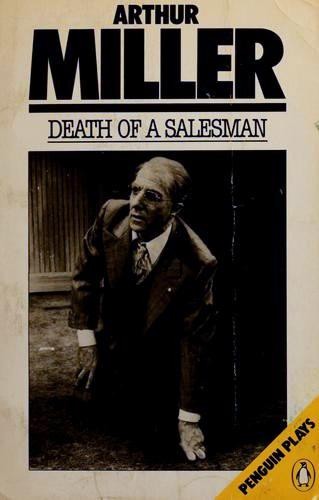
1949 · 139 pages · Summary updated 24 October 2026
Death of a Salesman is Arthur Miller's 1949 play about Willy Loman, an aging salesman whose faith in being well liked has failed him and his sons. For readers who want the plot, the themes and the ending in plain words.
Willy Loman, sixty-three, has spent his life selling on the road for a New York firm. He believes success comes from being well liked, and he raised his sons to believe it too. Now his sales have collapsed, his boss fires him, and his elder son, Biff, once a football star, drifts between farm jobs. Over one day, Willy's mind slips between the present and memories of the past, including a secret from a Boston hotel room that broke Biff's faith in him. Arthur Miller shows a common man destroyed by the American Dream and by lies his family tells to protect him.
Willy teaches his sons that personality, not work, wins in business: be liked and you will never want. He mocks Bernard for studying and laughs when Biff steals. The rule fails everyone who follows it. Biff cannot hold a job, Happy lies about his position, and Willy loses his own job to a boss who does not care whether he is liked. Miller's example is Bernard, the boy Willy called not well liked, who becomes a lawyer arguing before the Supreme Court.
When Howard fires him, Willy says you cannot eat the orange and throw the peel away. He gave the firm thirty-four years and named Howard as a baby. Howard answers with business logic: Willy cannot sell, so he must go. Miller shows a system that values people only for what they produce now. Charley puts it more bluntly: the only thing you have in this world is what you can sell. The example is Willy's slide from salary to commission to nothing.
Linda knows about the suicide attempts, the borrowing and the falling sales, and she supports Willy's version of himself anyway. The sons repeat his exaggerations. Willy tells himself he is vital in New England. Miller shows a family that protects a man by agreeing with his lies and so keeps him from facing reality. Biff's line is the verdict: they never told the truth for ten minutes in this house. The example is the fifty dollars a week from Charley, which Willy calls his salary.
Willy does not just remember the past. He walks into it in the middle of a conversation, talks to people who are not there and answers them aloud. Miller stages memory as action: the walls of the house disappear, and the music changes. The device shows a man who cannot leave his best years, when the boys were young and the future seemed certain. It also shows how one buried event, the Boston hotel room, still controls the present.
Biff idolized his father and believed every promise. When he found Willy with another woman in Boston, he saw his father as a fake and lost all direction. He gave up on summer school, on college and on himself. Miller shows how much of a child's ambition rests on belief in a parent. The example is Biff's line that he could not take orders from anyone because his father blew him so full of hot air that he could never take a small job.
Ben represents one dream: walk into the jungle, come out rich, take what you can. Willy chooses another: sell yourself, be known, get rich by being liked. Charley represents a third: steady work, no illusions, and help for a neighbor in trouble. Miller sets these side by side. Only Charley's quiet version works, and Willy despises it. The example is Willy's refusal of Charley's job offer, which would have saved his family, because accepting it would mean admitting failure.
Willy tells Charley that a man can end up worth more dead than alive, and he means his life insurance. After Biff breaks down in tears, Willy decides the money will make his son magnificent, and he crashes his car. At the funeral almost no one comes, unlike the crowd at Dave Singleman's. Linda has made the last payment on the house, and no one is home. Miller ends with the bleakest arithmetic of the dream: Willy prices his own life and still gets it wrong.
“Attention, attention must be finally paid to such a person.”
“Be liked and you will never want.”
Death of a Salesman is Arthur Miller's 1949 play about the last day of Willy Loman, an aging traveling salesman in Brooklyn whose belief in being well liked has failed him, his job and his sons. It opened on Broadway in February 1949, directed by Elia Kazan, with Lee J. Cobb as Willy. It won the Pulitzer Prize for Drama and the Tony Award for Best Play the same year. Its subtitle is Certain Private Conversations in Two Acts and a Requiem.
Miller's first title for the play was The Inside of His Head, and that is its method. The present-day action covers about twenty-four hours. Into it, without warning, come scenes from the past, as Willy remembers or relives them. Characters walk through walls. A flute plays when the past arrives. The audience sees what Willy sees and has to sort out which time it is in.
The main characters:
The main themes are the American Dream, the gap between illusion and reality, fathers and sons, the value of a person under capitalism, and betrayal.
Late at night Willy comes home to his small house in Brooklyn, surrounded now by apartment buildings. He has turned back from a sales trip to New England. He kept drifting off the road and could not keep his mind on driving. Linda, worried, urges him to ask his boss for a job in New York so he does not have to travel. Willy complains about Biff, who is home for a visit and still has not made anything of himself.
Upstairs, Biff and Happy talk in their old bedroom. Biff, restless and unhappy, has spent years moving between ranch jobs. He feels he is wasting his life but also hates the city's rat race. Happy has money and women but is lonely too. They hear their father talking to himself downstairs.
Willy slips into the past. It is about 1928. The boys are teenagers and Biff is a football hero about to play a big game at Ebbets Field. Biff has stolen a football from the locker room, and Willy laughs it off. Willy tells his sons that the man who makes an appearance in the business world, who creates personal interest, is the man who gets ahead. Be liked, he says, and you will never want. He boasts that he is known and welcome all over New England. Bernard, the neighbor's son, warns that Biff will fail math if he does not study. Willy dismisses him: Bernard is liked, but not well liked.
In the memory Willy confesses to Linda that he is not selling well and that people laugh at him. Then a woman's laugh cuts in. Willy is in a Boston hotel room with The Woman, who thanks him for a gift of stockings. Back in the kitchen, Linda is mending her own stockings, and Willy angrily tells her to throw them out.
Charley comes over to play cards. He offers Willy a job, and Willy is insulted. During the game Willy talks to Ben, whom only he can see. Ben says that he walked into the jungle at seventeen and walked out at twenty-one, rich. Willy confuses the two conversations and quarrels with Charley, who leaves.
Linda tells her sons the truth. Willy's firm has taken him off salary. He works on commission and sells almost nothing. Every week he borrows fifty dollars from Charley and pretends it is his pay. She also tells them that the car accidents were not accidents, and that she found a short length of rubber hose behind the fuse box in the cellar and a new fitting on the gas pipe of the water heater. He is trying to kill himself. She demands that the boys treat their father with respect. He is not a great man, she says, but he is a human being, and attention must be paid.
Biff, ashamed, agrees to stay. He says he will ask a former employer, Bill Oliver, for a loan to start a sporting goods business with Happy. Willy is overjoyed and full of advice. He goes to bed sure that tomorrow will change everything.
In the morning Willy is cheerful. He will ask Howard for a New York job and an advance. Linda reminds him of the bills: the refrigerator, the car, and the last payment on the house.
At the office, Howard is busy playing with a new wire recorder and barely listens. Willy tells him the story of Dave Singleman, an old salesman who could sell from his hotel room in his green velvet slippers. When Singleman died, at eighty-four, on a train to Boston, hundreds of buyers and salesmen came to his funeral. That, Willy says, is the death of a salesman. He asks for sixty-five dollars a week, then fifty, then forty. Howard refuses. Willy tells him a man is not a piece of fruit: you cannot eat the orange and throw the peel away. Howard fires him.
Willy retreats into memory. Ben offers him a job in Alaska. Linda reminds him that he is doing well where he is. Willy turns it down, convinced that being liked will bring him wealth without leaving home. Then it is the day of the Ebbets Field game, and young Biff is a hero.
Willy goes to Charley's office to borrow money. There he meets Bernard, now a successful lawyer about to argue a case before the Supreme Court. Willy asks him why Biff's life went wrong. Bernard says that after Biff failed math, he went to Boston to see his father. When he came back, he burned his University of Virginia sneakers and gave up. Bernard asks what happened in Boston. Willy becomes defensive.
Charley gives Willy the money and offers him a job again. Willy refuses. Charley tells him that the only thing you have in the world is what you can sell, and that being liked has nothing to do with it. Willy says that after all the trains and highways, a man ends up worth more dead than alive.
At a restaurant, Happy flirts with two young women while they wait for their father. Biff arrives shaken. He waited six hours to see Bill Oliver, who did not remember him. Biff was never a salesman there. He was a shipping clerk. Alone in the office, he stole Oliver's fountain pen and ran. He wants to tell his father the truth.
Willy arrives and announces that he has been fired. He wants good news. Biff tries to explain, and Willy keeps refusing to hear it. Willy slips into the past again.
The memory is the hotel in Boston. Teenage Biff, having failed math, has come to ask his father to talk to the teacher. He finds The Woman in Willy's room. Willy pushes her out, but she demands her stockings, and Willy hands over the new stockings he bought for Linda. Biff weeps and calls his father a fake. That was the day Biff stopped believing in him.
In the present, the sons leave Willy alone in the restroom and go off with the women. Happy tells one of them that the old man is not their father, just a guy. Willy asks the waiter where he can buy seeds. He says he has nothing planted.
This section reveals the ending.
Late that night the boys come home. Linda is furious that they abandoned their father. Willy is in the backyard with a flashlight, planting seeds in ground that gets no sun. He talks to Ben about a proposition worth twenty thousand dollars: his life insurance. Ben warns that the company might not pay on a suicide, then calls it a jungle that is dark but full of diamonds. Willy imagines a funeral as big as Dave Singleman's, which will show Biff how important his father was.
Biff comes to say goodbye for good. He puts the rubber hose on the table. He tells the family that they never told the truth for ten minutes in this house. He was in jail in Kansas City for stealing a suit. He stole himself out of every job because his father filled him with such big ideas that he could not take orders. He is a dime a dozen, he says, and so is Willy. Willy shouts that he is not a dime a dozen, that he is Willy Loman. Biff breaks down sobbing in his father's arms and asks him to let him go.
Willy is astonished. Biff likes him. He takes the tears as proof of love and also as proof that Biff can still be magnificent with money behind him. Everyone goes upstairs. Willy, alone, hears Ben calling. Linda calls for him. A car starts and speeds away, and there is a crash.
In the Requiem, the family, Charley and Bernard stand at Willy's grave. No one else came. Linda cannot understand why. Biff says his father had the wrong dreams and never knew who he was. Charley answers that no one can blame him: a salesman has to dream, and that comes with the territory. Happy says he will stay in the city and prove that Willy's dream was a good one. Linda, alone at the grave, tells Willy that she made the last payment on the house today, and there will be nobody home. She cannot cry. She repeats that they are free.
Miller argued in his 1949 essay "Tragedy and the Common Man" that an ordinary person can be a tragic hero, as long as he is willing to lay down his life to secure his sense of personal dignity. Critics still debate whether Willy fits, since he never fully understands what went wrong. Others argue over the play's target: some read it as an attack on American capitalism, which uses up workers and throws them away, while others see a personal tragedy of a man who lies to himself. Linda divides readers too. She can be played as the moral center or as the person whose protection lets Willy's illusions survive.
Read it if you are studying the play or want to understand the most famous American tragedy. It suits anyone who has worried about work, success, what a parent expects of a child, or what a life is worth.
12 cards
Question 1 of 5
Why does Willy come home early at the start of the play?
Biff confronts his father and says they are both ordinary men, then breaks down crying in his arms. Willy takes the tears as proof that Biff loves him. He decides his life insurance will give Biff a fresh start, and he drives off and crashes his car. At the funeral almost no one comes, and Linda says they are free.
Wonder by R. J. Palacio is a novel about August Pullman, a ten-year-old boy with a facial difference who goes to school for the first time in fifth grade. For readers who want the plot, the narrators and the book's lesson on kindness.

Ugly Love is Colleen Hoover's romance about Tate Collins, a nursing student who agrees to a no-strings affair with a guarded airline pilot, Miles Archer, whose past is a closed door. For readers who want a steamy, emotional love story with a heartbreaking backstory.

Zora Neale Hurston's novel about Janie Crawford, a Black woman in early 1900s Florida who moves through three marriages in search of real love and her own voice. For readers who want the plot, the themes and the meaning of the title.

The Wife Upstairs is Rachel Hawkins's 2021 thriller that retells Jane Eyre in a wealthy Alabama suburb, where a broke dog walker falls for a widower whose wife vanished on a lake. For readers who like twisty domestic suspense.
More in Fiction →More in Relationships →More in Society and history →
New books, occasionally