
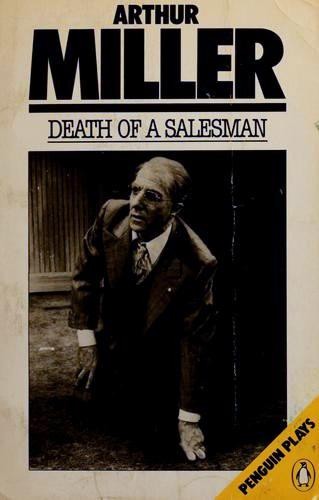
Death of a Salesman is Arthur Miller's 1949 play about Willy Loman, an aging salesman whose faith in being well liked has failed him and his sons. For readers who want the plot, the themes and the ending in plain words.

Author · 2 summaries
American playwright and essayist
Arthur Miller was born in New York City in 1915. His father's clothing business collapsed in the Depression, and the family moved from Harlem to Brooklyn. He worked in an auto parts warehouse to pay for the University of Michigan, where he began writing plays.
Death of a Salesman (1949) follows Willy Loman, an aging traveling salesman who cannot accept that his life has not turned out as he promised his sons. It won the Pulitzer Prize for Drama and argues that the American measure of success, being liked and getting rich, can destroy a person. The Crucible (1953) dramatizes the Salem witch trials of 1692 as a parable of the anti-communist hearings of his own time.
In 1956, the year he married Marilyn Monroe, he refused to name others before the House Un-American Activities Committee and was convicted of contempt of Congress. The conviction was overturned in 1958. He and Monroe divorced in 1961. He kept writing plays into his eighties, though critics found his later work uneven. He died in Connecticut in 2005.

Death of a Salesman is Arthur Miller's 1949 play about Willy Loman, an aging salesman whose faith in being well liked has failed him and his sons. For readers who want the plot, the themes and the ending in plain words.
The Crucible is Arthur Miller's 1953 play about the Salem witch trials, where a girl's lies and a town's fear send innocent people to the gallows. For readers who want the plot act by act, the themes and the ending in plain words.
New books, occasionally