John Gray's Men Are from Mars, Women Are from Venus claims men and women communicate and cope with stress as if from different planets: men retreat to their caves, women talk. For couples who keep misreading each other.
by Mel Helitzer with Mark Shatz
1987 · 352 pages · Summary updated 24 October 2026
Comedy Writing Secrets by Mel Helitzer with Mark Shatz is a workbook on writing humor: the THREES formula, joke structure, plays on words and markets from stand-up to speeches. For writers, speakers and teachers who want to be funnier on purpose.
Mel Helitzer, a journalism professor who taught humor writing, argues that being funny is a craft you can learn, not a gift you are born with. His core tool is the THREES formula: good humor has a Target, Hostility, Realism, Exaggeration, Emotion and Surprise. He breaks jokes into a setup that leads the audience one way and a punch line that turns them another. He teaches techniques such as plays on words, reverses and triples, plus ways to brainstorm material. The second half shows how to use humor in stand-up, speeches, columns, greeting cards, sitcoms and the classroom.
Helitzer rejects the idea that comedians are simply born funny. He argues that humor follows patterns, such as setups, reversals and surprises, and that these patterns can be studied and practiced. The book is built like a course, with examples and exercises in each chapter. The lesson is that anyone who writes or speaks can become funnier by learning the structures behind jokes and rewriting their own material.
Helitzer's core tool lists six elements of good humor: Target, Hostility, Realism, Exaggeration, Emotion and Surprise. A joke aims at a target, taps a shared frustration, rests on a recognizable truth, stretches that truth, builds tension and releases it with a surprise. When a joke fails, he says, check it against the six elements to see which one is missing or weak.
Helitzer argues that humor is criticism disguised as entertainment. Every joke makes fun of someone or something: a boss, a group, an institution, a habit or yourself. The writer must choose a target that suits the audience, or the joke will offend instead of amuse. Self-deprecating humor is often the safest choice, because the only person you criticize is you.
People laugh at what frustrates them. Helitzer lists common sources of hostility: authority, sex, money, family, anxiety, technology and differences between groups. Humor gives people a safe outlet for these feelings. A joke about airport security or a bad boss works because the audience already shares the annoyance. The writer's job is to find the frustration and say what everyone feels.
A joke has two parts. The setup creates an expectation and leads the audience in one direction. The punch line breaks that expectation. Helitzer advises keeping setups short and putting the key word of the punch line as near the end as possible. Any words after it weaken the laugh. Tight jokes, with every extra word cut, almost always get bigger laughs.
Two of the most useful techniques are the triple and the reverse. In a triple, two items set a pattern and the third breaks it. In a reverse, the setup points toward a normal answer and the punch line flips it. Plays on words, such as twisted clichés and double meanings, are a third tool. These structures give beginners a dependable starting point for writing jokes.
When you cannot think of anything funny, Helitzer says to make a list. Pick a topic and write down every word, idea and image connected to it. Then look for associations, especially surprising links between items. Many jokes come from joining two ideas that do not belong together. He also urges writers to keep notes on everyday frustrations, which supply most good material.
Comedy Writing Secrets by Mel Helitzer with Mark Shatz is a practical guide to writing humor. Helitzer first published it in 1987. The widely used second edition, co-written with the psychologist and comedy writer Mark Shatz, came out in 2005. A third edition followed in 2016, after Helitzer's death. Helitzer taught humor writing in the journalism school at Ohio University and had worked in advertising and public relations.
The book starts with a strong claim. Many people believe comedians are born funny. Helitzer calls this a myth. He argues that humor follows patterns, that those patterns can be studied, and that anyone willing to practice can learn to write jokes that work. The book reads like a course: each chapter explains a concept, gives examples from well-known comedians and writers, and ends with exercises.
Helitzer also argues that humor is useful far beyond comedy clubs. Speakers, teachers, managers, advertisers and columnists all use it to hold attention, make a point stick and build a bond with an audience.
Before teaching technique, the book reviews the main theories of why people laugh. One theory says we laugh from a sense of superiority, when we see someone else fail. Another says we laugh at incongruity, when two ideas that do not belong together collide. A third says laughter brings relief, releasing tension or fear. Helitzer also stresses surprise. He does not pick one theory. He uses them to show what a joke must do: create an expectation, then break it in a way that feels both unexpected and right.
The center of the book is Helitzer's THREES formula. He argues that good humor, from a one-liner to a full routine, contains six elements.
He argues that when a joke falls flat, a writer can check it against these six elements to find what is missing. A joke with no clear target feels vague. A joke with no realism feels silly rather than sharp. A joke with no surprise feels flat, because the audience got there first. The formula is a diagnostic tool as much as a recipe.
Helitzer breaks a joke into two parts. The setup creates an expectation. It leads the audience down a path and makes them assume they know where it goes. The punch line turns them in a new direction. He advises keeping setups short and placing the key word of the punch line as close to the end as possible, so the surprise lands at the last moment. Extra words after the punch weaken the laugh.
He also stresses rewriting. A first draft is rarely funny. The writer cuts words, sharpens the target, tests different punch words and tries alternate versions. He uses examples from comedians to show that less is often better: the tightest version of a joke usually gets the biggest laugh.
The book teaches a set of traditional techniques for building jokes.
He also covers exaggeration and understatement, funny names and sounds, and the use of specific details, which are funnier than general ones.
Many beginners say they cannot think of anything funny. Helitzer gives methods for generating material. One is listing: choose a topic and write down every word, idea and image connected to it. Another is association: look for links between items on the list, especially unexpected ones, and build jokes from them. He urges writers to keep notes on daily frustrations and observations, because these are the raw material of most humor. A writer who carries a notebook, he suggests, will never run out of topics. The habit also trains you to notice the small absurdities most people pass by.
He treats the audience as the final judge. A joke is funny only if this audience, in this room, laughs. Writers should know who will hear the joke, what they share and what will offend them. They should test new material in front of real listeners, keep what works and cut what does not, without arguing with the silence.
The second half of the book applies these tools to specific kinds of writing.
The book also discusses the risks of humor that targets ethnic groups, sex or disability, and how a writer can tell when a joke crosses a line for a given audience.
The book is widely used in humor writing courses. Critics note that some of its examples and views are dated. The writer Saul Austerlitz called some of its statistics dubious and some of its views on comedy old-fashioned, while granting that much of its advice is sound for new comics. Some readers also find that analyzing jokes this closely takes the fun out of them, and that a formula cannot replace a writer's own voice.
Read it if you want to write jokes, add humor to speeches or presentations, or teach with more energy. It suits beginners who want a clear method and exercises more than writers who already perform regularly.
11 cards
Question 1 of 5
What does Helitzer say about the idea that comedians are born funny?
John Gray's Men Are from Mars, Women Are from Venus claims men and women communicate and cope with stress as if from different planets: men retreat to their caves, women talk. For couples who keep misreading each other.
How to Talk to Anyone: 92 Little Tricks for Big Success in Relationships by Leil Lowndes gives short, named techniques for first impressions, small talk, rapport, praise, phone calls and parties. For anyone who feels awkward with new people.
Dave Perrotta's Conversation Casanova is a short guide for men on starting conversations with women, moving past small talk and flirting, built on mindset first. For shy men who freeze when they want to talk to someone.
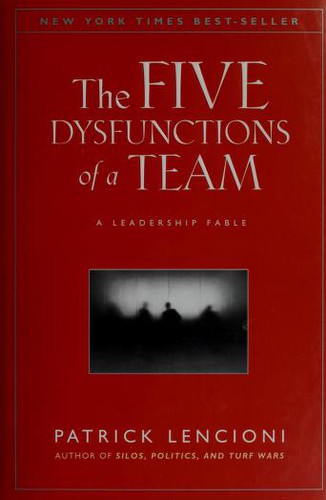
Patrick Lencioni's leadership fable about a new CEO who rebuilds a failing executive team, followed by his five-level model of why teams fail. For managers and anyone who sits on a leadership team.
New books, occasionally