Brianna Wiest on why people sabotage their own goals and how to turn that pattern into self-mastery. For anyone who keeps getting in their own way.
2005 · 296 pages · Summary updated 24 October 2026
Malcolm Gladwell's account of snap judgments: when the first two seconds of thinking beat months of analysis, and when they fail. For readers curious about intuition, bias and expertise.
The mind makes fast judgments below awareness, and they are often as good as slow analysis. Gladwell calls this thin-slicing: the adaptive unconscious reads a situation from a small sample, as when art experts sensed in seconds that the Getty's kouros statue was fake, or when John Gottman predicts divorce from 15 minutes of a couple's conversation. But the same process fails in predictable ways. Priming and unconscious bias produce the Warren Harding error, stress shuts down the ability to read faces, and too much information buries the signal. Snap judgments can be trained and protected. Experts earn good instincts through practice, and institutions can design out bias, as orchestras did with blind auditions.
The adaptive unconscious can read a situation from a narrow slice of experience. John Gottman predicts whether a couple will divorce from 15 minutes of conversation by coding emotions, with contempt as the strongest signal. Students who saw two-second silent clips of teachers gave ratings that matched a full semester's evaluations. Gladwell argues that a marriage, a classroom or a person has a signature, and a short sample contains it. More data often adds noise, not accuracy.
We get the result of a fast judgment but not the reasoning. Tennis coach Vic Braden could predict double faults before the serve but never explain how. When people are forced to explain an intuition, they invent a story, which Gladwell calls the storytelling problem. Speed daters chose people who did not match their stated preferences and then revised the preferences. Asking why can degrade a judgment that was correct.
Gladwell cites John Bargh's experiments in which students exposed to words about old age walked more slowly, and students primed with rude words interrupted sooner. He also describes test scores dropping when Black students were asked to state their race first. The adaptive unconscious absorbs cues from the environment and acts on them. Later research has struggled to replicate several of these priming effects, so treat the specific studies with caution, but the broader point about context stands.
Warren Harding became president because he looked presidential, and he was a poor one. Gladwell uses the Implicit Association Test to show that most people hold associations about race, gender and age that they do not endorse. Those associations change behavior in the first seconds: Chicago car dealers quoted Black and female shoppers higher prices even when they followed identical scripts. A snap judgment built on appearance shuts down thought, and the fix is to change the exposure, not the belief.
At Cook County Hospital, Brendan Reilly replaced doctors' judgment about chest pain with Lee Goldman's algorithm, which used only the ECG and three risk factors. It beat physicians who weighed far more information. In the Millennium Challenge war game, Paul Van Riper's low-tech Red Team sank the data-rich Blue Team's fleet on day one. Gladwell argues that extra information raises confidence more than accuracy. Good fast judgment needs structure that focuses attention on the few facts that matter.
Pepsi won sip tests because sweetness wins a sip, but New Coke, which also won sip tests, failed in the market. The Aeron chair scored poorly on looks and comfort in early tests and became a bestseller. Kenna's music thrilled industry experts and failed in audience research. Gladwell argues that untrained consumers cannot judge the unfamiliar in a test setting, and that sensation transference (reacting to the package, not the product) distorts results. Trained experts give more reliable first impressions.
Four officers shot Amadou Diallo in about seven seconds after misreading his reach for a wallet. Gladwell links this to research on reading faces (Ekman's Facial Action Coding System), on autism (Ami Klin's eye-tracking study) and on heart rate under stress (Dave Grossman). Above about 145 beats per minute, perception degrades, and people stop reading faces. Departments that moved to one-officer cars saw officers slow down and take fewer risks. Time and distance protect snap judgments.
Trombonist Abbie Conant won a blind audition at the Munich Philharmonic, then was demoted once the orchestra saw she was a woman. After orchestras adopted screens, the share of women in major orchestras rose sharply. Gladwell's closing argument is that we cannot easily switch off biased snap judgments, but we can remove the cues that trigger them. Design the room, the form or the process so that the first two seconds see only what matters.
“There can be as much value in the blink of an eye as in months of rational analysis.”
“The key to good decision making is not knowledge. It is understanding. We are swimming in the former. We are desperately lacking in the latter.”
In 1983 the J. Paul Getty Museum in California was offered a marble kouros, a Greek statue of a standing youth, for close to $10 million. The museum spent 14 months checking it. A geologist examined the surface and found a thin layer of calcite that seemed to take centuries to form. Lawyers traced the paperwork. The Getty bought the statue. Then it showed the piece to experts. Federico Zeri, an art historian, looked at the fingernails and felt something was wrong. Evelyn Harrison, a specialist in Greek sculpture, felt a jolt of doubt the instant she saw it. Thomas Hoving, the former director of the Metropolitan Museum, said the first word that came to mind was "fresh." None of them could explain their reaction at first. Later investigation showed the documents were forged and the statue was probably a modern fake.
Malcolm Gladwell, a staff writer at The New Yorker, uses this story to frame the book. In the first two seconds of looking, the experts reached a better conclusion than the Getty's team did in 14 months. Blink asks three questions. When are snap judgments reliable? When do they fail? And can we control and improve them?
Gladwell borrows the term adaptive unconscious from psychologist Timothy Wilson. It is a part of the mind that processes large amounts of data quickly and quietly, like a mental computer. It is not the Freudian unconscious. It is the system that lets you duck a thrown object before you know you have seen it.
The skill he calls thin-slicing is the ability of this system to find patterns from a very narrow slice of experience. His main example is John Gottman, a psychologist at the University of Washington who ran a "love lab." Gottman recorded couples talking for 15 minutes about a point of disagreement, coded every second of the conversation for emotion, and used the results to predict with about 90 percent accuracy whether the couple would still be married 15 years later. With an hour of tape he reached 95 percent. The key signal was contempt, one of what Gottman calls the Four Horsemen (the others are criticism, defensiveness and stonewalling). A marriage has a signature, and a short sample contains it.
Other examples follow. Psychologist Nalini Ambady showed students silent video clips of teachers as short as two seconds. Their ratings matched the end-of-semester evaluations of students who sat through the full course. In another of her studies, judges who heard only the tone of surgeons' voices, with the words filtered out, could predict which surgeons had been sued for malpractice. Psychologist Samuel Gosling found that strangers who spent 15 minutes looking at a student's dorm room judged the student's conscientiousness and openness better than the student's close friends did. The room was a thin slice.
Gladwell closes the chapter with the Iowa gambling experiment by Antonio Damasio's team. Players drew cards from four decks, two of which were rigged to lose. Players began to sweat when reaching for the bad decks after about ten cards, before they could say why. Their bodies knew before their conscious minds did.
The second chapter explains why snap judgments are hard to describe. Gladwell calls the adaptive unconscious a locked door: we get the output but not the reasoning. Vic Braden, a tennis coach, could tell when a player was about to double-fault before the ball was hit, with near-perfect accuracy, but he could never explain how.
Gladwell describes priming experiments by psychologist John Bargh. Students who unscrambled sentences containing words such as "Florida," "gray" and "wrinkle" walked more slowly down the hall afterward. Students primed with rude words interrupted an experimenter sooner. Gladwell also cites a study where Black students who identified their race before a test scored worse. The point is that behavior is shaped by cues we never notice.
The chapter's warning is the storytelling problem. When asked to explain an intuition, people make up a plausible story. In a speed-dating study by Sheena Iyengar and Raymond Fisman, participants said in advance what they wanted in a partner, then chose people who did not match their stated preferences, then revised their stated preferences to match their choices. Asking people why they feel what they feel can distort the feeling itself. Gladwell recounts a study in which students who were asked to explain why they liked a poster ended up less happy with their choice than those who just picked one.
The third chapter is about the dark side of thin-slicing. Warren Harding became president of the United States in 1920 largely because he looked like a president: tall, handsome, dignified. He is widely regarded as one of the worst presidents in history. Gladwell calls this the Warren Harding error: a snap judgment that is driven by a surface cue, such as appearance, and that then shuts down deeper thinking.
The tool for measuring this is the Implicit Association Test (IAT), developed by Anthony Greenwald, Mahzarin Banaji and Brian Nosek. The test measures how quickly people pair words and faces. Most people, including Gladwell himself, who is half Jamaican, are faster to pair white faces with positive words than Black faces with positive words. The result is not a measure of stated beliefs. It measures associations absorbed from the culture, and those associations affect behavior in the first seconds of an encounter.
Gladwell adds data on height: in his survey of Fortune 500 CEOs, about 30 percent were 6 feet 2 or taller, against under 4 percent of American men. Then he visits Bob Golomb, a car salesman in Flemington, New Jersey, who sells about twice the average. Golomb's rule is to treat every customer the same way and to never judge from appearance. Studies by law professor Ian Ayres found that Chicago car dealers quoted Black and female shoppers higher prices than white men, even when the shoppers followed identical scripts. The dealers were not necessarily racist in their stated beliefs. Their snap judgments did the work.
The fourth chapter contrasts two ways of deciding. In 2002 the US military ran Millennium Challenge, a war game that cost about $250 million. The Blue Team, representing the United States, had enormous data, computer models and a decision process called Operational Net Assessment. The Red Team, a rogue Persian Gulf commander, was led by retired Marine general Paul Van Riper. Van Riper used motorcycle couriers and light signals instead of radios, launched a surprise attack with small boats and cruise missiles, and sank most of the Blue fleet in the first day. The exercise was then reset and scripted so that Blue would win.
Gladwell uses this to argue that more information is not always better. He draws on Gary Klein's research on firefighters, who do not compare options in a crisis but recognize a pattern and act, and on improv comedy, where the rule of accepting every offer lets a group make fast decisions without planning. The strongest example is Cook County Hospital in Chicago. Brendan Reilly, the chairman of medicine, adopted an algorithm by cardiologist Lee Goldman for deciding which chest-pain patients to admit. It used only a few factors: the ECG, unstable angina, fluid in the lungs and low blood pressure. Doctors with much more information, including age, weight, smoking and history, did worse than the simple rule. Extra data added confidence but not accuracy. Gladwell's conclusion: good snap judgment requires both spontaneity and structure. Van Riper gave his team freedom within a framework, and Reilly gave doctors a rule that focused them on what mattered.
The fifth chapter asks when first impressions should not be trusted. Kenna is a musician whose demo thrilled record executives, radio programmers and fans at live shows, but who scored badly in market research with ordinary listeners. Gladwell argues that the test audience was being asked to judge something unfamiliar in a format that could not capture it.
He compares this with the Pepsi Challenge. In sip tests, people prefer Pepsi, which is sweeter. Coca-Cola responded with New Coke in 1985, which won sip tests and failed in the market. A sip test measures the first sip, not a whole can, and it strips away the brand. The Aeron chair from Herman Miller scored poorly in early comfort and appearance tests because it looked strange, yet it became the best-selling office chair in the company's history. Gladwell describes sensation transference, the idea of marketing researcher Louis Cheskin that people transfer their reaction to a package onto the product inside, as with margarine colored yellow to look like butter. The lesson is that snap judgments about new things are unreliable, and that experts who have trained their reactions, such as the food tasters who can describe a product on dozens of scales, give better first impressions than untrained consumers.
The sixth chapter is built around the death of Amadou Diallo. In February 1999, four plainclothes New York police officers saw Diallo, a West African immigrant, standing on his stoop in the Bronx. They thought he looked like a suspect. He reached for his wallet. They thought it was a gun and fired 41 shots. The whole sequence took about seven seconds.
Gladwell explains this as a failure of mind-reading. He describes the work of Paul Ekman and Wallace Friesen, who cataloged the facial muscles into the Facial Action Coding System and showed that fleeting expressions reveal emotion. He then describes research by Ami Klin on autism: when an autistic man watched the film Who's Afraid of Virginia Woolf?, his eye tracking showed he looked at a light switch rather than at the actors' faces. Gladwell argues that extreme stress produces a kind of temporary autism. Research by Dave Grossman on heart rate shows that above about 145 beats per minute, fine motor skills and perception degrade, and above 175, people stop processing what they see. The officers, under stress and moving fast, lost the ability to read Diallo's face. Gladwell notes that police departments that switched to one-officer patrol cars saw officers slow down and take fewer risks, because they had no partner to perform for. The fix for bad snap judgments is often time and distance.
The conclusion returns to the kouros and adds the story of trombonist Abbie Conant. In 1980 she auditioned for the Munich Philharmonic behind a screen, and the conductor, Sergiu Celibidache, declared her the one he wanted. When she walked out and the orchestra saw she was a woman, she was demoted and sidelined for years. Once orchestras adopted blind auditions, the share of women in major American orchestras rose several times over. Gladwell's final argument: snap judgments can be controlled by changing the environment in which they happen. Remove the cue that triggers the bias and the judgment improves.
Reviewers such as Richard Posner argued that the book has no clear thesis: it says intuition is powerful, then says it is unreliable, and offers no rule for telling the two apart. Several of the priming studies Gladwell cites, including John Bargh's slow-walking experiment, failed to replicate in later research, and the Implicit Association Test's power to predict behavior is now disputed. Critics also note that Gladwell tends to build arguments from vivid stories rather than systematic evidence.
Read it if you want to understand why first impressions feel so convincing and when to trust them. It suits managers, hiring teams and anyone who makes fast decisions under pressure. Readers who want a more rigorous treatment of the same questions should pair it with Daniel Kahneman's Thinking, Fast and Slow.
12 cards
Question 1 of 5
What does Gladwell call the ability to make accurate judgments from a narrow slice of experience?
Brianna Wiest on why people sabotage their own goals and how to turn that pattern into self-mastery. For anyone who keeps getting in their own way.
Salinger's novel about Holden Caulfield, a sixteen-year-old who is expelled from prep school and wanders New York for three days. For students and readers who want the plot, the voice and the meaning of the title in plain words.
Jonathan Haidt's case that smartphones and overprotection rewired childhood after 2010 and drove a surge in teen anxiety. For parents, teachers and anyone weighing the research dispute around it.
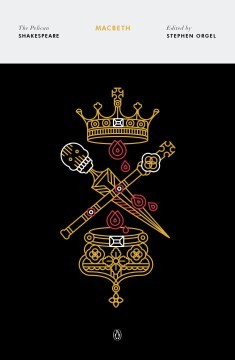
Shakespeare's shortest tragedy: a Scottish general murders his king after three witches promise him the crown, and guilt and tyranny destroy him. For students and readers who want the plot, themes and ending in plain words.
New books, occasionally