Emily Brontë's 1847 novel about Heathcliff, Catherine Earnshaw and two families on the Yorkshire moors, told across two generations. For readers who want the plot, the characters and the ideas behind a famous story of love and revenge.
1606 · 144 pages · Summary updated 24 October 2026
Shakespeare's shortest tragedy: a Scottish general murders his king after three witches promise him the crown, and guilt and tyranny destroy him. For students and readers who want the plot, themes and ending in plain words.
Three witches tell Macbeth, a Scottish general, that he will be king. Pushed by his wife, he murders King Duncan while the king sleeps in his castle and takes the throne. One murder leads to more: his friend Banquo, then the wife and children of his rival Macduff. Lady Macbeth sleepwalks and washes invisible blood from her hands. Macbeth trusts new prophecies that seem to make him safe, until each one comes true in a way he did not expect. The play shows how ambition without limit, once acted on, destroys sleep, trust and the self.
Macbeth is a loyal soldier when the play begins. The witches do not force him to do anything. They name a possibility, and the thought of murder arrives on its own. In the soliloquy before the killing he admits that nothing drives him except "vaulting ambition." Each crime after Duncan is meant to secure the first one: Banquo, Fleance, Macduff's family. By the end he has the crown and nothing else. He has no friends, no sleep, no wife, and a life that he calls a tale told by an idiot.
Banquo sees the danger at once: the powers of darkness tell small truths to win trust, then betray people in things that matter. The witches never lie. Macbeth becomes Cawdor, then king. Later apparitions tell him that no man born of woman can harm him and that he is safe until a forest moves. He hears these as guarantees. The play's word for this is equivocation: a statement that is true in one sense and false in the sense the listener assumes. Macbeth is destroyed by trusting what he wanted to hear.
After the murder Macbeth cannot say "Amen," hears a voice that says he has murdered sleep, and sees his hands as something that could turn the oceans red. Later he sees Banquo's ghost at the feast while no one else does. Lady Macbeth, who mocked these fears, later sleepwalks and scrubs at a spot of blood that is not there. Shakespeare shows guilt as insomnia, hallucination and compulsive action, not as a moral argument. The doctor who watches the queen says the case is beyond medicine.
Lady Macbeth turns her husband around by attacking his masculinity. A real man, she says, would keep his word and act. Macbeth later uses the same trick on the murderers he hires, asking whether they are men or dogs. The play questions this definition of manhood. When Macduff learns his family is dead and is told to take it like a man, he says he must first feel it as a man. The play's most human moment comes from grief, not from violence.
The witches' first chant sets a rule for the whole play. Duncan says there is no art to read the mind in the face, right after he has been betrayed by one Cawdor and just before he is betrayed by the next. Lady Macbeth tells her husband to look like the innocent flower and be the serpent under it. Macbeth's castle has sweet air and houses a murder. The lesson for a reader is practical: in this play, and often in life, the confident surface is the thing to question.
In the world of the play, the king is the head of a body politic, and his murder is a wound in nature itself. On the night of the murder an old man reports that an owl killed a falcon and Duncan's horses ate each other. The sky stays dark by day. Scotland under Macbeth is described as a country that cannot be called a mother, only a grave. Shakespeare was writing for King James, who believed kings ruled by divine right, and the play reflects that view. Order returns only when the rightful heir takes the throne.
Macbeth hears that no man born of woman can harm him and that he is safe until Birnam Wood comes to Dunsinane. He takes both as impossible conditions. Then Malcolm's soldiers cut branches from Birnam Wood as cover, and the forest walks to the castle. Macduff tells him he was cut from his mother's womb before birth, so he was not born in the usual sense. Each prophecy was accurate and useless. The play suggests that a promise of safety is itself a trap, because it stops a person from thinking.
“Fair is foul, and foul is fair.”
“Out, out, brief candle! Life's but a walking shadow, a poor player that struts and frets his hour upon the stage and then is heard no more.”
“Is this a dagger which I see before me, the handle toward my hand?”
Macbeth is the shortest of Shakespeare's tragedies. It was probably first performed in 1606, three years after the Scottish king James VI became James I of England. The play flatters the new king in two ways. It treats his ancestor Banquo as honorable, and it shows witches as real and dangerous, a subject James had written a book about. Shakespeare took the plot from Holinshed's Chronicles, a history of Britain, and changed the facts freely. The historical Macbeth ruled Scotland for seventeen years. The play compresses his reign into what feels like a few weeks.
The story is simple. A brave soldier is told he will be king. He kills the king to make it happen. He then kills anyone who threatens his position, loses his wife, his sleep and his reason, and dies in battle. What makes the play last is not the plot but the inside view. Macbeth speaks his fears, doubts and self-deceptions aloud in soliloquies, so the audience watches a decent man talk himself into evil and then watches what the evil does to him.
The main characters are Macbeth, Thane of Glamis; his wife, Lady Macbeth; King Duncan of Scotland and his sons Malcolm and Donalbain; Banquo, Macbeth's fellow general, and his son Fleance; Macduff, the Thane of Fife; and the three Weird Sisters, the witches. The play has five acts.
The play opens with the three witches on a heath in thunder and lightning. They plan to meet Macbeth after a battle. Their chant, "fair is foul, and foul is fair," sets the mood: nothing in this play is what it seems.
Macbeth and Banquo have just won a battle for Duncan against rebels and a Norwegian army. On their way home the witches stop them. They greet Macbeth with three titles: Thane of Glamis (which he is), Thane of Cawdor (which he is not) and "king hereafter." They tell Banquo he will be "lesser than Macbeth, and greater," and that his descendants will be kings, though he will not. The witches vanish. Messengers arrive at once with news that Duncan has given Macbeth the title of Cawdor, because the old thane was a traitor. The second prophecy has come true within minutes.
Macbeth's reaction is the key to his character. He does not rejoice. He is frightened by his own thoughts. The idea of murder has already entered his mind, and the thought "unfixes" his hair and makes his heart knock against his ribs. Banquo, by contrast, warns that the "instruments of darkness" tell small truths to win people over to great harm.
Duncan names his son Malcolm as heir, with the title Prince of Cumberland. This blocks Macbeth's path to the crown by any normal route. Duncan then announces he will spend the night at Macbeth's castle at Inverness.
Macbeth writes to his wife about the witches. Lady Macbeth reads the letter and decides at once that Duncan must die. She fears her husband is "too full of the milk of human kindness" to take the shortest way. In a famous speech she calls on spirits to "unsex" her, to fill her with cruelty and stop any feeling of remorse. When Macbeth arrives, she takes charge of the plan.
Duncan arrives and praises the castle's pleasant air. Macbeth, alone, nearly backs out. In the soliloquy that begins "If it were done when 'tis done," he lists the reasons against the murder. Duncan is his king, his kinsman and his guest. Duncan has been a good and gentle ruler. The only motive for the murder is "vaulting ambition," which leaps over itself and falls. He tells his wife they will go no further. She answers with contempt. She questions his manhood, says she would have dashed out the brains of her own nursing baby rather than break such a promise, and lays out the method: get Duncan's two guards drunk, kill the king with their daggers, and smear them with blood. Macbeth gives in.
Late at night Macbeth meets Banquo in the courtyard. Banquo says he dreamed of the witches. Macbeth lies and says he does not think of them. Alone, Macbeth sees a dagger floating in the air, pointing him toward Duncan's room. He cannot tell whether it is real or "a dagger of the mind." A bell rings, the signal from his wife, and he goes to kill the king.
The murder happens offstage. Macbeth returns shaking, with bloody hands and the daggers he was meant to leave with the guards. He heard a voice cry "Sleep no more! Macbeth does murder sleep." He could not say "Amen" when the guards prayed. He refuses to go back. Lady Macbeth takes the daggers herself and returns with her own hands bloody. She says a little water will clear them of the deed. Macbeth says all the oceans could not wash the blood from his hand.
A knocking at the gate follows. A drunken porter answers it in a comic scene, imagining himself as the gatekeeper of hell. The visitors are Macduff and Lennox. Macduff goes to wake the king and finds the body. In the uproar Macbeth kills the two guards, claiming he acted in a fury of loyalty. This removes the only witnesses. Lady Macbeth faints, or pretends to. Malcolm and Donalbain, fearing they are next, flee to England and Ireland. Their flight makes them look guilty, and Macbeth is crowned king at Scone.
Macbeth is king but not at peace. Banquo suspects him. Worse, the witches promised that Banquo's heirs would rule. Macbeth has, as he puts it, given his soul to "the common enemy of man" only to make Banquo's sons kings. He hires two murderers, later joined by a third, to kill Banquo and Fleance on their ride before a royal feast. They kill Banquo, but Fleance escapes in the dark.
The feast is the center of the play. As Macbeth prepares to sit, Banquo's ghost appears in his chair. No one else sees it. Macbeth shouts at the ghost in front of his guests. Lady Macbeth tries to cover for him, saying he has had these fits since youth, and whispers to him that this is the same weakness as the dagger. The ghost leaves and returns. The feast breaks up in confusion. Macbeth decides to visit the witches again. He says he is so far stepped in blood that going back would be as hard as going on.
Macduff, meanwhile, has refused to attend the coronation or the feast. He goes to England to join Malcolm and seek help from the English king. Macbeth has spies in every noble's house.
The witches stir their cauldron with the famous list of ingredients ("eye of newt and toe of frog") and summon three apparitions for Macbeth. An armed head warns him to beware Macduff. A bloody child tells him that "none of woman born" shall harm him. A crowned child holding a tree tells him he will never be defeated until Birnam Wood comes to Dunsinane hill. Macbeth takes these as guarantees of safety. He then insists on one more answer and sees a line of eight kings, all descendants of Banquo, with Banquo's ghost at the end. This is the family of King James.
Lennox tells Macbeth that Macduff has fled to England. Macbeth responds by ordering the murder of Macduff's wife, children and servants. The next scene shows Lady Macduff and her young son talking about her absent husband. The murderers enter and kill the boy on stage. This is the point where Macbeth's crimes stop having any strategic purpose. The killings are pure spite.
In England, Malcolm tests Macduff's loyalty by pretending to be even worse than Macbeth, greedy and lustful and without virtue. When Macduff despairs for Scotland, Malcolm reveals the lie and the test is passed. Ross arrives with the news of Macduff's family. Macduff's grief is quiet and physical. Asked to take it like a man, he answers that he must also feel it as a man. His sorrow turns into a single aim: to meet Macbeth in battle.
This section reveals the ending.
At Dunsinane, a doctor and a gentlewoman watch Lady Macbeth sleepwalk. She rubs her hands as if washing them and speaks pieces of the murders: "Out, damned spot," the blood of the old man, the wife of the Thane of Fife, the knocking at the gate. The woman who said a little water would clear them of the deed now cannot get her hands clean. The doctor says she needs a priest more than a physician.
Malcolm's army, with English troops, marches on Dunsinane. Malcolm orders every soldier to cut a branch from Birnam Wood and carry it as camouflage. Macbeth, inside the castle, has become numb. He hears a cry of women and learns that the queen is dead, apparently by her own hand. His response is the speech that begins "Tomorrow, and tomorrow, and tomorrow." Life is a brief candle, a walking shadow, a tale told by an idiot, signifying nothing. Then a messenger reports that the wood is moving toward the castle. The third prophecy has come true.
Macbeth fights anyway, trusting the promise that no man born of woman can harm him. He kills Young Siward. Then Macduff finds him. Macbeth tells him to turn back, because he already has too much Macduff blood on him. When Macduff hears the "woman born" charm, he answers that he was "from his mother's womb untimely ripped," delivered by what we would call a cesarean. Macbeth's courage fails for a moment. He refuses to surrender and be shown off as a captured tyrant. They fight offstage. Macduff returns with Macbeth's head.
Malcolm is hailed as king of Scotland. He promises to call home the exiles and to reward his thanes with the new title of earl. He calls the dead pair "this dead butcher and his fiend-like queen." Fleance is not mentioned, but the audience knows from the show of kings that Banquo's line will one day take the throne.
Critics have argued for centuries about how much the witches control events. One view is that they only name what Macbeth already wants, and that the choice to murder is entirely his. Another is that the play shows real supernatural evil at work. Samuel Johnson thought Macbeth lacked the depth of other tragic heroes and that the play's strength lay in its action and language. A. C. Bradley called it the most tightly built of the tragedies. Some scholars think parts of the witch scenes, including the goddess Hecate, were added by another writer, Thomas Middleton, after Shakespeare's death. The sleepwalking scene and the "tomorrow" speech are among the most quoted passages in English.
Read it if you are studying the play for school and want the events, the people and the main arguments in order. It also suits any reader who wants a short, fast tragedy about how a single bad choice grows.
12 cards
Question 1 of 5
Which title does Macbeth receive from Duncan minutes after the witches predict it?
Lady Macbeth dies, apparently by suicide, after sleepwalking and trying to wash invisible blood from her hands. Malcolm's army carries branches from Birnam Wood to Dunsinane, which fulfills one prophecy. Macduff, who was cut from his mother's womb before birth, kills Macbeth in single combat and brings his head to Malcolm. Malcolm becomes king of Scotland.
Emily Brontë's 1847 novel about Heathcliff, Catherine Earnshaw and two families on the Yorkshire moors, told across two generations. For readers who want the plot, the characters and the ideas behind a famous story of love and revenge.
Harper Lee's novel about Scout Finch, her brother Jem, and their father Atticus, who defends a Black man falsely accused of rape in 1930s Alabama. For students and readers who want the plot, the themes and the ending in plain words.
Chinua Achebe's novel about Okonkwo, an Igbo leader whose village is undone by his own rigidity and the arrival of British missionaries. For readers who want the colonial encounter told from the African side.
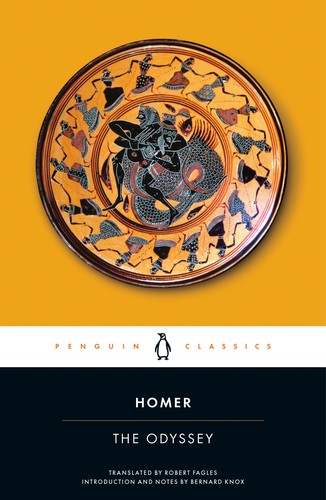
Homer's ancient Greek epic about Odysseus's ten-year journey home from Troy to Ithaca, and his son Telemachus's search for him. For readers who want the plot, the characters and the ideas, book by book.
New books, occasionally