
Wonder by R. J. Palacio is a novel about August Pullman, a ten-year-old boy with a facial difference who goes to school for the first time in fifth grade. For readers who want the plot, the narrators and the book's lesson on kindness.
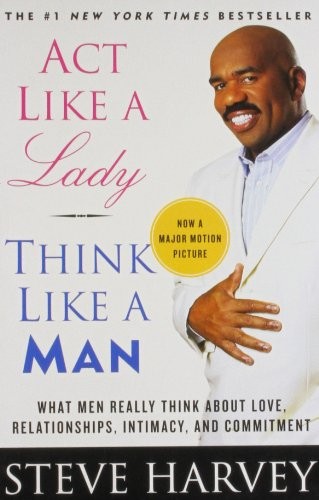
by Steve Harvey
2009 · 240 pages · Summary updated 24 October 2026
Act Like a Lady, Think Like a Man is comedian Steve Harvey's advice to women on how men think about love and commitment: the three P's, the 90-day rule and setting standards. For women dating with marriage in mind.
Steve Harvey, the comedian and radio host, tells women that men are simple and that he will explain the rules. A man is driven by who he is, what he does and how much he makes. A man who loves you will profess, provide and protect. Men sort women into sport fish, caught and released, and keepers. To be a keeper, a woman should set clear standards and requirements, ask early questions about his goals and views, and follow the 90-day rule: no sex until he has shown commitment for three months. Critics call the book a set of gender stereotypes that puts the work of a relationship on women.
Harvey argues that a man defines himself by his title, his work and his income. Until he feels settled in these, he will not fully commit to a woman. A man still building his career may want company, but he has no room for a serious relationship. Harvey tells women to look at where a man stands in his own life before investing in him.
Harvey's best-known idea is that a man in love will do three things. He will profess, claiming the woman in public as his girlfriend or fiancée. He will provide, sharing what he has and helping her. He will protect her from threats. If a man is not doing all three, Harvey says, he is not in love, whatever he says.
Harvey says men sort women into sport fish, pursued for fun and released, and keepers, the women they want to commit to. In his view, a man decides early, and a woman's behavior shapes the choice. A woman with clear standards who does not rush into sex signals that she is a keeper. Harvey argues that men respect what they have to work for.
Harvey tells women to state what they expect early: how they want to be treated and what they need from a partner, such as reliable calls or shared faith. He argues that men will rise to meet clear requirements if they want the woman, and leave if they do not. Either way, the woman learns quickly and does not waste years on the wrong man.
Harvey lists questions to ask early: his short-term goals, his long-term goals, his views on relationships, what he thinks about you and how he feels about you. If his short-term and long-term goals are the same, he is not planning. The relationships question shows how he treats the people closest to him, especially his mother. The answers give a woman facts before her feelings take over.
Harvey compares a new relationship to a new job, where workers often wait about 90 days for full benefits. He tells women to wait 90 days before sex. In that time, a woman can see whether the man meets her standards and shows the three P's. A man who wants only sex will usually leave. This is the book's most discussed and most criticized advice.
Harvey says a man in a relationship needs three things from a woman: her support, her loyalty and sex, which he calls the cookie. He argues that men want a partner who backs their goals and stands by them in public. Critics say this frames sex as a reward women give men, and that the list reduces men's needs to a stereotype.
Across the book, Harvey tells women to watch what men do. Men, he says, rarely talk about feelings and do not pick up hints. So women should ask directly for what they want and read the answer in behavior: whether he introduces her to his family, keeps his word and makes plans. A man who will not claim a woman in public is not committed.
Steve Harvey is a comedian, actor and television and radio host. On The Steve Harvey Morning Show he ran a call-in segment called "Ask Steve" and later a segment called the Strawberry Letter, in which listeners wrote in about their love lives and Harvey gave blunt advice. Most of the callers and letter writers were women confused about the men they were dating. Act Like a Lady, Think Like a Man (2009), written with journalist Denene Millner, grew out of those conversations. It became a bestseller and was adapted into the 2012 film Think Like a Man.
Harvey's pitch is simple. Women ask other women for advice about men, but other women do not know how men think. Harvey says he will tell them, as a man who has been married more than once and has talked to many men. His claim is that men are not complicated. They follow a few basic drives, and a woman who understands them can choose better partners and get the relationship she wants.
The book is written in Harvey's comic, conversational voice, with stories from his own life and his radio callers. It speaks mainly to women who want marriage, and it assumes heterosexual relationships throughout.
The title's advice is that a woman should act like a lady, with standards and self-respect, while thinking like a man, which in Harvey's terms means being strategic and clear about what she wants. He presents this as a way for women to protect themselves and to get commitment from men who are ready to give it.
Harvey begins with what he sees as the core of male identity. A man, he says, defines himself by three things:
Until a man feels settled in these, Harvey argues, he will not fully commit to a woman. A man who is still building his career may want company and sex, but he does not have room for a serious relationship. Harvey tells women to understand this rather than take it personally, and to look at where a man stands in his own life.
Harvey uses his own life as the example. In his early twenties he was a college dropout who lost his job as an inspector at the Ford Motor Company. He sold carpet, insurance and Amway products and had no clear title, work or income. Finding a partner, he says, was the last thing on his mind. Only after he won an amateur night at a comedy club and printed business cards that read "Steve Harvey. Comedian." did he feel he knew who he was and what he did. A woman who meets a man in that stage should know that his work will come first.
The best-known idea in the book is the three P's. Harvey says a man who truly loves a woman will do three things:
Harvey says that if a man is not doing all three, he is not in love, no matter what he says. He tells women to judge men by these actions rather than by words.
Harvey adds that the three P's are not tied to wealth. A man with little money can still provide by fixing things, giving time or sharing what he has. A man can protect by standing up for a woman with his family or friends. What matters, in his view, is that the man takes on the role willingly.
In a chapter on strong, independent and lonely women, Harvey addresses successful women who say they do not need a man. He argues that this message can push men away. If a woman makes it clear that she can provide and protect herself in every way, she leaves no room for a man to do the things that, in Harvey's view, make him feel like a partner. Men, he says, want to feel needed.
He does not tell women to give up careers or pretend to be helpless. He tells them to leave space for a partner to contribute, to accept help and to show appreciation when he does. He also warns that women who bring a work mindset into a relationship, managing and directing their partner, may get compliance but not love. Critics see this chapter as one of the clearest examples of the book's traditional view of gender roles.
Harvey uses a fishing image. Men, he says, sort women into two groups. Sport fish are women a man pursues for fun and sex, then lets go. Keepers are women he wants to commit to.
In Harvey's account, a man decides which group a woman is in early, and her behavior shapes his decision. A woman with clear standards, who expects respect and does not rush into sex, signals that she is a keeper. A woman who gives everything at once signals that she is a sport fish. He tells women that men respect what they have to work for.
Harvey tells women to set standards and requirements and state them early. Standards are what a woman expects in how she is treated. Requirements are what she needs from a partner, such as calling when he says he will or going to church with her. He argues that men will rise to meet clear requirements if they want a woman, and walk away if they do not, which saves her time.
In the chapter "The Five Questions Every Woman Should Ask Before She Gets in Too Deep," he gives a list to use early in dating, before she is emotionally invested:
Harvey says the short-term and long-term answers should differ. If they are the same, the man is not really planning, and a man without a plan has no room for a partner. The question about relationships includes his bond with his mother. A missing or damaged bond with her is a warning sign, Harvey says, because a man who treats his mother badly may treat a partner the same way. The last two questions work as a pair. Almost any man can compliment a woman, but a man who has thought seriously about her will give a deeper answer about how he feels. The point is to gather information before deciding whether to invest.
The most discussed part of the book is the 90-day rule. Harvey compares a new relationship to a job. Many employers, he says, make new workers wait about 90 days before they get full benefits, to see whether they are committed. Harvey argues that women should do the same: wait 90 days before having sex with a new partner.
Harvey's reasoning is that sex is something men want badly, and that waiting shows whether a man is interested in the woman or only in sex. In those 90 days, a woman can see whether he meets her standards, how he treats her and whether he shows the three P's. A man who is only looking for sex will usually leave.
In the same spirit, Harvey says that a man needs three things from a woman in a relationship: her support, her loyalty and sex, which he calls the cookie.
Harvey covers many of the questions women sent to his show. He explains why men cheat, in his view: because they can, because they are not getting what they need at home, or because they never committed in the first place. He talks about mama's boys, how men see single mothers and when to introduce a new man to your children, why men dislike nagging and how they handle feelings.
On communication he tells women to be direct. Men, he says, do not pick up hints. If a woman wants something, she should say it plainly. He also says men are less likely to talk about their feelings, so women should watch what men do.
He warns about types of men to avoid, such as the player who wants no commitment and the man who will not introduce a woman to his friends or family. He also defends what he sees as men's needs, including time alone and respect at home.
The book ends with a question and answer section that responds to common reader questions in short, direct answers.
Critics say the book rests on broad gender stereotypes: that all men think alike, want the same things and show love the same way. They note that it puts the responsibility for men's behavior on women, who must set rules, test men and withhold sex to get commitment. Some reviewers object to framing sex as a reward a woman gives a man, and to the book's focus on women who want marriage with men. Harvey has no training as a counselor, and the advice comes from his opinions and experience rather than research. Supporters say the plain talk about standards and early questions helps women make clearer choices.
Read it if you are a woman who wants a blunt, comic take on dating with commitment in mind. Treat it as one man's opinions rather than research, and keep the parts on clear standards and early questions.
11 cards
Question 1 of 5
What are Harvey's three P's of how a man shows love?
Wonder by R. J. Palacio is a novel about August Pullman, a ten-year-old boy with a facial difference who goes to school for the first time in fifth grade. For readers who want the plot, the narrators and the book's lesson on kindness.
Ugly Love is Colleen Hoover's romance about Tate Collins, a nursing student who agrees to a no-strings affair with a guarded airline pilot, Miles Archer, whose past is a closed door. For readers who want a steamy, emotional love story with a heartbreaking backstory.

Zora Neale Hurston's novel about Janie Crawford, a Black woman in early 1900s Florida who moves through three marriages in search of real love and her own voice. For readers who want the plot, the themes and the meaning of the title.

The Wife Upstairs is Rachel Hawkins's 2021 thriller that retells Jane Eyre in a wealthy Alabama suburb, where a broke dog walker falls for a widower whose wife vanished on a lake. For readers who like twisty domestic suspense.
New books, occasionally