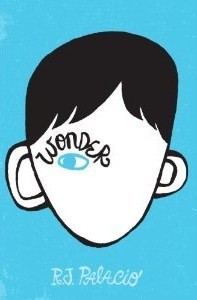
Wonder by R. J. Palacio is a novel about August Pullman, a ten-year-old boy with a facial difference who goes to school for the first time in fifth grade. For readers who want the plot, the narrators and the book's lesson on kindness.
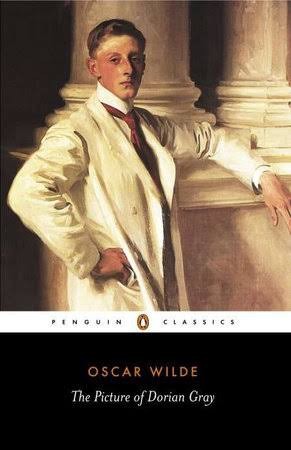
by Oscar Wilde
1890 · 252 pages · Summary updated 24 October 2026
Oscar Wilde's only novel, about a beautiful young man whose portrait ages and records his sins while he stays young. For readers who want the plot chapter by chapter and the ideas about beauty, influence and conscience behind it.
The painter Basil Hallward paints a portrait of Dorian Gray, a young man of striking beauty. Basil's witty friend Lord Henry Wotton tells Dorian that youth and pleasure are all that matter. Dorian wishes that the picture would grow old instead of him, and he would give his soul for it. The wish comes true. Dorian stays young and handsome while the hidden portrait shows every cruelty and vice. He drives an actress, Sibyl Vane, to her death and then sinks into years of secret corruption. Oscar Wilde writes a Gothic fable about beauty, influence, art and the cost of a life without conscience.
Dorian's portrait records everything he does: the cruelty to Sibyl, the years of vice, the murder of Basil. His own face stays young and innocent. Society believes the face and dismisses the rumors. Wilde turns the double life into a literal object locked in an attic. The idea is that people can hide their moral nature from others but not from themselves. Dorian visits the picture in secret, and in the end he cannot bear what it shows.
Lord Henry says that to influence a person is to give him one's own soul. He then does exactly that, filling Dorian's head with ideas about youth and pleasure and sending him the yellow book. He never acts on his own theories; he only talks. Dorian lives them. Wilde shows how a clever, careless voice can shape a young mind, and he raises the question of who is responsible when someone follows our words to disaster.
Lord Henry tells Dorian that youth is the only thing worth having and that it will soon be gone. In terror of aging, Dorian wishes the portrait could grow old in his place and would give his soul for it. His wish destroys him. Wilde writes in an age that worshiped beauty and wit, and he was one of its leading figures. The novel exposes the cost of treating appearance as the measure of worth: Dorian's beauty becomes a mask over rot.
Dorian loves Sibyl Vane only as an artist who becomes Juliet and Rosalind each night. When real love makes her stop pretending, he rejects her. Lord Henry later persuades Dorian to see her suicide as a beautiful tragedy. The Preface claims there is no such thing as a moral or immoral book. Yet the novel shows what happens when a person treats life as art: real people get hurt. Wilde leaves the tension open.
Lord Henry preaches a life devoted to new sensations, with no fear and no shame. Dorian adopts it fully: he studies perfumes, music, jewels and rare books, and then moves into opium dens and darker pleasures. The pursuit of sensation leads not to joy but to boredom, fear and cruelty. Wilde himself defended the novel by saying that all excess, as well as all renunciation, brings its own punishment. Pleasure as a whole philosophy of life fails.
Dorian tries to give his conscience to the portrait, so that he can live free of guilt. For a while it works: he feels nothing at Sibyl's death and enjoys watching the picture change. But he cannot stop visiting it, and fear grows. After Basil's murder he lives in terror of being found out. Wilde shows that hiding one's guilt in a locked room does not destroy it. It only separates a person from the part of himself that could change.
When Dorian finally tries to be good and spares Hetty Merton, the portrait shows only hypocrisy, because he did it from vanity. He decides the picture is the last evidence against him and stabs it with the knife that killed Basil. His servants find the portrait young again and Dorian dead and withered on the floor. Wilde's ending shows that the picture was Dorian's soul. In trying to kill his conscience, he kills himself.
“There is only one thing in the world worse than being talked about, and that is not being talked about.”
“The only way to get rid of a temptation is to yield to it.”
“All art is quite useless.”
The Picture of Dorian Gray by Oscar Wilde first appeared in July 1890 in Lippincott's Monthly Magazine, in thirteen chapters. Reviewers attacked it as immoral. For the book edition of 1891, Wilde added six chapters, softened passages about Basil's feelings for Dorian and added a Preface of short sayings about art. This summary follows the 1891 text, which most editions print. Five years later, in the 1895 libel case that Wilde brought against the Marquess of Queensberry, the defense read from the novel to attack his morals. That case led to his own trials for gross indecency.
The story is a Gothic tale set in the drawing rooms and slums of late Victorian London. It has three main characters: an artist, a corrupting wit and a beautiful young man. Its themes are the worship of beauty and youth, the influence one person can have on another, the relationship between art and morality, and the double life.
The Preface is a list of epigrams about art. Wilde writes that the artist is the creator of beautiful things, that there is no such thing as a moral or immoral book, only books well or badly written, and that all art is quite useless. The Preface states the creed of aestheticism: art for art's sake. The novel that follows tests that creed and, many readers argue, shows its dangers.
In his London studio, on a summer day, the painter Basil Hallward shows his friend Lord Henry Wotton his new portrait of a young man of extraordinary beauty, Dorian Gray. Lord Henry says it is his best work and he must exhibit it. Basil refuses. He says he has put too much of himself into it: the picture reveals the secret of his own soul, his worship of Dorian. He asks Lord Henry not to meet Dorian, fearing his influence.
Dorian arrives, and they meet anyway. While Basil paints, Lord Henry talks. He tells Dorian that the only way to get rid of a temptation is to yield to it, that youth is the one thing worth having, and that it will soon be gone. He preaches a new Hedonism: a life devoted to beauty and the senses, with no fear of pleasure. Dorian is fascinated. He has never thought about himself this way.
Basil finishes the portrait. Dorian looks at it and sees his own beauty as if for the first time. Then he thinks of growing old and ugly. He cries out that he wishes the picture could age while he stays young forever, and that he would give his soul for it. Basil offers to destroy the canvas. Dorian stops him. Basil gives it to him.
Lord Henry learns from his uncle that Dorian's mother, a beautiful heiress, ran off with a poor young soldier, who was killed in a duel her father arranged. She died soon after. Lord Henry decides to shape Dorian as an experiment.
A month later, Dorian tells Lord Henry that he is in love with Sibyl Vane, a seventeen-year-old actress in a shabby little theater in a poor part of London. Every night she plays a different heroine of Shakespeare: Juliet, Rosalind, Imogen. Dorian loves her art more than her. Sibyl knows him only as Prince Charming.
Sibyl's brother, James Vane, is about to leave for Australia as a sailor. He distrusts the rich gentleman who is courting his sister and swears to kill him if he ever harms her. He does not know his name.
Dorian announces his engagement to Sibyl and brings Lord Henry and Basil to see her play. She acts terribly, as if she does not care. Afterward, she tells Dorian that before she met him, acting was her only reality. Now she knows real love, and she can no longer pretend. Dorian is disgusted. He tells her that she has killed his love, that without her art she is nothing, and he leaves her sobbing on the floor.
At home, Dorian looks at the portrait and sees a new line of cruelty around the mouth. The wish has come true. Frightened, he resolves to make it right and marry Sibyl. He writes her a passionate letter.
The next day, Lord Henry brings the news: Sibyl killed herself the night before by swallowing poison at the theater. Dorian is shocked, but Lord Henry persuades him to see her death as a beautiful tragedy, like a scene from a play. Dorian goes to the opera that evening. When Basil comes to comfort him, he finds Dorian cold and unmoved.
Dorian decides that the portrait will carry the burden of his conscience while he enjoys life. He has it carried to the locked schoolroom at the top of his house, where he played as a child, and keeps the only key. When Basil asks to exhibit it, Dorian refuses, and Basil confesses that he worshiped him. Dorian feels pity, and relief that Basil has not seen the change.
Lord Henry sends Dorian a book with a yellow cover, about a young Parisian who tries to experience every sensation of every age. Wilde does not name it, but it is usually identified as Joris-Karl Huysmans's novel À rebours. Dorian reads it for years and models his life on it.
The story moves quickly through eighteen years. Dorian collects perfumes, music, jewels, embroideries and rare books. He is the center of fashionable London, and he still looks twenty. But rumors follow him. Young men who befriend him are ruined. One young officer kills himself. Another man has to leave England with his name ruined. A lady's reputation is destroyed. Dorian is seen in the opium dens and low taverns of the docks. Sometimes he climbs to the locked room and compares the aging, evil face on the canvas with his own young face in a mirror, with growing pleasure.
On the night before his thirty-eighth birthday, Dorian meets Basil in the fog. Basil is leaving for Paris and has come to warn him. He has heard terrible rumors and cannot believe them. He says he would need to see Dorian's soul to know the truth.
Dorian, in a strange mood, offers to show him. He takes Basil up to the locked room and pulls the cover from the portrait. Basil sees a hideous, leering face that is still recognizably the one he painted. He is horrified and begs Dorian to pray with him.
Dorian feels a sudden hatred for the man who painted the picture. He picks up a knife and stabs Basil again and again in the neck. Then he locks the door and goes downstairs as if nothing has happened.
The next day, Dorian calls on Alan Campbell, a young chemist and a former friend. He blackmails him, with a threat written on a piece of paper, into destroying Basil's body with chemicals. Campbell does it and leaves shattered. Later he shoots himself in his laboratory.
Unable to forget, Dorian goes to an opium den near the docks to drown his memory. A woman there calls him Prince Charming. A sailor hears the name. It is James Vane, back from the sea, who has spent years looking for the man who destroyed his sister. He seizes Dorian at gunpoint outside. Dorian asks him how long ago Sibyl died. Eighteen years, James says. Dorian tells him to look at his face under the lamp: he looks like a boy of twenty. James lets him go, ashamed. Then the woman tells him that Prince Charming has not changed in eighteen years, and that he sold himself to the devil for a pretty face.
This section reveals the ending.
At his country house, Selby Royal, Dorian is entertaining guests. One evening he sees James Vane's face pressed against the window of the conservatory, watching him, and he faints. For days he is afraid to leave the house. At a shooting party, a guest fires at a hare and kills a man hiding in the trees. Dorian goes to see the body. It is James Vane. Dorian feels saved.
Back in London, Dorian tells Lord Henry that he means to be good. He has spared a village girl, Hetty Merton, whom he could have ruined. Lord Henry laughs. He talks of Basil's disappearance and says Dorian could never commit a murder, because crime belongs to the lower orders. Dorian asks him what he would say if he were told that Dorian had killed Basil. Lord Henry does not believe it.
At home, Dorian goes to the portrait, hoping that his good deed has softened it. It has not. The face now shows cunning and the curved wrinkle of hypocrisy, and the red stain on the hand looks brighter. He sees that he spared Hetty from vanity, not virtue. He realizes that the picture is the only evidence against him, and his conscience.
He takes the knife he used to kill Basil and stabs the canvas. A cry rings through the house. The servants force the door. They find the portrait on the wall as it was first painted, showing a beautiful young man. On the floor lies a dead man in evening dress, with a knife in his heart. He is withered, wrinkled and loathsome. They recognize him only by his rings.
The 1890 version was condemned by many British reviewers as decadent and unclean. Wilde defended it in letters to the press, saying the book has a moral: all excess, as well as all renunciation, brings its own punishment. Modern critics debate whether the novel is a warning against aestheticism or a celebration of it, and many note the coded homoerotic feeling in Basil's love for Dorian. In 2011 Harvard University Press published the uncensored typescript, restoring passages removed before the first printing.
Read it if you want a short Gothic novel full of famous epigrams, or if you are studying it and need the plot in order. It suits anyone interested in vanity, influence and the price of a double life.
12 cards
Question 1 of 5
Why does Basil refuse to exhibit the portrait?
Dorian tries to be good, but the portrait shows only hypocrisy. He stabs it with the knife he used to kill Basil Hallward. His servants find the portrait restored to its original beauty and Dorian dead on the floor, old and withered, with a knife in his heart. They recognize him only by his rings.
Wonder by R. J. Palacio is a novel about August Pullman, a ten-year-old boy with a facial difference who goes to school for the first time in fifth grade. For readers who want the plot, the narrators and the book's lesson on kindness.
Ugly Love is Colleen Hoover's romance about Tate Collins, a nursing student who agrees to a no-strings affair with a guarded airline pilot, Miles Archer, whose past is a closed door. For readers who want a steamy, emotional love story with a heartbreaking backstory.
Zora Neale Hurston's novel about Janie Crawford, a Black woman in early 1900s Florida who moves through three marriages in search of real love and her own voice. For readers who want the plot, the themes and the meaning of the title.
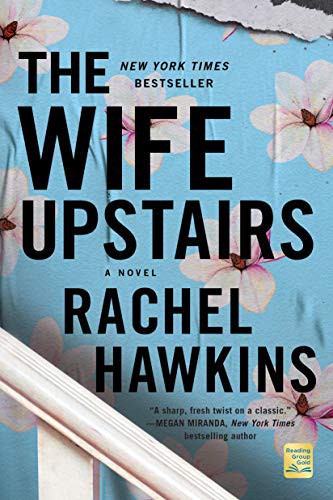
The Wife Upstairs is Rachel Hawkins's 2021 thriller that retells Jane Eyre in a wealthy Alabama suburb, where a broke dog walker falls for a widower whose wife vanished on a lake. For readers who like twisty domestic suspense.
New books, occasionally