A palliative care nurse recounts the five regrets she heard most often from dying patients, the people who told her each one, and how those lessons changed her own life.
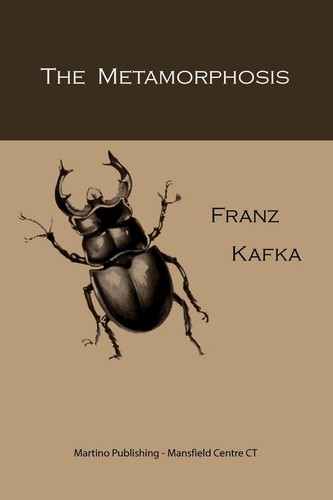
by Franz Kafka
1915 · 224 pages · Summary updated 6 November 2026
Franz Kafka's novella about Gregor Samsa, a salesman who wakes up as a giant insect and watches his family turn away. For readers who want the plot of the three parts, the first sentence and the main readings.
Gregor Samsa, a traveling salesman who supports his parents and sister, wakes one morning as a huge insect. Kafka calls it an ungeheures Ungeziefer, a monstrous vermin, and never says more. Gregor's first worry is the train he has missed. In three parts the family's care turns to disgust: the chief clerk flees, the father drives Gregor back with a cane and later lodges an apple in his back, his sister Grete feeds him and then gives up on him, and three lodgers take over the apartment. Kafka's argument is that a family built on one person's wages treats him as a thing the moment he stops providing.
Kafka calls Gregor an ungeheures Ungeziefer, a monstrous vermin, and never names the species. He told his publisher that the insect must not be drawn. Translators have chosen insect, cockroach or vermin, and each choice shapes the story. The reasoning is that Gregor is a thing the family cannot name, and a clear picture would make him an animal in a fable. The example is the charwoman, who calls him an old dung beetle, the only character who gives him a species, and only as an insult.
Gregor's first thoughts after the change are about the missed train, his boss and the debt. He has worked five years without a sick day. The firm sends the chief clerk within hours. Kafka's reasoning is that the insect body only makes visible a condition that already existed: Gregor was a wage-earning machine to his employer and his family. The example is his relief, not anger, when he learns that his father had savings all along and let him keep traveling.
Grete feeds Gregor and cleans his room, and he hides under the sofa so she will not have to see him. By Part III she is the one who says they must get rid of it. Kafka shows the change in small steps: the furniture removal, the room becoming a dump, the lodgers. The reasoning is that disgust grows from fatigue, not cruelty. The example is Grete's argument that if the thing were Gregor it would have left on its own, which lets her stop calling him by his name.
When Gregor earns, the family rests. When he cannot, the father puts on a uniform, the mother sews, Grete sells and the apartment fills with lodgers. Kafka's reasoning is that the Samsas' love was tied to money, and that the father's revival proves it: he is a broken man while Gregor provides and an officer in gold buttons when Gregor does not. The example is the apple, thrown by a father who is strong again because he has a job.
He learns to crawl on the ceiling, prefers rotten food and lets dust cover him. But he still wants to apologize for being late and still dreams of sending Grete to the conservatory. Kafka keeps the narration inside Gregor's head, so the reader feels the gap between an animal body and a human loyalty. The example is the picture of the woman in furs, which he presses himself over to save the last object that proves he was a person.
Hermann Kafka was a domineering shopkeeper who scorned his son's writing. In the 1919 Letter to His Father, Kafka describes feeling like vermin in his father's eyes. Mr. Samsa's cane, his hissing and his apples read as that relationship on the page. The reasoning is biographical but supported by the text: the father only becomes a father again by attacking his son. The example is the uniform Mr. Samsa refuses to take off, worn even asleep, as if authority were a costume he fears losing.
Gregor dies before dawn, agreeing with his family that he must disappear. The charwoman announces it, the parents cross themselves, and the father throws out the lodgers. Then the three Samsas take a tram into the spring countryside and decide it is time to find Grete a husband. Kafka's point is that the family was waiting for this. The example is the last image, Grete stretching her young body, which shows new life growing from Gregor's removal.
“As Gregor Samsa awoke one morning from uneasy dreams he found himself transformed in his bed into a gigantic insect.”
The Metamorphosis (Die Verwandlung) is a novella by Franz Kafka, written in German in the autumn of 1912 and published in 1915. It is about 60 pages long in most editions and divided into three parts. Kafka was then a 29-year-old insurance lawyer in Prague, living with his parents, and the story is the one piece of his fiction that almost every reader meets.
The first sentence does all the work. Gregor Samsa, a traveling salesman in textiles, wakes from troubled dreams and finds that he has turned into a huge insect. Kafka's phrase is ungeheures Ungeziefer. Ungeziefer means vermin, an unclean animal unfit for sacrifice, and ungeheuer means monstrous or enormous. Translators have tried "gigantic insect" (Willa and Edwin Muir), "monstrous vermin" (Stanley Corngold), "monstrous cockroach" (Michael Hofmann) and "some sort of monstrous insect" (Susan Bernofsky). Kafka never says what kind of creature Gregor is, and he told his publisher that the insect must not be drawn on the cover. The vagueness is the point. Gregor is a thing the family cannot name.
Gregor's first thoughts are not about his body. He worries about the train he has missed, his job, his boss, and the debt his parents owe the firm. He has worked five years without a sick day to pay it off. He is the family's only earner. His father's business failed, his mother has asthma, and his 17-year-old sister Grete plays the violin and does little else. Gregor had planned to send her to the conservatory. The transformation is horrifying, but Gregor's reaction tells you that his life was already a trap.
The family knocks on Gregor's locked door. His voice has changed, and they cannot understand him. Then the chief clerk from Gregor's firm arrives to find out why he has not caught the five o'clock train. The clerk stands in the living room and accuses Gregor, through the door, of poor work and hints that his job is at risk. Gregor pleads, but what comes out is animal noise.
Gregor turns the key with his jaws and opens the door. The clerk backs away. His mother collapses. His father clenches his fist, then weeps. Gregor tries to run after the clerk to save his job, and his father drives him back into his room with the clerk's cane and a newspaper, hissing like a savage. Gregor jams in the doorway, and his father shoves him through so hard that he bleeds. The door slams.
In one morning Gregor has lost his job, his standing in the family and the use of the apartment. He has not lost his mind. He still thinks like a man who must apologize for being late.
Grete takes over Gregor's care. She leaves food and finds that he prefers rotten vegetables and old cheese to fresh milk. She cleans the room while he hides under the sofa, so that she does not have to see him. Gregor is grateful and ashamed.
Through the door he learns the family's finances. His father saved some money from the failed business and set aside part of Gregor's wages. Gregor had been told there was nothing. He is relieved, and then hurt. The savings could have shortened his years on the road. The family now has to decide how to live. The father, the mother and Grete will all have to work.
Gregor discovers that he enjoys crawling across the walls and ceiling. Grete decides to clear the room of furniture to give him space. The mother objects: removing the furniture means giving up on Gregor's return. They move the desk and the chest anyway, and Gregor, losing the last signs of his human past, climbs onto the wall and presses himself over a framed picture of a woman in furs that he had cut from a magazine. His mother sees him and faints.
The father comes home from his new job as a bank messenger, in a uniform with gold buttons, and finds the chaos. He pelts Gregor with apples from the fruit bowl. One lodges in his back and stays there. The mother, half undressed, begs the father for Gregor's life. The apple rots in Gregor's body for the rest of the story.
The family changes shape around Gregor's absence. The father keeps his uniform on even at home and falls asleep in it. The mother sews underwear for a shop. Grete works as a sales clerk and studies shorthand and French at night. They dismiss the maid and hire a charwoman, a bony old widow who is not afraid of Gregor, calls him an old dung beetle and prods him with a chair.
To bring in money they take in three lodgers, bearded men who eat at the family's table and treat the Samsas as servants. Gregor's room becomes a storeroom for whatever the lodgers do not want. He stops eating. The wound in his back inflames, and he spends the nights awake and the days in the dust.
One evening Grete plays her violin for the lodgers. They are bored and smoke. Gregor, drawn by the music, creeps out of his room into the lit living room, dirty and trailing dust, with the thought that he will bring Grete into his room and tell her that she should have gone to the conservatory. He asks himself whether he can be an animal if music moves him so. The lodgers see him. The chief lodger gives notice and says he will pay nothing for the days he has lived there.
Grete speaks. She says they have to get rid of it. She stops calling Gregor by his name. If it were Gregor, she argues, it would have left on its own and spared them. Gregor hears all of it.
This section reveals the ending.
Gregor turns and crawls back into his room. It takes a long time, and his family watches in silence. The door is shut and locked behind him. He thinks of his family with tenderness and agrees that he must disappear. He hears the clock strike three in the morning. Then his head sinks, and his last breath leaves him.
The charwoman finds the body in the morning, pokes it with her broom and announces that it has croaked. The parents cross themselves. Grete notices how thin the body is, since it has eaten nothing for so long. Mr. Samsa orders the lodgers out of the apartment, and for the first time he is the one giving orders. The charwoman disposes of the body and is dismissed.
The three Samsas write letters excusing themselves from work and take a tram into the country. It is a warm spring day. They talk about the future and agree that their jobs are good and that they should move to a smaller, cheaper apartment. The parents look at their daughter and notice, as if for the first time, that she has grown into a good-looking young woman. They think it is time to find her a husband. At the end of the ride Grete stands up first and stretches her young body.
The ending is the cruelest part of the story. Gregor's death is not a tragedy for anyone but him. The family is relieved, and the daughter he hoped to support blooms the moment he is gone.
Kafka's story has drawn more interpretation than almost any other short work of the century. Four readings matter most.
Alienation. Gregor is a man who has become a thing. He was already a thing to his firm, which sends the chief clerk the moment he misses a train, and to the family that lived off his wages. The insect body makes the condition visible. Kafka's narration stays with Gregor's mind, so the reader feels the gap between a person who still thinks and a world that sees only vermin.
Family and money. The Samsas are an economic unit. When Gregor earns, he is the center. When he stops earning, he is a burden, then a problem, then a thing to be cleared away. The father revives the moment he has a job and a uniform, and Grete grows the moment she works. The story asks what a family owes a member who can no longer provide.
The body. The story is physical: the many legs, the voice, the taste for rotten food, the wound from the apple, the dust. Gregor's mind adjusts to his body before his feelings do. Readers interested in illness and disability often see in it the experience of being cared for by people who want you to disappear.
Kafka's own father. Hermann Kafka was a loud, domineering shopkeeper who despised his son's writing. Kafka's 1919 Letter to His Father describes a boy who felt like vermin in his father's eyes. Mr. Samsa's cane, his uniform and his apples read as a portrait of that relationship, and Grete's violin as the family's hope for a child who does what is expected.
Vladimir Nabokov, who taught the story at Cornell, read it as a work about a kind artist in a family of philistines and argued from the text that Gregor is a beetle with wings he never discovers. Other critics reject attempts to pin down the insect at all and see the story as a parable about a condition rather than a creature. A long argument about the first sentence, and whether "vermin" or "insect" is right, keeps producing new translations. Some readers find the story cold or cruel. Max Brod reported that Kafka laughed when he read his own stories aloud to friends.
Read it if you want the one short work that explains what "Kafkaesque" means, or if you have to write about it for school and want the three parts and the four readings in order. It takes about an hour to read.
12 cards
Question 1 of 5
What is Gregor Samsa's job before his transformation?
After Grete says the family must get rid of the creature, Gregor crawls back to his room and dies before dawn. The charwoman finds the body. The father throws out the lodgers, and the three Samsas take a tram into the spring countryside, plan a smaller apartment and decide it is time to find Grete a husband.
A palliative care nurse recounts the five regrets she heard most often from dying patients, the people who told her each one, and how those lessons changed her own life.
A moral psychologist explains why people reason after they judge, why liberals and conservatives draw on different moral foundations, and why morality holds groups together while blinding them to each other.

Brené Brown's short guide to Wholehearted living: ten guideposts for building worthiness, each paired with a habit to let go of, drawn from her research on shame and connection.
Malcolm Gladwell uses the Sandra Bland traffic stop, Cuban spies, Bernie Madoff, Amanda Knox, and Kansas City policing to show why people misjudge strangers.
More in Fiction →More in Philosophy and stoicism →More in Psychology →
New books, occasionally