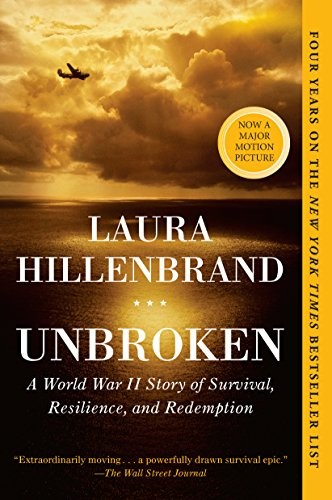
Laura Hillenbrand's biography of Louis Zamperini: Olympic runner, bombardier, 47 days adrift in the Pacific, two years in Japanese prison camps, and a long road home. For readers of war history and survival stories.
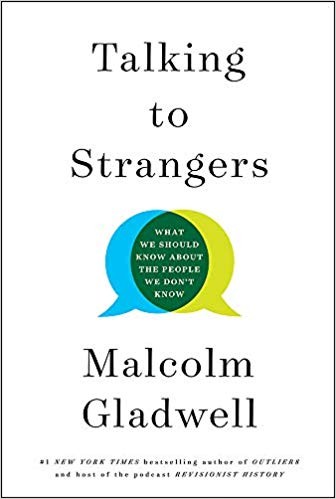
2019 · 400 pages · Summary updated 6 November 2026
Malcolm Gladwell uses the Sandra Bland traffic stop, Cuban spies, Bernie Madoff, Amanda Knox, and Kansas City policing to show why people misjudge strangers.
Malcolm Gladwell asks why a routine 2015 traffic stop ended with Sandra Bland dead in a Texas jail cell. His answer is that humans use three faulty tools to judge strangers. We default to truth, so spies like Ana Montes and frauds like Bernie Madoff go undetected for years. We assume transparency, so we misread people like Amanda Knox whose faces and manners do not match their feelings. And we ignore coupling, the way behavior depends on place and circumstance, from Sylvia Plath's gas oven to aggressive policing that worked only in a few Kansas City blocks. Gladwell argues that Bland died because her arresting officer applied all three errors at once. Critics say he stretches the research.
Gladwell's core borrowing is Tim Levine's truth-default theory. In Levine's trivia experiments, people who watch interviews of students who did or did not cheat identify liars a little over half the time. They spot honest people easily and miss liars, because they assume honesty until the evidence against it becomes overwhelming. Gladwell argues that this explains how Ana Montes spied for Cuba inside the Defense Intelligence Agency for years, and how a counterintelligence officer who interviewed her in 1996 noticed the inconsistencies and still let her go.
Levine says the truth default is a good bargain. Trust makes cooperation possible, and the price is that an occasional liar gets through. The people who do not pay this price are what Gladwell calls holy fools. Harry Markopolos worked out that Bernie Madoff's returns were impossible and sent warnings to the Securities and Exchange Commission for years. Nobody acted. Markopolos was right, but he lived in constant suspicion and feared for his safety. A society of holy fools, Gladwell argues, would not function.
We assume a stranger's face and manner reveal their inner state. Gladwell shows that actors in an episode of Friends display emotions so clearly that viewers can follow the plot without sound, which trains us to expect the same from real people. Research among the Trobriand Islanders found that they read the standard Western fear face as a threat. Judges who meet defendants in person make worse bail decisions than a computer model that sees only the file. Seeing a stranger often makes the judgment worse.
Levine's experiments show that lie detection works only when demeanor matches truth: a nervous liar and a calm truth-teller. A calm liar and a nervous truth-teller fool almost everyone. Gladwell applies this to Amanda Knox, who was convicted of her roommate's 2007 murder in Italy and later cleared. The physical evidence pointed elsewhere, but Knox kissed her boyfriend near the crime scene and stretched in the police station. She did not act like a grieving person, so police and the press read her as guilty.
Gladwell draws on Claude Steele and Robert Josephs's theory of alcohol myopia. Drinking narrows attention to the immediate and removes the long-range considerations that restrain behavior. Dwight Heath found that the Camba of Bolivia drank very strong alcohol in rituals without violence, so the effect depends on setting and expectations. At high blood alcohol levels the hippocampus stops recording memory while the person stays awake. Gladwell argues that two blacked-out strangers, as in the Brock Turner case, cannot read each other at all.
Sylvia Plath died in 1963 using the coal gas in her London oven. When Britain switched to natural gas, which does not kill this way, gas suicides vanished and the national suicide rate fell instead of shifting to other methods. Richard Seiden found that most of the 515 people stopped from jumping off the Golden Gate Bridge never died by suicide. Gladwell calls this coupling: an act is tied to a specific method, place, and moment. Remove the condition and the act often does not happen.
The 1970s Kansas City patrol experiment found that more patrol cars did not reduce crime. In the 1990s Lawrence Sherman focused officers on one small high-crime district with aggressive traffic stops aimed at guns, and gun crime there fell. David Weisburd's law of crime concentration explains why: a few percent of street segments produce half of all crime. Departments nationwide copied the stops and dropped the targeting. Gladwell argues that Brian Encinia applied a hot-spot tactic to a quiet road in daylight where it made no sense.
Gladwell reads the stop line by line. Encinia was trained not to default to truth and to treat minor signs as suspicious. He assumed transparency, reading Bland's irritation at a trivial stop as evidence of something hidden. And he used a tactic that worked only in coupled conditions in a place with almost no crime. Gladwell argues that blaming the trooper, or Bland, misses the institutions that trained him. His closing advice is to approach strangers with caution and humility, and to stop punishing people when our tools fail.
Malcolm Gladwell opens with a traffic stop. In July 2015, Sandra Bland, a 28-year-old Black woman who had just moved to Texas for a job at Prairie View A&M University, was pulled over by state trooper Brian Encinia for failing to signal a lane change. He asked her to put out her cigarette. She refused. He ordered her out of the car, the stop escalated, and he arrested her. Three days later she was found dead in her cell in the Waller County jail. The death was ruled a suicide. The dashcam video spread worldwide.
Gladwell's question is not who was at fault. It is why an ordinary encounter between two strangers went so wrong. His answer runs through the whole book. Humans use a set of tools to make sense of people they do not know, and those tools fail in predictable ways. He names three. We default to truth, so we miss liars. We believe in transparency, so we misread people whose faces and manners do not match their inner state. And we ignore coupling, the way behavior is tied to a specific place and circumstance. The chapters are case studies, and the last one returns to Bland.
Gladwell starts with Neville Chamberlain, who flew to Germany in 1938, met Hitler face to face, and came away convinced that Hitler could be trusted. The people who read Hitler correctly, such as Churchill, had never met him. Meeting the stranger made the judgment worse, not better.
The next cases are spies. In 1987 a Cuban intelligence officer, Florentino Aspillaga, defected and revealed that nearly every Cuban agent the CIA ran was a double agent working for Havana. Ana Montes, the top Cuba analyst at the Defense Intelligence Agency, spied for Cuba for years. A counterintelligence officer, Scott Carmichael, interviewed her in 1996, noticed inconsistencies, and still let her go. She was arrested in 2001.
Gladwell explains these failures with the work of psychologist Tim Levine and his truth-default theory. In Levine's experiments, students take a trivia test with a partner who is a confederate. The instructor leaves the room, and the partner points out that the answers are in an envelope on the desk. Some students cheat. Afterward, each is interviewed on camera. When other people watch the tapes and judge who lied, they are right a little over half the time, barely better than chance. The pattern is lopsided. People are good at spotting truth-tellers and bad at spotting liars, because they assume honesty until the evidence against it becomes overwhelming.
Levine argues that this default is not a flaw. Trust makes cooperation possible. The cost is that a determined liar gets through. Gladwell applies the idea to Bernie Madoff, whose fraud ran for years while Harry Markopolos, a financial analyst, sent repeated warnings to the Securities and Exchange Commission. Markopolos is what Gladwell calls a holy fool, a person who does not default to truth. Such people catch frauds, but they also live in constant suspicion. He uses the same lens on the Jerry Sandusky case at Penn State and the Larry Nassar case in gymnastics, where parents, coaches, and administrators heard reports and found reasons to believe the man they knew.
The second tool is the belief that a stranger's face and manner reveal what they feel. Gladwell calls this the transparency assumption. He describes a study in which psychologist Jennifer Fugate coded the facial expressions of actors in an episode of the sitcom Friends. The actors' faces matched the script so well that viewers could follow the plot with the sound off. Television trains us to expect that real people are this readable.
They are not. Gladwell cites research by Sergio Jarillo and Carlos Crivelli among the Trobriand Islanders of Papua New Guinea. Shown the standard Western fear face, with wide eyes and open mouth, the islanders read it as a threat display, not fear. Facial expressions are not a universal language.
The central case is Amanda Knox. In 2007 her roommate Meredith Kercher was murdered in Perugia, Italy. The physical evidence pointed to Rudy Guede, who was convicted. Knox was also convicted, acquitted, convicted again, and finally cleared by Italy's highest court in 2015. Gladwell argues that police and the press judged her guilty because she behaved oddly. She kissed her boyfriend outside the crime scene and did stretches in the police station. She did not act the way a grieving person is supposed to act. Gladwell borrows a term from Levine: Knox was mismatched. Her outward manner did not match her inner state. Levine's research shows that people judge mismatched truth-tellers as liars and matched liars as honest. Judges, who meet defendants in person, make worse bail decisions than a computer model that sees only the file.
Gladwell adds the interrogation of Khalid Sheikh Mohammed by CIA contractors, who used waterboarding and sleep deprivation. He cites research by Charles Morgan on soldiers in survival training, whose memories broke down under stress, to argue that coercion makes a stranger less readable, not more.
In January 2015, Brock Turner, a Stanford swimmer, was found by two graduate students on top of an unconscious woman behind a dumpster near a fraternity party. He was convicted of sexual assault in 2016. Both he and the victim, who later identified herself as Chanel Miller, had been drinking heavily. She remembered nothing of the encounter.
Gladwell uses the case to argue that alcohol does more than lower inhibitions. He draws on the alcohol myopia theory of psychologists Claude Steele and Robert Josephs. Drinking narrows attention to what is immediate and strips away the long-range considerations that normally restrain behavior. He contrasts this with the Camba people of Bolivia, studied by anthropologist Dwight Heath in the 1950s, who drank very strong alcohol in ritual settings without violence or disorder. The effect of alcohol, he argues, depends on the setting and the expectations drinkers bring to it.
He then explains blackouts. At a blood alcohol level around 0.15, the hippocampus stops forming new memories while the person remains awake and apparently functional. Gladwell notes that heavy drinking of this kind has become common on campuses. Two strangers who are both drunk cannot read each other, cannot remember, and cannot give or judge consent. His conclusion is that the campus drinking culture is a central part of the problem. This chapter is the one most readers and reviewers have objected to, as the critics section explains.
The third tool, which Gladwell says we ignore, is coupling: behaviors are tied to specific places and conditions.
The poet Sylvia Plath died by suicide in 1963 by putting her head in a gas oven in her London flat. At that time British homes ran on town gas, made from coal and rich in carbon monoxide. In the 1960s and 1970s Britain switched to natural gas from the North Sea, which does not kill in this way. Suicides by gas disappeared, and the overall suicide rate in Britain fell, rather than shifting to other methods. Gladwell draws on the work of criminologists Ronald Clarke and Pat Mayhew to argue that for many people suicide is coupled to one specific method. Remove the method and the act often does not happen.
He makes the same point with the Golden Gate Bridge. Richard Seiden followed 515 people who had been stopped from jumping between 1937 and 1971. The large majority were still alive years later or had died of other causes. Yet the bridge went without a barrier for more than eighty years, because people assumed that someone determined to die would find another way.
The chapter then turns to policing. In the early 1970s the Kansas City preventive patrol experiment, led by George Kelling, varied the number of patrol cars in different districts. Crime did not change. In the 1990s, criminologist Lawrence Sherman ran a different experiment in Kansas City. He focused on one small high-crime district and had officers make aggressive traffic stops there, looking for guns. Gun seizures went up and gun crime in that district went down. Sherman's work built on David Weisburd's law of crime concentration: in Minneapolis, Seattle, and other cities, a few percent of street segments account for half of all crime.
The lesson, Gladwell says, was coupling. Aggressive stops worked because they were tied to a few blocks at a few hours. Police departments across the country took the method and dropped the coupling. Traffic stops for minor infractions became a national tactic, and training manuals taught officers to treat small signs of nervousness as reasons for suspicion.
Encinia had this training. He stopped Bland on a quiet road near the university campus in daylight, a place with little crime, for a minor violation. He then read her irritation as a sign of something hidden. Gladwell walks through the stop line by line. Encinia did not default to truth, because his training told him not to. He assumed transparency, treating her annoyance as evidence. And he applied a tactic that had worked only in coupled conditions to a place where those conditions did not exist.
Encinia was fired and charged with perjury. The charge was dropped in 2017 when he agreed never to work in law enforcement again. Gladwell argues that blaming Encinia, or Bland, misses the point. The institutions that trained him and the assumptions he carried produced the outcome. His closing advice is that we should talk to strangers with caution and humility, accept that we cannot read them, and stop punishing people when our tools fail.
Reviewers in several major outlets argued that Gladwell stretches the research to fit his cases. Levine's experiments concern college students and trivia, and critics question how far they explain spies, financiers, and police. Several noted that the chapters do not add up to a clear thesis beyond a call for humility. The Brock Turner chapter drew the sharpest objections. Critics said that by framing the assault as a problem of two drunk strangers misreading each other, Gladwell blurs the question of consent and shifts attention from Turner's choices to campus drinking culture. Gladwell has defended the chapter as an argument about alcohol, not an excuse for the assault.
Read it if you make judgments about people you barely know: hiring, lending, policing, judging, or teaching. The default-to-truth and coupling chapters are the most useful. Readers who want firm conclusions or rigorous treatment of the studies will find the book thin in places.
12 cards
Question 1 of 5
Why, according to Gladwell, did so many people fail to catch Ana Montes and Bernie Madoff?
Laura Hillenbrand's biography of Louis Zamperini: Olympic runner, bombardier, 47 days adrift in the Pacific, two years in Japanese prison camps, and a long road home. For readers of war history and survival stories.
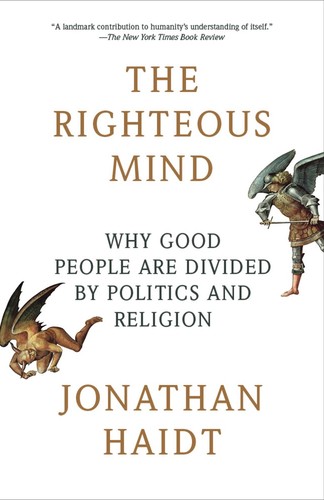
A moral psychologist explains why people reason after they judge, why liberals and conservatives draw on different moral foundations, and why morality holds groups together while blinding them to each other.

Franz Kafka's novella about Gregor Samsa, a salesman who wakes up as a giant insect and watches his family turn away. For readers who want the plot of the three parts, the first sentence and the main readings.
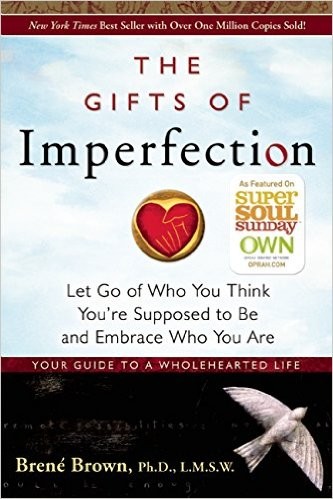
Brené Brown's short guide to Wholehearted living: ten guideposts for building worthiness, each paired with a habit to let go of, drawn from her research on shame and connection.
More in Communication and persuasion →More in Psychology →More in Society and history →
New books, occasionally