
Laura Hillenbrand's biography of Louis Zamperini: Olympic runner, bombardier, 47 days adrift in the Pacific, two years in Japanese prison camps, and a long road home. For readers of war history and survival stories.
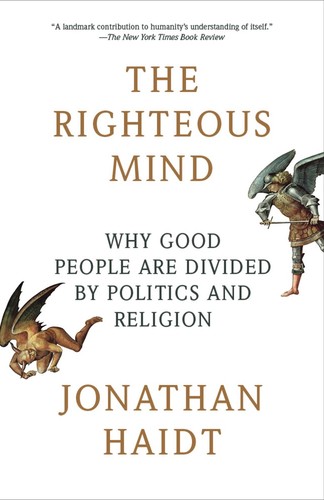
2012 · 528 pages · Summary updated 6 November 2026
A moral psychologist explains why people reason after they judge, why liberals and conservatives draw on different moral foundations, and why morality holds groups together while blinding them to each other.
Jonathan Haidt argues that moral judgment is mostly intuition, with reasoning arriving afterwards as a lawyer for the verdict. His image is a small rider on a large elephant. Moral dumbfounding studies show people condemning harmless taboo acts without being able to say why. Haidt's moral foundations theory names six intuitive foundations: care, fairness, loyalty, authority, sanctity, and liberty. Liberals build mainly on care, fairness, and liberty. Conservatives draw on all six, which gives them a broader appeal. Finally, humans are groupish as well as selfish. A hive switch lets people lose themselves in a team, and religion evolved to bind communities. Morality binds and blinds, and understanding that can make political disagreement less bitter.
Haidt compares the mind to a small rider on a large elephant. The elephant is fast automatic intuition. The rider is conscious reasoning, which evolved to serve the elephant by explaining and justifying its moves. His evidence is moral dumbfounding: people hear a story about adult siblings who have consensual sex once with two forms of birth control and no harm, condemn it, and then cannot give a reason that survives questioning. Haidt's social intuitionist model holds that intuitions trigger judgments and reasoning follows, mainly to persuade others. Minds change when a new intuition is triggered, often by a trusted person.
Haidt tested harmless taboo stories, such as a family eating its pet dog after a car killed it, on people in Brazil and Philadelphia. Educated Westerners called the acts disgusting but not wrong, since nobody was hurt. Most other groups called them wrong and invented harms to justify the verdict. Haidt links this to the finding that Western, educated, industrialized, rich, democratic (WEIRD) subjects are outliers who see individuals rather than relationships. Richard Shweder's three ethics of autonomy, community, and divinity describe the wider moral world that most of humanity inhabits.
Haidt uses Glaucon's ring of invisibility from Plato to argue that people care about appearing good more than being good. Conscious reasoning works like a press secretary for the intuitive politician inside us. Philip Tetlock found that accountability improves thinking only when people do not know what the audience wants to hear. David Perkins found that higher IQ produced more arguments for one's own side and none for the other side. Mercier and Sperber conclude that reasoning is a tool for persuasion. Good reasoning emerges only in groups where members hold different views and check each other.
Moral foundations theory compares the moral mind to a tongue with several receptors on which cultures build different cuisines. Haidt names care/harm, fairness/cheating, loyalty/betrayal, authority/subversion, sanctity/degradation, and liberty/oppression. Each evolved to solve an adaptive challenge: protecting children, reciprocal exchange, forming coalitions, managing hierarchy, avoiding pathogens, and restraining bullies. Each has original triggers and wider current triggers. Disgust at rotten food, for example, now extends to moral revulsion at a desecrated flag. Fairness, he stresses, means proportionality to most people, not equality.
Using YourMorals.org surveys with Jesse Graham and Brian Nosek, Haidt found that liberals build morality mainly on care, fairness, and liberty, and rate loyalty, authority, and sanctity low. Conservatives value all six foundations more evenly. Haidt calls this the conservative advantage: a message about community, tradition, or sanctity reaches tastes that a message about victims does not. He contrasts the Millian view of society as a contract among free individuals with the Durkheimian view of society as a body held by shared norms, and argues each captures something real.
Haidt argues that natural selection acted on individuals, which produced selfish instincts, and also on groups through multilevel selection, which produced groupish instincts. Cohesive groups outcompeted less cohesive groups. The hive switch is the capacity to lose the self in something larger: soldiers marching in step, crowds at a rave, worshippers in ritual, a person in awe at a canyon. Oxytocin and mirror neurons support this bonding, but mostly within the group. Haidt acknowledges that group selection remains a minority view among biologists and defends it through shared intentionality and cultural evolution.
Against Dawkins, Dennett, and Harris, Haidt argues that religion is not merely a parasitic byproduct of cognitive quirks. Belief in gods may have begun as a byproduct, but gods who watch and punish suppress cheating and bind groups. Richard Sosis found that nineteenth-century religious communes outlasted secular ones, and that the number of costly demands predicted survival. Religious Americans give and volunteer more, and belonging to a congregation, not belief, is the active ingredient. Haidt calls the result moral capital: the norms, practices, and institutions that let a community cooperate.
Haidt argues that people do not reason their way to politics. Temperament makes some stories appealing, and stories become identity. Liberals see victims of corporations and inherited privilege and push for change, but undervalue moral capital and can damage institutions they do not understand. Libertarians see the harm of government control. Social conservatives see that groups need boundaries and shared sacred things to survive. His advice: treat opponents as holding part of the truth, find shared foundations before arguing, and spend time with people whose intuitions differ from yours.
“Morality binds and blinds.”
“The mind is divided, like a rider on an elephant, and the rider's job is to serve the elephant.”
Jonathan Haidt is a social psychologist who studies morality across cultures. His book has one central claim and three parts. The claim: human morality is built on intuition, not reasoning, and understanding this explains why good people are divided by politics and religion.
The three parts each carry a principle. First, intuitions come first and strategic reasoning second. Second, there is more to morality than harm and fairness. Third, morality binds and blinds. Haidt writes as a liberal who studied conservatives and came to believe that each side sees moral truths the other misses.
Haidt opens with the question of where morality comes from. Developmental psychologists such as Lawrence Kohlberg and Elliot Turiel held that children reason their way to morality by working out what causes harm and what is unfair. Richard Shweder, who studied moral thinking in India, argued that this harm-based view is a local product of Western, educated, individualist culture.
Haidt tested this as a graduate student. He wrote short stories about harmless taboo violations: a family that eats its pet dog after a car kills it, a man who has sex with a dead chicken and then cooks it, a woman who cleans a toilet with the national flag. He read the stories to people in Brazil and Philadelphia across social classes. Educated Westerners said the acts were disgusting but not wrong, because nobody was harmed. Most other groups said they were wrong, and when pressed for a reason they often invented harms that were not in the story. Moral judgment did not come from reasoning about harm. The reasoning came after.
The second chapter gives the book's central metaphor. The mind is divided like a small rider on a large elephant. The elephant is automatic intuition: fast, emotional, and in charge. The rider is conscious reasoning. Haidt argues the rider evolved to serve the elephant, not to steer it. He sides with David Hume, who called reason the servant of the passions, against Plato and Kant.
The evidence is moral dumbfounding. In one scenario, Julie and Mark, adult siblings, have consensual sex once on vacation, use two forms of birth control, keep it secret, and feel it brought them closer. Almost everyone says it was wrong. Asked why, they cite risks the story has ruled out, then say they cannot explain it but know it is wrong. Haidt's social intuitionist model describes this: an intuition fires, a judgment follows, and reasoning is produced afterwards, mainly to persuade others. Reasoning changes minds mostly through social channels. A friend's argument can trigger a new intuition in you.
Chapter three gives supporting evidence that elephants rule. Brains make evaluations within a fraction of a second. Patients studied by Antonio Damasio who lost emotional processing after brain injury could reason about ethics but could not make decisions. Psychopaths reason but do not feel. Babies in Paul Bloom's lab prefer a helpful puppet to a hindering one before they can talk. Bodily states shape judgment: people near a bad smell judged others more harshly, and people who washed their hands became more moralistic about purity.
Chapter four asks what reasoning is for. Haidt draws on Glaucon's challenge in Plato's Republic: a ring of invisibility would turn anyone into a cheat, so what matters is reputation. People are intuitive politicians, and conscious reasoning works like a press secretary justifying decisions already made. Experiments by Philip Tetlock show that accountability improves reasoning only when people do not know what the audience wants. David Perkins found that higher IQ predicted more arguments for one's own side but no more arguments for the other side. Hugo Mercier and Dan Sperber's argumentative theory concludes that reasoning evolved to win arguments, not to find truth. Good reasoning is a property of groups with diverse views, not individuals.
Haidt introduces the acronym WEIRD: Western, educated, industrialized, rich, and democratic. Research subjects from WEIRD societies are statistical outliers who see a world of separate objects and individuals. Most people see relationships. Shweder's fieldwork in Bhubaneswar, India, identified three ethics. The ethic of autonomy protects individual rights and welfare. The ethic of community protects groups, roles, and institutions. The ethic of divinity protects the sacred from degradation. Haidt spent three months in Bhubaneswar and found himself coming to feel the other two ethics, not just understand them.
From this comes moral foundations theory, developed with Craig Joseph and later Jesse Graham. Haidt compares the moral mind to a tongue with several taste receptors. Cultures build different cuisines on the same receptors. Each foundation evolved to solve an adaptive challenge, has original triggers, and now responds to current triggers that stretch beyond the original. The book names six:
Chapter eight presents what Haidt calls the conservative advantage. Using surveys from the website YourMorals.org, Haidt, Graham, and Brian Nosek found that self-described liberals built morality mainly on care and fairness. Conservatives valued every foundation more evenly. Once liberty is added, Haidt describes liberals as working from three foundations and conservatives from all six. Liberals rate loyalty, authority, and sanctity low. Conservatives rate care and fairness slightly lower than liberals but still high. The practical result: conservative messages can speak to more moral tastes. Haidt argues that Democrats have lost elections by appealing only to care and fairness while Republicans spoke to the whole palette.
He pairs this with two views of society. John Stuart Mill saw society as a contract among individuals who should be free to do what they wish if they harm nobody. Emile Durkheim saw society as a body held together by shared norms and sacred things. Liberals are Millian. Conservatives are Durkheimian. Each view captures something real.
The third part asks why humans are moral at all. Haidt's answer is that we are 90 percent chimp and 10 percent bee. Natural selection mostly favored individuals, which produced selfish and competitive instincts. But humans also went through a period of multilevel selection in which cohesive groups outcompeted less cohesive groups. That produced groupish instincts. Haidt defends group selection, which most biologists rejected after the 1960s, by arguing that shared intentionality, cultural evolution, and the control of free riders made human groups into units that selection could act on.
The hive switch is Haidt's name for the ability to lose oneself in something larger than the self. Durkheim called the feeling collective effervescence. Haidt gives examples: soldiers marching in step, which historian William McNeill called muscular bonding; crowds at raves; religious rituals; awe in nature. Oxytocin increases trust and generosity, but research shows it does so mainly toward one's own group. Mirror neurons help people feel what others feel, again mostly within the group. The hive switch makes people less selfish but also more tribal.
Chapter eleven treats religion as a team sport. Haidt argues against the New Atheists, Richard Dawkins, Daniel Dennett, and Sam Harris, who see religion as a parasitic byproduct of cognitive quirks that spreads false beliefs. Haidt agrees that belief in gods began as a byproduct of agency detection, but argues that gods then became useful. Belief in a watching god suppresses cheating and binds communities. Richard Sosis studied nineteenth-century American communes and found that religious communes lasted far longer than secular ones, and that the number of costly demands a religious commune made predicted its survival. Religious people in modern America give more and volunteer more, and the active ingredient is belonging to a congregation, not belief itself. Religion creates moral capital: the shared norms, practices, and institutions that let a community function.
The last chapter applies all of this to politics. Haidt says people do not choose an ideology by reasoning. Genes shape temperament, temperament shapes which stories appeal, and stories become identity. Liberals, libertarians, and social conservatives each see threats the others miss. Liberals see victims of corporations and inherited privilege and push for change. Haidt argues that liberals undervalue moral capital and can damage institutions they do not understand. Libertarians see the harm of government overreach. Social conservatives see that some groups need boundaries and hierarchy to survive. He borrows the image of yin and yang: each side holds part of a whole, and a society needs both.
His practical conclusion is modest. Stop seeing opponents as stupid or evil. Find shared moral foundations before arguing. Spend time with people who hold other views so that your intuitions have a chance to shift.
Moral foundations theory has drawn sustained criticism. Kurt Gray and colleagues argue that a single harm-based template explains moral judgment better than six separate foundations, and that people find harm even in the taboo scenarios. Other researchers question whether the six foundations hold up statistically across cultures, and whether survey responses reflect fixed intuitions or political identity. Haidt's defense of group selection remains a minority view in evolutionary biology. Critics on the left object to his claim that each side's moral palette is equally valid, noting that loyalty, authority, and sanctity have justified oppression throughout history. Haidt and his collaborators describe the list of foundations as provisional and open to revision.
Read it if you cannot understand how intelligent people vote the way they do, or if you argue about politics and religion and keep losing friends. It is also a clear introduction to the research on moral intuition for anyone in persuasion, policy, or leadership.
12 cards
Question 1 of 5
In Haidt's metaphor, what does the rider represent?
Laura Hillenbrand's biography of Louis Zamperini: Olympic runner, bombardier, 47 days adrift in the Pacific, two years in Japanese prison camps, and a long road home. For readers of war history and survival stories.
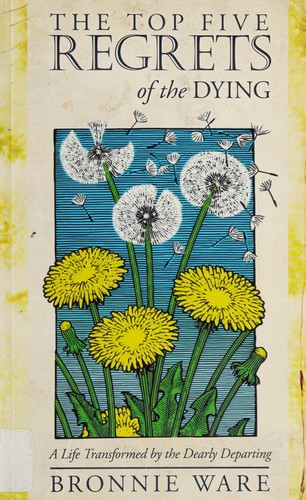
A palliative care nurse recounts the five regrets she heard most often from dying patients, the people who told her each one, and how those lessons changed her own life.

Franz Kafka's novella about Gregor Samsa, a salesman who wakes up as a giant insect and watches his family turn away. For readers who want the plot of the three parts, the first sentence and the main readings.
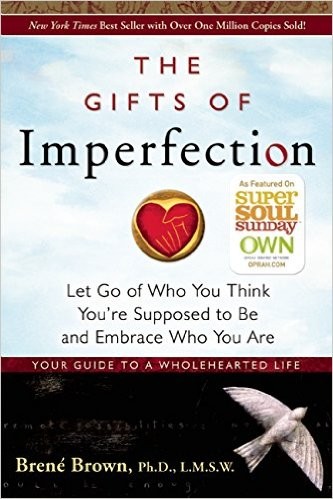
Brené Brown's short guide to Wholehearted living: ten guideposts for building worthiness, each paired with a habit to let go of, drawn from her research on shame and connection.
More in Philosophy and stoicism →More in Psychology →More in Society and history →
New books, occasionally