
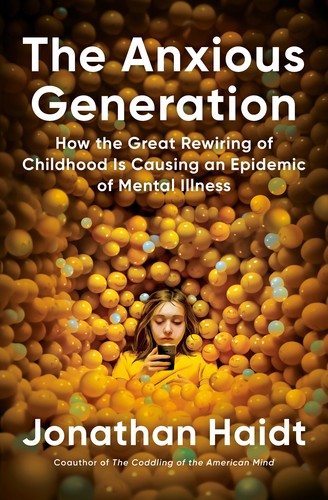
Jonathan Haidt's case that smartphones and overprotection rewired childhood after 2010 and drove a surge in teen anxiety. For parents, teachers and anyone weighing the research dispute around it.

Author · 1 summary
American social psychologist and professor
Jonathan Haidt is a social psychologist who studies moral emotions and moral judgment. He was born in New York City and grew up in Scarsdale, New York. He studied philosophy at Yale University, then earned a PhD in psychology at the University of Pennsylvania in 1992. He taught at the University of Virginia from 1995 to 2011 and is now a professor of ethical leadership at New York University's Stern School of Business.
His best-known academic idea is moral foundations theory. It holds that people build moral judgments on a few intuitive foundations, such as care, fairness, loyalty and authority, and that political groups weight them differently. The Happiness Hypothesis (2006), The Righteous Mind (2012) and The Coddling of the American Mind (2018, with Greg Lukianoff) bring this work to general readers.
The Anxious Generation (2024) argues that the shift from a play-based to a phone-based childhood after about 2010 caused a sharp rise in teen anxiety and depression. He proposes four norms: no smartphones before high school, no social media before 16, phone-free schools, and more independence and free play. Some researchers, such as the psychologist Candice Odgers, say the evidence does not support a causal link.
Jonathan Haidt's case that smartphones and overprotection rewired childhood after 2010 and drove a surge in teen anxiety. For parents, teachers and anyone weighing the research dispute around it.
New books, occasionally