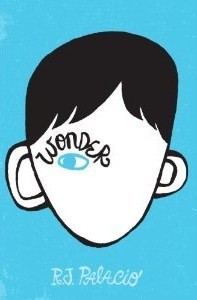
Wonder by R. J. Palacio is a novel about August Pullman, a ten-year-old boy with a facial difference who goes to school for the first time in fifth grade. For readers who want the plot, the narrators and the book's lesson on kindness.
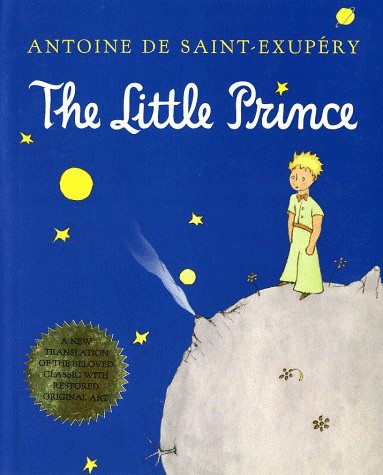
1943 · 96 pages · Summary updated 24 October 2026
The Little Prince is Antoine de Saint-Exupéry's illustrated fable about a pilot stranded in the Sahara who meets a small prince from a tiny asteroid. For readers who want the story, the fox's lesson and what the book says about love and growing up.
A pilot crashes his plane in the Sahara Desert with water for about a week. A small boy with golden hair appears and asks him to draw a sheep. He is the little prince, who has left his asteroid and the proud rose he loves. On his way to Earth he visited six tiny planets, each ruled by a grown-up obsessed with one empty task. On Earth, a fox teaches him that you only really see with the heart and that you are responsible for what you have tamed. Saint-Exupéry's short fable is about friendship, love, loss and the way adults forget what matters.
The narrator's drawing of a boa constrictor digesting an elephant looks like a hat to every adult. They tell him to study useful subjects. So he learns to talk to them about golf and neckties. The book returns to this idea often: adults want numbers, such as the price of a house, and cannot see what is in front of them. Saint-Exupéry asks readers to keep the child's way of seeing, which notices what matters.
The fox asks the prince to tame him. Taming means establishing ties. Before, the fox is one fox among a hundred thousand. After, each is unique to the other. The fox explains that the golden wheat will now remind him of the boy's hair. The idea is that love is built through patient time together, and that it changes how a person sees the whole world, not just the one they love.
The fox's secret is that one sees rightly only with the heart. The prince's rose looks like five thousand others in a garden. What makes her his is the time he spent watering, sheltering and listening to her. Saint-Exupéry argues that the value of a person or a thing lies in the care given to it, not in appearance. The well in the desert works the same way: the water is sweet because of the walk.
The fox tells the prince that he is responsible forever for his rose. This turns love from a feeling into a duty. The prince left the rose because her vanity hurt him. Now he understands that he must return to her, because she depends on him. The book suggests that commitment, not passion alone, gives a relationship weight, and that leaving someone you have bound to you has a cost.
The six planets each hold a grown-up with one fixed task: the king who commands, the vain man who wants praise, the drunk who drinks from shame, the businessman counting stars he cannot use, the lamplighter, and the geographer who never explores. The prince finds them all very odd. Saint-Exupéry uses them to mock power, vanity, addiction, greed and dry learning. Only the lamplighter, who serves something beyond himself, earns the prince's respect.
On the prince's planet, baobab seedlings look like rosebushes at first. If he does not pull them up every day, they grow so large their roots split the planet. The narrator draws the scene with urgency and says children should be warned. The lesson works at many scales: habits, conflicts and dangers are easy to remove early and impossible to remove late. Some readers see in it a warning about the rise of Nazism.
At the end, the prince lets the snake bite him so he can return to his rose. The narrator is grief-stricken. But the prince leaves him a gift: every star will seem to laugh, because one of them holds his friend. Saint-Exupéry suggests that love does not disappear with the person. It changes how the one left behind sees the world, as the wheat did for the fox.
“It is only with the heart that one can see rightly; what is essential is invisible to the eye.”
The Little Prince is a short illustrated book by Antoine de Saint-Exupéry, a French writer and pilot. It was first published in April 1943 in New York, in English and in French (Le Petit Prince), while the author was living in exile in the United States during the Second World War. He drew the watercolor pictures himself. In July 1944, he disappeared on a reconnaissance flight over the Mediterranean and was never found. He did not live to see the book published in liberated France.
Saint-Exupéry had flown mail routes over the Sahara and, in 1935, crashed in the Libyan desert with his mechanic. They nearly died of thirst before a Bedouin found them. The book's frame story draws on that experience.
The book is dedicated to his friend Léon Werth, a Jewish writer then hiding in occupied France. In the dedication, Saint-Exupéry apologizes to children for giving the book to a grown-up, then dedicates it instead to the child Werth once was. The theme is set: grown-ups have forgotten how to see.
The Little Prince is one of the most translated books in the world, available in hundreds of languages. In English, the first translation is by Katherine Woods (1943). A newer one by Richard Howard (2000) is also common. The book is short, about 27 chapters and under 100 pages with the drawings.
The narrator begins with a memory. At six, he drew a boa constrictor that had swallowed an elephant. Grown-ups looked at it and saw a hat. They told him to give up drawing and study geography, arithmetic and grammar. He became a pilot. All his life he showed the drawing to adults to test them. They always saw a hat. So he talked to them about bridge, golf and neckties.
Six years before he writes the story, his plane broke down in the Sahara, a thousand miles from anyone, with water for about eight days. On the first morning, a small voice woke him. It asked him to draw a sheep.
The boy rejects every sheep the narrator draws: one is sick, one is a ram, one is too old. At last the narrator draws a box with air holes and says the sheep is inside. The boy is delighted. This is the little prince. The narrator learns slowly that he comes from a planet barely bigger than a house. The narrator believes it is asteroid B-612, seen once by a Turkish astronomer. The narrator explains that he gives the number only because grown-ups love numbers.
On his tiny planet, the prince has three volcanoes, two active and one extinct, which he cleans out each morning. He also must pull up baobab seedlings every day. If he lets one grow, its roots will split the planet apart. The narrator says this is a lesson about dealing with bad things while they are small.
The prince is often sad. Because his planet is so small, he can watch many sunsets in one day by moving his chair a few steps. He tells the narrator that one day he watched dozens of them. When you are very sad, he says, you love sunsets.
The prince's great love is a rose that grew from a seed blown in from somewhere. She is beautiful and vain. She has four thorns and is proud of them. She coughs to make him feel guilty, asks for a screen against drafts and a glass globe for the night. He takes her demands too seriously and feels miserable. He decides to leave. When he says goodbye, she admits that she loves him and tells him to go quickly. He later sees he should have judged her by her acts, not her words. Her fragrance and beauty filled his planet.
The narrator learns all this in pieces over the first days. One day the prince asks if sheep eat flowers, even ones with thorns. The narrator, busy with his engine, answers carelessly that thorns are useless and that he is busy with matters of consequence. The prince is furious and in tears. He says that a man who has never loved a flower is not a man but a mushroom. The narrator puts down his tools and holds him.
On his way to Earth, the prince visits six asteroids. Each has one inhabitant, and each shows an adult folly.
The geographer advises him to visit Earth.
The prince lands in the African desert. The first creature he meets is a yellow snake, coiled like a gold bracelet. The snake says he can send anyone back to the earth from which he came, and that he can help the prince one day if he misses his planet.
The prince crosses the desert and climbs a mountain, where only an echo answers him. Then he finds a garden with five thousand roses, all just like his. He had thought his rose was the only one in the universe. He lies down in the grass and cries.
Then the fox appears. The fox asks the prince to tame him. Taming, he explains, means establishing ties. To the prince, the fox is now just a fox like a hundred thousand others. Once tamed, they will need each other. Each will be unique in the world to the other. The fox also says the wheat fields mean nothing to him, but if the prince tames him, the golden wheat will remind him of the boy's hair.
The prince tames the fox by coming at the same hour each day and sitting a little closer. When it is time to leave, the fox says he will cry. The prince asks what good the taming did. The fox says it did good because of the color of the wheat.
The fox sends him back to the roses. The prince tells them they are beautiful but empty: no one would die for them. His rose matters more than all of them because she is the one he watered, sheltered and listened to. Then the fox gives him a secret. It is only with the heart that one sees rightly. What is essential is invisible to the eye. It is the time you spent on your rose that makes your rose so important. You become responsible forever for what you have tamed.
The prince also meets a railway switchman, who sends trains full of people rushing in both directions, and only children press their noses to the windows. He meets a merchant who sells pills that end thirst and save fifty-three minutes a week. The prince says that if he had fifty-three minutes to spare, he would walk slowly toward a spring.
This section reveals the ending.
By the eighth day, the narrator has drunk his last drop of water. The prince suggests they look for a well. They walk all night under the stars. The prince says the desert is beautiful because somewhere it hides a well. At daybreak they find one, with a pulley, a bucket and a rope, like a village well. The narrator draws water, and the prince drinks. The water tastes sweet, the narrator says, because of the walk under the stars and the effort of his arms.
The narrator learns that the prince landed exactly a year ago, and that tomorrow his star will be right above the spot. He sees the prince talking to the yellow snake on an old stone wall. The snake has agreed to bite him. The prince says his body is too heavy to carry home, and that when he seems to die, it will not be true. He gives the narrator a gift: when the narrator looks at the stars at night, he will know that the prince is laughing on one of them, so all the stars will seem to laugh.
That evening, the prince slips away. The narrator catches up with him. The prince is afraid. He says his rose is so weak and has only four thorns to defend herself. Then there is a flash of yellow near his ankle. He stands still for a moment, then falls gently, as a tree falls, without a sound, in the sand.
At daybreak, his body is gone. The narrator repairs his engine and flies home. Six years have passed. He is comforted, and not. He remembers that he forgot to draw a leather strap for the sheep's muzzle, so the sheep may have eaten the rose. He says that grown-ups will never understand how much that matters.
The last page shows the empty desert landscape where the prince fell. The narrator asks readers who travel there to wait under the star. If a child comes who laughs, has golden hair and will not answer questions, they will know who it is. Then, he asks, write to me quickly and tell me he has come back.
Some readers find the book too sentimental or too heavy with morals for a children's story. Others note that its ending, with a child's apparent death by snakebite, is darker than most children's books allow. Many critics read the rose as a portrait of Saint-Exupéry's wife, Consuelo, whose marriage to him was stormy. The baobabs are sometimes read as a warning about the rise of Nazism, though the book never says so.
Read it if you want a short book you can finish in an hour that says something lasting about love, friendship and what grown-ups lose. It suits children with an adult reading alongside, adults who read it long ago, and students who need the story and its symbols.
12 cards
Question 1 of 5
What do grown-ups think the narrator's first drawing shows?
After a year on Earth, the prince lets a yellow snake bite him so he can return to his rose, saying his body is too heavy to carry home. He falls silently in the sand, and in the morning his body is gone. The narrator flies home and asks readers to write to him if they ever see a laughing boy with golden hair in the desert.
Wonder by R. J. Palacio is a novel about August Pullman, a ten-year-old boy with a facial difference who goes to school for the first time in fifth grade. For readers who want the plot, the narrators and the book's lesson on kindness.

Ugly Love is Colleen Hoover's romance about Tate Collins, a nursing student who agrees to a no-strings affair with a guarded airline pilot, Miles Archer, whose past is a closed door. For readers who want a steamy, emotional love story with a heartbreaking backstory.
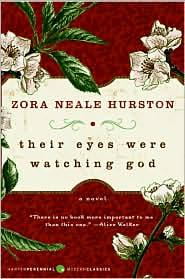
Zora Neale Hurston's novel about Janie Crawford, a Black woman in early 1900s Florida who moves through three marriages in search of real love and her own voice. For readers who want the plot, the themes and the meaning of the title.

The Wife Upstairs is Rachel Hawkins's 2021 thriller that retells Jane Eyre in a wealthy Alabama suburb, where a broke dog walker falls for a widower whose wife vanished on a lake. For readers who like twisty domestic suspense.
More in Fiction →More in Philosophy and stoicism →More in Relationships →
New books, occasionally