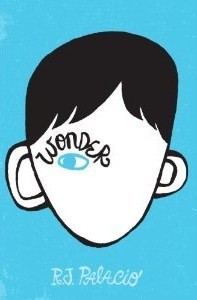
Wonder by R. J. Palacio is a novel about August Pullman, a ten-year-old boy with a facial difference who goes to school for the first time in fifth grade. For readers who want the plot, the narrators and the book's lesson on kindness.
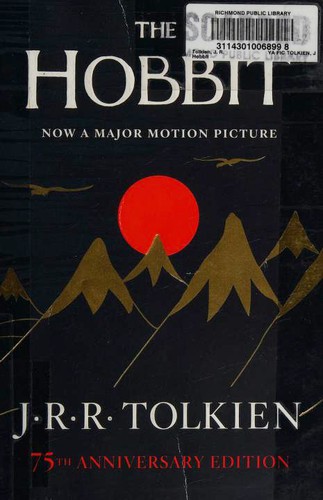
1937 · 300 pages · Summary updated 24 October 2026
The Hobbit is J. R. R. Tolkien's fantasy novel about Bilbo Baggins, a comfortable hobbit who joins thirteen dwarves and the wizard Gandalf on a quest to win back a treasure from the dragon Smaug. For readers who want the plot chapter by chapter and the ideas behind it.
Bilbo Baggins is a hobbit who loves his quiet home, his meals and his pipe. The wizard Gandalf signs him up, against his will, as burglar for thirteen dwarves led by Thorin Oakenshield, who want to reclaim their ancestors' gold from the dragon Smaug under the Lonely Mountain. On the road, Bilbo meets trolls, goblins, giant spiders and elves, and finds a magic ring in a riddle contest with the creature Gollum. Step by step, the timid hobbit becomes the cleverest and bravest member of the company. Tolkien's book is about courage, greed, home and how small people can change big events.
Bilbo starts as a fussy hobbit who runs from adventure. Each test makes him a little braver: the trolls, the riddles with Gollum, the spiders, the rescue from the elves, and the walk down the dark tunnel toward Smaug, which Tolkien calls the bravest thing he ever did. The point is that courage is not a fixed trait. It grows from small choices to keep going when you are afraid.
The dwarves doubt Bilbo, and he is the smallest member of the company. Yet he frees the dwarves from spiders and elves, discovers Smaug's weak spot, and tries to stop a war by giving up the Arkenstone. Tolkien shows that an ordinary person in the right place, with wits and good will, can matter more than kings and warriors. The idea carries over into The Lord of the Rings.
Thorin is brave and proud, but once he sees the treasure, he refuses any share to the people of Lake-town, whose homes Smaug burned. He is ready to go to war over gold. Smaug, sleeping on a hoard he cannot use, is the extreme form of the same sickness. Tolkien shows how possessions can take over a person. Thorin understands this only as he dies.
In the tunnel, Bilbo has the chance to kill Gollum. He sees the creature's misery, feels pity, and leaps over him instead. It seems a small moment in the book, but Tolkien later makes it one of the most important choices in all of Middle-earth. Mercy shown to a dangerous person, the book suggests, can have consequences no one can foresee.
Bilbo is not a fighter. He wins by riddles with Gollum, by clever names and flattery with Smaug, and by tricks like the barrels. Gandalf too saves the company from the trolls by throwing his voice, not by force. Tolkien draws on old tales where the clever hero beats the giant. He shows that thinking under pressure is often more useful than strength.
Bilbo misses his kettle, his armchair and his second breakfast through the whole journey. The book does not mock this. Tolkien treats home, food and cheer as real goods, the things worth protecting. Thorin's last words praise them over gold. Bilbo returns changed, but he still loves his home. The book's subtitle, There and Back Again, holds both halves: adventure matters because there is a home to return to.
Bilbo gives the Arkenstone to Bard and the Elvenking to force a fair deal and avoid war. Thorin calls him a traitor and nearly throws him off the wall. Bilbo accepts the risk because he thinks it is right. In the end, Thorin forgives him on his deathbed. Tolkien shows that acting with integrity can look like betrayal to those caught in greed, and that it is worth doing anyway.
“In a hole in the ground there lived a hobbit.”
The Hobbit, or There and Back Again, is a fantasy novel by J. R. R. Tolkien, published in 1937. Tolkien was a professor of Old English at Oxford, an expert in medieval languages and Norse myth. He began the story for his own children, and the narrator often speaks directly to the reader in the warm, joking voice of someone telling a bedtime tale. The book was an immediate success, and the publisher asked for a sequel. That sequel became The Lord of the Rings.
The story is set in Middle-earth, a world of men, elves, dwarves, goblins and dragons. It has 19 chapters and follows one journey: from Bilbo's home in the Shire, east across the Misty Mountains and the forest of Mirkwood, to the Lonely Mountain, and back.
Tolkien revised the book in 1951 so that it would fit The Lord of the Rings. In the first edition, Gollum bets his ring in the riddle game and is willing to give it up. In the revised one, which almost all editions now print, Gollum is far more dangerous and tied to the ring's power.
The book begins with its most famous line: in a hole in the ground there lived a hobbit. Hobbits are small, about half the height of men, with hairy feet and no love of adventure. Bilbo Baggins is about fifty, well off and respectable. But his mother was a Took, a family known for odd, adventurous streaks.
One morning the wizard Gandalf stops by. Bilbo politely gets rid of him. Gandalf scratches a secret mark on Bilbo's green door. The next evening, thirteen dwarves arrive in ones and twos, eat all his food, wash up while singing, and fill his house. Their leader is Thorin Oakenshield, grandson of the last King under the Mountain.
Thorin explains the quest. Long ago, the dragon Smaug drove the dwarves out of their kingdom under the Lonely Mountain, called Erebor, and took their great hoard of gold. Gandalf has a map made by Thorin's grandfather, Thror, and a key to a secret side door. The dwarves plan to sneak in, and they need a burglar. Gandalf has chosen Bilbo. The dwarves doubt him. Bilbo, stung by their doubts and stirred by their songs, agrees. The next morning he runs out of his house without a pocket handkerchief to join them.
On the road, the company stops for the night, and Bilbo is sent to look at a fire. He finds three huge trolls, Bert, Tom and William, cooking mutton. He tries to pick a troll's pocket and is caught. The trolls capture the dwarves one by one in sacks. Gandalf saves them by throwing his voice to keep the trolls arguing until dawn, when sunlight turns them to stone. In the trolls' cave, the company finds treasure and three elvish swords. Gandalf takes Glamdring, Thorin takes Orcrist, and Bilbo takes a short blade that serves him as a sword.
They rest at Rivendell, home of the half-elf Elrond. He reads hidden moon-letters on the map: stand by the grey stone when the thrush knocks, and the last light of the setting sun on Durin's Day will shine on the keyhole.
Crossing the Misty Mountains, they shelter from a storm in a cave. It is a back door into the tunnels of the goblins, who capture them. Gandalf kills the Great Goblin and leads the dwarves out in the dark. In the chase, Bilbo falls and is left behind.
Alone in the black tunnels, Bilbo's hand closes on a small ring lying on the floor. He puts it in his pocket. He comes to an underground lake, where a slimy creature named Gollum lives on an island and catches fish and stray goblins. Gollum talks to himself and calls the ring, which he has lost, his precious.
Gollum proposes a riddle game. If Bilbo wins, Gollum will show him the way out. If Gollum wins, he will eat him. They trade riddles about mountains, wind, eggs, fish and time. Bilbo, running out of ideas, feels the ring in his pocket and asks: what have I got in my pocket? Gollum cannot guess.
Gollum goes to fetch his ring, finds it gone and realizes that Bilbo has it. He comes after him in rage. Bilbo slips the ring on by accident and becomes invisible. He follows Gollum to the goblins' back gate. Gollum blocks the passage. Bilbo could kill him. He feels pity for the miserable creature, and leaps over him instead. He escapes into daylight as Gollum shrieks behind him that he hates the thief forever.
Bilbo finds the dwarves and Gandalf, and he walks into their camp unseen. He does not tell them about the ring. The dwarves start to respect him.
Goblins and Wargs, evil wolves, trap the company in pine trees. Gandalf throws burning pinecones. The trees catch fire. The great Eagles, who hate goblins, swoop down and carry the company away to safety.
They stay with Beorn, a huge man who can take the shape of a bear. He is gruff and dangerous but hates goblins. Gandalf gets them welcomed by telling the story slowly and bringing in the dwarves two at a time. Beorn gives them ponies and food and warns them: in the forest of Mirkwood, never leave the path.
At the forest's edge, Gandalf leaves them for other business. The forest is dark and hungry. They cross an enchanted stream, and the fat dwarf Bombur falls in and sinks into a deep sleep. They see elves feasting in the woods, leave the path to beg for food, and get lost.
Giant spiders catch the dwarves and wrap them in webs. Bilbo, alone, kills a spider with his blade, which gives him new courage. He names the sword Sting. With the ring on, he leads the spiders away, cuts the dwarves free and fights at their side.
Then the Wood-elves capture the dwarves and take them to the king's halls. The Elvenking distrusts dwarves and wants to know their errand. Thorin will not tell. Bilbo, invisible, lives in the palace for weeks, finds the cells and steals the keys. He packs the dwarves into empty wine barrels that the elves float down the river to Lake-town, a town of men built on stilts on the Long Lake. Bilbo rides on top of a barrel.
The people of Lake-town welcome Thorin, because old songs say the return of the King under the Mountain will bring back gold. The Master of the town is glad to see them go.
At the mountain, they find the hidden door, but cannot open it. On Durin's Day, as Bilbo sits by the grey stone, a thrush knocks a snail on the rock, and the last light of the sun shows the keyhole. Thorin opens the door.
The dwarves send Bilbo down the tunnel alone. He finds Smaug asleep on a mountain of gold. He steals a golden cup and runs. Smaug wakes, sees the cup is missing, and burns the mountainside in fury. On a second visit, invisible, Bilbo talks with the dragon. He calls himself riddling names, such as Barrel-rider and Ringwinner. Smaug tries to make him doubt that the dwarves will pay him fairly. Bilbo flatters the dragon into showing his jeweled belly and sees a bare patch on his left breast. On his way out, Bilbo cannot resist a joke, and Smaug's flame nearly catches him.
Bilbo tells the dwarves about the weak spot. An old thrush nearby listens. Smaug flies off in rage to attack Lake-town, which he blames for helping the thieves.
This section reveals the ending.
Smaug sets Lake-town on fire. A grim archer, Bard, descended from the old lords of Dale, keeps fighting. The thrush lands on his shoulder and tells him about the bare patch. Bard shoots his last arrow, a black arrow that has been in his family for generations, and kills Smaug. The dragon falls on the town and destroys it.
The survivors and the Elvenking's army march to the mountain to claim a share of the treasure to rebuild. Thorin, gripped by love of the gold, refuses them everything and fortifies the gate. He searches above all for the Arkenstone, the Heart of the Mountain, a great white gem. Bilbo has found it already and kept it in his pocket.
At night, Bilbo slips out and gives the Arkenstone to Bard and the Elvenking, so they can bargain with Thorin and prevent a war. He meets Gandalf, who has returned. Thorin, when he learns, nearly throws Bilbo off the wall. Gandalf stops him, and Bilbo leaves the company.
Thorin's cousin Dain arrives with an army of dwarves. Just as the dwarves, elves and men are about to fight, a huge army of goblins and Wargs pours down on them. The three sides unite in the Battle of Five Armies. Bilbo puts on his ring and is knocked out by a stone. When he wakes, the eagles and Beorn have come, and the battle is won.
Thorin is dying. He asks Bilbo's forgiveness and says that if more people valued food, cheer and song above gold, the world would be merrier. His young nephews, Fili and Kili, have died defending him. Thorin is buried under the mountain with the Arkenstone on his chest. Dain becomes King under the Mountain and shares the treasure fairly. Bilbo accepts only two small chests of gold and silver.
He travels home with Gandalf, stopping at Beorn's and Rivendell. He arrives to find his relatives, who think he is dead, auctioning his belongings. He has to buy back much of his own furniture, and some of his silver spoons are never found. He has lost his good name among hobbits, but he writes poetry, visits elves and is happy. Years later, Gandalf and the dwarf Balin visit. Bilbo is pleased that the old songs about gold came true. Gandalf reminds him that he is only quite a little fellow in a wide world after all, and Bilbo laughs and agrees.
Some readers note that the book has almost no female characters. Others find the tone uneven: it begins as a light children's story and grows darker and more serious with Smaug and the battle. The narrator's asides to the reader charm some and annoy others. The book's portrayal of goblins as purely evil has been discussed in light of later debates about race in fantasy.
Read it if you want a short, warm adventure that is the gateway to The Lord of the Rings, about a timid person who finds courage. It suits children read to by adults, adults who never read it, and students who need the plot chapter by chapter.
12 cards
Question 1 of 5
What job do the dwarves hire Bilbo to do?
Bard kills Smaug when the dragon attacks Lake-town. Thorin refuses to share the treasure, and Bilbo gives the Arkenstone to his rivals to prevent war. Goblins and Wargs attack, and the dwarves, elves and men unite in the Battle of Five Armies. Thorin dies after making peace with Bilbo, who returns home richer, changed and happy.
Wonder by R. J. Palacio is a novel about August Pullman, a ten-year-old boy with a facial difference who goes to school for the first time in fifth grade. For readers who want the plot, the narrators and the book's lesson on kindness.
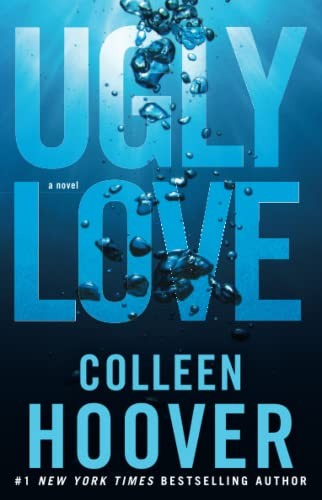
Ugly Love is Colleen Hoover's romance about Tate Collins, a nursing student who agrees to a no-strings affair with a guarded airline pilot, Miles Archer, whose past is a closed door. For readers who want a steamy, emotional love story with a heartbreaking backstory.
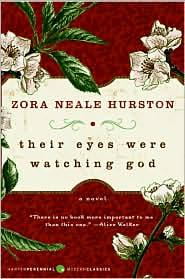
Zora Neale Hurston's novel about Janie Crawford, a Black woman in early 1900s Florida who moves through three marriages in search of real love and her own voice. For readers who want the plot, the themes and the meaning of the title.
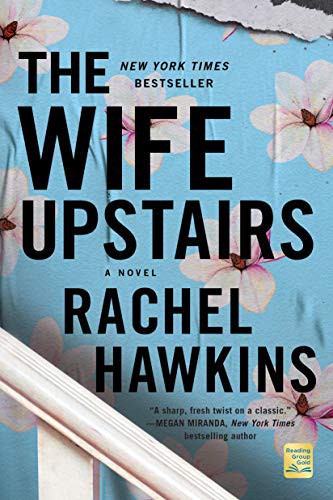
The Wife Upstairs is Rachel Hawkins's 2021 thriller that retells Jane Eyre in a wealthy Alabama suburb, where a broke dog walker falls for a widower whose wife vanished on a lake. For readers who like twisty domestic suspense.
New books, occasionally