
Wonder by R. J. Palacio is a novel about August Pullman, a ten-year-old boy with a facial difference who goes to school for the first time in fifth grade. For readers who want the plot, the narrators and the book's lesson on kindness.
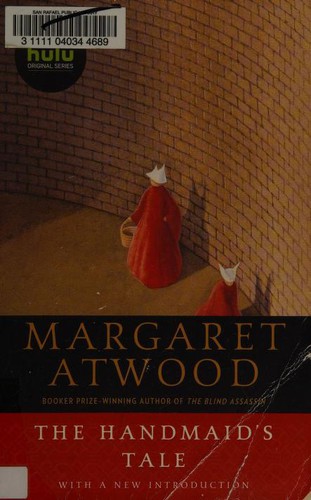
1985 · 311 pages · Summary updated 24 October 2026
Margaret Atwood's dystopian novel about Offred, a woman forced to bear children for a powerful family in Gilead, a religious dictatorship that has replaced the United States. For readers who want the plot, the world and the themes.
In the near future, a religious movement has overthrown the United States government and founded the Republic of Gilead. Birth rates have collapsed. Women have lost their jobs, money and names. The few who can still have children are made Handmaids and assigned to powerful men called Commanders, to bear children for them and their wives. The narrator, Offred, remembers her husband, her daughter and her old life while she serves a Commander and his wife, Serena Joy. Atwood's argument is that freedom can disappear in weeks when people stop paying attention, and that every part of Gilead has a precedent in history.
Offred remembers how Gilead began. After an attack on the government, the Constitution was suspended. People stayed home and waited. Then, one day, women's bank accounts were frozen and they were fired from their jobs. Few resisted. Atwood's argument is that rights are not lost in one great crash but in small steps, each accepted as temporary. The example is Offred and her colleagues walking out of the library, unsure what to do and too stunned to protest.
Aunt Lydia tells the Handmaids that what seems strange now will become ordinary in time. She is right. Offred adjusts to the red robes, the Wall and the Ceremony. Atwood shows how people adapt to conditions they would once have found unthinkable, and how adaptation becomes a kind of consent. The novel's flat, precise voice makes the reader feel it too. The example is Offred's walk past the Wall, where she studies the hanged bodies with a calm she could not have imagined before.
Gilead renames everything. Handmaids lose their names and become property: Offred is "of Fred." Approved greetings like "Blessed be the fruit" replace conversation. Women may not read, and shop signs are pictures. Atwood shows that controlling words controls thought. The counterattack is also language: the scratched phrase in Offred's closet, the forbidden Scrabble game, and Offred's own act of telling her story, which is the book itself.
Atwood set herself a rule: nothing goes in that has not already happened somewhere. The use of a servant to bear a child comes from Genesis. Forced births, stolen children, color-coded clothing, public hangings, bans on women reading and secret brothels for officials all have historical examples. The novel is not a prophecy but a collage. The example is the Ceremony itself, built from the story of Rachel and Bilhah read aloud before it begins.
The Aunts train and punish the Handmaids. The Wives resent them. Serena Joy once preached that women belong at home, and now she enforces the system that confines her. Atwood shows that oppression does not need every enforcer to be a man. It works by giving some women a little power over others. The example is the group session at the Red Center, where the women chant that Janine was to blame for her own rape.
Offred cannot fight Gilead openly. She resists in small ways: she steals a pat of butter to use as hand cream, holds on to her real name, and repeats the phrase scratched in her closet. Moira's escape and Ofglen's work for Mayday are larger. Atwood's point is that even private, hidden acts matter, because they keep alive the person the regime is trying to erase. Offred's recorded story is the largest of them.
The novel ends with Offred stepping into a van, not knowing if it means rescue or arrest. Then come the Historical Notes, set in 2195. Gilead has fallen. Offred's tapes survive, but no one knows what became of her, and the male professor studying them jokes about her and refuses to judge the regime. Atwood shows that history can treat a woman's suffering as material, and that the only proof of Offred's life is the story she chose to tell.
“Nolite te bastardes carborundorum.”
“Better never means better for everyone, he says. It always means worse, for some.”
“Ordinary, said Aunt Lydia, is what you are used to.”
The Handmaid's Tale by Margaret Atwood was published in 1985. Atwood, a Canadian poet and novelist, began it in West Berlin in 1984, behind the Iron Curtain. It won Canada's Governor General's Award and the first Arthur C. Clarke Award, and was shortlisted for the Booker Prize. A television series began in 2017, and Atwood published a sequel, The Testaments, in 2019, which shared the Booker Prize. Atwood has said she set one rule for herself: nothing would go into the book that people had not already done somewhere, at some time.
The novel is set in the Republic of Gilead, a theocracy that has replaced the United States. Most of the action takes place in the former Cambridge, Massachusetts, near what was Harvard University. The narrator is a woman in her early thirties who is called Offred. The name means "of Fred": it marks her as the property of the Commander she serves. She never gives her real name.
The book is told in short sections, moving between Offred's present in Gilead, her memories of training at the Red Center, and her life before. Many sections are headed "Night," the only time she has to herself.
Gilead is ruled by men who claim to follow the Bible, especially the Old Testament. Pollution, radiation and disease have made most people infertile. The regime blames women's freedoms and answers with a rigid order, in which every woman's role is shown by the color of her clothes.
Men have ranks too. Commanders hold power. Guardians are soldiers and servants. Angels fight on the front lines. The Eyes are the secret police. Women may not read or write. Shop signs are pictures. Even the Bible is kept locked up.
Once a month, the Handmaid must take part in the Ceremony. The Commander reads the story of Rachel, who gave her servant Bilhah to her husband so that the servant could bear children for her. Then he has sex with the Handmaid while she lies between the Wife's legs, her hands held by the Wife. Offred describes it in flat, exact language. It is rape, made into ritual.
Offred lives in a single room in the Commander's house. The light fixture has been removed from the ceiling, and the window opens only a few inches. She has learned why: the woman who held her post before her hanged herself in this room.
Her days are empty. She walks to the shops each day with another Handmaid, Ofglen, for safety and surveillance. They speak only approved phrases, such as "Blessed be the fruit" and "May the Lord open." On the way they pass the Wall, once part of the university, where the bodies of executed doctors, priests and others hang with bags over their heads.
The household includes the Commander's wife, Serena Joy, a former gospel singer who once gave speeches on television telling women to stay home. Now she is trapped in the home she preached. She is bitter and cruel. There are two Marthas, Rita and Cora. There is Nick, the Commander's chauffeur, a Guardian who winks at Offred against all rules.
In her closet, Offred finds a phrase scratched into the wood by the previous Handmaid: Nolite te bastardes carborundorum. She does not know what it means, but it gives her strength.
Before she was assigned to the house, Offred was trained at the Red Center, a former high school gym surrounded by barbed wire. The Aunts, led by Aunt Lydia, taught the Handmaids their new role. They used cattle prods. They called the old world of choice a world of danger, and the new one a world of safety. They said that what seemed strange now would become ordinary in time.
At the Center, women were made to confess their pasts in group sessions. One, Janine, told how she had been gang-raped as a teenager. The Aunts led the others in chanting that it was her fault. Offred also found her best friend from college, Moira, a lesbian and a rebel. Moira escaped by tying up an Aunt and walking out in her uniform. For the other women, Moira's escape was proof that resistance was possible.
Offred remembers her old life. She worked at a library, transferring books to computer discs. She had a husband, Luke, and a young daughter. Luke had been divorced when they married, and Gilead does not recognize second marriages, so their union was declared adultery.
She remembers how it happened. Gunmen killed the president and machine-gunned Congress, and the attack was blamed on Islamic fanatics. The army declared an emergency and suspended the Constitution. People stayed home and watched television. Then, one day, all women's bank accounts were frozen and their money moved to their husbands or male relatives. Their employers fired them. Offred describes how she and her colleagues simply walked out. Luke said he would take care of her, and she felt something between them change.
The family tried to escape to Canada with false passports. They were caught near the border. Luke ran into the woods with a gun. Offred does not know whether he is alive. Her daughter was taken from her and given to another family.
Offred also remembers her mother, a feminist activist who marched for women's rights in the 1970s. At the Red Center, she saw her mother in a film about Unwomen in the Colonies.
The Commander sends for Offred to come to his study one night, alone. This is forbidden. She fears a trap. Instead, he wants to play Scrabble. Holding letters and making words, after years without reading, is almost too much for her.
The visits continue. He lets her read old fashion magazines. He gives her hand lotion. He wants her to kiss him as if she meant it. He explains the phrase in her closet: it is mock Latin, a schoolboy joke, meaning don't let the bastards grind you down. Offred begins to understand that the previous Handmaid also came to this study, and that the Commander, in his loneliness, wants a companion. She asks him what he thinks of the world he helped build. He says that better never means better for everyone; it always means worse for some.
On a walk, Ofglen tests Offred and reveals that she belongs to a resistance network called Mayday. She asks Offred to find out what she can from the Commander.
At a Birth Day, all the Handmaids of the district gather while Janine, now called Ofwarren, gives birth. The Wives sit in another room and act out labor with the Commander's wife. The baby is a girl and seems healthy. Weeks later it turns out to have a defect, and it is called a shredder.
Serena Joy, desperate for a child and suspecting that the Commander is sterile, makes Offred an offer. She will arrange for Offred to sleep with Nick, so that she can become pregnant. In return, Serena brings her a photograph of her daughter, now older, in a white dress. Offred sees that her daughter has forgotten her.
The Commander takes Offred out one night, dressed in an old sequined costume, to Jezebel's, a secret club in a former hotel where officials meet women forced into prostitution. There she finds Moira. Moira tells how she was caught after her escape and given a choice between the Colonies and Jezebel's. She chose Jezebel's. She seems to have given up. The Commander takes Offred to a hotel room upstairs.
That same night, Serena sends Offred to Nick. Offred and Nick begin a secret affair. She goes to him again and again, not for Serena's purpose but for herself. She tells him things, including her real name. She becomes careless about Mayday and stops asking the Commander for information. She says she does not want to leave anymore.
This section reveals the ending.
The Handmaids are called to a Salvaging, a public execution of two Handmaids and a Wife. Then comes a Particicution: a Guardian accused of rape is thrown to the Handmaids, who beat him to death. Ofglen pushes through and kicks him in the head to knock him out. She tells Offred that he was not a rapist but a member of Mayday, and she spared him the pain.
The next day, a different woman meets Offred for the walk and says she is Ofglen. The old Ofglen is gone. The new one says that the old one hanged herself when she saw the black van of the Eyes coming for her.
When Offred returns home, Serena Joy is waiting with the sequined costume and Offred's cloak, stained with lipstick. She knows about Jezebel's. She calls Offred a slut and sends her to her room. Offred considers ways to end her life, or to set the house on fire.
Then a black van arrives. Nick comes to her room and tells her that the men are from Mayday, that she should trust him and go with them. Two men take her out. The Commander protests and asks what the charge is. Serena wants to know who betrayed them. Offred steps into the van, not knowing if it leads into darkness or into light.
The novel then adds "Historical Notes," the transcript of an academic conference held in the year 2195, long after Gilead has fallen. A male professor explains that Offred's story was found recorded on cassette tapes in a footlocker in what was Bangor, Maine, a stop on an escape route. He tries to identify the Commander and notes that the man was later killed in a purge. He makes jokes about the Handmaids and warns against judging Gilead by modern standards. No one knows what happened to Offred. His lecture closes by asking if there are any questions.
Some early reviewers found Gilead implausible, especially in a secular, liberal America. Others criticized the novel as too bleak, or as using the oppression of women of color as a source for white women's suffering without giving those women a voice. The book is among the most challenged in American schools for its sexual content and its treatment of religion. Its red robes and white bonnets became a protest costume in many countries after the television series.
Read it if you are studying it and need the plot and the world explained, or if you want a short, sharp novel about how quickly rights can be lost. The Historical Notes at the end change how you read everything before them.
12 cards
Question 1 of 5
What does the name Offred mean?
Serena Joy discovers that the Commander took Offred to Jezebel's. A black van comes for Offred. Nick tells her it is the Mayday resistance and to trust him, and she steps in, not knowing whether she is being rescued or arrested. An epilogue set in 2195 reveals that Gilead fell and her story survived on tapes, but her fate is unknown.
Wonder by R. J. Palacio is a novel about August Pullman, a ten-year-old boy with a facial difference who goes to school for the first time in fifth grade. For readers who want the plot, the narrators and the book's lesson on kindness.

Ugly Love is Colleen Hoover's romance about Tate Collins, a nursing student who agrees to a no-strings affair with a guarded airline pilot, Miles Archer, whose past is a closed door. For readers who want a steamy, emotional love story with a heartbreaking backstory.
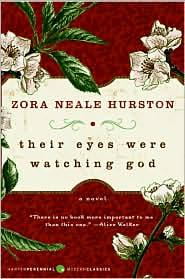
Zora Neale Hurston's novel about Janie Crawford, a Black woman in early 1900s Florida who moves through three marriages in search of real love and her own voice. For readers who want the plot, the themes and the meaning of the title.

The Wife Upstairs is Rachel Hawkins's 2021 thriller that retells Jane Eyre in a wealthy Alabama suburb, where a broke dog walker falls for a widower whose wife vanished on a lake. For readers who like twisty domestic suspense.
New books, occasionally