Wonder by R. J. Palacio is a novel about August Pullman, a ten-year-old boy with a facial difference who goes to school for the first time in fifth grade. For readers who want the plot, the narrators and the book's lesson on kindness.
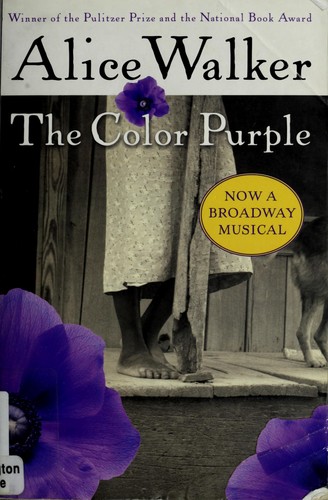
by Alice Walker
1982 · 288 pages · Summary updated 24 October 2026
Alice Walker's novel in letters about Celie, a poor Black girl in rural Georgia who survives abuse and a forced marriage and slowly finds love, a voice and her lost sister. For readers who want the plot, the characters and the themes.
Celie is fourteen when the man she calls Pa rapes her and gives away the two babies she bears. He then marries her off to Mr. ___, a widower who beats her and hides the letters from her beloved sister, Nettie. Celie writes her letters to God because she has no one else. Her life changes through other women: her stepdaughter-in-law Sofia, who fights back, and the blues singer Shug Avery, who becomes her lover and teacher. Walker argues that women can heal one another, that God is in everything and wants to be noticed, and that even a cruel man can change.
Pa tells Celie to tell no one but God, so she writes to God. Her letters are the only place where she can say what happens to her. Walker uses the letter form to show a voice growing: the early letters are flat and short, the late ones are funny and sure. The example is the change of address. When Celie learns the truth about her family, she stops writing to God and writes to Nettie, a person who will answer.
Every turn in Celie's life comes through a woman. Kate tells her to fight. Sofia shows that a woman can refuse to be beaten. Shug gives her love, pleasure and her sister's letters. Nettie gives her back her children's story. Walker argues that bonds between women, as sisters, friends and lovers, are a force strong enough to undo years of abuse. The example is the quilt Celie and Sofia sew after their quarrel.
Celie's first God is an old white man who does not listen. Shug offers another: God is not a he or a she but everything, and wants to be loved. She says God is annoyed if you walk past the color purple in a field and do not notice it. Walker's point is that faith can be joyful and personal rather than a rule handed down. The title comes from this idea.
Sofia fights everyone who tries to rule her, including Harpo. When she says no to the mayor's wife and hits the mayor, the police beat her nearly to death and she spends years in prison and service. Walker does not pretend that resistance is free. Sofia survives by holding her rage inside. The example shows that the same society that punishes Celie's silence punishes Sofia's defiance, so the problem is the system, not the woman.
Albert beats Celie because his father taught him that is what a man does. Harpo asks how to make Sofia mind and is told to beat her. Walker traces abuse as something learned and handed down. The example is Harpo eating until he is sick, trying to grow large enough to beat a wife he loves. He does not want to be a tyrant; he thinks he is supposed to be one.
Celie leaves Albert only when she has somewhere to go and a way to earn. In Memphis she sews pants designed for each wearer and builds a business called Folkspants, Unlimited. Then she inherits her real father's house and land. Walker links Celie's spiritual growth to money she controls. The example is the contrast with the start, when Celie is handed over with a cow as if she were property.
After Celie curses him and leaves, Albert nearly dies of loneliness and fear. Harpo nurses him. When Celie returns, Albert has learned to sew, and wants to talk about why people are on earth. They become friends. Walker insists that even a man who did great harm can be remade by honesty about it. Celie does not marry him again, but she forgives him, and the novel ends in a reunited family.
“You better not never tell nobody but God. It'd kill your mammy.”
“I think it pisses God off if you walk by the color purple in a field somewhere and don't notice it.”
“All my life I had to fight.”
The Color Purple by Alice Walker was published in 1982. It won the Pulitzer Prize for Fiction and the National Book Award in 1983, and Walker was the first Black woman to win the fiction Pulitzer. Steven Spielberg made it into a film in 1985, and it became a Broadway musical in 2005 and a musical film in 2023.
The novel is told in letters. For most of the book they are written by Celie, a poor Black girl in rural Georgia in the early twentieth century, and addressed to God. Later come letters from her sister, Nettie, from Africa. Celie writes in the dialect she speaks, with little punctuation, and her voice grows as she does. The early letters are short and flat. By the end they are full of jokes, opinions and joy.
The book opens with a warning from the man Celie calls Pa: she had better never tell anybody but God. So she tells God.
Celie is fourteen. Her mother is sick, and Pa begins to rape her. She has two babies, a girl and then a boy, and Pa takes each one away. Celie believes he killed the first and sold the second. Her mother dies. Pa marries a young wife and starts to look at Celie's younger sister, Nettie. Celie tries to protect Nettie by making herself the target.
A widower with four children asks Pa for Nettie. Celie never names him. She calls him Mr. ___. Pa refuses Nettie and offers Celie instead, saying she is ugly but a hard worker and cannot have more children. He throws in a cow. Mr. ___ takes her.
On her wedding day, Mr. ___'s oldest son, Harpo, hits Celie in the head with a rock. Mr. ___ beats her the way one beats a child. Celie survives by going numb. She tells herself she is wood.
Nettie runs away from Pa's house to live with Celie. Mr. ___ makes advances to her, and she refuses him. He orders her out. Celie tells Nettie to find a minister's wife she once saw in town, a kind woman who had with her a baby girl who looked like Celie's daughter. Nettie promises to write. Mr. ___ swears that Celie will never hear from her. No letter comes.
Mr. ___'s sisters visit. One of them, Kate, buys Celie a dress, the first of her own, and tells her to fight. Celie says she does not know how. She says that as long as she can spell G-o-d she has somebody along.
Harpo falls in love with Sofia, a big, strong, loud young woman who is pregnant with his child. They marry. Sofia does what she likes and does not obey Harpo. Harpo asks his father and then Celie how to make her mind. Both say to beat her. Celie says it out of envy.
Sofia fights back and wins, and Harpo shows up with black eyes. Sofia learns what Celie said and confronts her. She tells Celie that all her life she had to fight: her father, her brothers, her cousins and her uncles. She will not be beaten in her own house. Celie confesses she was jealous because Sofia does what Celie cannot. They make a quilt together and become friends. Sofia tells Celie she should bash Mr. ___'s head open and think about heaven later.
Harpo keeps trying to dominate Sofia, and eats until he swells, trying to grow big enough to beat her. Eventually Sofia leaves him and takes the children to her sister's.
Celie has heard of Shug Avery for years. She is a blues singer, Mr. ___'s lover from long ago, and the woman he wanted to marry. Celie keeps a photograph of her and is fascinated. When Shug falls ill and no one will take her in, Mr. ___ brings her home. Celie nurses her. Shug is rude at first, then softens. She calls Mr. ___ by his first name, Albert, which Celie has never heard.
Harpo turns his house into a juke joint, and Shug sings there. She sings a song she calls Miss Celie's song, the first time anyone has made anything for Celie. When Shug learns that Albert beats Celie, she stays longer to protect her, and Albert stops.
Shug teaches Celie about her own body and that sex can be a pleasure, not something done to her. The two women become lovers. It is the first love Celie has known. Shug leaves to sing, and comes back married to a man named Grady, but her bond with Celie holds.
Sofia, now with a prizefighter, visits the juke joint and fights Harpo's new girlfriend, Squeak. Later, in town with her children, she meets the mayor and his wife, Miss Millie. Miss Millie admires the children and asks Sofia to be her maid. Sofia says, "Hell no." The mayor slaps her. Sofia knocks him down.
The police beat Sofia nearly to death. She is sentenced to twelve years. In prison she washes laundry and does what she is told, because thinking about her own anger is the only way to stay alive. The family tries to help. Squeak, who is related to the white warden, goes to plead for Sofia. The warden rapes her. Squeak comes back and insists on her real name, Mary Agnes, and begins to sing her own songs. Sofia is moved out of prison to work as Miss Millie's maid, which is the job she refused.
One night Shug notices Albert taking letters from the mailbox. She and Celie find a bundle of letters from Nettie hidden in his trunk. They have been arriving for years.
Nettie's letters tell her story. She found the minister's wife, Corrine, and her husband, Samuel. They had adopted two children, Olivia and Adam. Nettie realizes they are Celie's children. The couple took Nettie with them as missionaries to the Olinka, a people in West Africa. Nettie describes the village, its customs, and the way the Olinka value boys over girls. She grows close to Olivia's friend Tashi. Later an English rubber company builds a road through the village and destroys it.
Corrine, noticing how much the children look like Nettie, suspects that Nettie is their mother and that Samuel is their father. She grows cold. Nettie and Samuel tell her the truth, and she believes them only shortly before she dies of fever. Nettie and Samuel later marry.
Samuel also tells Nettie a story he heard: their real father owned a store and was lynched by white rivals. Their mother lost her mind, and the man Celie calls Pa married her for her property. Pa is their stepfather. Celie's children are not her brother and sister.
Celie is furious with Albert. She wants to cut his throat with his razor, and Shug stops her. Celie also stops writing to God. She says the God she was writing to is a man, and like all the other men she knows, he does not listen. She writes to Nettie instead. Shug tells her that God is not a white man with a beard. God is in everything, wants to be loved, and is annoyed when people walk past the color purple in a field and do not notice it.
This section reveals the ending.
At a family dinner, Celie announces that she is leaving for Memphis with Shug. Albert mocks her: she is poor, Black, ugly and a woman, and she is nothing at all. Celie answers that she is poor, Black and may be ugly, but she is here. She curses him: until he does right by her, everything he touches will crumble. Mary Agnes leaves too, to sing. Sofia laughs for the first time in years.
In Memphis, Celie starts sewing pants, which she designs for each person who wears them. The business becomes Folkspants, Unlimited. She has money and work of her own.
Pa dies. Celie learns that the house and land belonged to her real father and now come to her and Nettie. She has a home.
Shug falls for a nineteen-year-old flute player named Germaine and goes off with him. Celie is heartbroken, but she finds she can love Shug without owning her.
Back home, Albert has changed. After Celie left, he nearly died, alone and haunted, until Harpo nursed him. He now sews, sits on the porch with Celie and talks with her about Shug and about why people are on the earth. They become friends. He asks her to marry him again, in spirit this time. She says no, but they stay friends. Sofia, now free, works in Celie's store.
Nettie's last letters say the family is coming home. Adam has married Tashi after she underwent the Olinka initiation rites, and he cut marks into his own face to match hers. Then a telegram reports that their ship was sunk in the war. Celie refuses to believe it.
Shug comes back. On the Fourth of July, while the family is together in Celie's yard, a car pulls up. Nettie steps out with Samuel, Olivia, Adam and Tashi. Celie and Nettie fall into each other's arms. Celie's last letter is addressed to God, the stars, the trees, the sky, the people and everything. She says that for the first time she feels young.
Some critics, especially Black men, attacked the novel for its portrayal of Black men as abusers. The writer Ishmael Reed was among the loudest. Others objected to the lesbian relationship and the frank sexual content, and the book is often challenged in schools. Some reviewers find the happy ending too complete. Defenders answer that Walker shows men can change, as Albert and Harpo do, and that the novel gave voice to women whose suffering had been ignored.
Read it if you are studying it and need the letters in order, or if you want a novel about surviving abuse and finding love and faith on your own terms. The opening is hard; the ending is one of the most joyful in American fiction.
12 cards
Question 1 of 5
What does Pa give Mr. ___ along with Celie?
Celie leaves Albert for Memphis, starts a business making pants, and inherits her real father's house. Albert changes, and he and Celie become friends. Shug returns after an affair. On the Fourth of July, Nettie comes home from Africa with Samuel and Celie's grown children, Olivia and Adam, and the family is reunited.
Wonder by R. J. Palacio is a novel about August Pullman, a ten-year-old boy with a facial difference who goes to school for the first time in fifth grade. For readers who want the plot, the narrators and the book's lesson on kindness.

Ugly Love is Colleen Hoover's romance about Tate Collins, a nursing student who agrees to a no-strings affair with a guarded airline pilot, Miles Archer, whose past is a closed door. For readers who want a steamy, emotional love story with a heartbreaking backstory.
Zora Neale Hurston's novel about Janie Crawford, a Black woman in early 1900s Florida who moves through three marriages in search of real love and her own voice. For readers who want the plot, the themes and the meaning of the title.
The Wife Upstairs is Rachel Hawkins's 2021 thriller that retells Jane Eyre in a wealthy Alabama suburb, where a broke dog walker falls for a widower whose wife vanished on a lake. For readers who like twisty domestic suspense.
New books, occasionally