
Wonder by R. J. Palacio is a novel about August Pullman, a ten-year-old boy with a facial difference who goes to school for the first time in fifth grade. For readers who want the plot, the narrators and the book's lesson on kindness.

by Sylvia Plath
1963 · 288 pages · Summary updated 24 October 2026
Sylvia Plath's only novel, about Esther Greenwood, a gifted college student whose summer internship in New York gives way to depression, a suicide attempt and treatment. For readers who want the plot, the symbols and the context.
Esther Greenwood is nineteen, a prize-winning student who wins a summer internship at a fashion magazine in New York in 1953. She should be happy. Instead she feels numb, and she cannot see which of the lives offered to a woman of her time she wants. Back home in the Boston suburbs, she stops sleeping, reading and writing. A bad course of shock treatment makes her worse, and she attempts suicide. In a private hospital, with a psychiatrist she trusts, she slowly recovers. Plath describes depression from the inside as a bell jar, a glass dome that traps a person in her own stale air.
Esther says that wherever she went, on a ship or in Paris, she would be sitting under the same bell jar, breathing her own sour air. The image captures the isolation of depression: the world is visible but distorted, and nothing outside can reach in. Plath shows that the condition does not depend on circumstances. Esther is in New York with every advantage and feels nothing. The jar lifts only with treatment, and she knows it could come down again.
Esther sees her life as a fig tree. Each fig is a future: wife and mother, poet, professor, editor, traveler. She cannot pick one without losing the rest, so she sits and starves while the figs rot. Plath ties this to the 1950s, when a woman was expected to choose marriage and give up the other lives. The example captures a pressure many readers still feel, and shows how fear of loss can stop a person from choosing at all.
Buddy Willard lets Esther think he is innocent, then admits an affair. Esther is not angry about the sex. She is angry that men may have a past and women may not. Buddy's mother says a man is an arrow and a woman is where the arrow shoots from. Plath shows how these rules shrink the lives of gifted women. The example is Esther's relief at getting a diaphragm, which frees her from marrying out of fear.
Esther has won every prize and scholarship. She is at a glamorous magazine with free clothes and parties. Everyone assumes she is happy. Plath's point is that achievement and depression can live together, and that outward success can make it harder for others to see the illness. Esther herself does not understand it. The example is the opening chapters, where she lists the gifts and the parties and then says she felt very still and very empty.
Dr. Gordon barely listens, and his shock treatment is careless and frightening. Esther feels punished and gets worse. Dr. Nolan listens, lets Esther hate her mother without judgment, explains what will happen, and stays with her. The same treatment, given with care, helps. Plath, who had both experiences, shows that a patient's trust in the person treating her is part of the treatment. The example is Esther's sense of betrayal and then relief with Dr. Nolan.
Plath fills the book with women who stand for paths Esther might take. Doreen is the rebel, Betsy the good girl, Jay Cee the career woman, Mrs. Willard the wife. Joan Gilling is the closest double: from Esther's town, linked to Buddy, and in the same hospital after the same kind of attempt. Esther both identifies with her and pulls away. Plath suggests that recovery involves seeing these mirrors clearly and choosing which self to keep.
At the end Esther is about to be released. Her mother wants to forget the year as a bad dream. Esther will not: it is part of her, and she knows the bell jar may come down again someday. At Joan's funeral she listens to her heart saying I am, I am, I am. Plath ends not with a cure but with a person who has survived and chooses to walk forward, into the interview room, guided by the faces turned toward her.
“It was a queer, sultry summer, the summer they electrocuted the Rosenbergs, and I didn't know what I was doing in New York.”
“I took a deep breath and listened to the old brag of my heart. I am, I am, I am.”
The Bell Jar by Sylvia Plath was published in London in January 1963 under the pen name Victoria Lucas. Plath died by suicide a month later, at the age of thirty. The novel appeared under her own name in Britain in 1966 and in the United States in 1971, where it became a best seller. It is Plath's only novel. She is better known as a poet, for the collections The Colossus and Ariel.
The book is closely based on Plath's own life. In the summer of 1953 she was a guest editor at Mademoiselle magazine in New York. That August, back home in Massachusetts, she attempted suicide and spent months in a psychiatric hospital. The novel changes names and details but keeps the shape of that year.
The narrator, Esther Greenwood, tells the story some years later. She gives a hint early on: she still has the free gifts from the magazine, and she has taken them out for her baby to play with. The reader knows from the start that she survives.
The novel opens with the summer the Rosenbergs were executed for spying. Esther, nineteen, is one of twelve college women who have won a month as guest editors at Ladies' Day, a women's magazine. They live in a hotel for women called the Amazon. They get free clothes, makeup and lunches, and they go to parties. Esther tells the reader she is supposed to be having the time of her life.
She is not. She feels still and empty, like the eye of a tornado moving through the noise. She is a scholarship girl from a modest home, and she watches the others carefully. Doreen, from the South, is sharp, cynical and glamorous, and Esther envies her. Betsy, from Kansas, is cheerful and wholesome, and Esther feels she should be more like her. She belongs to neither.
Her editor, Jay Cee, is smart and plain and asks Esther what she wants to do with her life. Esther has always said she wants to be a poet. Now, suddenly, she does not know. She has done well at everything she has been asked to do, and no one is asking any more.
The month brings a run of bad experiences. A night out with Doreen and a disc jockey ends with Esther walking home alone. At a magazine banquet, she eats a whole bowl of crabmeat, and the crab turns out to be poisoned; most of the guest editors spend the night vomiting. She goes on a date with a United Nations interpreter, Constantin, hoping he will seduce her, and he falls asleep. On her last night, a man named Marco, a friend of Doreen's, takes her to a country club dance, throws her in the mud and tries to rape her. She hits him in the face and gets away.
Back at the hotel, she climbs to the roof and throws her new clothes off into the night, piece by piece.
Through the New York chapters, Esther remembers her college boyfriend, Buddy Willard, a medical student at Yale. Everyone, especially both mothers, expects them to marry. Buddy took her to see dissections and a baby being born. He seemed pure and decent. Then he told her he had slept with a waitress the summer before. Esther was not upset that he had had sex. She was furious that he had pretended to be innocent while she had been expected to stay that way. She decided to lose her own virginity to someone, as a kind of balancing.
Buddy's mother likes to say that a man is an arrow into the future and a woman is the place the arrow shoots off from. Esther wants to be the arrow herself. When Buddy catches tuberculosis, Esther visits him at a sanatorium in the mountains. He takes her skiing, and she breaks her leg. He asks her to marry him. She says she will never marry.
In New York, Esther thinks of her life as a fig tree. Each fig on the branches is a future: a husband and children, a famous poet, a brilliant professor, an editor like Jay Cee, a traveler with exotic lovers. She sits in the crotch of the tree, starving, because she cannot choose one without losing all the others. As she sits there, the figs wrinkle and fall.
Esther takes the train home to the Boston suburbs. Her mother meets her at the station and tells her she was not accepted into a summer writing course she had counted on. She faces a summer at home with nothing to do.
She tries to write a novel and gets a single paragraph. She tries to read Finnegans Wake for her thesis and the letters will not stay still. She considers learning shorthand, which her mother wants, and cannot. She stops washing her hair and changing her clothes. She stops sleeping. She notices that she has not slept for weeks.
Her mother takes her to a psychiatrist, Dr. Gordon, a handsome man with a photograph of his perfect family on his desk. He seems uninterested. He sends her for electroshock therapy at his private hospital, and it is done without care: Esther feels as if she is being punished and thinks she has done something terrible. She refuses to go back.
Esther begins to think about how to die. Over the following days she makes several attempts and stops. She visits her father's grave for the first time; he died when she was nine, and she realizes she never mourned him. She sits in the rain and cries.
Then she leaves a note for her mother saying she is going for a long walk. She takes a bottle of sleeping pills and hides in a crawl space under the house. She swallows the pills. She is found alive days later.
Esther wakes in a city hospital, then is moved to a psychiatric ward. She is hostile and frightened. The newspapers have covered her disappearance. Philomena Guinea, a wealthy novelist who funds Esther's college scholarship, hears of it and pays for her to move to a private hospital.
There she meets Dr. Nolan, a woman psychiatrist. Dr. Nolan is the first doctor Esther trusts. She lets Esther say that she hates her mother and does not tell her she is wrong. Esther receives insulin therapy, which makes her gain weight and slowly lightens her mood. When Dr. Nolan schedules shock treatment, Esther feels betrayed, but Dr. Nolan comes with her, explains it, and the treatment is given properly, under anesthesia. Afterward Esther feels that the bell jar has lifted and that she can breathe the air again.
Plath's image of the bell jar is the novel's center. Esther says that wherever she went, she would be sitting under the same glass dome, stewing in her own sour air. The world outside was distorted through the glass. For the person inside the bell jar, the world itself is the bad dream.
At the hospital Esther meets Joan Gilling, a young woman from her hometown who once dated Buddy. Joan read about Esther's disappearance in the newspapers and then made her own attempt. Esther feels Joan is a double of herself, the side she wants to leave behind. Joan is attracted to women, and Esther pulls away from her.
This section reveals the ending.
As Esther improves, she is allowed out of the hospital. With Dr. Nolan's help, she gets fitted for a diaphragm, a form of birth control. She feels free. She no longer has to marry the wrong man out of fear of pregnancy.
On the steps of the Harvard library she meets Irwin, a young math professor, and decides to sleep with him. Afterward she bleeds heavily and has to go to an emergency room. Joan, now living outside the hospital, helps her get there. Esther sends Irwin the bill and tells him she does not want to see him again.
A few days later Joan goes missing from the hospital. She is found dead in the woods. She has taken her own life. At the funeral, Esther listens to her own heartbeat and hears it say, I am, I am, I am.
Buddy visits Esther before she leaves. He asks whether there is something about him that drives women mad, since Joan and Esther both went to the hospital after dating him. Esther tells him he had nothing to do with it.
Esther prepares for an interview with the hospital board, which will decide if she can go back to college for the winter term. Her mother wants to treat the whole year as a bad dream. Esther refuses: the year is part of her. She knows the bell jar could come down again. She waits outside the meeting room, the door opens, and she walks in.
Many readers find in the book the first honest account of depression from inside, and of the pressures on young women in the 1950s to be pure, marry and stop working. Some critics have read it mainly as autobiography and treated Plath's death as its key, which others argue reduces a deliberate, often funny novel to a symptom. Plath's family, especially her mother, objected to its portrayal of real people, and Aurelia Plath tried to prevent its American publication. Some readers find Esther's views on race, sexuality and other patients cruel, a sign of when it was written.
Read it if you are studying it and need the plot and the main images, or if you want a sharp, darkly funny account of depression and of the limits placed on women in the 1950s. Readers who are struggling themselves may want to read it with support.
12 cards
Question 1 of 5
What event opens the novel?
Esther improves in the hospital with the help of Dr. Nolan. Her fellow patient Joan takes her own life, and at the funeral Esther hears her heart say I am, I am, I am. Esther refuses to forget the year as a bad dream. The book ends as she walks into the interview that will decide her release, aware that the bell jar could return.
Wonder by R. J. Palacio is a novel about August Pullman, a ten-year-old boy with a facial difference who goes to school for the first time in fifth grade. For readers who want the plot, the narrators and the book's lesson on kindness.

Ugly Love is Colleen Hoover's romance about Tate Collins, a nursing student who agrees to a no-strings affair with a guarded airline pilot, Miles Archer, whose past is a closed door. For readers who want a steamy, emotional love story with a heartbreaking backstory.
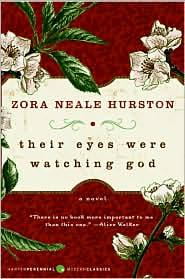
Zora Neale Hurston's novel about Janie Crawford, a Black woman in early 1900s Florida who moves through three marriages in search of real love and her own voice. For readers who want the plot, the themes and the meaning of the title.

The Wife Upstairs is Rachel Hawkins's 2021 thriller that retells Jane Eyre in a wealthy Alabama suburb, where a broke dog walker falls for a widower whose wife vanished on a lake. For readers who like twisty domestic suspense.
New books, occasionally