Emily Brontë's 1847 novel about Heathcliff, Catherine Earnshaw and two families on the Yorkshire moors, told across two generations. For readers who want the plot, the characters and the ideas behind a famous story of love and revenge.
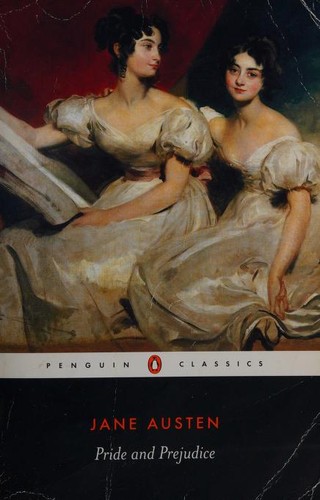
by Jane Austen
1813 · 480 pages · Summary updated 24 October 2026
Jane Austen's 1813 novel about Elizabeth Bennet, Mr. Darcy and the misjudgments that keep them apart. For readers who want the plot, the characters and what the book says about marriage, money and pride.
The Bennets have five daughters, no son and an estate that will pass to a cousin. Their mother's one aim is to marry the girls off. When the rich Mr. Bingley rents a nearby house and brings his richer friend Mr. Darcy, Jane Bennet and Bingley fall in love, while Elizabeth Bennet and Darcy take an instant dislike to each other. Darcy is proud. Elizabeth judges him on first impressions and on the lies of a charming officer, George Wickham. A rejected proposal, a long letter and a scandal involving the youngest Bennet sister force both of them to see themselves clearly. Austen uses the courtship to show how money, class and character decide who marries whom.
Austen's working title was First Impressions. Elizabeth decides at the first ball that Darcy is arrogant and decides at a first conversation that Wickham is honest. Both judgments are built on how each man treats her. Darcy's letter forces her to reread every scene, and she concludes that vanity, not reason, guided her. The lesson is practical: notice when you like someone because they flatter you, or dislike someone because they slighted you, and treat that feeling as data about yourself, not about them.
The Longbourn estate is entailed to Mr. Collins, so the Bennet daughters face poverty when their father dies. Charlotte Lucas, at twenty-seven and without fortune, marries Mr. Collins for a home and says plainly that she is not romantic. Wickham courts a girl with ten thousand pounds. Austen does not condemn Charlotte. She shows the system and lets the reader judge it. Elizabeth's refusal of two proposals is a risk, not a romantic gesture, and the book makes sure you feel the risk.
Darcy is proud of his family and rank and believes he is above the Meryton crowd. Elizabeth is proud of her judgment and prejudiced against him for wounding her vanity. Austen's title points at both characters, not one each. Each has to be humbled: Darcy by a refusal that calls him ungentlemanlike, Elizabeth by a letter that proves her wrong about Wickham. Only after both corrections can they see each other. The novel treats self-knowledge as the condition for love, not its result.
Wickham has perfect manners and no principles. Darcy has bad manners in company and sound principles, which show in how his housekeeper, his tenants and his sister speak of him. Mr. Collins has elaborate manners that only reveal his servility. Austen asks the reader to look past charm to conduct over time. Mrs. Reynolds's praise at Pemberley matters because it comes from someone who has watched Darcy for twenty years, not from someone he is trying to impress.
Darcy's letter states that Mrs. Bennet, Lydia, Kitty and even Mr. Bennet behaved so badly at the Netherfield ball that any sensible man would hesitate to join the family. Elizabeth is angry but recognizes the truth. Her father's refusal to control Lydia leads directly to the elopement, which could have ruined all five sisters. Austen shows that a person's prospects depend on relatives they did not choose, and that Mr. Bennet's detachment, which Elizabeth shares in part, has real victims.
Mr. Bennet laughs at his wife and daughters instead of guiding them. Elizabeth inherits his habit: she turns Darcy's insult into an anecdote and refuses to take Charlotte's warnings seriously. The novel values intelligence and humor, but it shows their limits. Mr. Bennet admits after Lydia's elopement that he should have acted years earlier. Elizabeth's growth includes learning when a joke is a way of not thinking. Austen's own irony is the model: sharp, but always pointed at something real.
Darcy finds Lydia and Wickham in London, pays Wickham's debts, buys his army commission and makes the marriage happen. He tells no one and asks the Gardiners to keep quiet. Elizabeth learns of it only by accident. Austen uses this to settle the question of Darcy's character: he helps the family that insulted him, for a woman who refused him, without expecting credit. The contrast with Wickham, who does everything for display and money, completes the reversal of Elizabeth's first impressions.
Lady Catherine demands that Elizabeth promise never to marry Darcy. Elizabeth refuses to make the promise, though at that moment she has no reason to think he will ask again. Lady Catherine reports the refusal to Darcy, intending to end the matter, and instead gives him the hope he needs to propose a second time. Austen's point is that pressure forces people to say what they actually think. Elizabeth discovers her own mind by defending it against someone who tries to overrule it.
“It is a truth universally acknowledged, that a single man in possession of a good fortune, must be in want of a wife.”
“I could easily forgive his pride, if he had not mortified mine.”
“For what do we live, but to make sport for our neighbours, and laugh at them in our turn?”
Pride and Prejudice was published in 1813. Jane Austen wrote the first version, called First Impressions, in the 1790s, when she was about twenty-one. Her father offered it to a publisher, who refused it unread. She revised it fifteen years later, and it became her most popular book in her lifetime and since.
The novel opens with its famous line: a single man with a good fortune must be in want of a wife. The joke is that the sentence states the view of the neighborhood, not the man. The neighborhood is Meryton, a village in Hertfordshire, and the family at the center is the Bennets of Longbourn.
Mr. Bennet is a dry, clever man who has retreated into his library and amuses himself by mocking his wife. Mrs. Bennet is loud, anxious and not clever. They have five daughters and no son. The Longbourn estate is entailed: by law it will pass on Mr. Bennet's death to the nearest male relative, a cousin named Mr. Collins. The girls will be left with little. Mrs. Bennet's one project is to get them married.
The daughters are Jane, the eldest, beautiful and kind, who thinks well of everyone; Elizabeth, the heroine, quick, witty and her father's favorite; Mary, who reads sermons and plays the piano badly; and Kitty and Lydia, the two youngest, who care only for officers and balls.
A rich young man, Charles Bingley, rents Netherfield Park nearby. He brings his two sisters, Caroline Bingley and Mrs. Hurst, and his closest friend, Fitzwilliam Darcy, who owns the great estate of Pemberley in Derbyshire and has ten thousand pounds a year.
At the Meryton assembly ball, Bingley is friendly to everyone and dances twice with Jane. Darcy dances only with Bingley's sisters and refuses to be introduced to anyone else. Elizabeth overhears him telling Bingley that she is tolerable but not handsome enough to tempt him. She tells the story as a joke to her friends, but it fixes her opinion of him.
Over the following weeks, Darcy finds himself watching Elizabeth and admiring her eyes and her conversation. She has no idea. Her closest friend, Charlotte Lucas, who is twenty-seven and plain, warns that Jane is too reserved and that Bingley may not realize she loves him. Charlotte also says that happiness in marriage is a matter of chance and that it is best to know as little as possible of a husband's faults before the wedding. Elizabeth laughs. Charlotte is serious.
Jane is invited to Netherfield, rides there in the rain at her mother's insistence, catches a cold and has to stay. Elizabeth walks three miles through the mud to nurse her. Caroline Bingley mocks her dirty petticoat. Darcy, who Caroline is pursuing, says the walk brightened her eyes. During the stay, Elizabeth and Darcy spar about character and pride. He admits that his temper is resentful and that his good opinion, once lost, is lost forever.
Mr. Collins, the cousin who will inherit Longbourn, arrives for a visit. He is a clergyman, pompous and servile, obsessed with his patroness, Lady Catherine de Bourgh, who happens to be Darcy's aunt. He has come to choose a wife from among the Bennet girls, as a way of making up for the entail. He settles on Elizabeth and proposes in a long speech that lists his reasons. She refuses. He assumes she is being coy. She refuses again. Mrs. Bennet is furious; Mr. Bennet tells Elizabeth that her mother will never see her again if she does not marry Mr. Collins, and that he will never see her again if she does.
Within days, Mr. Collins proposes to Charlotte Lucas, who accepts. Elizabeth is shocked. Charlotte explains that she is not romantic. She wants a comfortable home, and at her age with no fortune this is her best chance. The marriage is one of Austen's clearest pictures of what the economic facts meant for women.
Meanwhile a militia regiment is stationed in Meryton, and the younger girls are in heaven. One officer, George Wickham, is handsome, easy and charming. He tells Elizabeth that he grew up at Pemberley as the son of the Darcys' steward, that old Mr. Darcy left him a church living in his will, and that the present Darcy refused to give it to him out of jealousy. Elizabeth believes every word. It fits what she already thinks.
At the Netherfield ball, Darcy asks Elizabeth to dance, and she accepts out of surprise. She needles him about Wickham. Her family disgraces itself all evening: Mrs. Bennet boasts loudly that Jane will soon marry Bingley, Mary sings badly, Mr. Collins introduces himself to Darcy without being asked, and Lydia and Kitty run after officers.
The next day Bingley goes to London on business. Soon a letter from Caroline tells Jane that the whole party is leaving Netherfield for the winter and hints that Bingley will marry Darcy's sister. Jane is quietly heartbroken. Elizabeth is sure that Caroline and Darcy have separated him from Jane on purpose.
Jane goes to London to stay with her uncle and aunt, the Gardiners, who live in Cheapside, the merchant district that Bingley's sisters despise. Caroline snubs her, and Bingley never comes.
In the spring Elizabeth visits Charlotte, now Mrs. Collins, at Hunsford in Kent. The parsonage stands at the gates of Rosings, Lady Catherine's estate. Lady Catherine is rich, rude and used to directing everyone's affairs. She has a sickly daughter, Anne, whom she intends Darcy to marry. Darcy arrives for his yearly visit with his cousin, Colonel Fitzwilliam, who is pleasant and open with Elizabeth.
Darcy begins calling at the parsonage and meeting Elizabeth on her walks. She cannot understand why. Then Colonel Fitzwilliam mentions that Darcy recently saved a friend from an imprudent marriage. Elizabeth realizes he means Bingley and Jane.
That same evening Darcy comes to the parsonage and proposes. He begins by saying how much he admires her, then spends most of the speech on how far beneath him her family is and how hard he has struggled against his feelings. Elizabeth refuses him. She accuses him of ruining Jane's happiness and of ruining Wickham. Darcy, white with anger, asks whether she might have accepted him had he flattered her. She answers that he is the last man in the world she could ever be persuaded to marry, and that his manner has been ungentlemanlike from the start.
The next morning Darcy hands her a letter. It makes two points. About Jane: he watched her and believed she did not return Bingley's feelings, and he admits that he helped keep Bingley away. He also says the behavior of her mother and younger sisters was a real objection. About Wickham: Wickham refused the church living and took three thousand pounds instead, spent it, came back for more, and then, the previous summer, tried to elope with Darcy's sister Georgiana, who was fifteen and had a fortune of thirty thousand pounds. Darcy stopped it just in time.
Elizabeth reads the letter again and again. She remembers that Wickham told his story to a stranger at their first meeting, and that he avoided the Netherfield ball when Darcy would be there. She sees that she was flattered by one man and offended by the other, and that she judged both on that basis. She tells herself that until this moment she never knew herself.
Elizabeth goes home. Lydia is invited to Brighton with the regiment, as the guest of the colonel's young wife. Elizabeth begs her father to refuse. He lets her go, saying she will be no trouble to anyone there.
In the summer Elizabeth tours Derbyshire with the Gardiners, her sensible, warm uncle and aunt. They visit Pemberley as tourists, after Elizabeth makes sure the family is away. The house is handsome and the grounds are beautiful. The housekeeper, Mrs. Reynolds, who has known Darcy since he was four, describes him as the best landlord and the best master who ever lived, and says that she has never heard a cross word from him.
Then Darcy walks around a corner. He has come home a day early. Elizabeth is mortified. He is courteous, asks after her family and asks to introduce his sister. Over the next days he treats the Gardiners with respect, despite their trade connections, and Georgiana turns out to be shy, not proud. Elizabeth begins to see that she could love him.
A letter from Jane ends the visit. Lydia has run away from Brighton with Wickham. They were thought to be going to Scotland to marry, but they have been traced to London and there is no sign of a wedding. Elizabeth, in tears, tells Darcy everything. He leaves quickly, and she assumes she has lost him.
This section reveals the ending.
At Longbourn, Mrs. Bennet takes to her bed. Mr. Bennet goes to London and finds nothing. Then Mr. Gardiner writes: Lydia and Wickham have been found and will marry, on terms that cost Mr. Bennet only a small annual sum. Mr. Bennet assumes his brother-in-law has paid Wickham a large amount to agree.
Lydia returns a married woman, shameless and triumphant. She lets slip that Mr. Darcy was at the wedding. Elizabeth writes to her aunt, and Mrs. Gardiner's reply tells the truth. Darcy traced the couple in London, paid Wickham's debts, bought him a commission in the regular army and settled money on Lydia. He did it in secret and asked the Gardiners not to tell. Elizabeth understands that he did it for her.
Bingley returns to Netherfield, with Darcy. Within days he proposes to Jane, who accepts. Darcy has admitted to him that he hid the fact that Jane was in London all winter.
Lady Catherine arrives at Longbourn without warning. She has heard a rumor that Elizabeth is to marry Darcy, and she demands a promise that Elizabeth will never accept him. Elizabeth refuses to promise anything. Lady Catherine leaves in a rage and goes to Darcy to report the conversation. It has the opposite effect from the one she intends. Darcy reasons that if Elizabeth still hated him, she would have given the promise.
He comes back to Longbourn, and on a walk Elizabeth thanks him for what he did for Lydia. He tells her his feelings are unchanged, and she accepts him. Each admits fault: he was taught good principles but allowed to be proud and selfish, and she was prejudiced. Mr. Bennet, who thinks she dislikes Darcy, asks whether she knows what she is doing, and she convinces him. Mrs. Bennet is beyond speech at ten thousand a year.
The last chapter sums up. Jane and Bingley move to Derbyshire within a year. Kitty improves away from Lydia. Lydia and Wickham are always in debt and always asking for money. Georgiana and Elizabeth become close. Lady Catherine eventually consents to visit. The Gardiners, the relatives from trade whom Darcy once scorned, are the most welcome guests at Pemberley.
Charlotte Brontë found the novel cold: an accurate picture of a cultivated garden with no open country or fresh air. Some readers in every generation have objected that it ignores the wars with France (the militia is the only sign), the poor and the servants, and that marriage is the only story it has for a woman. Others point out that Elizabeth's feelings change after she sees Pemberley, and that she jokes about it herself. Defenders answer that the narrow range is the point: Austen shows how the economic facts of her world press on a few families, and the novel's irony is directed at those facts. The book is also the model for most of the romantic comedies written since.
Read it if you want a comic novel about judging people too fast, with some of the sharpest dialogue in English. It suits anyone who likes romance with a hard edge about money, and it rewards a second reading once you know what Darcy is doing offstage.
12 cards
Question 1 of 5
Why will the Bennet daughters be left poor when their father dies?
Darcy secretly finds Lydia and Wickham in London and pays for their marriage, saving the Bennets from disgrace. Bingley returns and proposes to Jane. Lady Catherine tries to make Elizabeth promise never to marry Darcy, and her refusal gives Darcy hope. He proposes again and Elizabeth accepts. The sisters marry, Jane and Bingley settle near Pemberley, and the Gardiners become Darcy's favorite guests.
Emily Brontë's 1847 novel about Heathcliff, Catherine Earnshaw and two families on the Yorkshire moors, told across two generations. For readers who want the plot, the characters and the ideas behind a famous story of love and revenge.
Harper Lee's novel about Scout Finch, her brother Jem, and their father Atticus, who defends a Black man falsely accused of rape in 1930s Alabama. For students and readers who want the plot, the themes and the ending in plain words.
Chinua Achebe's novel about Okonkwo, an Igbo leader whose village is undone by his own rigidity and the arrival of British missionaries. For readers who want the colonial encounter told from the African side.

Homer's ancient Greek epic about Odysseus's ten-year journey home from Troy to Ithaca, and his son Telemachus's search for him. For readers who want the plot, the characters and the ideas, book by book.
New books, occasionally