
Wonder by R. J. Palacio is a novel about August Pullman, a ten-year-old boy with a facial difference who goes to school for the first time in fifth grade. For readers who want the plot, the narrators and the book's lesson on kindness.
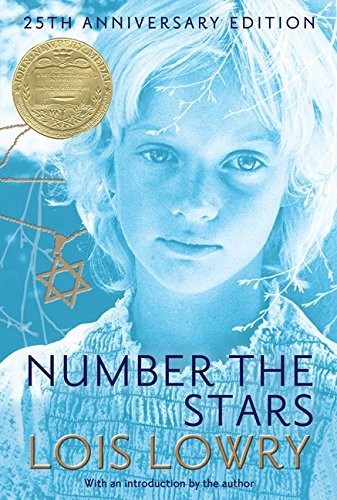
by Lois Lowry
1989 · 160 pages · Summary updated 24 October 2026
Number the Stars by Lois Lowry is a novel about Annemarie Johansen, a ten-year-old in Nazi-occupied Copenhagen who helps her Jewish best friend escape to Sweden in 1943. For readers who want the plot, the history and the themes.
In 1943, Denmark has been under German occupation for three years. Annemarie Johansen, ten, lives in Copenhagen with her parents and little sister Kirsti. Her best friend, Ellen Rosen, is Jewish. When the Nazis begin to round up Danish Jews, Ellen moves in with the Johansens and pretends to be their dead daughter, Lise. The family then takes Ellen to Uncle Henrik, a fisherman on the coast, who smuggles Jews across the sea to neutral Sweden. When the plan nearly fails, Annemarie must carry a vital package past German soldiers alone. Lowry's argument is that ordinary people can be brave, and that bravery often means acting without knowing everything.
Annemarie does not think of herself as brave. She thinks bravery belongs to people like Peter and Lise. Lowry shows that courage often appears in small acts by ordinary people. The example is the night the soldiers search the apartment: Annemarie tears the Star of David from Ellen's neck and holds it so hard that the star presses into her palm. She acts in a second, without thinking of herself as a hero.
Uncle Henrik tells Annemarie that he does not tell her everything to protect her, and that knowing less makes it easier to act. Lowry shows this idea in the resistance's methods: each person knows only their own part. The example is the wake for a Great-aunt Birte who never existed. Annemarie knows it is a lie, but she does not know why, and that ignorance lets her act naturally in front of the soldiers.
The story of King Christian X says that all of Denmark is the king's bodyguard. Lowry extends it: in 1943, much of Denmark became the bodyguard of its Jewish citizens. Neighbors hid them, fishermen carried them, and a German official warned them. The example is how the Johansens take in Ellen without debate. Lowry's afterword notes that nearly all of Denmark's Jews survived the war.
Annemarie and Ellen are best friends long before religion divides them. When the Nazis try to separate them, the friendship becomes a reason to act. Lowry shows that loyalty to one person can carry someone through danger. The example is Ellen pretending to be Lise, Annemarie's dead sister. For one night, the girls become sisters, and the necklace Annemarie keeps becomes a promise that the friendship will outlast the war.
Lowry shows the war through small losses. There is no coffee, no butter, no sugar. Kirsti's shoes are made of fish skin. Families use candles because electricity is rationed. Soldiers stand on every corner. The example is the button shop of Mrs. Hirsch, closed overnight with a German sign on the door. The girls do not understand what it means, but the reader does, and the small detail carries the weight of the Holocaust.
Annemarie tells herself the story of Little Red Riding Hood as she runs through the dark woods, and it steadies her. Her father tells the story of the king to give the girls courage. Peter reads Psalm 147 to the refugees before they leave. Lowry shows that stories carry people through moments they cannot control. The example is how Annemarie uses the role of the silly little girl from the fairy tale to fool the soldiers.
At the end, Annemarie learns that Lise did not die in an accident. She was in the resistance, and German soldiers ran her down with a car. Peter is executed in 1945. Lowry reveals that the calm adults around Annemarie carried secret grief and risk the whole time. The example is how her parents kept Lise's story from her until the war ended, so she could stay a child for a little longer.
“He telleth the number of the stars; he calleth them all by their names.”
Number the Stars by Lois Lowry was published in 1989 and won the Newbery Medal in 1990. It tells the story of the rescue of the Danish Jews in October 1943, when Danes hid and moved about 7,000 Jews across a narrow strait to Sweden in a few weeks. Almost all of them survived the war. Lowry based the novel on the memories of her friend Annelise Platt, who grew up in Copenhagen during the occupation.
The narrator stays close to Annemarie Johansen, a ten-year-old girl. She lives in an apartment in Copenhagen with her mother, her father and her five-year-old sister, Kirsti. Her older sister, Lise, died three years earlier, two weeks before her wedding. The family says she was killed in an accident. Lise's fiancé, Peter Neilsen, still visits, though less often now. He comes late at night and talks quietly with Annemarie's parents.
Annemarie's best friend is Ellen Rosen, who lives one floor up. Ellen's family is Jewish. Her father is a teacher. The girls play with paper dolls, race each other home from school, and dream about the future. Ellen wants to be an actress.
Denmark has been occupied by Germany since 1940. German soldiers stand on every corner. There is no butter, no sugar, no real coffee. The mothers drink hot water flavored with herbs and call it tea. Electricity is rationed, so families use candles. At night, the Danish resistance sabotages German trains and factories.
The book opens with the girls racing home. Two soldiers stop them on the street. One, whom the girls call the Giraffe because he is tall, asks why they are running and examines Annemarie's backpack. Kirsti talks back to him. The soldiers let them go. At home, the mothers tell the girls to use a different route and to be invisible.
Annemarie's father tells the girls about King Christian X, who rides his horse through Copenhagen every morning with no guard. A German soldier once asked a Danish boy who guarded the king. The boy said that all of Denmark was his bodyguard. Annemarie loves the story. She thinks she would die for the king.
Soon the girls notice that Mrs. Hirsch's button shop is closed. A German sign hangs on the door. The Hirsch family is Jewish. Peter brings the family a copy of an illegal resistance newspaper, De Frie Danske, the Free Danes, and warns Annemarie's parents that things are changing.
In late September 1943, it is the Jewish New Year, Rosh Hashanah. At the synagogue, the rabbi tells the congregation that the Germans have lists of Jewish names and addresses. They plan to arrest the Jews of Denmark that night. Someone in the German government leaked the plan.
The Rosens must hide. Peter takes Mr. and Mrs. Rosen away to a safe place. Ellen stays with the Johansens. She will pretend to be Annemarie's sister. That night the girls sleep in the same bed. Annemarie sees that Ellen still wears her necklace with the Star of David, the symbol of her faith. Ellen says she has never taken it off.
In the middle of the night, German officers pound on the door. They are searching for the Rosens. They ask why one girl has dark hair when the rest of the family is blond. Annemarie's father brings out a family photo album. He shows them a baby picture of Lise, born with dark hair. The officer tears the photo in half and drops it on the floor. Then the soldiers leave.
Before they came in, Annemarie tore the necklace off Ellen's neck and closed her fist around it. When the soldiers are gone, she opens her hand. The star has pressed its shape into her palm.
The next day, Annemarie's mother takes the three girls by train to the house of her brother, Uncle Henrik, a fisherman in a village near Gilleleje on the northern coast. Before they leave, Annemarie hears her father on the phone with Henrik. They talk in code about the weather for fishing and a carton of cigarettes, though no one in Denmark has had cigarettes for a year. On the train, soldiers question the mother, and Kirsti's chatter about her ugly new shoes, made of fish skin because leather is scarce, makes them lose interest.
The farmhouse sits by the sea. Across the water, the girls can see the coast of Sweden, which is neutral and safe. Annemarie remembers summers there with Lise. She runs through the meadow and feels free.
Then a casket arrives in the living room. The adults say that Great-aunt Birte has died, and that there will be a wake that night.
Annemarie knows the family has no Great-aunt Birte. She confronts Uncle Henrik. He tells her that it is easier to be brave if you do not know everything. Her mother does not know all the details of the plan either. Annemarie decides to trust him.
That night, strangers gather in the house. They are Jews, waiting to escape. Peter arrives with Ellen's parents. Ellen runs to them.
Car lights appear outside. German soldiers enter and ask why so many people are here. Annemarie's mother explains that a relative has died. The officer orders the casket opened. She tells him that Aunt Birte died of typhus, a contagious disease, and that the doctor said to keep the casket closed. The officer slaps her face for her answer. He does not want to risk the disease, and the soldiers leave.
When the soldiers are gone, Peter opens the casket. It holds blankets and warm clothes for the boat trip. Before the group leaves, Peter reads from the Bible, from Psalm 147: the Lord numbers the stars and calls them all by their names. Annemarie wonders how anyone can number all the stars in the sky.
Peter gives Mr. Rosen a packet and tells him that it must reach Uncle Henrik. Then he leads the first group toward the shore. Annemarie's mother goes with the Rosens through the dark woods to the boat. What happens next is the novel's climax and ending, and it is in the spoiler section below.
This section reveals the ending.
Hours pass. Annemarie wakes before dawn. Her mother should have returned long ago. She looks out and sees her mother lying on the path. She tripped on a root in the dark and broke her ankle, then crawled home. On the steps, Annemarie sees the packet. Mr. Rosen dropped it. Her mother says it must reach Henrik before his boat leaves, or everything is lost.
Annemarie puts the packet in a basket under bread, cheese and an apple, and runs through the woods. To calm herself, she tells herself the story of Little Red Riding Hood, as she has told it to Kirsti. Near the harbor, four German soldiers with dogs stop her. They ask what she has. She pretends to be a silly little girl taking lunch to her uncle. The soldiers tear the bread apart. They find the packet. Inside is a plain white handkerchief. The officer laughs, throws it down, and lets her go. She gives the basket to Uncle Henrik on his boat.
That evening, Uncle Henrik explains. The Rosens and others were hidden under the deck of his boat, in a secret space. The Germans had begun to use trained dogs to sniff out hidden people. The handkerchief was treated with a powder that attracts the dogs and then dulls their sense of smell. Without it, the dogs would have found the Rosens. Because of Annemarie, they reached Sweden.
The last chapter jumps ahead almost two years, to May 1945. The war is over. Danes celebrate in the streets. Annemarie learns two hard truths. Peter was captured by the Germans and executed in Copenhagen. Before his death he wrote to the family. And her parents tell her the truth about Lise. She did not die in an accident. She was in the resistance with Peter. German soldiers ran her down with a car after a raid.
Annemarie takes Ellen's Star of David necklace, which she has kept since that night. She asks her father to fix the broken chain. She will wear it until Ellen comes home.
In an afterword, Lowry explains which parts are true. The handkerchief powder was real. So were the fish skin shoes, the king's rides, and the warning on Rosh Hashanah. Lise and Peter are based on Danish resistance members, including a young man named Kim Malthe-Bruun, who was executed in 1945 and whose last letter to his mother Lowry quotes.
Read it if you want a short, clear introduction to the Holocaust and the Danish rescue for young readers, or if you are studying the book and need the plot in order. It suits readers aged nine and up and adults who want a quiet story about courage.
12 cards
Question 1 of 5
What does the Danish boy say guards King Christian X?
Annemarie runs alone through the woods with a packet that holds a handkerchief that ruins dogs' sense of smell. She fools German soldiers and delivers it, and the Rosens reach Sweden. Two years later the war ends. Annemarie learns that Peter was executed and that Lise died in the resistance. She keeps Ellen's necklace until Ellen returns.
Wonder by R. J. Palacio is a novel about August Pullman, a ten-year-old boy with a facial difference who goes to school for the first time in fifth grade. For readers who want the plot, the narrators and the book's lesson on kindness.

Ugly Love is Colleen Hoover's romance about Tate Collins, a nursing student who agrees to a no-strings affair with a guarded airline pilot, Miles Archer, whose past is a closed door. For readers who want a steamy, emotional love story with a heartbreaking backstory.
Zora Neale Hurston's novel about Janie Crawford, a Black woman in early 1900s Florida who moves through three marriages in search of real love and her own voice. For readers who want the plot, the themes and the meaning of the title.

The Wife Upstairs is Rachel Hawkins's 2021 thriller that retells Jane Eyre in a wealthy Alabama suburb, where a broke dog walker falls for a widower whose wife vanished on a lake. For readers who like twisty domestic suspense.
New books, occasionally