Emily Brontë's 1847 novel about Heathcliff, Catherine Earnshaw and two families on the Yorkshire moors, told across two generations. For readers who want the plot, the characters and the ideas behind a famous story of love and revenge.
1954 · 225 pages · Summary updated 24 October 2026
William Golding's 1954 novel about British schoolboys stranded on an island who build a society and then destroy it. For readers who want the plot, the symbols and the argument about human nature behind them.
During a war, a plane carrying British schoolboys crashes on an uninhabited tropical island. No adults survive. Ralph is elected chief and tries to keep a signal fire burning. Piggy supplies the ideas, and the conch shell stands for order. Jack, head of the choir, turns his boys into hunters, paints his face and breaks away. Fear of a beast spreads. The quiet boy Simon learns that the beast is inside the boys, not on the mountain. Golding argues that civilization is a thin layer, and that what sits under it is not innocence but appetite and cruelty.
Golding removes every outside pressure. The island has fruit, pigs, fresh water and no adults. The boys begin with a vote, a rule of speech and a plan for rescue. Within weeks they have a painted tribe, a tyrant and two deaths. Golding's claim is that the rules of society are not natural to people. They are a thin coat that peels off when no one enforces it. The boys are not unusually bad; they are what he believes anyone is underneath.
The littluns fear a snake-thing. The big boys find a dead airman on the mountain and call it the beast. Simon, alone with the pig's head, hears it say that it is part of him and of all of them. He climbs the mountain and finds only a corpse. Golding uses the beast to show how fear invents an outside enemy for what is really inside. The boys would rather hunt a monster than admit they are the danger.
The conch gives whoever holds it the right to speak, and at first the boys obey it. Jack is the first to say the rules do not matter when they get in his way. As his hunters gain meat and a fort, the conch loses its power until Jack says it does not count at Castle Rock. Golding shows that a rule has no force of its own. It works because people choose to honor it, and it dies the moment enough of them stop.
Jack paints his face with clay and charcoal to hide from pigs. When he sees himself in the water, he finds a stranger who feels no shame. Behind the mask he can kill, bully and dance. The whole tribe adopts paint, and the painted boys do what no unpainted boy did. Golding argues that cruelty is held in check by self-consciousness, and that anything which removes it, a mask, a crowd, a uniform, frees what was held.
Ralph tries to argue the beast away. Jack does the opposite. He offers to hunt it, posts a guard against it, leaves it the sow's head as a gift, and after Simon's death tells the tribe the beast came disguised and may return. The more the boys fear, the more they need him. Golding shows a pattern that works beyond the island: a leader who feeds a fear and then promises protection from it gains power that a leader who removes the fear never gets.
Piggy has the best ideas on the island: the conch, the signal fire, keeping water, a fire on the beach, a sundial. He is fat, asthmatic, short-sighted and speaks with the wrong accent, so the boys mock him and Jack punches him. Ralph values his thinking only slowly. Golding uses Piggy to show that a group chooses leaders for looks and force, not for sense, and that the person who could save it is often the one it refuses to hear.
Simon is the one boy who understands the beast and the only one who climbs the mountain to check. He frees the dead airman and comes down to tell the others. He walks into their dance, and they kill him as the beast before he can speak. The next day Piggy calls it an accident and Sam and Eric say they left early. Golding shows a group destroying the news it most needs and then agreeing not to remember doing it.
A naval officer rescues Ralph from a burning island and a hunting pack. He sees a game, expects better of British boys, and turns to look at his cruiser. The adult who saves them is fighting the same kind of war with bigger weapons. Golding ends on the officer to deny the reader comfort. There is no grown-up world that stands above the boys. The island was a small version of the one the plane left.
“Fancy thinking the Beast was something you could hunt and kill!”
Lord of the Flies was William Golding's first published novel. It appeared in 1954 after many rejections and became one of the most taught books in English. Golding was a schoolmaster who had served in the Royal Navy in the Second World War, including at the Normandy landings. The war convinced him that ordinary people, not monsters, do terrible things.
The book answers an older one. R. M. Ballantyne's The Coral Island (1858) puts three British boys named Ralph, Jack and Peterkin on a Pacific island, where they behave well and defeat pirates and cannibals. Golding takes the same setup and two of the names and asks what would really happen. The title is a translation of Beelzebub, a name for the devil.
The story takes place during a future war. A plane evacuating boys from Britain is shot down over the Pacific. The passenger section crashes onto a tropical island and is swept into the sea. The boys, aged about six to twelve, are alone with no adults.
A fair-haired boy, Ralph, meets a fat boy with glasses and asthma who begs not to be called Piggy, which becomes his name at once. Piggy spots a conch shell in the lagoon and shows Ralph how to blow it. The sound gathers the scattered boys. A group of choirboys arrives marching in black cloaks under their leader, Jack Merridew, who wants to be chief. The boys vote for Ralph, who holds the conch. Ralph makes Jack's choir the hunters. Ralph, Jack and a thin, fainting boy called Simon explore and confirm it is an island.
At the first assembly, Ralph sets a rule: whoever holds the conch may speak. A small boy with a birthmark on his face says he saw a snake-thing, a beastie, in the woods at night. The big boys laugh. Ralph says they need a signal fire so ships can see them. The boys rush to the mountain, use Piggy's glasses to light a pile of wood, and let the fire run out of control through the forest. The boy with the birthmark is never seen again. No one says so directly.
Weeks pass. Ralph and Simon build shelters while the others play. Jack spends his days hunting pigs and fails to catch one. He paints his face with clay and charcoal and finds that the mask frees him from shame. One afternoon a ship passes on the horizon. The signal fire is out. Jack took the boys who should have tended it on a hunt, and they return carrying their first pig and chanting. Ralph is furious. Jack punches Piggy and breaks one lens of his glasses. The hunters roast the pig, and Jack refuses to give Piggy meat until Simon hands over his own share.
Ralph calls an assembly to put things right. He lists what has gone wrong: no water kept, shelters unbuilt, the fire neglected, the rocks near the bathing pool used as a toilet. Then the talk turns to the beast. Piggy says life is scientific and there is nothing to fear, except perhaps people. A littlun says the beast comes from the sea. Simon tries to say that maybe the beast is only themselves and cannot find the words. Jack declares that the rules do not matter and leads the hunters off in a mock hunt. Ralph, Piggy and Simon are left in the dark wishing for a sign from the adult world.
The sign comes that night. An air battle takes place miles above the island, and a dead airman drifts down on his parachute and lands on the mountain. The wind lifts and lowers the body so that it seems to sit up and bow. The twins Sam and Eric, tending the fire, see it, run, and report a beast with claws.
Ralph and Jack lead the big boys to the one unexplored part of the island, a rock fort at the far end that Jack names Castle Rock. Jack wants to stay and build a fort. Ralph insists they go on to the mountain and relight the fire. On the way, the boys hunt a boar. Ralph throws his spear and hits it, and for a moment he feels the thrill of the hunt. The boys surround a boy named Robert in a mock hunt and hurt him before they stop. Ralph, Jack and Roger climb the mountain in the dark, see the parachute figure stir, and flee.
Jack calls an assembly and asks the boys to remove Ralph as chief. No one votes with him. Humiliated and crying, he walks off alone and says anyone who wants to hunt can join him. Most of the big boys slip away to him later. Simon suggests they climb the mountain and face the beast, but no one listens. Piggy proposes a new fire on the beach, within reach.
Jack's tribe hunts a sow. They kill her in a scene written as frenzy, cut off her head, and leave it on a stick as a gift for the beast. Then they raid Ralph's fire for burning sticks and invite everyone to a feast. Simon, hidden in his clearing, is alone with the pig's head as flies cover it. In the heat he hears it speak. It calls itself the Lord of the Flies. It tells him that it is the beast, that it is part of him and of all of them, and that they will have fun on the island. It says that Simon is not wanted and that the others will do him in. Simon faints.
Simon wakes and climbs the mountain. He finds the dead airman, understands what the beast is, and frees the lines so the body can rest. He goes down to tell the others.
On the beach, Jack holds his feast and rules like a chief. A storm gathers. To hold the boys together, Jack starts the dance and the chant: kill the beast, cut his throat, spill his blood. Ralph and Piggy join the ring. Simon crawls out of the forest into the circle, trying to speak about the dead man on the hill. The boys fall on him as the beast and kill him with hands, teeth and sticks. The rain comes, the parachute lifts the airman's body off the mountain and carries it out to sea, and the tide carries Simon's body away.
The next morning Ralph says it was murder. Piggy insists it was an accident, that it was dark, that they were on the outside of the ring. Sam and Eric claim they left early. Everyone wants not to have been there. At Castle Rock, Jack tells his tribe the beast came disguised and may come again, and he has a boy named Wilfred beaten for no stated reason. Roger watches.
That night Jack's tribe raids Ralph's shelter and steals Piggy's glasses. They now have fire, and Ralph's group has no way to make it. Ralph, Piggy, Sam and Eric go to Castle Rock to demand the glasses back. Piggy carries the conch. Jack and Ralph fight. Sam and Eric are seized and tied. Piggy, holding the conch, asks whether it is better to have rules and agree, or to hunt and kill. Above him, Roger leans on a lever and sends a boulder down. It strikes Piggy, shatters the conch and throws him onto the rocks forty feet below, where the sea takes him. Jack throws his spear at Ralph and screams that he is chief now. Ralph runs.
This section reveals the ending.
Ralph hides in the forest. At night he creeps to Castle Rock and learns from Sam and Eric, now in Jack's tribe after torture, that the hunt for him begins in the morning. Roger has sharpened a stick at both ends, the way they mounted the sow's head. Ralph understands what that means for him.
In the morning the tribe finds him. He hides in a thicket. They roll boulders, then set the forest on fire to smoke him out. Ralph runs through the burning island as the hunters close in. He breaks out onto the beach and falls at the feet of a naval officer in a white uniform. A cruiser lies offshore. The smoke that was meant to kill Ralph has brought the rescue that the signal fire never did.
The officer sees a crowd of painted, filthy small boys with sticks and assumes a game. He asks whether anyone is dead and is shocked to hear that two are. He says he would have expected a better show from British boys, and mentions The Coral Island. Ralph begins to cry, and the other boys cry with him. The novel ends with the officer looking away toward his warship. He is also a man at war. The adult world that rescues the boys is engaged in the same thing on a larger scale.
Golding said the book traces the defects of society back to the defects of human nature. The island has no economic pressure, no adults and plenty of food. The boys still produce fear, a tyrant and killing. The source is inside them.
Each major object carries a meaning. The conch stands for debate, rules and the right to speak. It loses power as Jack rises and is destroyed with Piggy. Piggy's glasses represent reason and technology: they make fire, and whoever holds them controls the island. The signal fire is the wish to return to civilization, and it dies whenever hunting takes over. The painted faces free the boys from shame and responsibility. The beast begins as a child's nightmare, becomes a dead airman, and ends as what Simon understood: the boys' own capacity for harm.
The characters are types as well as people. Ralph is the elected leader who wants order but lacks Piggy's brains and Jack's charisma. Piggy is intelligence without status. Jack is the appetite for power. Roger is cruelty that waits for permission. Simon is the one who sees the truth and is killed for it.
Some critics find the allegory too neat and the characters too clearly symbols. Others point out that the sample is narrow: British, middle-class boys of one era, with no girls, and that the book assumes its boys are civilized in a way others are not. A real case cuts the other way. In 1965 six Tongan boys were shipwrecked on the island of Ata for 15 months, cooperated, kept a fire and a garden, and all survived; the historian Rutger Bregman used the case in Humankind (2020) to argue against Golding's view. Golding himself grew uneasy with the book's fame and called it boring and crude in later life. It remains one of the most challenged and most assigned books in American schools.
Read it if you want a short novel that argues a hard claim about human nature, or if you are studying it and need the events and symbols in order. It suits anyone interested in how groups turn on their weakest members.
12 cards
Question 1 of 5
What do the boys use to light the signal fire?
Jack's tribe hunts Ralph across the island and sets the forest on fire to drive him out. Ralph runs onto the beach and finds a naval officer whose ship saw the smoke. The officer assumes the boys were playing and says he expected better of British boys. Ralph weeps for the end of innocence and for Piggy. The officer turns to look at his warship.
Emily Brontë's 1847 novel about Heathcliff, Catherine Earnshaw and two families on the Yorkshire moors, told across two generations. For readers who want the plot, the characters and the ideas behind a famous story of love and revenge.
Harper Lee's novel about Scout Finch, her brother Jem, and their father Atticus, who defends a Black man falsely accused of rape in 1930s Alabama. For students and readers who want the plot, the themes and the ending in plain words.
Chinua Achebe's novel about Okonkwo, an Igbo leader whose village is undone by his own rigidity and the arrival of British missionaries. For readers who want the colonial encounter told from the African side.
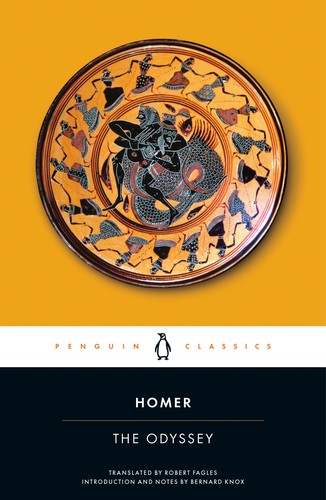
Homer's ancient Greek epic about Odysseus's ten-year journey home from Troy to Ithaca, and his son Telemachus's search for him. For readers who want the plot, the characters and the ideas, book by book.
New books, occasionally