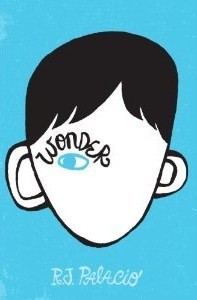
Wonder by R. J. Palacio is a novel about August Pullman, a ten-year-old boy with a facial difference who goes to school for the first time in fifth grade. For readers who want the plot, the narrators and the book's lesson on kindness.
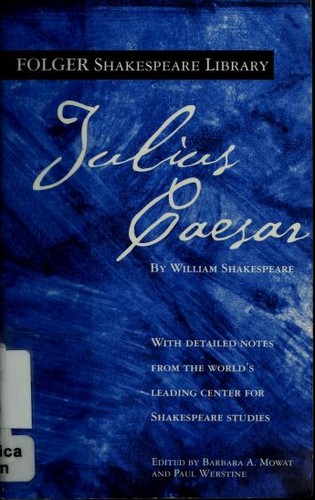
1599 · 288 pages · Summary updated 24 October 2026
Julius Caesar is Shakespeare's play about the plot to kill Julius Caesar, the funeral speeches that turn Rome against the killers, and the civil war that follows. For readers who want the plot, themes and ending in plain words.
Rome fears that Julius Caesar will make himself king. Cassius draws the honest senator Brutus, Caesar's friend, into a plot to kill him, and they stab Caesar in the Senate on the ides of March. Brutus believes he acts for the republic. At the funeral, Mark Antony uses one speech to turn the crowd against the killers, and civil war follows. Brutus and Cassius quarrel, Caesar's ghost appears, and the armies meet at Philippi. Shakespeare asks whether a good man can do a terrible act for the public good, and shows how words can outweigh principles in politics.
Brutus admits in his orchard soliloquy that Caesar has done nothing to deserve death. His case is about the future: crowned, Caesar might turn tyrant, so Brutus will kill him like a serpent's egg in the shell. Shakespeare shows the danger of preventive violence. The reasoning sounds firm and rests entirely on a guess. Brutus then reads forged letters, planted by Cassius, as the voice of Rome confirming the guess he already made.
Cassius knows Brutus's weakness is his love of his own good name. He flatters it, forges letters that appeal to it, and uses Brutus's reputation to make the plot look like justice. Brutus's honor then makes him refuse an oath, spare Antony and let him speak at the funeral. Each choice comes from principle and each one hurts the cause. Shakespeare shows that a man of pure motives is easy to steer and poor at politics.
Brutus speaks to the crowd in prose, with logic: he loved Rome more than Caesar. They cheer him. Antony follows with repetition, irony and props: the torn cloak, the wounds, the will. Each time he calls Brutus an honorable man, the phrase means less. Within minutes the same crowd wants to burn the conspirators' houses. Shakespeare shows that in public life emotion and story beat argument, and that whoever speaks last often wins.
The play opens with tribunes scolding commoners for cheering Caesar after cheering Pompey. At the funeral the crowd wants to crown Brutus, the man who killed Caesar, and then riots against him minutes later. A mob kills Cinna the poet for sharing a conspirator's name. Shakespeare presents the Roman people as easy to move and quick to forget. Every leader in the play needs them and none of them trusts them.
Rome is full of signs before the murder: the Soothsayer, a violent storm, Calpurnia's dream of a bleeding statue, a sacrifice with no heart. Caesar hears all of them and goes to the Senate anyway, because staying home would look like fear. Shakespeare leaves open whether the omens are fate or chance. The example is Decius, who turns the dream of blood into a flattering prophecy, showing that people read signs to fit what they already want.
Caesar presents himself in public as constant as the Northern Star, while in private he is deaf in one ear, prone to fits and swayed by his wife and flatterers. Brutus is a calm statesman in public and cannot sleep at home. Portia stabs her own thigh to make him share his secret. Shakespeare shows that political roles demand a mask, and that the gap between mask and person is where the tragedy grows.
Caesar dies in Act 3, but his name controls the rest of the play. His ghost visits Brutus. At Philippi, Cassius dies on the sword that stabbed Caesar, and Brutus says that Caesar is mighty yet. Brutus then runs on his own sword. The conspirators killed a man to save the republic, and their act brings Octavius, the future emperor, to power. Shakespeare shows that assassination can strengthen the very thing it aims to destroy.
“Beware the ides of March.”
“The fault, dear Brutus, is not in our stars, but in ourselves, that we are underlings.”
“Friends, Romans, countrymen, lend me your ears!”
Julius Caesar is William Shakespeare's play about the plot to kill Caesar in 44 BC and the civil war that follows. It was one of the first plays staged at the new Globe Theatre: a Swiss traveler, Thomas Platter, saw it there on September 21, 1599. It was first printed in the First Folio of 1623. Shakespeare took the story from Plutarch's Lives of the Noble Greeks and Romans, in Thomas North's English translation of 1579, and kept close to it.
The title character dies at the start of Act 3. The real center of the play is Marcus Brutus, an honest man who joins the conspiracy because he fears Caesar will become a tyrant. The play asks whether a good man can do a terrible act for the public good, and what happens when ideals meet the practical skill of a politician like Mark Antony.
The main characters:
The main themes are honor and ambition, public and private selves, the power of rhetoric, fate and omens, and the fickle Roman crowd.
Rome celebrates Caesar's victory over the sons of his old rival Pompey. Two tribunes scold the common people for forgetting Pompey so fast and strip the decorations from Caesar's statues.
At the feast of Lupercal, a Soothsayer calls out to Caesar to beware the ides of March, March 15. Caesar dismisses him as a dreamer.
While Caesar goes to the games, Cassius tests Brutus. He has noticed that Brutus seems troubled. He tells stories of Caesar's weakness: Caesar once nearly drowned in the Tiber and had to be rescued by Cassius, and he shook with fever in Spain. How has such a man become a god? Cassius tells Brutus that the fault is not in their stars but in themselves, that they are underlings. Brutus admits he fears the people will make Caesar king. He promises to think about it.
Casca reports what happened offstage. Antony offered Caesar a crown three times. Each time Caesar refused it, more reluctantly, and the crowd cheered. Then Caesar fell down in a fit. Caesar himself has noticed Cassius and tells Antony that the man has a lean and hungry look and thinks too much.
That night a violent storm fills Rome with strange signs: a lion in the streets, men on fire, a bird of night at noon. Cassius recruits Casca. He also plans to throw forged letters, written as if by different citizens, into Brutus's window, all urging him to act.
In his orchard Brutus works through the case in a soliloquy. He has no personal grievance against Caesar. The danger is what Caesar might become if he is crowned. Brutus decides to treat him like a serpent's egg and kill him in the shell. He reads the forged letters as the voice of Rome.
The conspirators arrive. Brutus takes charge at once. He refuses to let them swear an oath, since Romans of honor need none. He refuses to include Cicero. Most important, he refuses Cassius's advice to kill Antony too. They should be sacrificers, he says, not butchers.
When they leave, Portia asks what is troubling him. She has stabbed herself in the thigh to prove she can bear pain and keep a secret. Brutus promises to tell her everything.
At Caesar's house, Calpurnia has dreamed of his statue spouting blood while Romans washed their hands in it. The priests' sacrifice found a beast with no heart. Caesar agrees to stay home for her sake. Then the conspirator Decius arrives, reinterprets the dream as a sign that Rome will draw new life from Caesar, and adds that the Senate means to offer him a crown today. Caesar is ashamed of his fears and goes.
On the way to the Capitol, Caesar tells the Soothsayer that the ides of March have come. The Soothsayer replies that they have not yet gone. A teacher named Artemidorus tries to hand Caesar a note revealing the plot, and Caesar refuses to read it first.
In the Senate, the conspirators surround Caesar with a false petition to recall a banished man. Caesar refuses. He says he is as constant as the Northern Star. Casca strikes first, then the others. Brutus strikes last. Caesar, seeing him, says "Et tu, Brute?" (and you, Brutus?) and dies.
The conspirators wash their hands in Caesar's blood and shout of liberty. Antony sends a message asking for safe conduct. He arrives, grieves over the body, shakes each bloody hand, and asks to speak at the funeral. Cassius objects. Brutus agrees, on the condition that Antony speaks after him and does not blame the conspirators. Alone with the body, Antony promises revenge and civil war.
At the funeral Brutus speaks first, in plain prose. He did not love Caesar less but loved Rome more. Caesar was ambitious, so he killed him. The crowd cheers and wants to crown Brutus. Brutus leaves Antony to speak alone, a fatal mistake.
Antony begins, "Friends, Romans, countrymen, lend me your ears." He says he comes to bury Caesar, not to praise him. He repeats again and again that Brutus is an honorable man, while listing Caesar's refusals of the crown and his gifts to Rome, until the phrase becomes an accusation. He shows the crowd Caesar's torn cloak and points to each wound. He reveals the will: every citizen gets money, and Caesar's gardens become public parks. The crowd riots. In the street a mob tears apart a poet named Cinna because he shares a name with a conspirator. Brutus and Cassius flee Rome.
Antony, Octavius and Lepidus now rule as a triumvirate. They draw up a list of enemies to execute, trading the lives of relatives. When Lepidus leaves, Antony calls him a tool to be used and cast aside.
Near Sardis, in Brutus's tent, Brutus and Cassius quarrel. Brutus accuses Cassius of taking bribes and of refusing to send him gold to pay his troops. Cassius says Brutus no longer loves him. They reconcile. Brutus then reveals that Portia is dead. She grew desperate in his absence and swallowed fire.
They argue about strategy. Cassius wants to wait for the enemy to tire. Brutus wants to march to Philippi and fight at once, because there is a tide in the affairs of men that must be taken at the flood. Cassius gives way.
That night, while Brutus reads, the ghost of Caesar appears and calls itself his evil spirit. It tells him he will see it again at Philippi.
This section reveals the ending.
At Philippi the two sides trade insults before the battle. Cassius tells his officer that it is his birthday and that he now half believes in omens.
The battle goes two ways. Brutus's troops overrun Octavius's wing, but Cassius's troops are beaten by Antony. Cassius sends his friend Titinius to see whether some approaching horsemen are friends or enemies. His servant Pindarus, watching from a hill, reports wrongly that Titinius has been captured. Cassius, believing all is lost, has Pindarus kill him with the sword that stabbed Caesar. In fact the horsemen were Brutus's men greeting Titinius. Titinius returns, finds Cassius dead, and kills himself. Brutus sees the bodies and says that Julius Caesar is mighty yet, since his spirit turns their swords into their own bodies.
In the second battle Brutus's side loses. Brutus tells his servants that Caesar's ghost has appeared to him again. He asks one after another to hold his sword so he can run on it. They refuse until Strato agrees. Brutus dies saying that Caesar can now be still, since he killed him with less goodwill than he kills himself.
Antony and Octavius find the body. Antony says Brutus was the noblest Roman of them all: the other conspirators acted from envy, and Brutus alone acted for the common good. Octavius orders him buried with honor. The republic Brutus fought for is gone, and Octavius will become the emperor Augustus.
Critics have argued for centuries about who the hero is. Caesar dies halfway through, Brutus has the inner struggle of a tragic hero, and Antony wins. The play's politics are also open. Royalists read it as a warning against killing a ruler. Republicans read Brutus as a martyr for liberty. Orson Welles staged it in 1937 in modern dress as an anti-fascist play, and a 2017 New York production with a Trump-like Caesar drew protests. Scholars also note that Brutus's reasoning is weak: he admits Caesar has done nothing wrong and kills him for what he might do.
Read it if you are studying the play or want to understand two of the most famous speeches in English. It suits anyone interested in political ideals, persuasion and what happens when good intentions meet power.
12 cards
Question 1 of 5
What does the Soothsayer warn Caesar about?
Antony and Octavius defeat Brutus and Cassius at Philippi. Cassius, misled by a false report, has his servant kill him. Brutus, after seeing Caesar's ghost again, runs on his own sword. Antony calls him the noblest Roman of them all, and Octavius orders an honorable burial.
Wonder by R. J. Palacio is a novel about August Pullman, a ten-year-old boy with a facial difference who goes to school for the first time in fifth grade. For readers who want the plot, the narrators and the book's lesson on kindness.

Ugly Love is Colleen Hoover's romance about Tate Collins, a nursing student who agrees to a no-strings affair with a guarded airline pilot, Miles Archer, whose past is a closed door. For readers who want a steamy, emotional love story with a heartbreaking backstory.

Zora Neale Hurston's novel about Janie Crawford, a Black woman in early 1900s Florida who moves through three marriages in search of real love and her own voice. For readers who want the plot, the themes and the meaning of the title.

The Wife Upstairs is Rachel Hawkins's 2021 thriller that retells Jane Eyre in a wealthy Alabama suburb, where a broke dog walker falls for a widower whose wife vanished on a lake. For readers who like twisty domestic suspense.
New books, occasionally