
Wonder by R. J. Palacio is a novel about August Pullman, a ten-year-old boy with a facial difference who goes to school for the first time in fifth grade. For readers who want the plot, the narrators and the book's lesson on kindness.
1847 · 578 pages · Summary updated 24 October 2026
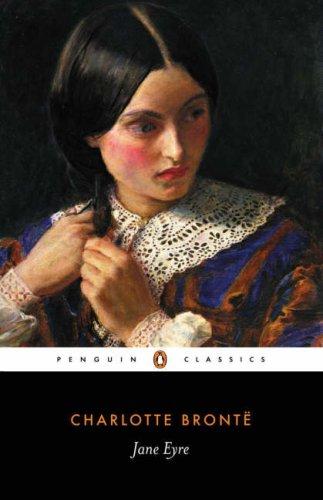
Charlotte Brontë's novel about an orphan who becomes a governess, falls in love with her employer, Mr. Rochester, and refuses to give up her self-respect for anyone. For readers who want the plot stage by stage and the ideas behind it.
Jane Eyre is an orphan raised by a cruel aunt and sent to a harsh charity school. She grows into a plain, sharp-minded young woman and becomes governess at Thornfield Hall. There she falls in love with its moody owner, Edward Rochester, and he asks her to marry him. At the altar she learns he already has a wife, the mad Bertha Mason, locked in the attic. Jane leaves him rather than become his mistress. Charlotte Brontë tells the story in Jane's own voice, as a fight for love on equal terms, without losing conscience, dignity or independence.
Jane will not marry Rochester as his doll, his mistress or his dependent. When he teases her about Blanche Ingram, she tells him she has as much soul and heart as he does and speaks to him as an equal. Before the wedding she refuses his silks and jewels and keeps earning her own salary. The novel argues that love is real only between equals, and it delays the happy ending until Jane can stand beside Rochester by choice, not need.
After the failed wedding, Rochester offers Jane a life with him in France. She loves him, she has no family and no money, and no one would know. She leaves anyway. She tells herself that laws and principles matter most at the moment of temptation, not when life is easy. Brontë makes this the hardest choice in the book. Jane does not leave because she stops loving him. She leaves because staying would make her someone she does not respect.
As a child, Jane fights John Reed and tells Mrs. Reed exactly what she thinks of her. It feels like victory, then leaves her shaking and alone. At Lowood, Helen Burns teaches the opposite: endure and forgive. Jane takes something from both. She keeps her sense of justice but learns self-control from Miss Temple. The adult Jane speaks her mind at the right moment and in measured words, which makes her more powerful, not less.
The novel shows three kinds of Christian. Mr. Brocklehurst uses religion to starve and shame poor girls while his family wears silk. Helen Burns uses it to accept suffering with peace. St. John Rivers uses it as a call to heroic duty that leaves no room for love. Jane respects Helen and St. John but rejects a faith that crushes the self. Brontë argues that true religion includes conscience and feeling, not only obedience.
Bertha Mason is hidden on the third floor for most of the novel, known only by a laugh, a fire and a torn veil. When she appears, she is violent and almost wordless. Critics have read her as Jane's double: the rage and passion that Jane learned to lock away after the red room. Others point out that she is a Creole woman from Jamaica given no voice of her own. Either way, she is the secret that the comfortable house is built on.
Jane is a lady by birth and education but poor, so her choices are narrow: teacher, governess or wife. The Ingrams treat governesses as furniture. Blanche wants Rochester for his money. St. John offers Jane a marriage as a working partnership. When Jane inherits twenty thousand pounds, she shares it equally with her cousins, valuing family over wealth. Brontë shows how money shapes every relationship and why independence for a woman begins with an income.
Jane goes back to Rochester only after she has her own fortune, a family of cousins and the freedom to choose. By then Bertha is dead, Thornfield is burned and Rochester is blind and missing a hand. Some readers see his injuries as punishment; others see them as the end of his power over her. The marriage that follows is one in which she leads him, reads to him and is his eyes. The ending makes their love possible on the terms Jane set at the start.
“I am no bird; and no net ensnares me; I am a free human being with an independent will, which I now exert to leave you.”
“Women are supposed to be very calm generally: but women feel just as men feel; they need exercise for their faculties, and a field for their efforts, as much as their brothers do.”
Jane Eyre by Charlotte Brontë came out in 1847 under the male pen name Currer Bell. It was an instant success. Readers were struck by its narrator: a poor, plain, passionate woman who speaks directly to the reader and judges the people around her. The book's subtitle in the first edition was "An Autobiography", and it reads like one. Jane looks back on her life from about ten years after its end.
The novel follows Jane through five places, and each one is a stage of her growth: Gateshead, where she is a rebellious child; Lowood, where she learns self-control; Thornfield, where she finds love; Moor House, where she finds family and faces a different temptation; and finally Ferndean. In each place she meets a person who wants to control her, and in each she has to decide how much of herself to give.
Three themes run through the book. The first is independence: Jane wants to be loved, but never at the cost of her self-respect. The second is the conflict between passion and principle. The third is social class and the limited choices of a poor woman in Victorian England. Brontë also mixes realism with Gothic elements: a haunted red room, a mysterious laugh in the night, a fire, a ghostly voice.
Jane is ten. Her parents died when she was a baby, and she lives with her uncle's widow, Mrs. Reed, at Gateshead Hall. Her uncle made his wife promise to raise Jane as one of her own children, but Mrs. Reed resents her. Her son John Reed bullies Jane and one day throws a book at her head. Jane fights back and calls him a murderer and a slave driver.
As punishment, Mrs. Reed locks Jane in the red room, the bedroom where Mr. Reed died. Jane, in the dark, thinks she sees a light that might be her uncle's ghost. She screams and faints. The apothecary, Mr. Lloyd, suggests that she go to school.
Mrs. Reed sends her to Lowood, a charity school run by Mr. Brocklehurst, a hard clergyman. Mrs. Reed tells him Jane is a liar. Before she leaves, Jane stands up to her aunt and tells her what she thinks of her. It is the first time she feels the power of speaking for herself, and also the first time she feels the cost of anger.
Lowood is cold, the food is burnt and scarce, and the girls wear plain clothes while Brocklehurst's own family dresses in silk. Brocklehurst preaches humility to the poor and practices none himself. He makes Jane stand on a stool in front of the school and calls her a liar.
Two people help her. The superintendent, Miss Temple, is kind and fair. She lets Jane tell her side and clears her name. Jane's friend Helen Burns is a gentle, pious girl who accepts every punishment without complaint. Helen teaches that one should endure injustice and return good for evil. Jane cannot fully agree: she believes that unjust people should be resisted.
In the spring, typhus sweeps through the school and kills many girls. Helen dies of consumption in Miss Temple's room. Jane has crept into her bed to be with her and wakes to find her dead. After the epidemic, the public learns about the school's conditions, and new managers improve it. Jane stays eight more years, six as a pupil and two as a teacher. When Miss Temple marries and leaves, Jane feels restless. She advertises for a post as a governess.
Jane becomes governess at Thornfield Hall to Adèle Varens, a lively French girl who is the ward of the master, Edward Rochester. The kind housekeeper, Mrs. Fairfax, runs the house. From the third floor Jane sometimes hears a strange, low laugh. Mrs. Fairfax says it is Grace Poole, a servant who sews up there.
Jane first meets Rochester on an icy road at dusk, when his horse slips and falls. He is dark, rude and not handsome. At the house he questions her sharply, and she answers him plainly. They begin to talk in the evenings. He tells her that Adèle is the daughter of a French opera dancer, Céline Varens, who betrayed him. He is not sure the child is his, but he took her in.
One night Jane hears the laugh outside her door and finds Rochester's bed curtains on fire. She throws water over him and saves his life. He tells her to say nothing and blames Grace Poole. The next morning, Grace is still in the house, which puzzles Jane.
Rochester leaves and returns with guests, among them the beautiful, proud Blanche Ingram. Everyone expects him to marry her. Jane, who now knows she loves him, watches in silence. Rochester disguises himself as a Gypsy fortune-teller to question the guests, including Jane. Then a stranger arrives from Jamaica, Richard Mason. That night a scream wakes the house. Rochester takes Jane to the third floor, where Mason is bleeding from a stab wound and a bite. Jane tends him while Rochester fetches a doctor. Mason leaves before dawn.
Jane is called back to Gateshead. John Reed has killed himself after a life of debt, and Mrs. Reed is dying. Mrs. Reed confesses that three years earlier, Jane's uncle John Eyre, a merchant in Madeira, wrote asking to adopt Jane and leave her his money. Out of spite, Mrs. Reed told him Jane had died at Lowood. Jane forgives her. Mrs. Reed dies unforgiving.
Back at Thornfield, Rochester teases Jane that he will marry Blanche and send her to a post in Ireland. Jane breaks down and tells him what she feels. She says that she has as much soul and heart as he has, and that she speaks to his spirit as an equal. Rochester says he never meant to marry Blanche, and he asks Jane to marry him. She accepts. That night, lightning splits the great chestnut tree under which he proposed.
In the month before the wedding, Rochester wants to dress her in silks and jewels. Jane refuses to be his doll and keeps working as Adèle's governess. Two nights before the wedding, a woman Jane does not know enters her room, puts on her wedding veil and tears it in two.
At the church, a lawyer, Mr. Briggs, and Richard Mason stop the ceremony. Rochester is already married. Fifteen years ago, in Jamaica, he married Mason's sister, Bertha Mason. She went mad, and he keeps her locked on the third floor with Grace Poole as her keeper. It was Bertha who laughed, set the fire, attacked her brother and tore the veil. Rochester takes everyone to see her. She attacks him like an animal.
Rochester begs Jane to live with him in France as his wife in all but law. She loves him and is tempted. She refuses, because she would lose her self-respect, and she leaves Thornfield before dawn with almost no money.
The coach leaves Jane at a crossroads called Whitcross. She sleeps on the moor, begs for food and nearly starves. At last she collapses at the door of Moor House, where she is taken in by a clergyman, St. John Rivers, and his sisters, Diana and Mary. She gives a false name, Jane Elliott. The sisters are warm and clever, and Jane recovers. St. John finds her a post as teacher in the village school at Morton, where she teaches poor girls.
St. John is handsome, cold and ambitious. He loves the rich and lovely Rosamond Oliver but will not marry her, because she would not suit the life of a missionary in India. He plans to go there and wants to crush his own feelings for the sake of duty.
Then St. John learns Jane's real name. Her uncle John Eyre has died and left her twenty thousand pounds. He was also the uncle of the Rivers family, so St. John, Diana and Mary are Jane's cousins. Jane, who has never had a family, is overjoyed. She divides the money into four equal parts, one for each of them.
St. John asks Jane to learn Hindustani. Then he asks her to marry him and go with him to India as a missionary's wife. He does not love her; he says she is formed for labor, not for love. Jane offers to go as his sister, not his wife. He refuses and keeps pressing her with the weight of God's will. One night, under his pressure, she almost agrees.
This section reveals the ending.
At that moment, Jane hears Rochester's voice calling her name: "Jane! Jane! Jane!" She does not know where it comes from. She answers that she is coming, breaks free of St. John and travels back to Thornfield.
She finds the house a burnt ruin. The innkeeper tells her what happened. After Jane left, Rochester sent everyone away. Bertha escaped one night and set fire to the house. Rochester rescued the servants and tried to save his wife, but she jumped from the roof and died. A falling beam crushed Rochester. He lost one hand and his sight. He now lives in seclusion at Ferndean, a damp manor house in the woods.
Jane goes to Ferndean. She brings Rochester a glass of water, and he recognizes her voice. He is humbled and fears she pities him. She tells him she is independent now, with her own money, and that she wants to be with him. He asks her to marry him again. He tells her that on the night she heard his voice, he called her name in despair, and he heard her answer.
The last chapter opens with Jane's famous address to the reader announcing the marriage. They have now been married ten years. Rochester regains partial sight in one eye and is able to see their first son. Diana and Mary marry happily. Adèle goes to a better school. The book ends with a letter from St. John in India, who expects to die soon in his work, at peace with his duty.
The ending balances the book. Jane returns to Rochester only when she can do so freely, as an equal with her own fortune and a family of her own, and when the barrier to their marriage is gone.
The novel shocked some early reviewers, who called it coarse and un-Christian for its angry, self-assertive heroine. Later readers praised it as an early feminist novel. In 1979, Sandra Gilbert and Susan Gubar's study The Madwoman in the Attic read Bertha as Jane's dark double, the rage that Jane must control. Postcolonial critics, notably Gayatri Spivak, point out that the novel gives Bertha, a Creole woman from Jamaica, no voice, and that Jane's freedom depends on her death. Jean Rhys's novel Wide Sargasso Sea (1966) tells Bertha's side.
Read it if you want a love story with a heroine who keeps her conscience and her pride, or if you are studying the novel and need the plot in order. It suits anyone who has had to choose between what they want and who they are.
12 cards
Question 1 of 5
Why does Mrs. Reed lock Jane in the red room?
Jane hears Rochester calling her and returns to find Thornfield burned. Bertha set the fire and died jumping from the roof, and Rochester lost a hand and his sight trying to save her. Jane, now independent with her own inheritance, marries him at Ferndean. He regains some sight and sees their first son. St. John goes to India to serve as a missionary.
Wonder by R. J. Palacio is a novel about August Pullman, a ten-year-old boy with a facial difference who goes to school for the first time in fifth grade. For readers who want the plot, the narrators and the book's lesson on kindness.

Ugly Love is Colleen Hoover's romance about Tate Collins, a nursing student who agrees to a no-strings affair with a guarded airline pilot, Miles Archer, whose past is a closed door. For readers who want a steamy, emotional love story with a heartbreaking backstory.
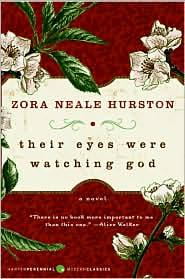
Zora Neale Hurston's novel about Janie Crawford, a Black woman in early 1900s Florida who moves through three marriages in search of real love and her own voice. For readers who want the plot, the themes and the meaning of the title.

The Wife Upstairs is Rachel Hawkins's 2021 thriller that retells Jane Eyre in a wealthy Alabama suburb, where a broke dog walker falls for a widower whose wife vanished on a lake. For readers who like twisty domestic suspense.
New books, occasionally