Wonder by R. J. Palacio is a novel about August Pullman, a ten-year-old boy with a facial difference who goes to school for the first time in fifth grade. For readers who want the plot, the narrators and the book's lesson on kindness.
1952 · 601 pages · Summary updated 24 October 2026
East of Eden is John Steinbeck's long novel about two families in California's Salinas Valley, the Trasks and the Hamiltons, and two generations of brothers who replay the story of Cain and Abel. For readers who want the plot part by part and the idea of timshel.
In California's Salinas Valley, Adam Trask builds a farm with his wife Cathy, a woman with no conscience who shoots him and abandons their newborn twin sons. Adam's neighbor, the wise Irish inventor Samuel Hamilton, and his Chinese servant, Lee, help raise the boys. The twins, Cal and Aron, repeat the rivalry of Adam and his own brother Charles, and the Bible story of Cain and Abel behind it. Through Lee, Steinbeck builds the book around one Hebrew word, timshel, thou mayest: the idea that people are not bound by their nature and can choose good over evil.
Lee finds that the Hebrew word timshel, in God's words to Cain, means thou mayest. It is not a promise that Cain will defeat sin, nor an order that he must. It is a choice. Steinbeck builds the novel around this idea. Characters are shaped by parents, wounds and temperament, but none is fated. Cal, who fears he carries his mother's evil, learns that he can choose otherwise.
Cyrus loves Adam's stray puppy and ignores Charles's expensive knife. Charles beats Adam nearly to death. A generation later, Adam favors gentle Aron over Cal, and rejects Cal's gift of money. Cal takes revenge by showing Aron their mother. Steinbeck shows how a parent's preference, even an unspoken one, can set children against each other. The rejected child does not stop wanting love; the need turns into anger.
Steinbeck calls Cathy a monster, a person born without the moral sense others have, as some are born without a limb. She lies, manipulates and kills to get control. Yet even she is afraid at the end, and she cannot understand goodness, which frightens her. Critics debate whether she is believable. Steinbeck uses her to ask whether evil is chosen or innate, and to set up timshel as the answer for everyone else.
The Trasks seem trapped in a cycle. Charles and Adam replay Cain and Abel, and so do Cal and Aron. Cal fears he is doomed to be like his mother. But he visits Kate and sees that he is different from her. Steinbeck admits the force of inheritance and family patterns, then insists that knowing them is the start of breaking them. Adam's last word gives the next generation a choice the first did not take.
Samuel Hamilton is poor, farms bad land and never profits from his inventions, yet he is wise, generous and loved. Lee, a servant whom white people treat as a stock figure, is the most learned man in the book and raises Adam's sons. Steinbeck places moral strength in people the world overlooks. The novel suggests that goodness is less about success than about attention, honesty and care for others.
Cal hates himself for his jealousy and dark moods. He thinks he must be all good, like Aron seems to be, or he is all bad. Lee tells Abra, who also fears she is bad, that once she stops needing to be perfect she can be good. Aron's purity turns out to be fragile and breaks the moment he faces the truth about his mother. Cal's struggle with his faults makes him stronger. Steinbeck suggests that goodness is a practice of choosing, not a state of being flawless.
At the end, Cal believes he caused Aron's death and his father's stroke. Lee warns Adam that guilt may cripple his son for life, and asks him to give Cal his blessing. With his last strength, Adam whispers timshel. Steinbeck ends not with punishment but with permission. The father who once rejected his son's gift now gives him the freedom to choose who he will be.
“And now that you don't have to be perfect, you can be good.”
East of Eden is a novel by John Steinbeck, published in 1952. He wrote it in his fifties, after The Grapes of Wrath and Of Mice and Men, and called it the book he had been practicing for all his life. He addressed it to his two young sons so they would know where they came from. It is long, about 600 pages, and is set in the Salinas Valley in California, where Steinbeck grew up, from the Civil War to the end of the First World War.
The book follows two families. The Hamiltons are based on Steinbeck's real mother's family. The narrator is an unnamed grandson of Samuel Hamilton, which is to say a version of Steinbeck himself, and he appears briefly as a small boy. The Trasks are invented. Their story carries the main plot.
The title comes from Genesis: after Cain kills his brother Abel, he goes to live in the land of Nod, east of Eden. The book retells the Cain and Abel story twice. In each generation, a father loves one son more, and the less-loved son struggles with jealousy and anger. Steinbeck also uses the letters C and A for his pairs: Cyrus and Alice, Charles and Adam, Cathy and Adam, Caleb and Aron.
The novel has four parts. Steinbeck often stops the story to talk directly about the valley, history and human nature.
The book opens with the valley itself: the bright Gabilan Mountains to the east, the dark Santa Lucias to the west, the river that floods and dries up, the rich floor and the poor hills.
Samuel Hamilton comes from Ireland with his small, fierce wife, Liza. He takes a dry farm in the hills, where the land gives little but stones. He is a blacksmith, a well digger, an inventor who never makes money from his patents, a midwife for the neighborhood and a reader of philosophy. They have nine children. He is the moral heart of the first half of the book.
In Connecticut, Cyrus Trask, a farmer, loses a leg in his first skirmish in the Civil War. He then invents a heroic military past so convincingly that he becomes an expert on armies and moves to Washington. His first wife kills herself when their son Adam is a baby. His second wife, Alice, bears him a son, Charles.
Cyrus loves Adam more and is harder on him. On his birthday, Charles gives him an expensive knife he worked to buy. Adam gives him a stray puppy. Cyrus loves the puppy and ignores the knife. Charles, mad with jealousy, beats Adam nearly to death and comes back with a hatchet to finish him. Adam hides. The scene is the first replay of Cain and Abel.
Cyrus forces Adam into the army, where he fights in the wars against the Plains Indians and comes to hate violence. Adam then wanders as a tramp, serves time on a chain gang in the South and escapes. When he comes home, Cyrus has died and left the brothers a fortune that may have been stolen from the government.
Steinbeck then introduces Cathy Ames, whom he calls a monster: a person born, he says, without a conscience, as some are born without a hand. As a girl in Massachusetts she learns to use sex and lies to control people. She has two boys punished for a rape that did not happen. A teacher she seduces kills himself. At sixteen she sets fire to her parents' house, killing them, steals their money and leaves.
She becomes the mistress of Mr. Edwards, a man who runs brothels. When he realizes what she is, he beats her almost to death and leaves her on a road. She crawls to the nearest farm, which belongs to Adam and Charles Trask.
Adam nurses her and falls in love with her. Charles sees through her at once and tells Adam to send her away. Adam marries her. On their wedding night, Cathy gives Adam a sleeping drug and goes to Charles's bed.
Adam takes Cathy to the Salinas Valley and buys a large ranch near King City. He hires Samuel Hamilton to find water and dig wells, and plans a garden of Eden. Cathy is pregnant and does not want the child.
Adam's servant is Lee, a Chinese American man born in California. He speaks pidgin English because white people expect it, but in private he speaks perfect English and reads widely. Lee and Samuel become close friends.
Cathy gives birth to twin boys. Samuel delivers them, and she bites his hand. A week later, she tells Adam she is leaving. When he tries to stop her, she shoots him in the shoulder with his own gun and walks out. She goes to Salinas and takes work at a brothel run by a woman named Faye. She becomes Faye's favorite, then poisons her slowly and inherits the house. She runs it as Kate, and it becomes known for cruelty.
Adam, wounded inside more than out, falls into a numb state for more than a year. He will not even name his sons. Finally Samuel comes and knocks him down to wake him up.
In a scene that the whole book returns to, Samuel, Lee and Adam read the Cain and Abel story aloud to choose names for the twins. They argue about why God rejected Cain's offering and what it means that every person carries Cain's line. Lee is troubled by one verse. In one English Bible, God tells Cain that he shall rule over sin, a promise. In another, God commands him: do thou rule over it, an order.
They name the boys Caleb and Aron. Lee stays to raise them, more a father to them in daily life than Adam is.
Years pass. Samuel's children grow up and scatter. Will becomes a successful businessman. Tom, the son most like Samuel, stays on the farm and struggles. Samuel grows old and tired, and his children arrange for him to stop working the farm.
Before he leaves, Samuel visits Adam one last time. Lee tells them what he has done about the verse. He took the question to a group of elderly Chinese scholars, who spent two years learning Hebrew to study it. They found the word timshel, which Lee translates as thou mayest. It is neither a promise nor an order. It is a choice. Lee calls it perhaps the most important word in the world, because it means that a person can choose to overcome sin. People are not fated to be good or evil.
Then Samuel tells Adam the truth he has kept back: Cathy is in Salinas running a whorehouse under the name Kate. He tells Adam that he must face her. Samuel goes home and soon dies.
After the funeral, Adam goes to Kate's brothel. She tries to wound and seduce him. She tells him the twins may be Charles's sons. Adam sees her clearly for the first time and is free of her. He goes home almost happy.
Adam moves to Salinas so the boys can go to school. Aron is fair, gentle and loved by everyone. He falls for a girl named Abra Bacon and later turns to religion. Cal is dark, clever and watchful. He feels that his father loves Aron more and that something evil lives inside him. He lies awake at night and roams the town.
Adam invests most of his money in a plan to ship lettuce packed in ice to the East Coast by train. The train is delayed, the ice melts, and the lettuce rots. He loses most of his fortune.
Cal learns that his mother is alive and follows Kate. He visits her and sees what she is. He also sees that he is not her: he has a choice. Kate is aging, crippled by arthritis, frightened of being exposed.
To give his father back the lost money, Cal goes into business with Will Hamilton. With the United States entering the First World War, they buy beans cheaply and sell them for a large profit. Cal makes $15,000.
This section reveals the ending.
At Thanksgiving, Cal gives his father the money wrapped as a gift. Adam refuses it. He says he will not take money made from the war, from farmers paid less than their crop is worth. He says he would have been glad if Cal had given him something like his brother's good grades and honest life. Cal, hurt beyond bearing, does what Charles did. He takes Aron to Kate's brothel and shows him his mother.
Aron is destroyed. He enlists in the army the next day, under age, and leaves without telling his father. Kate, shaken by the look on Aron's face and threatened by blackmail, kills herself with poison. She leaves her fortune to Aron.
A telegram arrives: Aron has been killed in France. Adam suffers a stroke and lies paralyzed. Cal believes he caused his brother's death and his father's collapse. He thinks he carries his mother's evil and is cursed, as Cain was.
Abra, who has come to love Cal, refuses to let him give up. Lee, who has stayed with the family all these years, brings Cal to his father's bedside. He tells Adam that Cal has the mark of guilt and asks him to give his son his blessing, so that he will not be crippled by it. With great effort, Adam raises his hand and whispers one word: timshel. Then he closes his eyes and sleeps. The novel ends there, with the choice handed to Cal.
Critics in 1952 were divided. Some found the book sprawling, the narrator's comments preachy and Cathy too evil to be believable as a person. Others praised its ambition. Lee's speeches about the word timshel are moving to many readers and too neat to others. The Hamilton chapters can feel like a separate book, and some think the novel should have cut them. Its standing has grown over time, helped by Elia Kazan's 1955 film starring James Dean, which covers only the last part.
Read it if you want a big family saga about fathers and sons, jealousy and the freedom to choose what kind of person you become. It suits readers who enjoy long novels, strong characters and moral argument, and readers who liked Steinbeck's shorter books and want his most personal one.
12 cards
Question 1 of 5
What does timshel mean in the novel?
Adam rejects Cal's gift of money, and Cal in anger shows Aron their mother's brothel. Aron enlists and is killed in France, and Kate kills herself. Adam has a stroke. Lee asks him to bless Cal so guilt will not destroy him. Adam whispers timshel, thou mayest, and closes his eyes.
Wonder by R. J. Palacio is a novel about August Pullman, a ten-year-old boy with a facial difference who goes to school for the first time in fifth grade. For readers who want the plot, the narrators and the book's lesson on kindness.
Ugly Love is Colleen Hoover's romance about Tate Collins, a nursing student who agrees to a no-strings affair with a guarded airline pilot, Miles Archer, whose past is a closed door. For readers who want a steamy, emotional love story with a heartbreaking backstory.
Zora Neale Hurston's novel about Janie Crawford, a Black woman in early 1900s Florida who moves through three marriages in search of real love and her own voice. For readers who want the plot, the themes and the meaning of the title.
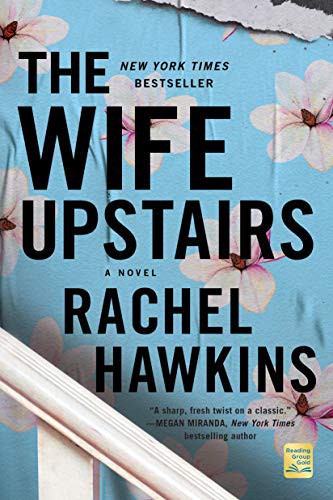
The Wife Upstairs is Rachel Hawkins's 2021 thriller that retells Jane Eyre in a wealthy Alabama suburb, where a broke dog walker falls for a widower whose wife vanished on a lake. For readers who like twisty domestic suspense.
More in Fiction →More in Philosophy and stoicism →More in Relationships →
New books, occasionally