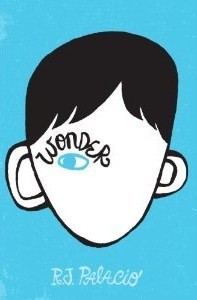
Wonder by R. J. Palacio is a novel about August Pullman, a ten-year-old boy with a facial difference who goes to school for the first time in fifth grade. For readers who want the plot, the narrators and the book's lesson on kindness.
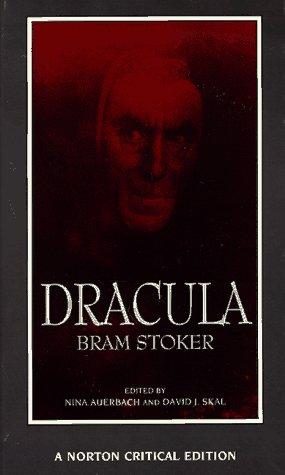
by Bram Stoker
1897 · 492 pages · Summary updated 24 October 2026
Bram Stoker's novel, told in diaries and letters, about a Transylvanian count who moves to England to spread his curse, and the small band who hunt him. For readers who want the plot in order and the ideas behind the vampire story.
Jonathan Harker, a young English solicitor, travels to Transylvania to help Count Dracula buy a house in London. He soon learns he is a prisoner and that his host is a vampire. Dracula sails to England, where he preys on Lucy Westenra, the friend of Jonathan's fiancée, Mina. The Dutch doctor Abraham Van Helsing recognizes the signs and gathers Lucy's suitors to fight. When the Count turns on Mina, the group must hunt him back to his castle before sunset. Bram Stoker tells the story in diaries, letters and newspaper clippings, setting old superstition against modern science.
Stoker builds the novel from diaries, letters, phonograph records, telegrams and press reports. No single person understands what is happening until Mina types the documents and puts them in order. The structure is the plot. Each fragment is incomplete, and only together do they show the pattern of the Count's movements. Stoker suggests that evil hides in the gaps between what different people know, and that sharing information is the first weapon against it.
The hunters use the newest tools of the 1890s: typewriters, phonographs, blood transfusions, trains, telegraphs and steam launches. Dr. Seward is a modern psychiatrist. Yet their enemy can be defeated only with garlic, crucifixes and stakes. Van Helsing combines both worlds, a scientist willing to believe in old superstitions. Stoker argues that modern people who dismiss the past are vulnerable, and that real knowledge includes what reason cannot explain.
Dracula studies English law, railway timetables and London maps before he moves to a city of millions, where he plans to create a new race of vampires. He arrives by ship, in boxes of his own soil. Critics read the novel as a story of Victorian fear of foreign invasion at the height of the British Empire: a reversal in which the colonizing power is itself colonized. The Count's threat is not just to individuals but to the nation.
Lucy receives three proposals in one day and wishes she could marry all three. After the Count's attack, she becomes openly sensual and calls to Arthur with a cruel voice. The three women in the castle are described with the same mix of desire and dread. Many critics read the novel as an expression of Victorian anxiety about female sexuality. The men's destruction of the undead Lucy, with a stake, restores the pure image of her that they prefer.
No single hero defeats Dracula. Van Helsing knows the lore, Seward the medicine, Arthur brings money and rank, Quincey brings weapons and courage, Jonathan has seen the castle, and Mina organizes the evidence. Their bond is sealed by blood: four of them gave theirs to Lucy. Stoker shows that loyalty and cooperation are the answer to a lone, ancient power. The group is also a picture of the Victorian ideal of manly duty.
Van Helsing explains the Count's powers and weaknesses. He is strong as twenty men, can become a wolf, bat or mist, and casts no reflection. He cannot enter a house unless invited, must rest in his native earth and is weak by day. Garlic, the crucifix and the sacred wafer repel him. Many of these rules became standard in later vampire stories. In the novel they make the fight a problem to solve, not just a terror to endure.
When the Count forces Mina to drink his blood, he creates a bond he means to use against her. Under Van Helsing's hypnosis, Mina turns it around and senses where he is: on a ship, then on the river. Her reports guide the chase to the castle. At sunset, Jonathan and Quincey kill the Count, and Mina's scar disappears. Stoker makes the victim the key to victory, and the vampire's power over her becomes the means of his defeat.
“Welcome to my house! Enter freely and of your own will!”
Dracula by Bram Stoker came out in 1897. Stoker was an Irish writer who worked as the business manager of the Lyceum Theatre in London. He spent years researching Eastern European folklore and took the name Dracula from Vlad III, a fifteenth-century prince of Wallachia, though the novel uses little of Vlad's history. Vampire stories existed before Stoker, but his book fixed the image of the vampire for the next century.
The novel has no single narrator. It is a collection of documents: the journals of Jonathan Harker and Mina Murray, the letters of Lucy Westenra, the phonograph diary of Dr. John Seward, telegrams, a ship's log and newspaper reports. Mina later arranges them in order. The method makes the story feel like evidence and lets the reader know more than any one character.
The main themes are modern science and technology against ancient evil, the fear of invasion from the East, sexuality and its control in Victorian England, and the power of a group working together.
Jonathan Harker, a newly qualified solicitor from Exeter, travels by train across Europe to arrange the sale of a London estate, Carfax Abbey, to a nobleman in Transylvania. At an inn in Bistritz, the local people are frightened when they learn where he is going. An old woman gives him a crucifix. A mysterious coach meets him at the Borgo Pass, and wolves follow it through the night.
At the castle, Count Dracula welcomes him warmly. He is a tall old man with a white mustache, pointed ears, sharp teeth, hairy palms and very cold hands. He speaks excellent English and questions Harker closely about London. He never eats with him and is never seen by day. When Harker cuts himself shaving, the Count lunges at his throat, then pulls back from the crucifix. Harker also notices that the Count has no reflection in his mirror.
Harker soon realizes that every door is locked and that he is a prisoner. From his window he sees the Count crawl head first down the castle wall like a lizard. One night he falls asleep in a forbidden room and three beautiful women with red lips approach him. As one bends to bite his neck, the Count bursts in and drives them off, saying that Harker belongs to him. He gives them a bag that holds a child.
Harker climbs down the wall into the Count's chamber and finds him lying in a box of earth in the chapel, looking younger, with blood on his lips. Gypsy workers load fifty such boxes onto carts for shipment to England. Harker understands that the Count will soon be among the millions of London. He decides to escape down the castle wall. His journal breaks off.
In England, Mina Murray, Harker's fiancée, is a schoolteacher who is learning shorthand and typing to help her future husband. Her close friend, Lucy Westenra, writes that she has received three proposals in one day: from Dr. John Seward, who runs a lunatic asylum; from Quincey Morris, a cheerful Texan; and from Arthur Holmwood, son of Lord Godalming. She accepts Arthur. The three men remain friends.
Dr. Seward keeps a diary on phonograph records. His most interesting patient is Renfield, a man who eats flies, then feeds the flies to spiders and the spiders to sparrows, and asks for a kitten. Seward calls him a zoophagous, or life-eating, maniac. Renfield grows excited and speaks of his Master coming.
Mina joins Lucy in the seaside town of Whitby. During a great storm, a Russian ship, the Demeter, drives into the harbor with its dead captain lashed to the wheel. A huge dog leaps ashore and vanishes. The ship's log tells how the crew disappeared one by one during the voyage, as a tall, thin stranger was seen on deck. The cargo is fifty boxes of earth.
Lucy begins to sleepwalk. One night Mina finds her on a bench in the churchyard on the cliff, with a dark figure with red eyes bending over her. Lucy has two small marks on her throat. She grows pale and weak. Mina receives news that Jonathan is in a hospital in Budapest with brain fever. She goes to him, and they marry there. Jonathan gives her his journal and asks her never to read it unless she must. She seals it.
Lucy returns to her home near London and grows worse. Arthur asks Seward to examine her. Seward finds nothing physically wrong except great loss of blood. He sends for his old teacher, Professor Abraham Van Helsing of Amsterdam, a doctor, scientist and student of the occult.
Van Helsing suspects the truth but says little. He gives Lucy blood transfusions from Arthur, Seward, himself and finally Quincey. He fills her room with garlic flowers and hangs a garland around her neck. Each time she improves, something undoes the protection. Her mother removes the garlic to let in fresh air. One night a wolf breaks the window, and the shock kills Lucy's mother. Lucy dies a few days later, with Arthur at her side. Van Helsing stops Arthur from kissing her in her last moments.
Soon the newspapers report that a woman in white, whom the children call the bloofer lady, has been luring children on Hampstead Heath and leaving small wounds on their necks. Van Helsing takes Seward to Lucy's tomb at night and shows him that her coffin is empty. Then he shows Arthur and Quincey. They watch Lucy return from the Heath with a child, her face cruel and voluptuous. She calls to Arthur to come to her. Van Helsing holds up a crucifix and she shrinks back into the tomb.
The next day, with Van Helsing's guidance, Arthur drives a wooden stake through Lucy's heart while the others read prayers. Her body writhes, then grows still, and her sweet face returns. They cut off her head and fill her mouth with garlic.
Jonathan has recovered. In London he sees Dracula, now looking young, in Piccadilly. Van Helsing reads Jonathan's journal and Mina's notes, and the group combines everything they know. Mina types all the documents and puts them in order, which helps reveal the pattern. The Count owns several houses in London and has hidden his boxes of earth in them. Carfax Abbey, which Harker sold to him, stands next to Seward's asylum.
Van Helsing explains what he knows. The vampire is strong as twenty men, can change into a wolf, a bat or mist, commands rats and wolves, and casts no reflection. He cannot enter a house unless invited, has power only at night and must rest in his native earth. Garlic, the crucifix and the sacred wafer repel him. A stake through the heart and cutting off the head destroy him.
The men decide to keep Mina out of the hunt to protect her. It is a mistake. Renfield, who earlier invited the Count in, now tries to stop him and is fatally injured. Before he dies, he tells the men that the Count has gone to Mina. They break into the Harkers' room and find Jonathan in a trance and the Count forcing Mina to drink blood from a cut in his chest. The Count escapes as mist. When Van Helsing touches Mina's forehead with a sacred wafer, it burns a red scar into her skin. She cries out that she is unclean.
The men find and sterilize the boxes of earth by placing a sacred wafer in each. They corner the Count in his house in Piccadilly. Jonathan slashes at him with a knife and cuts his coat, and gold coins spill out. The Count escapes through a window, mocking them. One box remains.
This section reveals the ending.
Mina realizes that her bond with the Count works both ways. Under hypnosis at sunrise and sunset, she can sense what he senses: lapping water, creaking ropes. He is on a ship, the Czarina Catherine, bound for the Black Sea in his last box. Mina asks the men to promise that if she turns into a vampire, they will kill her.
The group follows by train to Varna, in Bulgaria. The ship goes instead to Galatz, in Romania, and the Count's box is moved up the river toward his castle by Gypsy workers. Using Mina's hypnotic reports and Van Helsing's reasoning about the Count's criminal mind, the group splits up. Jonathan and Arthur follow by steam launch, Seward and Quincey on horseback, and Van Helsing takes Mina by carriage toward the castle.
Near the castle, Van Helsing draws a circle of crushed sacred wafer around Mina. In the night, the three vampire women come and call to her, and they cannot enter. In daylight, Van Helsing enters the castle and destroys all three with stake and knife as they sleep. He also seals Dracula's own tomb.
At sunset, the Gypsies race toward the castle with the box on a cart. The four men attack from all sides. Jonathan and Quincey reach the box and pry it open. As the sun sinks, Jonathan cuts the Count's throat with his large knife, and Quincey plunges his bowie knife into his heart. The Count crumbles to dust, and Mina sees a look of peace on his face. Quincey has been stabbed in the fight. As he dies, he points to Mina's forehead and sees that the red scar is gone.
In a note seven years later, Jonathan says that he and Mina have a son, born on the anniversary of Quincey's death and named after all the men in the group, but called Quincey. Arthur and Seward are happily married. Van Helsing says that one day the boy will know how brave his mother was.
Reviews in 1897 were mixed; some found it powerful and others merely horrible. Since the twentieth century, critics have read it in many ways: as a story of Victorian fears about sexuality, especially female sexuality, as Lucy and Mina's transformations suggest; as a fear of foreign invasion in an age of empire; and as a clash between modern technology and the irrational past. Some readers find the heroes' endless praise of Mina and the long middle section slow.
Read it if you want the original behind a century of vampire films, or if you are studying the novel and need its documents in order. It suits anyone who likes a slow, building dread and a team effort against evil.
12 cards
Question 1 of 5
What does Harker notice when he cuts himself shaving?
Mina's hypnotic link to the Count lets the group track his last box of earth back to Transylvania. At sunset near his castle, Jonathan cuts his throat and Quincey stabs his heart, and he crumbles to dust. Quincey dies of a wound. Mina's scar vanishes, and seven years later the Harkers have a son named Quincey.
Wonder by R. J. Palacio is a novel about August Pullman, a ten-year-old boy with a facial difference who goes to school for the first time in fifth grade. For readers who want the plot, the narrators and the book's lesson on kindness.
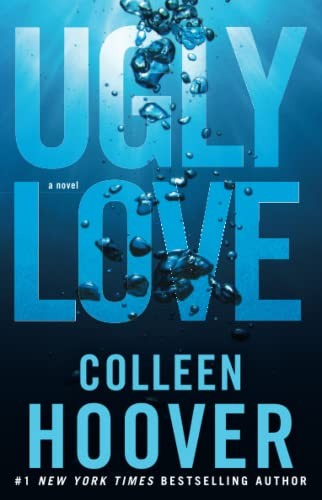
Ugly Love is Colleen Hoover's romance about Tate Collins, a nursing student who agrees to a no-strings affair with a guarded airline pilot, Miles Archer, whose past is a closed door. For readers who want a steamy, emotional love story with a heartbreaking backstory.
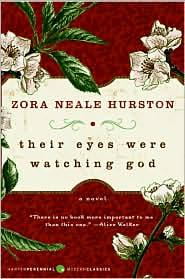
Zora Neale Hurston's novel about Janie Crawford, a Black woman in early 1900s Florida who moves through three marriages in search of real love and her own voice. For readers who want the plot, the themes and the meaning of the title.
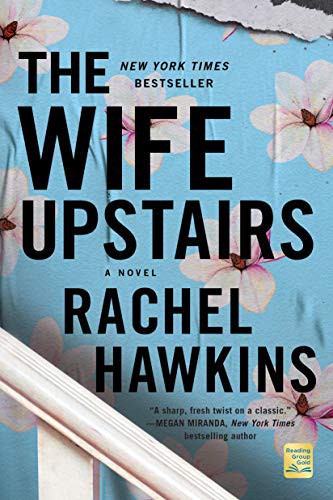
The Wife Upstairs is Rachel Hawkins's 2021 thriller that retells Jane Eyre in a wealthy Alabama suburb, where a broke dog walker falls for a widower whose wife vanished on a lake. For readers who like twisty domestic suspense.
New books, occasionally