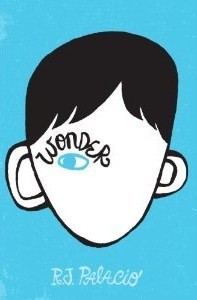
Wonder by R. J. Palacio is a novel about August Pullman, a ten-year-old boy with a facial difference who goes to school for the first time in fifth grade. For readers who want the plot, the narrators and the book's lesson on kindness.
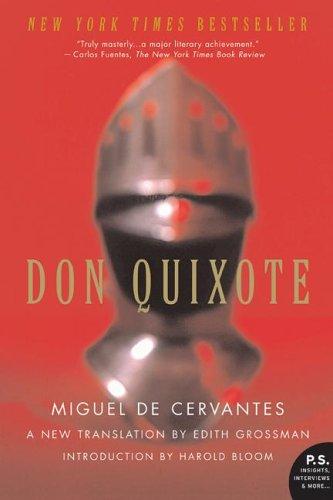
1605 · 992 pages · Summary updated 24 October 2026
Don Quixote is Miguel de Cervantes's comic novel about a Spanish gentleman who reads so many tales of chivalry that he becomes a knight errant, with the farmer Sancho Panza as his squire. For readers who want the plot of both parts and the ideas behind it.
An aging gentleman in La Mancha reads so many books of chivalry that he loses his mind. He renames himself Don Quixote, puts on old armor, chooses a peasant girl as his lady Dulcinea, and rides out to right wrongs. With his practical squire Sancho Panza, he attacks windmills he takes for giants and frees prisoners who then stone him. In Part Two, people have read Part One and stage tricks to fool him. Cervantes turns a parody of old romances into a story about imagination and reality, friendship, and how people make meaning out of the books they read.
Don Quixote does not see a windmill or a basin. He sees giants and the helmet of Mambrino, because his books have taught him what to look for. Cervantes makes this a joke and also a general point: everyone filters reality through stories they have absorbed. The priest and barber burn the books to cure him, but the habit of seeing life as a plot remains. Readers are invited to ask which stories shape their own vision.
Don Quixote dreams of justice and glory. Sancho Panza wants food, sleep and pay. Cervantes pairs them for the whole book, and each changes the other. Sancho starts to speak of honor and enchantment, a change critics call his quixotization. Don Quixote listens to Sancho's proverbs and practical sense. The novel argues that a life of pure ideals ends in beatings and a life of pure appetite has no purpose. The pair together is wiser than either.
Don Quixote stops a farmer beating the boy Andrés and rides on, sure he has done justice. The farmer beats the boy harder. Later Andrés meets him again and begs him never to help him. Don Quixote frees galley slaves, who stone him. Cervantes shows that wanting to do good is not the same as doing it. Without knowledge of the situation and follow-through, an act of rescue can leave its target worse off.
In Part Two, people have read Part One. The duke and duchess and many others know the knight before they meet him, and they treat him as entertainment. They stage tricks that feed his madness for their own amusement. Cervantes saw early what celebrity does: other people decide who you are and expect you to perform it. The cruelest moments of Part Two come from fans, not enemies.
The duke and duchess make Sancho governor of Barataria as a joke. They expect a fool. Instead he settles disputes with simple, shrewd judgments and passes sensible laws. When he resigns, he says he would rather be free than rule. Cervantes uses the episode to mock the idea that power needs noble birth or formal learning. A plain man with honesty and practical wisdom does the job well.
Cervantes pretends the book is a translation of an Arab historian's manuscript, interrupts the plot to discuss the source, and in Part Two lets the characters read about themselves and attack a fake sequel. These games make readers aware that they are reading a constructed story. Writers from Laurence Sterne to Jorge Luis Borges built on this. The idea is that fiction can question its own truth while still telling a good story.
At the end, Don Quixote wakes from a fever sane. He renounces chivalry, calls himself Alonso Quixano the Good, and dies. Sancho begs him to rise and become a shepherd with him. The return to reason is not a happy ending. Cervantes leaves readers to weigh whether the mad knight, with his courage and dreams, was more alive than the sensible man who dies in bed.
“Somewhere in La Mancha, in a place whose name I do not care to remember, a gentleman lived not long ago”
Don Quixote is a novel by Miguel de Cervantes, published in two parts in Spain: Part One in 1605 and Part Two in 1615, a year before the author's death. Its full Spanish title calls its hero the ingenious gentleman Don Quixote of La Mancha. Cervantes set out to mock the books of chivalry, long romances about knights, giants and enchanters that were popular in his day. He ended up writing a book that many critics call the first modern novel.
Cervantes had a hard life. He lost the use of his left hand at the naval battle of Lepanto in 1571, spent five years as a captive in Algiers, and later worked as a tax collector and went to prison over his accounts. That experience of war, captivity and poverty runs under the comedy.
The book plays games with its own authorship. The narrator claims that most of the story comes from an Arabic manuscript by a historian named Cide Hamete Benengeli, translated for him by a Moorish boy in Toledo. This frame lets Cervantes joke about truth, lies and who controls a story.
Common English translations include those by Edith Grossman (2003), John Rutherford and Tobias Smollett. The book is long, close to 1,000 pages in most editions, and made up of short chapters, many of which work as separate episodes.
In a village in La Mancha lives a gentleman of about fifty, named Alonso Quixano or something close to it. He owns a lance, an old shield, a thin horse and a greyhound. He reads books of chivalry day and night until his brain dries up and he believes every word.
He decides to become a knight errant. He cleans his great-grandfather's armor, makes a visor out of cardboard, and names his horse Rocinante. He takes the name Don Quixote de la Mancha. A knight needs a lady, so he chooses a farm girl he once admired from a distance, Aldonza Lorenzo, and renames her Dulcinea del Toboso. She never knows.
He rides out alone. He takes a roadside inn for a castle and the innkeeper for its lord, and insists on being dubbed a knight. The innkeeper plays along. On the road, Don Quixote stops a farmer beating his servant boy, Andrés, and makes him promise to pay the boy. As soon as the knight leaves, the farmer beats the boy harder. Later, Don Quixote challenges a group of merchants to swear that Dulcinea is the most beautiful woman alive. A muleteer beats him with his own lance. A neighbor carries him home on a donkey.
His friends, the priest and the barber, decide the books are to blame. With his niece and housekeeper, they burn most of his library and wall up the room. They tell him an enchanter carried it away.
Don Quixote recruits a poor, simple farmer, Sancho Panza, as his squire. He promises Sancho the governorship of an island. Sancho leaves his wife and children and follows on his donkey.
In the most famous episode, they see thirty or forty windmills on the plain. Don Quixote sees giants with long arms. Sancho tells him they are windmills. Don Quixote charges, his lance catches a sail, and he is thrown to the ground. He says an enchanter turned the giants into windmills to rob him of glory. The phrase "tilting at windmills" comes from this scene.
The adventures follow a pattern. Don Quixote sees a romance where there is ordinary life. He attacks two flocks of sheep, believing they are armies, and the shepherds knock out some of his teeth with stones. He takes a barber's brass basin for the golden helmet of Mambrino and wears it. He frees a chain of galley slaves being marched to the king's ships because no man should be forced. The prisoners, led by the thief Ginés de Pasamonte, stone him and steal Sancho's coat.
Sancho is the knight's opposite. He is hungry, practical and full of proverbs. He believes some of his master's promises and doubts others. Their long conversations on the road are the heart of the book.
In the Sierra Morena mountains, Don Quixote decides to do penance for Dulcinea, as the knight Amadís did in the romances. He sends Sancho with a letter to her. Sancho never delivers it.
Here Cervantes weaves in other stories. Cardenio, a young man driven mad by betrayal, lives wild in the mountains. Dorotea, a woman seduced and abandoned by the nobleman Don Fernando, is disguised as a boy. Their plots meet at an inn, where the lovers are reunited. The priest reads aloud a novella, The Man Who Was Recklessly Curious, about a husband who tests his wife's faithfulness and destroys his marriage. A former captive tells of his escape from Algiers, close to Cervantes's own experience.
To get Don Quixote home, the priest and barber disguise themselves and persuade him that he is enchanted. They carry him back to his village in a cage on an ox cart. Part One ends with him in bed, and the narrator hints at a third sally.
Part Two came out ten years later. In the meantime, another writer, using the name Alonso Fernández de Avellaneda, published a fake sequel in 1614. Cervantes answers it inside his own book: his characters read the fake, mock it, and change their route to prove it false.
In Part Two, many people have read Part One. A student, Sansón Carrasco, tells Don Quixote and Sancho that they are characters in a famous book. Strangers recognize them. This makes them both victims and celebrities.
Sancho, sent to find Dulcinea in El Toboso, cannot. He points to three peasant girls on donkeys and says one is Dulcinea. Don Quixote sees only a coarse farm girl, and concludes that enchanters have turned his lady ugly. For the rest of the book he seeks a way to break the spell.
Carrasco, disguised as the Knight of the Mirrors, challenges Don Quixote, hoping to defeat him and send him home. Don Quixote wins by luck. He faces a caged lion, which turns its back on him. He descends into the Cave of Montesinos and comes back with a dream of enchanted knights, which even he half doubts. He wrecks a puppet show, run by Ginés de Pasamonte in disguise, to save the puppet heroine.
A rich duke and duchess, who have read Part One, invite the pair to their castle. They stage elaborate jokes: a wooden horse, Clavileño, that Don Quixote and Sancho ride blindfolded while servants blow air at them and pretend they are flying, and a plan to free Dulcinea that requires Sancho to whip himself 3,300 times.
As the biggest joke, they give Sancho the governorship of an "island," a town called Barataria. Sancho surprises them. He judges cases with sense and fairness and makes useful laws. After ten days, the jokers stage a night attack, and Sancho, bruised, gives up the post. He says he would rather be free than govern.
This section reveals the ending.
Don Quixote and Sancho travel to Barcelona, where people treat them as celebrities and play more tricks. On the beach, a knight in shining armor, the Knight of the White Moon, challenges Don Quixote. It is Sansón Carrasco again. This time he wins. Lying on the sand, Don Quixote refuses to deny that Dulcinea is the most beautiful woman alive and asks the victor to kill him. Carrasco instead orders him to go home and give up arms for a year.
On the way home, Don Quixote talks about becoming a shepherd, another figure from books. Sancho finishes his lashes, mostly on trees, so Dulcinea can be disenchanted. They reach the village.
Don Quixote falls into a fever and sleeps for six hours. When he wakes, he is sane. He says he is no longer Don Quixote but Alonso Quixano the Good. He calls the books of chivalry foolish and asks forgiveness for leading Sancho into madness. He makes his will and leaves money to Sancho and his niece, on the condition that she not marry a man who reads books of chivalry.
Sancho weeps and begs him not to die. He urges him to get up and go out to the fields as shepherds, and perhaps they will find Dulcinea. Don Quixote dies in his bed. Cide Hamete hangs up his pen and declares that Don Quixote was born for him alone, so no other writer may revive him.
Readers have argued for four centuries about whether the book is a simple comedy or a tragedy. Early readers laughed at the knight. Romantic writers in the 19th century saw him as a noble idealist in a cruel world. Vladimir Nabokov, in his lectures, was struck by the cruelty of the jokes played on him and the beatings he takes. Some readers find the inserted stories in Part One a distraction. Others see them as part of the book's experiment with genres.
Read it if you want the source of a character everyone knows, and a comic novel that is also about imagination, friendship and the stories people live by. It suits patient readers who enjoy episodes, conversation and jokes about books, and students who need both parts in order.
12 cards
Question 1 of 5
What drives Alonso Quixano mad?
Sansón Carrasco, disguised as the Knight of the White Moon, defeats Don Quixote on the beach at Barcelona and orders him home for a year. Back in his village, he falls ill, wakes sane, renounces chivalry and calls himself Alonso Quixano the Good. He makes his will and dies, while Sancho begs him to get up and go out as shepherds.
Wonder by R. J. Palacio is a novel about August Pullman, a ten-year-old boy with a facial difference who goes to school for the first time in fifth grade. For readers who want the plot, the narrators and the book's lesson on kindness.

Ugly Love is Colleen Hoover's romance about Tate Collins, a nursing student who agrees to a no-strings affair with a guarded airline pilot, Miles Archer, whose past is a closed door. For readers who want a steamy, emotional love story with a heartbreaking backstory.
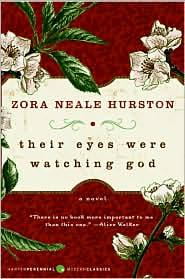
Zora Neale Hurston's novel about Janie Crawford, a Black woman in early 1900s Florida who moves through three marriages in search of real love and her own voice. For readers who want the plot, the themes and the meaning of the title.
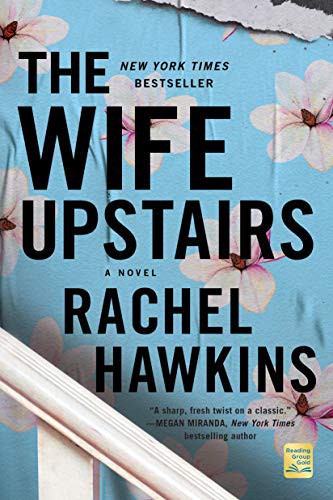
The Wife Upstairs is Rachel Hawkins's 2021 thriller that retells Jane Eyre in a wealthy Alabama suburb, where a broke dog walker falls for a widower whose wife vanished on a lake. For readers who like twisty domestic suspense.
New books, occasionally