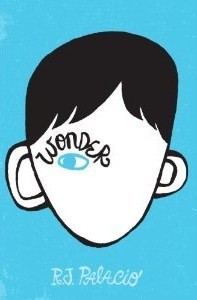
Wonder by R. J. Palacio is a novel about August Pullman, a ten-year-old boy with a facial difference who goes to school for the first time in fifth grade. For readers who want the plot, the narrators and the book's lesson on kindness.
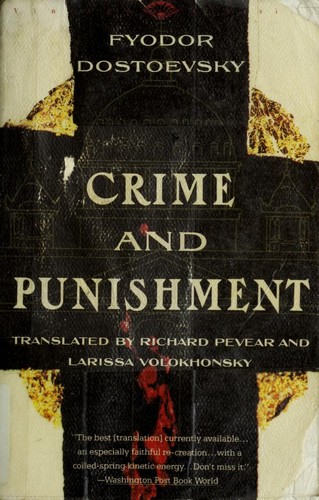
1866 · 564 pages · Summary updated 24 October 2026
Crime and Punishment is Fyodor Dostoevsky's novel about Raskolnikov, a poor student in St. Petersburg who kills a pawnbroker to prove a theory, and the guilt that breaks him. For readers who want the plot part by part and the ideas behind it.
Rodion Raskolnikov, a former law student living in a tiny room in St. Petersburg, believes that extraordinary people have the right to break moral law for a greater good. To test the idea, he kills an old pawnbroker with an axe, and then her sister, who walks in. He takes almost nothing. The rest of the novel is his punishment, which comes from inside him before it comes from the law: fever, panic, isolation and a cat-and-mouse game with the investigator Porfiry Petrovich. Through Sonya Marmeladova, a young woman forced into prostitution to feed her family, he faces the choice between his theory and confession.
Raskolnikov's article argues that extraordinary people, like Napoleon, may step over moral law when their idea requires it. He kills the pawnbroker partly to find out whether he belongs to that class. Dostoevsky shows how a clever abstraction, repeated alone in a small room, can turn into permission. The danger is not stupidity but reasoning cut off from other people. The novel takes the idea seriously enough to let it act, then shows what it costs.
No one arrests Raskolnikov for most of the book. Yet he faints at the police station, falls into fever, returns to the scene, and pushes away the people who love him. The title's punishment is mostly psychological. Dostoevsky argues that a person who breaks the moral law also breaks his ties to everyone else, and that this isolation is harder to bear than prison. The law catches up only after his conscience has done its work.
Porfiry Petrovich has no evidence against Raskolnikov. He has read his article, studied his moods, and understands that a guilty man reveals himself under pressure. In three long talks he jokes, rambles, hints, and lets silence do the work. He even says he could arrest Raskolnikov but prefers that he confess. The method shows Dostoevsky's view that crime is a matter of psychology first: understand the person and the facts follow.
Sonya Marmeladova sells her body to keep her stepmother and half siblings alive. She is the novel's moral center, not because she is pure, but because she sacrifices herself for others and still believes in grace. She reads Raskolnikov the story of Lazarus and later follows him to Siberia. Dostoevsky contrasts his self-made logic with her humble faith, and suggests that renewal comes through accepting suffering and love, not through reasoning.
Svidrigailov is rich, polite and free of morals. He seems to do whatever he wants and feels nothing. He is the kind of man Raskolnikov's theory describes, and Raskolnikov is drawn to and disgusted by him. Dostoevsky uses him as a double: a warning of where the hero is headed if he keeps going. The emptiness inside Svidrigailov shows that stepping over the line does not make a man great. It makes him alone.
Nearly every character is short of money. Marmeladov drinks his family into ruin. Sonya takes the yellow ticket. Dunya agrees to marry Luzhin to help her brother. Raskolnikov tells himself the stolen money could save a hundred lives. Dostoevsky does not excuse the murder with poverty, but he shows how a hot, crowded, broke city narrows people's options and makes every act of kindness, like a few coins on a windowsill, matter.
Raskolnikov confesses in the end, first to Sonya and then to the police. Even in Siberia he regrets only his weakness, not the crime. Real change comes later, when he falls at Sonya's feet by the river and feels love for her. Dostoevsky ends not with justice but with a beginning: the narrator calls it the start of a new story. Admitting the truth does not fix a person, but it makes repair possible.
Crime and Punishment is a novel by Fyodor Dostoevsky, first published in monthly parts in the Russian Messenger in 1866. It has six parts and an epilogue. Dostoevsky wrote it in debt and under deadline, a few years after his own return from prison camp in Siberia. The book is not a mystery. We see the murder in Part One. The question is what the murder does to the man who commits it.
The hero is Rodion Romanovich Raskolnikov, 23, a former law student who has dropped out for lack of money. He lives in a room so small it looks like a cupboard, owes rent, and barely eats. His mother and his sister, Dunya, send him what little they have. He has published an article that argues that history is moved by extraordinary people, like Napoleon, who have the right to step over moral law when their idea demands it. Ordinary people must obey. Raskolnikov wants to know which kind he is.
St. Petersburg is the novel's second main character. Dostoevsky shows the hot summer streets, the taverns, the stairwells and the canals of the poor districts. Almost everyone is short of money, drunk, sick or desperate. The city makes the crime feel both possible and pointless. Dostoevsky tells the story in the third person but stays close to Raskolnikov's mind, so readers share his fevers, doubts and sudden reversals from page to page.
Raskolnikov visits Alyona Ivanovna, an old pawnbroker who lends at high interest and treats her gentle half sister, Lizaveta, like a servant. He has decided that killing her would be a good deed: her money could save a hundred lives, and no one would miss her.
In a tavern he meets Semyon Marmeladov, a drunk former clerk who tells him his family's story. His wife, Katerina Ivanovna, is sick with consumption. His daughter from his first marriage, Sonya, has taken a yellow ticket, the license for prostitution, so the younger children can eat. Raskolnikov takes Marmeladov home and leaves some coins on the windowsill.
Then a letter from his mother arrives. Dunya is engaged to Pyotr Petrovich Luzhin, a rich, cold lawyer, and Raskolnikov sees that she is selling herself to help him, as Sonya does for her family. He dreams of peasants beating a horse to death and wakes in horror. He almost gives up. Then he overhears that the pawnbroker will be alone the next evening.
He goes with an axe hidden in a loop sewn inside his coat. He kills Alyona. Lizaveta comes back early, and he kills her too. He fumbles the robbery, hides under the stairs while visitors knock, and escapes by luck. He hides the purse and a few trinkets under a stone without counting the money.
The next day the police summon Raskolnikov about his unpaid rent. While there, he hears officers talking about the murders and faints. For days he lies in a fever, nursed by his loyal friend Razumikhin. He goes back to the crime scene, rings the bell, and asks about the blood.
He sees Marmeladov run over by a carriage and helps carry him home, where he dies in front of his family. Raskolnikov gives Katerina Ivanovna all the money his mother sent him for the funeral. For a moment he feels alive again. He meets Sonya for the first time.
His mother and Dunya arrive in the city. Raskolnikov openly despises Luzhin. Dunya later breaks the engagement when Luzhin shows his contempt for her family. Razumikhin falls in love with Dunya.
Raskolnikov then meets Porfiry Petrovich, the investigating magistrate. Porfiry has read the article on extraordinary people and draws Raskolnikov into discussing it. He asks, smiling, how one can tell the extraordinary from the ordinary, and whether the author himself might have felt he was one. Raskolnikov understands that Porfiry suspects him but has no proof. A tradesman meets him in the street and calls him a murderer, which sends him into new panic.
Arkady Svidrigailov, Dunya's former employer, comes to St. Petersburg. He once pursued Dunya, and rumor says he caused the death of his wife and a servant. He is calm, cynical and openly free of morals: a picture of what Raskolnikov's theory looks like when someone lives by it without guilt.
Raskolnikov visits Sonya in her rented room. He asks her how she can believe in God when her life is so cruel. She reads him the Gospel story of Lazarus, raised from the dead, in a trembling voice. The scene becomes the center of the book. The murderer and the prostitute sit together over the story of a resurrection, and Raskolnikov promises to tell her who killed Lizaveta, who was Sonya's friend.
His second meeting with Porfiry goes worse. Porfiry talks in circles, hints that he has a surprise in the next room, and pushes Raskolnikov close to breaking. Then a house painter named Nikolai bursts in and confesses to the murders. Raskolnikov leaves free, for now.
At the funeral meal for Marmeladov, Luzhin accuses Sonya of stealing a 100 ruble note. He has slipped it into her pocket himself to discredit Raskolnikov. Lebezyatnikov, the young man Luzhin lodges with, saw him do it and exposes him. Katerina Ivanovna, shamed and evicted, takes her children into the streets to beg, collapses and dies.
Raskolnikov goes to Sonya and confesses. He cannot give one clear reason. He tries money, then the wish to help his mother, then the theory: he wanted to know if he was a louse or a man, if he could step over. Sonya tells him to go to a crossroads, kiss the earth he has defiled, and tell everyone. She gives him a cypress cross. Svidrigailov, who rents the room next door, hears everything through the wall.
This section reveals the ending.
Porfiry visits Raskolnikov in his room and tells him plainly that he knows Nikolai is innocent and that Raskolnikov is the murderer. He has no proof, but he urges Raskolnikov to confess. A confession will reduce the sentence, Porfiry says, and suffering may give him a new life.
Svidrigailov uses what he overheard. He lures Dunya to his room, locks the door and threatens to expose her brother unless she gives in to him. She has a revolver and shoots at him. The first shot grazes his head, and the second misfires. He sees that she will never love him and lets her go. That night he gives money to Sonya and to his young fiancée's family, wanders the city in the rain and shoots himself in the head in front of a watchman.
Raskolnikov says goodbye to his mother, who senses something terrible, and to Dunya. He goes to the Haymarket, kneels and kisses the ground as Sonya told him. People laugh at him as a drunk. He goes to the police station, almost leaves, sees Sonya waiting outside, and turns back. He confesses: it was I who killed the old woman and her sister with an axe, and robbed them.
The epilogue takes place in a prison camp in Siberia. Because he confessed, and because witnesses describe his past acts of charity and his illness, he receives eight years of hard labor instead of a longer term. His mother falls ill and dies, never told the full truth. Dunya marries Razumikhin. Sonya follows Raskolnikov to Siberia and visits him. The other prisoners love her and hate him.
For more than a year he feels no repentance. He regrets only that he was too weak to carry the crime through. Then he falls ill and dreams of a plague that makes every person certain of their own truth, until humanity destroys itself. One morning by the river, Sonya sits with him, and he falls at her feet and weeps. He understands that he loves her. Seven years remain. The narrator says this is the start of a new story, of a man's slow renewal, and ends there.
Many readers find the epilogue too quick and too religious after 500 pages of psychological detail. They argue that Raskolnikov's turn is told, not shown. Others defend it as the point of the whole design: the Lazarus scene promises a resurrection, and the epilogue begins it. Sonya also draws criticism as an idealized, passive figure who exists to save the hero. The novel's long monologues and feverish scenes can feel melodramatic to modern readers. Translations differ a great deal; Richard Pevear and Larissa Volokhonsky's version (1992) is common in classrooms, and older ones by Constance Garnett and David McDuff are still read.
Read it if you want a psychological novel that treats a big idea, that some people are above morality, as a test a person can fail. It suits readers who like long conversations, moral argument and a city drawn in close detail, and students who need the plot part by part.
12 cards
Question 1 of 5
What weapon does Raskolnikov use for the murders?
Raskolnikov confesses to the police after Sonya urges him to. Svidrigailov kills himself. Raskolnikov is sentenced to eight years of hard labor in Siberia, and Sonya follows him there. His mother dies and Dunya marries Razumikhin. After more than a year without remorse, Raskolnikov weeps at Sonya's feet, and his slow renewal begins.
Wonder by R. J. Palacio is a novel about August Pullman, a ten-year-old boy with a facial difference who goes to school for the first time in fifth grade. For readers who want the plot, the narrators and the book's lesson on kindness.
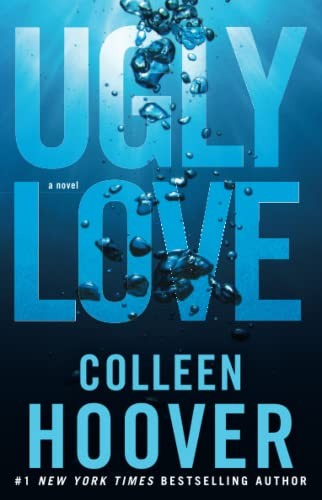
Ugly Love is Colleen Hoover's romance about Tate Collins, a nursing student who agrees to a no-strings affair with a guarded airline pilot, Miles Archer, whose past is a closed door. For readers who want a steamy, emotional love story with a heartbreaking backstory.
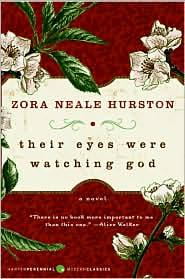
Zora Neale Hurston's novel about Janie Crawford, a Black woman in early 1900s Florida who moves through three marriages in search of real love and her own voice. For readers who want the plot, the themes and the meaning of the title.
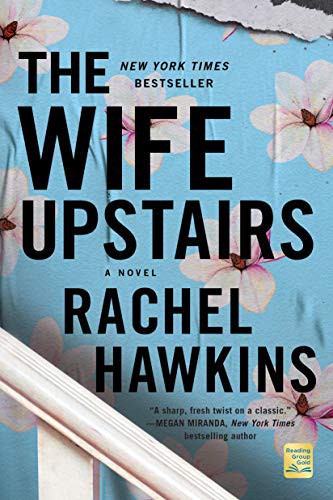
The Wife Upstairs is Rachel Hawkins's 2021 thriller that retells Jane Eyre in a wealthy Alabama suburb, where a broke dog walker falls for a widower whose wife vanished on a lake. For readers who like twisty domestic suspense.
More in Fiction →More in Philosophy and stoicism →More in Psychology →
New books, occasionally