
Wonder by R. J. Palacio is a novel about August Pullman, a ten-year-old boy with a facial difference who goes to school for the first time in fifth grade. For readers who want the plot, the narrators and the book's lesson on kindness.
1961 · 544 pages · Summary updated 24 October 2026
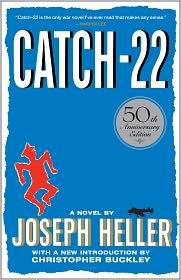
Joseph Heller's comic novel about Yossarian, an American bombardier in World War II trying to stay alive while his colonel keeps raising the number of missions. For readers who want the plot untangled and the meaning of Catch-22 explained.
Captain John Yossarian is a bombardier on Pianosa, a small island off Italy, in 1944. He believes everyone is trying to kill him: the enemy guns, and his own commander, Colonel Cathcart, who keeps raising the number of missions the men must fly before going home. Yossarian tries every trick to be grounded, and each one runs into Catch-22: a man who asks to be excused from combat because he is crazy shows he is sane, so he must fly. Heller's argument is that institutions run on circular logic that protects themselves, not the people inside them, and that the sane response may be to refuse.
Doc Daneeka explains it to Yossarian. A man who wants to be grounded for insanity only has to ask. But asking to avoid danger proves he is sane, so he must fly. Heller builds a trap that looks like a rule but cannot be satisfied. Later, an old woman in Rome tells Yossarian that Catch-22 means they can do anything to you that you cannot stop them from doing. The idea now names any no-win situation built into a system.
Colonel Cathcart raises the number of missions because he wants to be a general. The generals fight over who controls the bombers. A mail clerk, ex-PFC Wintergreen, has real power because he chooses which orders to pass on. Heller shows a military whose goals have shifted from winning the war to keeping the people at the top comfortable. The example is the Ferrara mission: the colonels give Yossarian a medal because punishing him would look bad.
Milo Minderbinder starts as a mess officer and becomes a trader who deals with both sides. He sells supplies to the Germans, corners the Egyptian cotton market, and finally takes a contract to bomb his own airfield. He is forgiven because the books show a profit, and every man has a share. Heller uses Milo to satirize a world in which business logic is the highest good, even when the business is killing your neighbors.
Yossarian is called crazy because he wants to stay alive. He walks around naked, sits in a tree, and moves the bomb line on a map. Yet his view that strangers shooting at him are trying to kill him is the plainest truth in the book. The colonels, who send men to die for their own careers, are treated as sane. Heller turns the usual categories around: in an insane system, the rational response looks like madness.
The novel is full of dialogue that goes in circles. Major Major will see people in his office only when he is not there. Clevinger is found guilty because he is accused. Heller shows how official language can be used to hide meaning rather than share it. The repetition in the book's structure does the same thing: events are mentioned many times before they are explained. The reader feels the frustration of a man who cannot get a straight answer.
Doc Daneeka puts his name on McWatt's flight log to collect flight pay without flying. When McWatt crashes, the records say Doc Daneeka was on board, so he is declared dead. His wife receives his insurance and moves away, and the men avoid him as a ghost. Heller's example is funny and chilling: once the paperwork decides something, reality must fit it. The man who exists only on paper outranks the one who stands on the ground.
In the last chapters, Yossarian finally remembers the full death of Snowden over Avignon. He treated one wound and missed the fatal one. Snowden's secret is that a man is only matter, and that when the spirit goes, what is left is garbage. This explains Yossarian's whole stance: life is all a person has, so no one has the right to spend it for a colonel's career. His desertion to Sweden is the book's answer.
“It was love at first sight. The first time Yossarian saw the chaplain he fell madly in love with him.”
“That's some catch, that Catch-22.”
Catch-22 by Joseph Heller was published in 1961. Heller had flown sixty combat missions as a bombardier in a B-25 from Corsica in World War II. He started the book in the early 1950s. Reviews were mixed at first, but the paperback became a huge seller in the 1960s, especially among young readers facing the draft for Vietnam. Its title entered the language: a catch-22 is a no-win rule whose conditions cancel each other out.
The novel is set on Pianosa, a small island off the west coast of Italy, where an American bomber squadron flies missions over Italy and France in 1944. It is not told in order. Its forty-two chapters are mostly named after characters, and they loop back and forth in time. The same events, especially the death of a young gunner named Snowden, are mentioned again and again, each time with a little more detail. The tone is slapstick and wordplay, but the jokes get darker as the book goes on.
The hero is Captain John Yossarian, a bombardier. His philosophy is simple. Strangers are shooting at him, so they are trying to kill him. When his friend Clevinger says no one is trying to kill him personally, Yossarian asks what difference that makes.
The novel opens with Yossarian in the hospital with a pain in his liver that is not quite jaundice. The doctors cannot find anything wrong, so they keep him there, and he is happy. His job in the ward is to censor enlisted men's letters. He gets bored and blacks out random words, then all the words except articles, and signs some of them Washington Irving. This causes trouble later, when investigators hunt for the man named Washington Irving. A soldier in white, wrapped head to foot in bandages, lies in the ward with jars feeding him and draining him. No one knows if anyone is inside.
The men in Yossarian's squadron can go home after a fixed number of missions. Colonel Cathcart, the group commander, wants to become a general and get his picture in the Saturday Evening Post. Each time the men approach the number, he raises it. Yossarian is always a few missions short.
Yossarian asks the squadron doctor, Doc Daneeka, to ground him for insanity. Doc Daneeka explains Catch-22. Anyone who flies more missions is crazy and can be grounded. All he has to do is ask. But anyone who asks to be grounded to avoid danger is showing a rational mind, so he is sane and must fly. Yossarian admires the logic. He says it is some catch, and Doc Daneeka agrees that it is the best there is.
Later in the book, Catch-22 grows into something larger. It becomes the rule that says the authorities can do anything they want to you, and you cannot stop them. An old woman in Rome tells Yossarian that the soldiers who cleared out a brothel cited Catch-22, and when he asks to see it, she says the law says they do not have to show it.
Much of the book is a gallery of characters, each living inside some private absurdity.
Yossarian goes to great lengths to avoid flying. Before a mission to Bologna, which everyone expects to be a slaughter, he puts soap into the squadron's food to give the men diarrhea and moves the bomb line on the map so that the generals think Bologna has already been captured. The mission is delayed. When it finally goes, there is almost no flak.
On a mission to Ferrara, Yossarian leads his flight over the target a second time to hit a bridge. The plane of a young pilot named Kraft is shot down, and everyone aboard dies. The colonels are embarrassed and do not know whether to punish Yossarian or decorate him. They decide to give him a medal, because it looks better.
The mission that haunts Yossarian is over Avignon. On that flight, a young gunner named Snowden is hit. Yossarian crawls back to him and treats a wound in his thigh. Snowden keeps saying he is cold. The book returns to this moment again and again, and each time it stops before the full truth.
After Avignon, Yossarian stops wearing clothes. He stands naked in formation to receive a medal from General Dreedle. He sits naked in a tree during Snowden's funeral, where Milo climbs up to offer him chocolate-covered cotton.
The colonels and generals are as absurd as the men. General Dreedle and General Peckem wage a private war over who controls the bombers, and ex-Private First Class Wintergreen, a mail clerk, holds real power because he decides which orders to forward. Colonel Cathcart keeps a list of ideas, such as having the chaplain say prayers before missions, to impress his superiors.
The deaths pile up and grow less funny. Milo, for a fee, contracts with the Germans to bomb his own squadron's airfield, and he is let off because he made a large profit. McWatt, a pilot who likes to buzz the beach, flies too low one day and his propeller kills a young pilot, Kid Sampson, who is standing on a raft. Horrified, McWatt flies his plane into a mountain. Doc Daneeka, who had his name put on McWatt's flight log to collect flight pay, is officially declared dead, though he is standing on the ground watching. His wife collects his insurance and moves away. He walks around the base, and everyone treats him as a ghost.
Orr ditches his plane in the sea again and disappears. Dunbar is "disappeared" by the authorities.
This section reveals the ending.
Nately has flown his missions but volunteers to keep flying so that he can stay in Europe near the woman he loves. Two planes collide in midair on a mission to La Spezia, and Nately is killed. Yossarian refuses to fly any more missions. He walks around the base backward, with a gun on his hip, so that no one can come up behind him.
He goes to Rome without permission to tell Nately's girlfriend that Nately is dead. She blames him and tries to stab him, and keeps trying for the rest of the book. Yossarian looks for her little sister, who has been thrown out on the street when the military police cleared the apartment. He walks through a night of horrors: a man beating a dog, a soldier having a seizure, police dragging away a man. At the officers' apartment, he finds that Aarfy has raped a maid named Michaela and thrown her out of the window. The military police arrive, apologize to Aarfy, and arrest Yossarian for being in Rome without a pass.
Colonels Cathcart and Korn make him an offer. They will send him home as a hero. In return, he must like them, praise them, and never say anything bad about them. Yossarian accepts. As he leaves the office, Nately's girlfriend, waiting in disguise, stabs him.
In the hospital, Yossarian finally remembers Avignon in full. After he bandaged Snowden's thigh, he opened Snowden's flak suit and found a much worse wound that he could do nothing about. Snowden died in his arms. The secret Snowden showed him is that a man is only matter, and that without spirit he is garbage. This is why Yossarian refuses to die for the colonels.
He decides the deal would betray the men who still have to fly. Then the chaplain runs in with news. Orr has turned up in Sweden. He did not die in the sea. He practiced crashing on every mission, so that he could row away in a life raft. Yossarian finally understands Orr. He decides to desert and go to Sweden himself. Major Danby asks how he will get there. Yossarian says he will get there somehow. As he goes out the door, Nately's girlfriend jumps out with a knife. It misses him, and he runs.
Early reviewers split. Some called the novel brilliant. Others called it formless, repetitive and too long. Some veterans objected that it mocked the war that defeated fascism. Heller answered that the book was less about World War II than about the Cold War and the corporate and military bureaucracy of the 1950s. Later critics have defended the repetition as the point: the circular structure mirrors the circular logic of Catch-22.
Read it if you want to understand where the phrase catch-22 comes from, or if you want a funny and furious novel about bureaucracy, war and staying alive. It is long and loops back on itself; the payoff is in the last chapters.
12 cards
Question 1 of 5
Why can Yossarian not be grounded for insanity?
After Nately's death, Yossarian refuses to fly. The colonels offer to send him home as a hero if he praises them, and he agrees, then backs out. He finally remembers Snowden's death in full. When the chaplain tells him Orr has rowed to Sweden, Yossarian decides to desert and runs for it, dodging Nately's girlfriend's knife.
Wonder by R. J. Palacio is a novel about August Pullman, a ten-year-old boy with a facial difference who goes to school for the first time in fifth grade. For readers who want the plot, the narrators and the book's lesson on kindness.

Ugly Love is Colleen Hoover's romance about Tate Collins, a nursing student who agrees to a no-strings affair with a guarded airline pilot, Miles Archer, whose past is a closed door. For readers who want a steamy, emotional love story with a heartbreaking backstory.

Zora Neale Hurston's novel about Janie Crawford, a Black woman in early 1900s Florida who moves through three marriages in search of real love and her own voice. For readers who want the plot, the themes and the meaning of the title.

The Wife Upstairs is Rachel Hawkins's 2021 thriller that retells Jane Eyre in a wealthy Alabama suburb, where a broke dog walker falls for a widower whose wife vanished on a lake. For readers who like twisty domestic suspense.
New books, occasionally