
Emily Brontë's 1847 novel about Heathcliff, Catherine Earnshaw and two families on the Yorkshire moors, told across two generations. For readers who want the plot, the characters and the ideas behind a famous story of love and revenge.
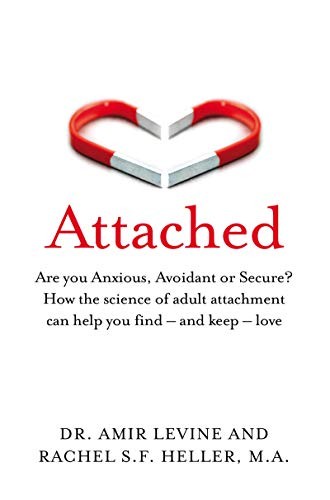
by Amir Levine and Rachel Heller
2010 · 304 pages · Summary updated 24 October 2026
Amir Levine and Rachel Heller apply attachment theory to adult romance: anxious, avoidant and secure styles, and how they pair. For anyone who keeps repeating the same relationship pattern and wants to know why.
Levine, a psychiatrist, and Heller, a psychologist, argue that adults bond the way infants do. Everyone has an attachment style. Anxious people crave closeness and read small signals as threats. Avoidant people equate intimacy with loss of independence and keep partners at a distance. Secure people are comfortable with closeness and respond to a partner's needs without drama. Needing a partner is not weakness: the dependency paradox says that a reliable base makes people more independent. The worst pairing is the anxious-avoidant trap, where one chases and the other retreats. The fix is to know your style, state your needs plainly with effective communication, and choose partners who can meet them.
John Bowlby argued that infants have an attachment system that keeps caregivers close. Mary Ainsworth's Strange Situation sorted toddlers into secure, anxious and avoidant by how they reacted when their mother left and returned. In 1987, Hazan and Shaver showed that adults in romantic relationships fall into the same three groups in similar proportions. Levine and Heller build on this. Your style shapes whom you choose, what you read into a late text and how you argue. Knowing it turns a confusing pattern into something you can name.
The authors reject the idea that needing a partner is weakness. Brooke Feeney's research found that people whose partners were available and responsive pursued their own goals more confidently and independently. A secure base makes people braver, not needier. The authors call this the dependency paradox: the more reliably your attachment needs are met, the more independent you can be. The cultural ideal of total self-sufficiency in love gets this backward. Someone who can count on a partner takes more risks at work and elsewhere, not fewer.
About one in five adults is anxious. Their attachment system fires easily: an unanswered call sets off worry that does not settle until contact returns. Activating strategies are the thoughts that keep the system on, such as replaying conversations and imagining the worst. When those fail, protest behavior takes over: excessive calling, withdrawing to provoke a response, keeping score, threats to leave, hostility or attempts to spark jealousy. The authors stress that this is not a flaw. It is the system trying to restore closeness, and the fix is to state the need plainly instead.
About one in four adults is avoidant. They equate intimacy with loss of independence and use deactivating strategies to keep distance: staying for years while saying they are not ready to commit, fixating on small flaws, flirting, keeping secrets, withholding "I love you," and pulling back after a close moment. The phantom ex, a former partner remembered as perfect, serves to keep the current partner at a distance. Avoidant people see themselves as self-reliant and their partners as needy, and the authors note that this independence often leaves them lonely later in life.
Anxious and avoidant people attract each other and then live at the edge of each other's tolerance. The anxious partner pushes for closeness, the avoidant partner pulls away, the pulling away activates the anxious partner further, and the escalation confirms the avoidant partner's belief that intimacy suffocates. Avoidant people feel most independent next to an anxious partner, and anxious people mistake activation for passion. Every fight about a weekend plan is really a fight about closeness. The way out is to name the pattern or to leave for a secure partner.
The authors explain why anxious daters meet so many avoidant partners. Secure people pair off and stay paired, so they leave the pool. Avoidant people end relationships more often and return to it. So the people available at any moment include more avoidant partners than their share of the population would suggest. The authors tell anxious readers to date several people at once early on, so that one person's signals do not take over the attachment system, and to give secure people a chance even when their calm feels like a lack of spark.
The book's main practice is stating needs and feelings directly, early and without blame. The five principles: be honest about what you feel, focus on your needs rather than the partner's faults, be specific, do not blame, and be assertive without apology. The response is the test. A secure partner shows concern and tries to meet the need. An avoidant partner dismisses it, calls you needy or changes the subject. Asking a new partner for regular contact and watching what happens tells you more in a week than months of reading signals.
The authors cite research that about one person in four changes attachment style over four years, usually because of a very good or very bad relationship. Secure partners have a buffering effect: they make anxious and avoidant partners more secure over time. The five secure principles for conflict (show concern for the other's well-being, stay on the problem, do not generalize, stay engaged, and state feelings and needs) can be practiced by anyone. Security is a set of behaviors as much as a trait, and behaving securely builds it.
Amir Levine is a psychiatrist and neuroscientist at Columbia University. Rachel Heller is a psychologist. They wrote Attached in 2010 after Levine noticed that the research he was doing on mothers and infants explained what he saw in his adult patients' love lives.
The science starts with John Bowlby, the British psychiatrist who argued in the 1950s and 1960s that infants are born with an attachment system: a set of behaviors that keep a caregiver close, because closeness meant survival. Mary Ainsworth tested it in the Strange Situation experiment. A toddler is left briefly by its mother in a room with a stranger. Secure toddlers protest, then calm quickly when the mother returns. Anxious toddlers cling and stay upset. Avoidant toddlers ignore the mother on her return, even though their heart rates show stress.
In 1987, psychologists Cindy Hazan and Phillip Shaver asked whether adults in romantic relationships show the same patterns. They found that they do, and in similar proportions. Levine and Heller build the book on that line of research. Their central claim is that adult romantic bonds use the same attachment system as the infant bond, and that your style shapes whom you choose, how you fight and how you handle distance.
The authors reject the idea that needing a partner is a weakness. They call the alternative view the dependency paradox. Research by Brooke Feeney at Carnegie Mellon found that people whose partners were responsive and available pursued their own goals more confidently and independently. A secure base makes people braver, not weaker. The book argues that the cultural ideal of self-sufficiency in love is wrong, and that a partner who meets your attachment needs is the thing that lets you go out and live.
About half of adults are secure. They are comfortable with intimacy, warm and loving, and they do not play games. They communicate needs directly, respond to a partner's needs, and do not take ordinary friction as a threat. When conflict comes, they stay focused on the problem. The authors note that secure people make their partners more secure over time, which they call a buffering effect.
About one in five is anxious. Anxious people want a great deal of closeness and worry that their partner does not want the same. Their attachment system is easily activated: a late text, a change of tone or a plan made without them sets off worry that does not settle until contact is restored. The authors describe activating strategies, thoughts and actions aimed at getting close again, such as checking a phone repeatedly, replaying conversations and imagining the worst. When those fail, anxious people turn to protest behavior: excessive calling, withdrawing to provoke a response, keeping score, threatening to leave, acting hostile or trying to make a partner jealous. The authors stress that protest behavior is not a character flaw. It is the attachment system trying to restore closeness in the only way it knows.
About one in four is avoidant. Avoidant people equate intimacy with a loss of independence and keep partners at arm's length. They use deactivating strategies: saying they are not ready to commit while staying in the relationship for years, focusing on small imperfections in a partner, pining for an ex or an idealized future partner, flirting with others, keeping secrets, avoiding physical closeness, not saying "I love you" while implying feelings, and pulling away after a close moment. The authors describe the phantom ex, a past partner remembered as perfect, who serves to keep the current partner at a distance. Avoidant people also tend to see their partners as needy and themselves as self-reliant.
A small group, three to five percent, is anxious-avoidant, wanting closeness and fearing it at once. The book spends little time on this group and suggests therapy.
Chapter 3 gives a questionnaire so readers can place themselves. The authors also give a method for reading a partner's style: look at how they respond to a need, whether they send mixed messages, how they handle conflict, and whether they talk about closeness as a threat. They say most people reveal their style within the first few dates if you know what to look for.
The heart of the book is a warning about one pairing. Anxious and avoidant people are drawn to each other, and the result is what the authors call the anxious-avoidant trap. The anxious partner pushes for closeness. The avoidant partner pulls away. The pulling away activates the anxious partner further, who pushes harder, which confirms the avoidant partner's belief that intimacy is suffocating. Both end up living at the edge of their tolerance: the anxious partner never gets enough closeness, and the avoidant partner never gets enough distance.
The authors explain why the pairing is so common. Avoidant people feel most independent next to an anxious partner, because the contrast confirms their self-image. Anxious people often mistake an activated attachment system for passion: the uncertainty feels like love. And the dating pool is skewed. Secure people pair off and stay paired. Avoidant people end relationships more often and return to the pool. So anyone dating meets more avoidant people than their share of the population would suggest.
The book works through couples in this trap. The pattern is the same in each: an argument about something small, such as a weekend plan or an unanswered call, that is really an argument about closeness. The anxious partner protests. The avoidant partner withdraws and calls the protest overreaction. Neither names the real need.
The authors say the trap can be escaped in two ways. The anxious partner can leave and choose someone secure. Or both partners can learn to recognize the pattern and respond to it: the avoidant partner moves toward the anxious one when the system is activated instead of away, and the anxious partner states the need plainly instead of protesting. They also warn against a common mistake: deciding that your needs are too much and trying to become less needy. The need is not the problem. The mismatch is.
The book's main tool is effective communication: stating your needs and feelings directly, early and without blame. The authors argue that this is not only the way secure people behave but also a test. How a partner responds to a plainly stated need tells you more than months of guessing. A secure partner responds with concern and tries to meet it. An avoidant partner dismisses it, makes it about your neediness or changes the subject. The authors give five principles: be brave and honest about what you feel, focus on your needs rather than the partner's faults, be specific, do not blame, and be assertive without apology.
They apply this to dating. Anxious people are told to state early what they need, such as regular contact or a clear sense of where the relationship is going, and to watch the response. If a date treats a reasonable need as a burden, that is information. The authors also advise anxious people to date several people at once in the early stage, so that one person's signals do not take over the whole attachment system, and to give secure people a chance even when they seem boring at first. The calm that feels like a lack of chemistry is often what security feels like to someone used to activation.
For avoidant people, the authors ask for a different kind of honesty. Notice the deactivating strategies as they happen. When you catch yourself listing a partner's flaws or thinking about an ex, name the move. Find a secure partner who will not chase, and practice staying close through the discomfort. They also point out that avoidant people are often lonely later in life and that the independence they protect costs them more than they expect.
All couples argue. The authors describe how secure couples do it and turn it into five principles. Show basic concern for the other person's well-being. Keep the focus on the problem at hand. Do not generalize the conflict into a verdict on the whole relationship. Be willing to engage rather than withdraw. Communicate feelings and needs. They contrast this with the moves insecure couples make: the anxious partner escalating to get a response, the avoidant partner going silent or leaving the room.
They add a chapter on secure people themselves, because readers tend to assume security is dull. Secure people, they argue, are not boring. They are reliable, and they make their partners better. The authors also note that security is not fixed. Attachment style can shift with experience. They cite research showing that about one person in four changes style over a four-year period, usually because of a relationship that was either very good or very bad. The book's final advice is to use that fact: a secure partner, or a conscious effort to behave securely, moves an anxious or avoidant person toward security over time.
The closing chapters cover staying in a relationship that is not working. The authors say that attachment makes leaving hard even when the relationship is bad, because the system clings to whoever is close. They suggest looking at whether your needs are met, whether the partner responds to effective communication, and whether you feel better or worse than you did before the relationship. If the answer is worse and nothing changes after the needs are stated, the attachment is not a reason to stay.
Attachment researchers say the book oversimplifies. Adult attachment is measured on two continuous dimensions, anxiety and avoidance, and most people fall somewhere in the middle rather than in one of three boxes. Styles also vary by relationship and by context, and they are less fixed than the book implies: the authors' own figure of one in four changing within four years shows how much movement there is. Reviewers also note that the book treats avoidant people as the villains of nearly every story, and that advising anxious readers to screen out avoidant partners is easier said than done when the attraction is strongest in that pairing. The three-category model comes from infant research and does not map cleanly onto adults.
Read it if you keep repeating the same relationship pattern, especially if you recognize yourself as anxious and your past partners as distant. It is less useful for avoidant readers, who may feel judged, and for people who want the research in full, which is in Hazan, Shaver and Fraley rather than here.
12 cards
Question 1 of 5
Which attachment style do the authors say about half of adults have?
Emily Brontë's 1847 novel about Heathcliff, Catherine Earnshaw and two families on the Yorkshire moors, told across two generations. For readers who want the plot, the characters and the ideas behind a famous story of love and revenge.
Brianna Wiest on why people sabotage their own goals and how to turn that pattern into self-mastery. For anyone who keeps getting in their own way.
Mel Robbins's two-word tool for the stress of other people: let them do what they do, then let me decide what I do. For readers who spend energy on opinions, choices and moods they cannot control.

Khaled Hosseini's novel about Amir, a boy in Kabul who betrays his loyal friend Hassan and spends his adult life seeking a way to make it right. For readers who want a story about guilt, fathers and sons, and Afghanistan's recent history.
New books, occasionally